Yes. Motion blur reduction can indirectly weaken HDR by cutting brightness headroom, changing the monitor’s processing path, or disabling features HDR tone mapping depends on, which can make highlights look pale, clipped, or flat.
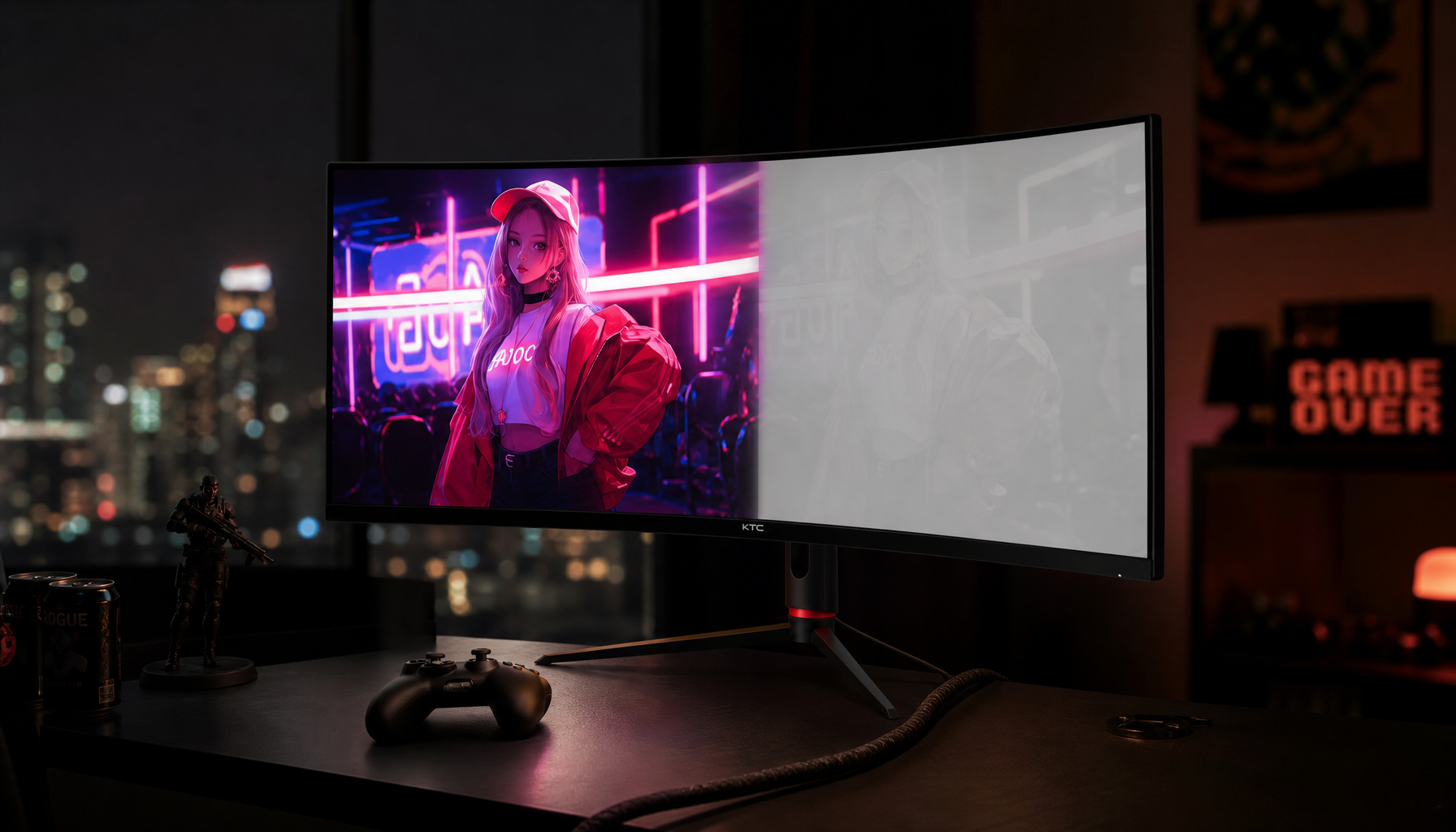
Does your game look razor-sharp in motion while sun glints, neon signs, or white HUD elements suddenly look bleached instead of brilliant? A simple A/B test between SDR, HDR, and blur-reduction modes can usually reveal whether the monitor is brightness-limited, processing-limited, or miscalibrated.
The Short Answer: It Can, But Not Always Directly
Motion blur reduction is usually a backlight-strobing or black-frame technique designed to reduce perceived blur. HDR tone mapping is a brightness and color conversion process that adapts HDR content to what your display can actually reproduce. These are separate systems, but they compete for the same display resources: brightness, timing, local dimming behavior, refresh stability, and image processing.
That matters because HDR tone mapping exists to preserve shadow and highlight detail within a display’s physical limits. If motion blur reduction lowers peak brightness or forces a different panel behavior, the tone-mapping curve may have less room to show bright highlights. The result can be washed-out sparkle, muted specular detail, or a bright scene that looks more like overexposed SDR than convincing HDR.
What Motion Blur Reduction Actually Does
Motion blur reduction tries to fight sample-and-hold blur. On a typical LCD, each frame stays visible until the next frame arrives. Your eyes track moving objects, but the image remains held on screen, so motion smears across your vision. At 60 Hz, each frame lasts about 16.7 milliseconds; at 240 Hz, it lasts about 4.2 milliseconds. Higher refresh helps, but strobing goes further by flashing the image for a shorter window.
Gaming monitors use different names for this idea, including strobe modes, MPRT modes, and backlight strobing. The tradeoff is predictable: less visible blur often means less brightness, possible flicker, and sometimes image duplication if the strobe timing does not line up well with the frame rate.
For competitive play, this can be powerful. A 240 Hz IPS monitor with a clean strobe mode can make crosshair tracking and fast strafing feel more defined. For HDR, however, the same brightness sacrifice can be costly.
What HDR Tone Mapping Needs to Work Well
HDR is not just brighter SDR. It depends on the display having enough peak brightness, contrast, color volume, and processing discipline to separate normal bright areas from true highlight detail. A sun reflection on a wet road should punch harder than a white spreadsheet cell. A muzzle flash should pop without turning the whole scene milky.
HDR settings are especially important because the operating system may perform tone mapping on the GPU before the final desktop image is composed. That means display-reported information and HDR metadata can affect the signal before it reaches the monitor. If the monitor then enters a blur-reduction mode with lower real brightness, the effective display capability may no longer match the tone-mapped signal cleanly.
This is why HDR can look correct in one mode and washed out in another, even with the same cable, GPU, and game. The monitor may still accept an HDR signal, but it may not have the same luminance headroom or local dimming behavior once motion blur reduction is active.
How Washed-Out Highlights Happen
The most common failure is reduced brightness headroom. Many blur-reduction modes dim the screen because the backlight is off for part of each refresh cycle. If HDR content expects a strong peak highlight and the monitor cannot physically deliver it in strobe mode, tone mapping has to compress the upper range. Highlights that should look crisp and intense can become dull, chalky, or flattened.

Another failure is a locked picture pipeline. Some monitors disable brightness controls, local dimming, VRR, or certain HDR presets when motion blur reduction is enabled. If local dimming is weakened, small highlights may lose contrast against dark backgrounds. If VRR is disabled, frame pacing can become less stable. If the HDR mode changes from a calibrated preset to a generic gaming preset, color and gamma can drift.
A third failure is confusion between specular highlights and diffuse bright areas. Tone mapping has to balance midtones, dark regions, and peak highlights. A small chrome glint should be treated differently from a full white office document. When brightness is restricted, the monitor may compress both too aggressively, making bright details look less dimensional.
Practical Example: Competitive Shooter Versus Cinematic HDR Game
In a competitive shooter, motion clarity can matter more than HDR impact. If enabling blur reduction makes enemy outlines cleaner and input feel more readable, SDR with strobing may be the better performance mode. A clean 240 Hz SDR setup often beats a compromised HDR mode where highlights bloom, flicker, or wash out.

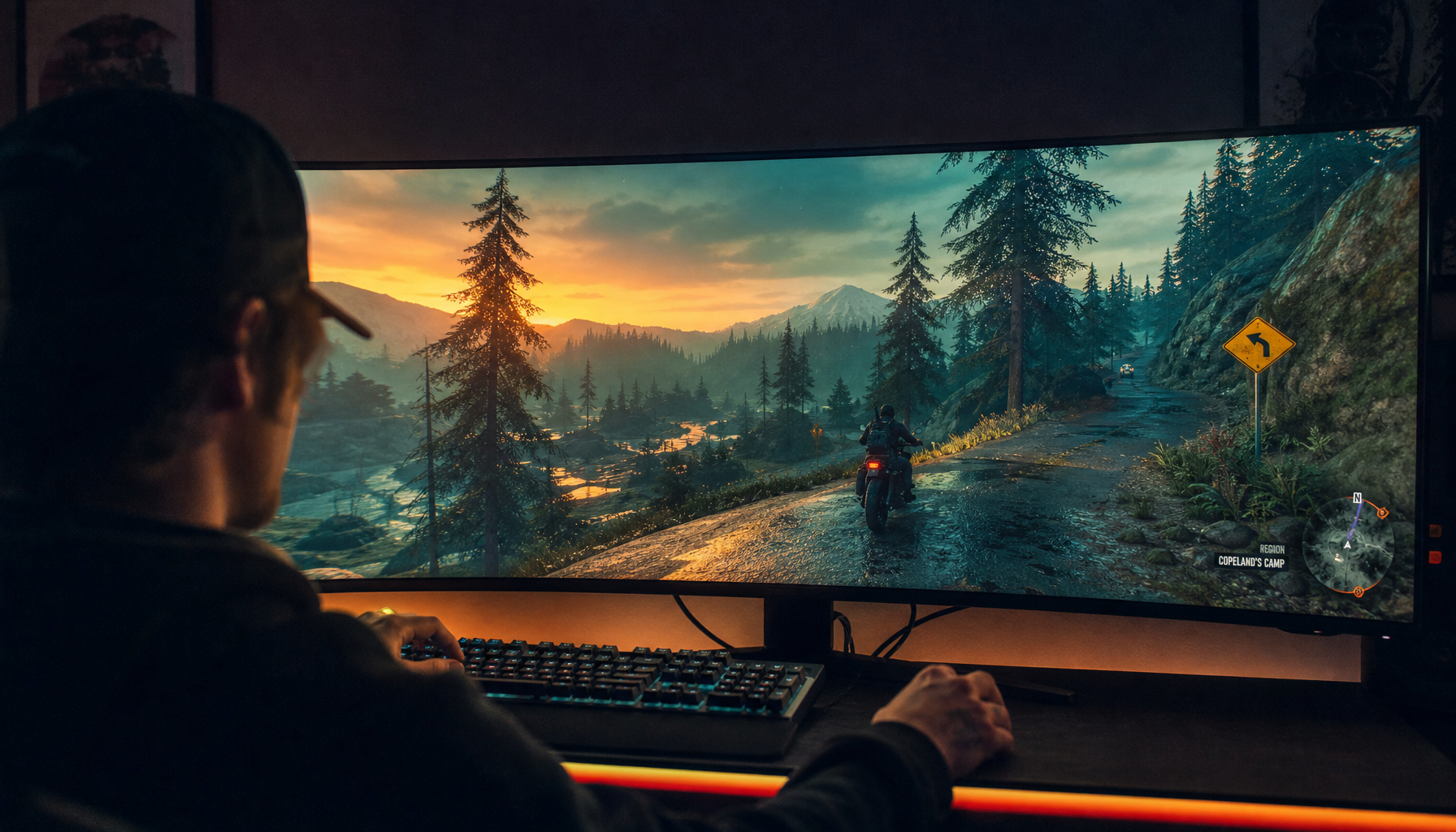
In a cinematic racing or open-world game, the priority changes. HDR earns its keep when brake lights, sun glare, wet asphalt, neon reflections, and night skies have real contrast. If blur reduction dims the panel enough to mute those highlights, HDR loses the advantage you turned it on for. In that scenario, higher refresh with VRR and balanced overdrive may produce a better total image than strobing.
Better Starting Point |
Why It Usually Works |
|
Competitive FPS |
SDR, high refresh, medium or fast overdrive |
Prioritizes clarity, latency, and stable visibility |
Cinematic HDR gaming |
HDR, VRR if stable, moderate overdrive |
Preserves highlight impact and contrast |
Office productivity |
SDR with comfortable brightness |
Avoids washed-out desktop SDR mapping and eye fatigue |
Portable smart screen use |
SDR unless HDR is genuinely bright |
Battery, brightness, and small-panel HDR limits often matter more |
How to Test Your Monitor Without Guessing
Start with one familiar scene that has motion and highlights. A night city, bright sky, wet road, muzzle flash, or white HUD over a dark scene works well. Keep the game, brightness, and camera position consistent.
First, test SDR with motion blur reduction off. Then enable blur reduction and look for cleaner motion, flicker, dimming, or duplicate images. Next, test HDR with blur reduction off and adjust the game’s black level, paper white or UI brightness, and peak brightness. Finally, enable blur reduction while HDR remains active, if your monitor allows it.
The winning mode is not the one with the most features enabled. It is the one where motion stays readable, highlights retain texture, and the screen does not look gray or overexposed. If HDR plus blur reduction makes white clouds, metal reflections, or HUD elements lose separation, the monitor is probably running out of brightness headroom or switching to a weaker processing path.
Settings That Usually Fix Washed-Out HDR
Check HDR calibration first. SDR desktop brightness and HDR peak behavior can interact in ways that make normal apps look pale or too bright. Keep HDR off for routine desktop work if your monitor does not handle SDR-in-HDR gracefully.
Use the monitor’s certified HDR mode when accuracy matters, but compare it with any available HDR10 mode if the display offers one. Some displays may expose different brightness behavior depending on certified HDR, dynamic HDR, or non-certified HDR10 modes, so the brightest mode is not always the most accurate mode.
Avoid the most aggressive blur-reduction setting at first. Shorter strobe pulses improve motion clarity but darken the image more. If your monitor offers pulse width, clarity level, or MPRT strength, try the middle setting before maxing it out.
Keep overdrive moderate. HDR can make overshoot halos easier to notice because bright objects against dark backgrounds reveal artifacts more clearly. Medium or Normal overdrive is often the reliable baseline before trying Fast or Extreme.
Buying Advice for HDR Plus Motion Clarity
Do not buy on 1 ms or HDR labels alone. For HDR, look for real peak brightness, sustained brightness, contrast, local dimming quality, OLED or mini-LED behavior, and credible color performance. For motion, look for tested response behavior, refresh rate, overdrive tuning, VRR support, and whether the blur-reduction mode works at the refresh rates you actually use.

HDR monitors for photography are judged heavily on brightness, accuracy, blooming, calibration, and sustained performance, and those same traits matter for high-end gaming and productivity displays. A monitor that can hit strong highlights only in a tiny test window may still disappoint when a bright game scene, HDR video, and desktop UI all compete for luminance.
Curved ultrawides and large displays add another wrinkle. Curved gaming monitors can make existing motion blur feel more noticeable because more fast-moving image area fills your peripheral vision. That does not mean curvature is bad; it means panel speed, overdrive, refresh stability, and HDR processing have to be strong enough for the larger visual field.
Final Verdict
Motion blur reduction can interfere with HDR tone mapping in practice, even if it does not rewrite the tone-mapping algorithm itself. If enabling it makes HDR highlights look washed out, treat that as a signal: your display is trading brightness and processing flexibility for motion clarity. For esports, that trade may be worth it; for immersive HDR gaming, creative review, and premium media, a well-calibrated HDR mode with clean refresh and sensible overdrive will usually deliver the stronger screen experience.