A newer desktop OS can feel cleaner for an ultrawide gaming setup, but it does not fundamentally solve ultrawide aspect ratio problems that an older desktop OS cannot handle. For stretched images, black bars, cutscene limits, and field-of-view problems, the game, GPU scaling mode, monitor settings, and cable handshake usually matter more than the OS version.
You launch a game on a 34-inch ultrawide monitor, expecting a wider view, but the menu is stretched, the cutscene has black bars, or the HUD looks slightly wrong. In real tests, a newer desktop OS showed only small gaming performance changes over an older desktop OS, while ultrawide problems often traced back to resolution and scaling behavior. Here is how to decide whether upgrading helps, and how to set up a 21:9 or 32:9 gaming monitor properly.
The Short Answer: A Newer Desktop OS Is Better Around the Edges, Not at the Core
An older desktop OS and a newer desktop OS both support ultrawide monitors through the same basic display path: choose the correct resolution, set the right refresh rate, extend or duplicate displays, and let the GPU and monitor negotiate the signal. For a 3440x1440, 3840x1600, or 5120x1440 gaming monitor, a newer desktop OS does not create a new universal ultrawide mode that forces games to render correctly.
The biggest difference is quality of life. A newer desktop OS generally feels more modern for window placement, mixed-display setups, and display management, while an older desktop OS remains capable for native ultrawide output. If your game already supports 21:9 or 32:9 properly, either OS can deliver the correct image. If your game does not, a newer desktop OS usually will not fix it by itself.
For monitor buyers, that means the upgrade decision should not be based only on aspect ratio support. A better question is whether your full setup benefits from a newer desktop OS’s desktop behavior, your GPU driver support, your HDR and refresh-rate workflow, and your long-term software plan.
Where Ultrawide Problems Actually Come From
Stretched Images Usually Start With Scaling

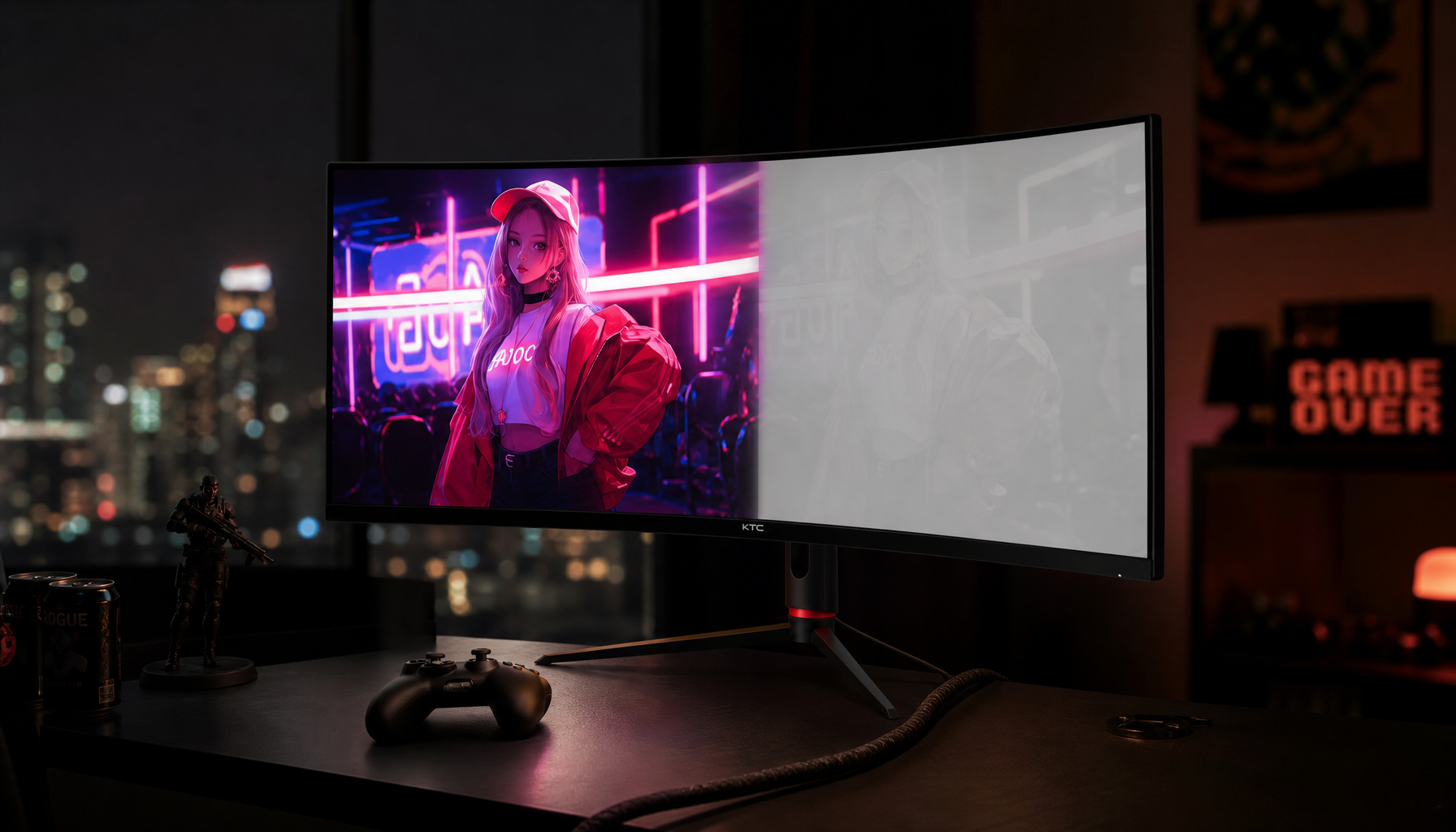
A stretched image happens when a 16:9 picture is forced to fill a wider panel instead of being preserved proportionally. Common gaming monitor formats include 16:9 for standard displays, 21:9 for ultrawide displays, and 32:9 for super-ultrawide displays; when a 16:9 signal is expanded across a 21:9 or 32:9 screen, the image becomes horizontally widened rather than properly scaled ultrawide monitors.
A practical example: if a game outputs 2560x1440 on a 3440x1440 monitor, the height matches but the width does not. If the system, GPU, or monitor stretches that 2560-wide frame to fill the full 3440-wide panel, circles become ovals, characters look wider, and aiming references can feel off.
That is not mainly an older desktop OS versus a newer desktop OS issue. It is a scaling-chain issue. The game resolution, system display mode, GPU control panel, monitor on-screen display, and cable or port negotiation can all influence whether the final image is stretched, pillarboxed, or mapped pixel-for-pixel.
Black Bars Are Not Always a Bug
Black bars can be correct behavior. If a game, cutscene, loading screen, or competitive mode is locked to 16:9, black bars on the left and right keep the image proportional on a 21:9 or 32:9 monitor. That may look less immersive, but it is preferable to distortion.
Older titles, esports games, menus, and pre-rendered cutscenes often have inconsistent ultrawide behavior. A game may support 3440x1440 during gameplay but fall back to 16:9 during cutscenes, or it may widen the field of view while leaving the HUD anchored awkwardly near the edges.
When troubleshooting, do not treat every black bar as something the OS should remove. First decide whether the game is protecting image geometry or failing to support the monitor’s native aspect ratio.
A Newer Desktop OS vs an Older Desktop OS for Ultrawide Gaming
Area |
Older Desktop OS |
Newer Desktop OS |
What Matters Most for Ultrawide Gaming |
Native ultrawide resolution |
Supports 21:9 and 32:9 display modes when the GPU, cable, and monitor expose them |
Also supports 21:9 and 32:9 display modes |
Monitor EDID, GPU driver, cable bandwidth, and selected resolution |
Aspect ratio correction |
Can preserve aspect ratio through GPU and monitor scaling choices |
Can preserve aspect ratio through the same general scaling chain |
Game resolution, GPU scaling mode, and monitor OSD scaling |
Game compatibility |
Depends heavily on each game |
Depends heavily on each game |
Game engine support, HUD design, cutscene format, and field-of-view settings |
Window management |
Works, but ultrawide layouts often benefit from extra tools |
Usually feels more polished for arranging windows |
Built-in snap layouts, zone-based window tools, and personal workflow |
Multi-monitor setup |
Managed through display settings |
Managed through display settings with a newer interface |
Physical display order, primary monitor choice, refresh rate, and scaling |
Performance |
Baseline gaming performance remains strong |
Small gains in some tests, no change in others |
GPU load from higher pixel count, game engine, and graphics settings |
Best reason to upgrade |
Familiar setup, broad compatibility |
Better desktop polish and long-term platform direction |
Upgrade for workflow and platform reasons, not as a guaranteed ultrawide fix |
Performance Differences Are Usually Small
A technology publication test compared an older desktop OS and a newer desktop OS on the same gaming laptop with a current-generation laptop CPU, 16GB of RAM, and a midrange laptop GPU. The newer desktop OS gained a small number of points in one graphics benchmark and a few hundred points in another, while real-game results were mixed: one racing game improved by about 3fps, one tactical shooter improved by 12fps on low settings and 16fps on maximum settings, and several open-world racing and adventure games showed almost no change gaming performance.
That matters for ultrawide monitor buyers because ultrawide gaming is already more demanding than standard 1440p. Moving from 2560x1440 to 3440x1440 increases pixel count by about 34%, so a player who was comfortable at 120fps or 144fps on a 16:9 monitor may need to lower shadows, anti-aliasing, ray tracing, or render scale after switching to 21:9.
In other words, a newer desktop OS may give a small lift in select games, but it is not a substitute for GPU horsepower. If your target is high-refresh ultrawide gaming at 3440x1440 or 5120x1440, the graphics card, game settings, and upscaling options will usually decide the experience before the OS does.
Settings That Matter More Than the OS Version
Start With the Monitor’s Native Resolution

The first check is simple: set the OS to the monitor’s native resolution. For a common 34-inch ultrawide gaming monitor, that is often 3440x1440. For a 49-inch super-ultrawide, it may be 5120x1440. Running below native resolution can be useful for performance, but it raises the risk of blur, stretching, or uneven scaling. For example, with a 49-inch DQHD display such as a 49-inch DQHD 180Hz 1000R curved gaming monitor, set the OS, the GPU control panel, and the game to the panel’s 5120x1440 native mode before judging whether an older desktop OS or a newer desktop OS is causing the behavior.
If a game offers both 2560x1440 and 3440x1440, choose 3440x1440 first and test performance. If frame rate drops too far, lower in-game graphics settings before lowering resolution. That keeps the panel sharp and preserves the intended aspect ratio.
If you must lower resolution, use an aspect-preserving scaling mode. Look for labels such as “Aspect Ratio,” “Maintain Aspect Ratio,” “No Scaling,” “Original,” or “1:1,” because these modes help prevent a narrower image from being stretched across the full panel scaling mode.
Check the Whole Signal Chain

Ultrawide problems often come from one setting in a chain of otherwise correct settings. Check the game first, then the OS, then the GPU control panel, then the monitor’s on-screen display. If any one of those is set to “full screen stretch” or an equivalent fill mode, the final image can look wrong.
For high-refresh ultrawide monitors, also confirm that the OS is actually using the intended refresh rate. A monitor marketed as 100Hz, 144Hz, 165Hz, or 240Hz may run at 60Hz until the correct mode is selected. The same applies after changing cables, updating GPU drivers, switching ports, or connecting a second display.
Cable choice matters because high resolutions at high refresh rates need enough bandwidth. If a 3440x1440 monitor refuses to show its top refresh rate, test the manufacturer-recommended video input, update GPU drivers, and avoid adapters unless they are rated for the exact resolution and refresh rate.
Game Support Matters More Than the OS
Field of View Is a Game Design Choice
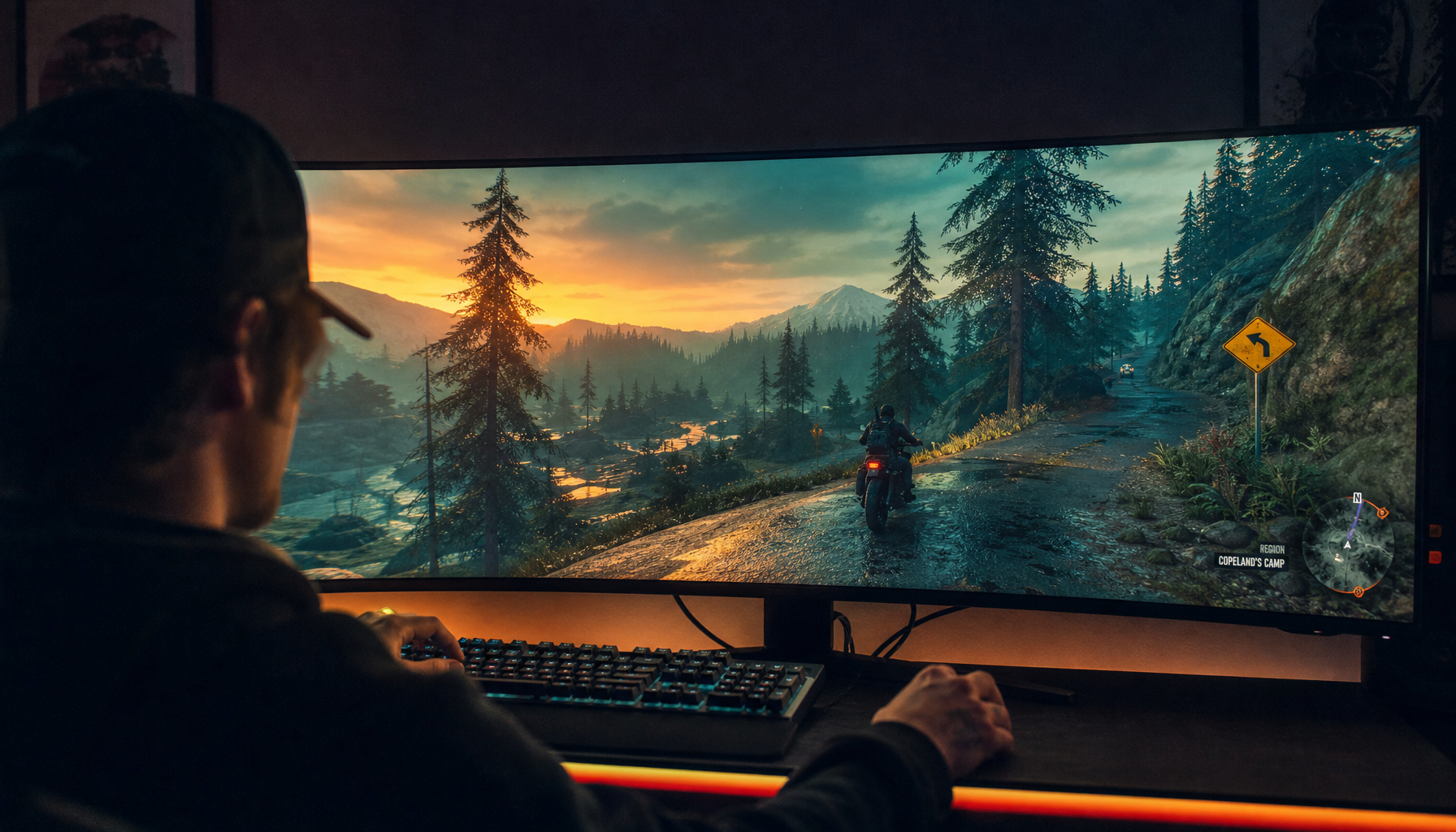
A well-implemented ultrawide game expands horizontal view while keeping the image natural. That can improve situational awareness in shooters, racing games, flight games, and open-world titles. In one hands-on ultrawide gaming account, a 34-inch 21:9 100Hz monitor made several shooter and action games feel more spacious because the wider field of view showed more of the scene wider field of view.
That benefit is not automatic. Some games widen the image correctly, some crop vertically, some stretch the HUD, and some keep gameplay at 16:9 for competitive consistency. This is why two games can behave completely differently on the same newer-OS PC and the same ultrawide monitor.
Before buying an ultrawide monitor mainly for one game, check that game’s current ultrawide behavior. Look for supported resolutions, field-of-view controls, HUD scaling, cutscene behavior, and whether the game treats 21:9 or 32:9 as official support rather than an accidental mode.
Menus, HUDs, and Cutscenes Are Common Weak Spots
Gameplay may look correct while menus do not. A title might render the 3D world at 3440x1440, then show inventory screens, dialogue scenes, maps, or cinematic sequences at 16:9. That is common enough that it should be part of your buying expectation, especially with older games and console-first releases.
For esports titles, black bars or restricted aspect ratios can be intentional. Developers may limit ultrawide advantages to preserve competitive parity. In that case, changing from an older desktop OS to a newer desktop OS will not override the game’s rules.
For single-player and simulation games, ultrawide support is more likely to improve the experience. Racing, flight, strategy, and cinematic adventure games often benefit strongly from the extra horizontal space, provided the field of view and interface scale properly.
Multi-Monitor and Desktop Workflow: Where a Newer Desktop OS Can Feel Better
Ultrawide Is Not Just for Full-Screen Games
Many gamers use an ultrawide monitor as both a gaming screen and a work display. Older and newer desktop OS versions both let users arrange displays under system display settings, drag monitor icons to match physical placement, and choose whether displays are duplicated or extended extra displays.
This matters if you run a main ultrawide plus a secondary monitor for a chat app, streaming controls, walkthroughs, hardware monitoring, or a browser. The “extend” mode gives each screen its own usable desktop space, while duplicate mode mirrors the same image and is usually less useful for gaming setups.
Keyboard shortcuts can help more than dragging windows by hand. Common system shortcuts can move windows between monitors or snap windows to the sides. On a very wide screen, those shortcuts are often faster and more predictable than trying to hit screen edges with the mouse.
Zone-Based Window Tools Can Make Ultrawide Screens More Useful

A 34-inch or 49-inch ultrawide monitor can make normal half-screen snapping feel awkward. Two huge side-by-side windows may be too wide, while three narrower work zones may fit better. A zone-based window management tool lets users divide an ultrawide display into custom regions, which is especially useful for streamers, reviewers, and players who manage multiple apps between matches FancyZones.
Another advanced display-management app is an option for advanced multi-monitor users. It can create virtual monitor regions, set app-to-display rules, and add multi-screen screensaver behavior; its pro features cost $29 after a 30-day trial. That is not necessary for every player, but it can be worthwhile for a battlestation with a main ultrawide, a vertical side monitor, and a streaming or productivity workflow.
This is where a newer desktop OS can feel like the better daily OS even if its raw ultrawide gaming support is not fundamentally different. The desktop experience around the game can be smoother, especially when you constantly move apps across zones, monitors, and full-screen sessions.
Practical Setup Checklist for Ultrawide Gaming
Use this checklist before blaming an older desktop OS, a newer desktop OS, or the monitor itself:
- Set the OS to the monitor’s native resolution, such as 3440x1440 for many 34-inch ultrawide gaming monitors.
- Confirm the refresh rate in display settings after every GPU driver update, cable change, or monitor swap.
- In the game, choose the native ultrawide resolution before reducing render scale or graphics quality.
- Set GPU scaling to preserve aspect ratio, not stretch-to-fill, when playing below native resolution.
- Open the monitor’s on-screen display and select “Aspect Ratio,” “Original,” “1:1,” or the closest equivalent if the image looks widened.
- Test both exclusive fullscreen and borderless fullscreen, because some games handle ultrawide modes differently between them.
- Check whether the specific game supports 21:9 or 32:9 gameplay, HUD scaling, and ultrawide cutscenes before assuming the OS is at fault.
Should You Upgrade to a Newer Desktop OS for an Ultrawide Gaming Monitor?
Upgrade to a newer desktop OS if you want the newer desktop experience, cleaner window organization, and a more current platform for future gaming features. It is a reasonable choice for a new gaming PC or a fresh ultrawide setup, especially if your hardware and favorite games already run well on the newer OS.
Do not upgrade expecting it to magically fix stretched 16:9 menus, locked cutscenes, poor HUD placement, or missing 32:9 support. Those issues usually live inside the game, GPU scaling configuration, or monitor settings. If a title does not render ultrawide properly on an older desktop OS, it often behaves the same way on a newer desktop OS.
For monitor buying guidance, prioritize the panel and GPU match first. A 3440x1440 high-refresh ultrawide is a strong middle ground for immersive gaming, while 5120x1440 super-ultrawide is more demanding and more dependent on game support. Pair the monitor with a GPU that can handle the added pixel load, then choose the OS based on your broader PC workflow.
FAQ
Q: Will a Newer Desktop OS Fix Black Bars on My Ultrawide Monitor?
A: Usually no. Black bars often appear because the game, menu, cutscene, or video content is locked to 16:9. A newer desktop OS may improve the surrounding desktop experience, but it cannot force every game to render true 21:9 or 32:9 content.
Q: Is a Newer Desktop OS Faster Than an Older Desktop OS for Ultrawide Gaming?
A: Not in a way ultrawide buyers should count on. In one same-laptop test, a newer desktop OS produced small gains in some benchmarks and games, but several major titles showed virtually no performance change. At ultrawide resolutions, GPU load and graphics settings are usually more important.
Q: What Is the Best Scaling Mode for Ultrawide Gaming?
A: Use the monitor’s native resolution whenever possible. If you run a lower resolution, choose an aspect-preserving mode such as “Maintain Aspect Ratio,” “No Scaling,” “Original,” or “1:1” in the GPU control panel or monitor OSD to avoid a stretched image.
Key Takeaways
A newer desktop OS handles ultrawide gaming monitors well, but an older desktop OS already supports the core display modes needed for 21:9 and 32:9 gaming. The upgrade is more about desktop polish, workflow, and platform direction than a dramatic change in aspect ratio handling.
For stretched images, start with native resolution, aspect-preserving scaling, and the monitor’s OSD. For black bars, check whether the game or cutscene actually supports ultrawide output. For performance, remember that 3440x1440 pushes about 34% more pixels than 2560x1440, so the GPU and game settings matter more than the OS version.
The practical recommendation is simple: choose a newer desktop OS for a new or modern gaming setup, but do not buy or upgrade solely to solve ultrawide compatibility issues. Buy the right monitor, use the right cable, set the correct resolution and refresh rate, and verify ultrawide support in the games you actually play.