Game Mode usually lowers input lag on a console gaming monitor by stripping out extra image processing, but the size of the gain depends on how that specific monitor handles its presets.
If your aim feels a little late after switching to a more cinematic picture preset, the monitor may be doing extra work before the image reaches the screen. At 120 Hz, even the center of the screen only appears about 4.17 ms after scanout starts, so small display delays are easier to feel in a fast console shooter than in a slower single-player game. You will leave with a practical way to choose the right preset for speed, image quality, or a balanced middle ground.
What Picture Mode Actually Changes
Game Mode vs. Standard and Custom
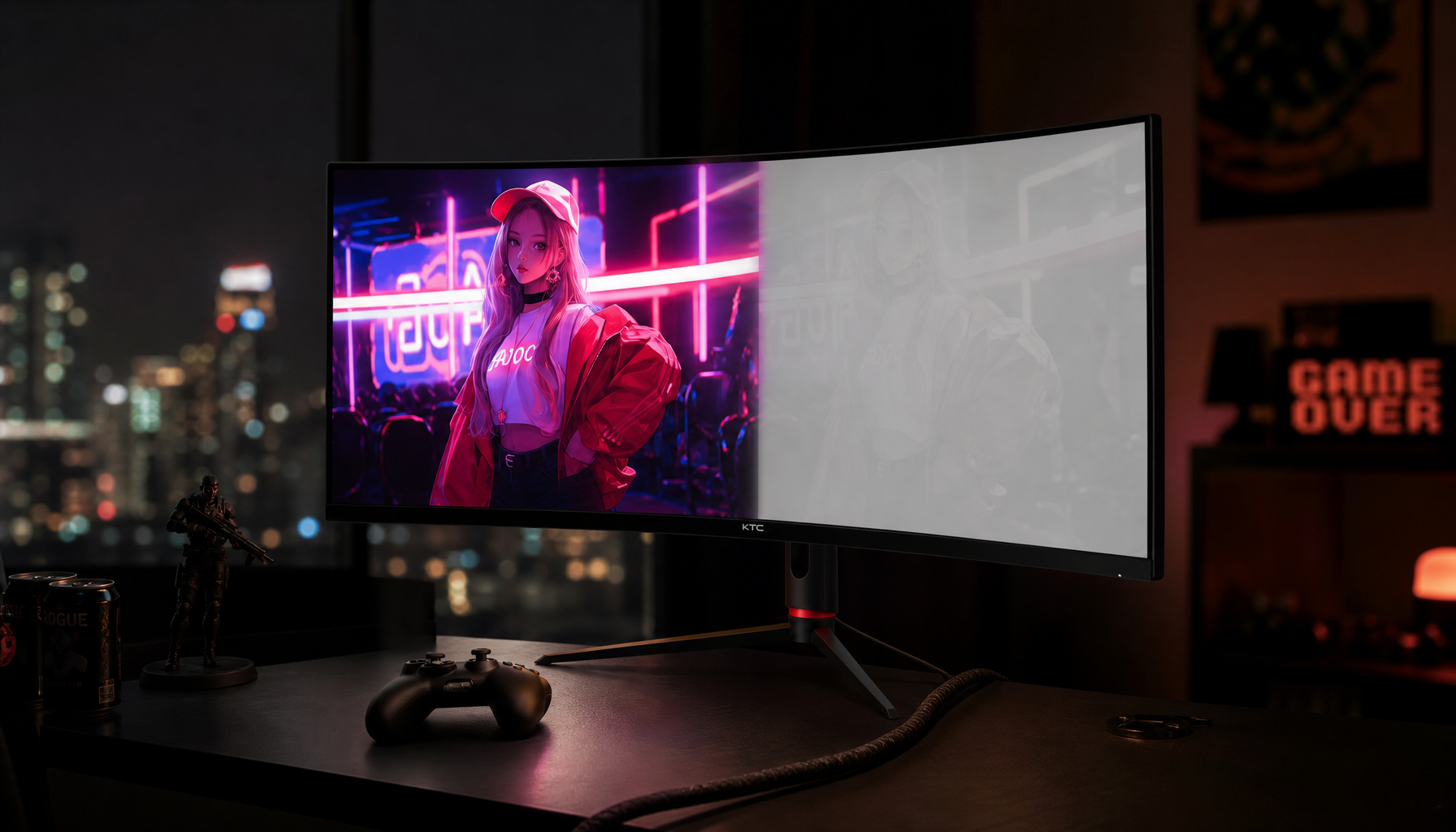
On gaming monitors, performance-oriented display modes can reduce input lag because they streamline signal processing before the image is shown. That usually means less sharpening, less image cleanup, and fewer tonal adjustments running in the background. On a console display, that is the main reason a Game, FPS, or Instant-type preset can feel faster than Standard, Cinema, or a heavily processed Custom mode.
 Input lag and response time are related, but they are not the same thing. Input lag is the delay between your action and the image update, while response time is how quickly pixels change color. A monitor can have fast pixel transitions and still feel slightly delayed if the picture preset adds processing before scanout.
Some monitors only reach their lowest lag in a dedicated fast preset, while others are already optimized in most modes. Testing notes summarized from a review site show that some displays need a Game or Instant mode for the best result, although many modern gaming monitors do not.
Which Picture Settings Usually Add Delay
Low-Risk Settings
On modern gaming monitors, overdrive generally does not add input lag. A forum contributor and another technical commenter both point out that old claims about overdrive-caused lag came from earlier designs, and modern implementations can work in real time with tiny buffers rather than holding a full frame. For most current console gaming monitors, overdrive is more about motion clarity and ghosting than added latency.
Higher refresh rates also help the display feel faster. Center-screen appearance times drop from 8.33 ms at 60 Hz to 4.17 ms at 120 Hz, which is one reason modern console games that support 120 Hz often feel noticeably more immediate on a good high-refresh-rate monitor.
Higher-Risk Settings
Some processing features still deserve caution. Black Frame Insertion can increase input lag on some monitors, and certain HDR pipelines have historically used frame buffering, which can add delay even though real-time HDR is possible on newer hardware. That means HDR is not automatically slow, but it is one of the settings worth testing rather than assuming.
Scaling can also be a hidden source of delay. A practical user report on a 1080p 144 Hz monitor from a brand found that non-native resolutions felt less responsive than native 1080p, especially when sync settings and refresh limits changed. For console players, that is a strong reason to prefer native console output and the monitor’s native resolution whenever possible.
A simple baseline helps. In a real-world setup discussion, a monitor owner ran with Image Enhancement off and a neutral color temperature, which is a sensible starting point if you want cleaner processing without giving up all image adjustment.
When Game Mode Matters Most on Console
Competitive Play vs. Slower Genres
For console gaming, 60 Hz and 120 Hz input-lag measurements matter most because they match how major console platforms are commonly used. In a competitive shooter, fighting game, or sports title, shaving even a small amount of display delay can make aiming, tracking, and timing feel more predictable. In a slower RPG or story-driven game, the same difference may be much harder to notice.
 That difference is easier to understand when you look at the typical numbers. Standard monitors often land around 10-30 ms of input lag, depending on their processing features and connection path. If a gaming monitor’s fast preset trims a chunk of that overhead, the improvement is meaningful in ranked play even when the image looks only slightly different.
Why the Tradeoff Is Not Always Worth It
The tradeoff is not universal. Speed-optimized modes can affect tonal accuracy, black detail, or color balance depending on the panel and firmware. If you mostly play single-player games, the better-looking preset may be the smarter choice as long as the monitor does not feel obviously sluggish.
A useful rule is simple: if you notice delay during camera turns, parries, or fine aiming, use Game Mode first. If you only notice that the picture looks flatter, then the fast preset may be doing its job without a major downside.
How to Choose the Right Picture Mode
Fast, Balanced, and Visual-First Setups
A console player who mainly cares about responsiveness should start with Game, FPS, or Instant mode, keep the display at the highest supported refresh rate, and avoid extra enhancement features. Performance-oriented modes are the most direct input-lag fix, while native resolution helps avoid scaling-related delay.
For mixed use, a custom preset can work well if it keeps unnecessary processing off. The practical pattern from monitor owners is straightforward: neutral color temperature, moderate brightness for the room, minimal enhancement, and only as much shadow boosting as you really need. That keeps the monitor useful for games, media, and general console use without turning the image harsh.
For visual-first play, HDR or a richer Standard preset can be worth it if the added lag is small on your model. Testing-site-style notes suggest HDR rarely changes input lag on modern monitors, so newer gaming monitors often let you keep good image quality without a major penalty.
Quick Comparison
Picture mode or setting |
Likely lag impact |
Common image effect |
Best use case |
Game / FPS / Instant |
Lowest or near-lowest |
Less processing, sometimes flatter color |
Competitive console play |
Standard / User |
Low to moderate |
More balanced color and tone |
Mixed gaming and everyday use |
HDR |
Usually low on modern models, but varies |
Better highlights and contrast |
Single-player and cinematic games |
BFI / strobing |
Can increase lag on some monitors |
Sharper motion, dimmer image |
Niche motion-clarity tuning |
Heavy enhancement / scaling |
Moderate to higher risk |
Sharpening or non-native output cleanup |
Usually avoid for fast play |
What to Look for When Buying a Console Gaming Monitor
Focus on Measured Lag, Not Just Marketing
When comparing gaming monitors, input lag is a separate metric from response time, so do not let a quoted 1 ms response time distract you from a slower processing pipeline. A display can advertise excellent Gray-to-Gray performance and still feel worse on console if its picture presets add delay.
The better buying question is whether the monitor has strong measured results at the refresh rates you will actually use. Center-screen lag at 60 Hz and 120 Hz is especially relevant for console gaming, so those numbers tell you more than a generic spec-sheet claim.
Watch for Hidden Processing Paths
Older display designs sometimes needed full-frame buffering for certain features. One older monitor from a brand reportedly added about one frame of lag with overdrive enabled, while modern gaming monitors from other brands are described as effectively lagless in overdrive mode. That is a reminder that implementation matters more than the feature name.
For buying guidance, favor monitors that are already fast in their normal gaming presets instead of models that need aggressive compromises to reach low lag. That is especially important if you want one monitor to handle console shooters, slower story games, and everyday media without constant menu switching.
FAQ
Q: Does Game Mode always reduce input lag on a console gaming monitor?
A: Usually, yes, but not always by a large amount. Some gaming monitors are already optimized in most presets, while others only hit their lowest lag in Game or Instant mode.
Q: Does overdrive make a monitor slower?
A: Usually not on modern gaming monitors. Older designs sometimes added about one frame of delay, but current overdrive implementations are generally real-time and focused on reducing ghosting.
Q: Is HDR a bad choice for console responsiveness?
A: Not necessarily. Many modern monitors show little to no input-lag penalty in HDR, but some models still process HDR differently, so it is worth testing if you are sensitive to delay.
Final Takeaway
Picture mode affects input lag most when it changes the monitor’s internal processing path. On a modern console gaming monitor, Game Mode is usually the safest choice for competitive play, overdrive is usually fine, HDR is often acceptable, and the biggest risks tend to come from extra enhancement, strobing, or scaling.
Use this checklist to dial in a console setup quickly:
-
 Set the console to the monitor’s native resolution.
 - Use the highest supported refresh rate, especially 120 Hz when the game allows it.
- Start with Game, FPS, or Instant mode.
- Turn off image enhancement, heavy sharpening, and any unnecessary processing.
- Test HDR separately instead of assuming it is slower.
- Disable BFI or strobing if responsiveness matters more than motion sharpness.
- If Standard mode looks better, compare it side by side in a game that exposes input delay clearly, such as a shooter or fighting game.
References
- A forum discussion on overdrive and input lag
- A company explanation of response time and input lag
- A company FAQ on gaming monitor lag and response time
- A company’s notes on performance-oriented display modes
- A monitor settings discussion on a forum
- A discussion defining input lag and response time
- A discussion on non-native resolution and latency
- A forum summary referencing a review site’s input-lag methodology and results