The same game can feel restrained, cinematic, gritty, or overly loud depending on whether your display is calibrated for sRGB or DCI-P3. The right choice is matching the monitor to the art style, game mode, and lighting around you.
Does your tactical shooter look clear in one monitor mode, while your open-world RPG turns into a neon postcard in another? A 30-minute warm-up, stable room lighting, and the right picture mode can make shadows, highlights, and character colors feel deliberate instead of random. This article explains how to choose sRGB or DCI-P3 for different game art styles without sacrificing visibility or immersion.
The Core Difference: Accuracy vs Expansion
sRGB is the dependable baseline. It was built for broad compatibility across computers, browsers, office apps, and standard digital media, and it remains the default standard for web content, documents, SDR games, and everyday displays. When a game’s art assets are authored for SDR, sRGB usually keeps UI colors, skin tones, fog, grass, armor, and enemy outlines closer to the developer’s expected look.
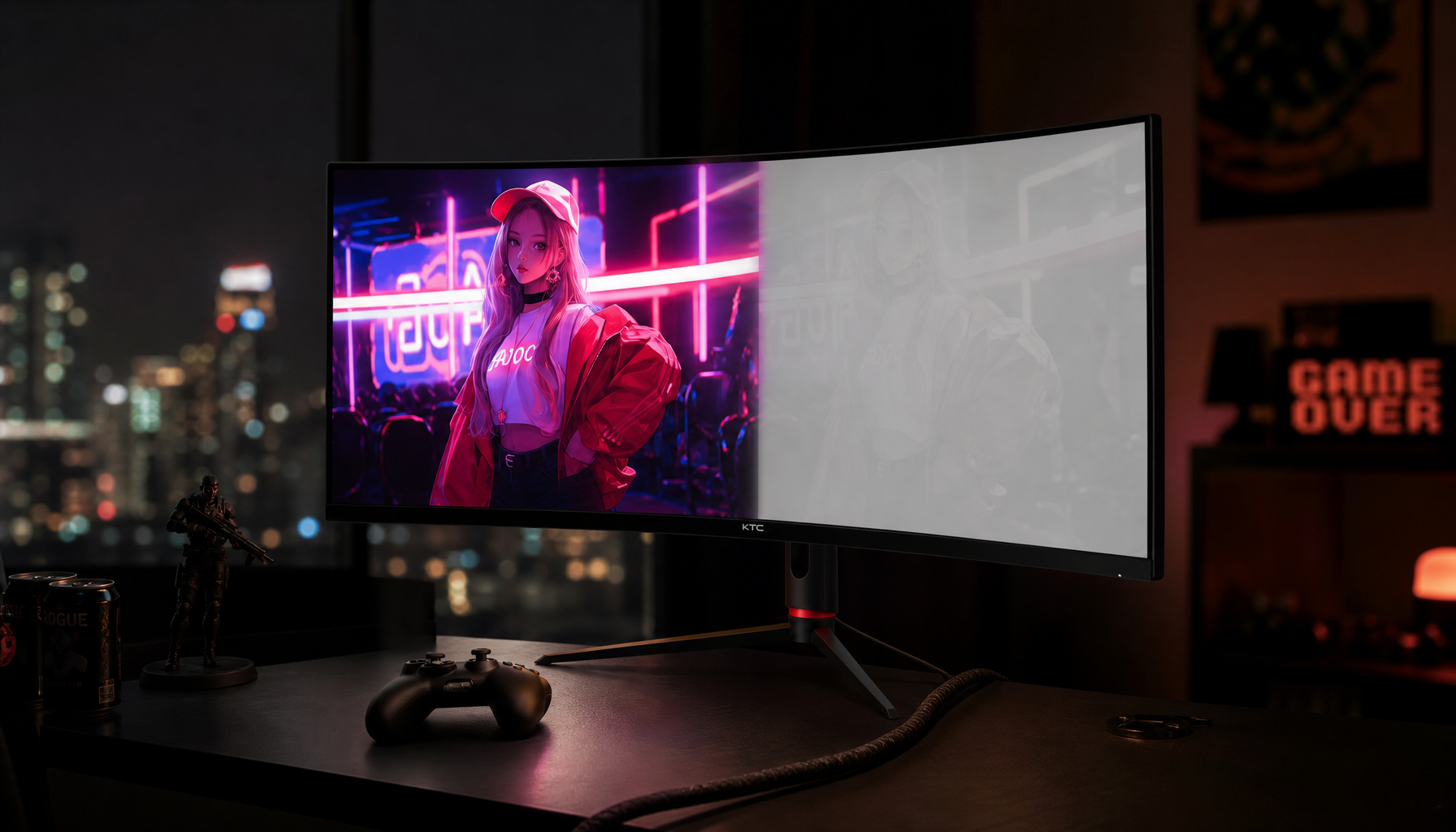
DCI-P3 is wider and more cinematic. It covers about 25% more color than sRGB, especially in saturated reds, greens, cyans, sunsets, oceans, and neon effects. That wider reach can make fantasy, sci-fi, racing, and HDR titles feel more alive, but poorly calibrated wide-color displays can also stretch normal sRGB content until it looks oversaturated.
A useful way to think about it: sRGB is the reference desk lamp, while DCI-P3 is the theater light rig. Both can be correct. The mistake is using the theater rig on a spreadsheet, or judging a cinematic HDR game through a cramped SDR preset.

Why Game Art Styles React So Differently
Realistic military shooters, competitive FPS titles, MOBAs, and many older PC games often benefit from sRGB because the art direction relies on readable contrast, believable grays, and predictable UI colors. In these games, extra saturation can make dirt, smoke, and foliage look punchier, but it may also hide subtle enemy silhouettes or make red hit markers and team colors visually louder than intended.
Stylized games behave differently. A cel-shaded action game, cyberpunk city, fantasy RPG, or anime-inspired adventure may feel richer in DCI-P3 because the palette already leans into exaggerated lighting and strong color separation. DCI-P3 can give neon signs, magic effects, painted skies, and glowing weapons more emotional weight, especially when the game supports HDR or wide-gamut output.

Pixel art and retro-inspired games are a special case. Their palettes are usually intentional and limited, so sRGB often preserves the charm better. If a wide-gamut mode makes old-school reds scream or blues look electric, the monitor is not revealing hidden detail; it is probably expanding a narrower signal beyond its intended range.
Calibration Is More Than Picking a Preset
Calibration means adjusting the display so brightness, contrast, gamma, white balance, and color behavior fit both the panel and the room. A preset labeled “sRGB,” “DCI-P3,” “Cinema,” or “Game” can be helpful, but presets are not full calibration. Some sRGB modes clamp color well but lock brightness or color controls, while some vivid or native modes deliver impressive store-demo color with weak accuracy.
For SDR gaming, a strong baseline is a D65 white point, gamma 2.2, and brightness matched to your room. KTC’s gaming calibration guidance recommends letting the monitor warm up for at least 30 minutes, disabling Eco Mode and Dynamic Contrast, then tuning black and white levels with test patterns so dark grays remain visible and bright details do not clip. That approach matters because factory settings are often tuned for bright retail environments, not your desk.

A monitor settings guide makes the same practical point from another angle: brightness should respond to room lighting, black level should avoid crushed shadows, and contrast should preserve near-white detail. It also warns that sRGB modes clamp colors but may restrict other settings, which is why a good preset still needs real-world checking in games.
Use case |
Better starting point |
Why it changes the feel |
Competitive FPS or MOBA |
sRGB |
Cleaner team colors, steadier UI, less distracting saturation |
Older SDR games |
sRGB |
Preserves palettes designed for standard displays |
HDR RPGs and cinematic adventures |
DCI-P3 |
Richer skies, fire, magic, foliage, and neon lighting |
Office work plus gaming |
sRGB for desktop, DCI-P3 for HDR games |
Keeps documents predictable while letting entertainment expand |
Color-sensitive content creation |
Calibrated target with ICC profile |
Accuracy matters more than preset names |
The Oversaturation Trap
A wide-gamut monitor can be excellent hardware and still make the wrong content look wrong. If an SDR game sends sRGB color values and the monitor displays them across DCI-P3 without proper color management, red armor, green grass, blue UI elements, and skin tones can look exaggerated. This is the common “why does everything look too vivid?” problem on wide-gamut gaming monitors.

The fix is not always to abandon DCI-P3. The fix is to match mode to content. For SDR games and desktop use, start with sRGB or a reliable sRGB clamp. For HDR games, enable HDR in the operating system and the game, then use the monitor’s HDR or DCI-P3-capable mode if it behaves correctly. A community discussion around 99% sRGB and 95% DCI-P3 coverage lands on the same practical split: use sRGB for SDR desktop use and DCI-P3 for HDR, while recognizing that casual gaming preference still matters.
Also watch the difference between gamut size and coverage. A display can advertise big color numbers while missing parts of the target color space. One projector explanation notes that color coverage is more useful than headline size when judging whether a display can reproduce a target accurately. In monitor shopping terms, 100% sRGB with a good clamp can be more valuable for mixed work than a flashy wide-gamut mode with weak control.
Brightness and Gamma Change the Mood as Much as Color
Color gamut gets the attention, but brightness and gamma often decide whether the game feels tense, flat, harsh, or cinematic. Gamma 2.2 is the common computer and gaming target because it gives midtones a familiar balance. If gamma is too low, dark scenes can look washed out. If it is too high, cave interiors, night maps, and horror scenes can crush into black.

Brightness should fit the room. A calibration walkthrough explains that monitor “brightness” often affects black-level visibility, while contrast affects near-white highlight detail. That means a poor brightness setting can hide enemies in shadows, and a poor contrast setting can erase clouds, snow texture, muzzle flash detail, or bright UI gradients. The built-in calibration tools in Windows and macOS are not perfect, but they are useful for setting a sane baseline before you fine-tune by eye.
HDR complicates this because SDR white is not supposed to map to the full brightness of an HDR panel. Discussions around SDR on HDR monitors point out that directly stretching SDR brightness across a high-output HDR display can feel uncomfortable or blinding. In practice, that is why one HDR toggle can make a desktop look strange while the same monitor looks excellent inside a properly mastered HDR game.
Practical Setup for Different Players
If you play competitive shooters, start in sRGB, set the refresh rate to the highest supported value, use native resolution, disable dynamic contrast, and adjust black level until the darkest visible test bar barely appears. Keep Ambient Occlusion if performance allows because it adds depth, but reduce heavy settings such as volumetric fog, clouds, and shadow distance first when chasing frame rate. Forum advice often lines up with this tradeoff: some visual effects are beautiful but expensive, while clarity settings protect gameplay.
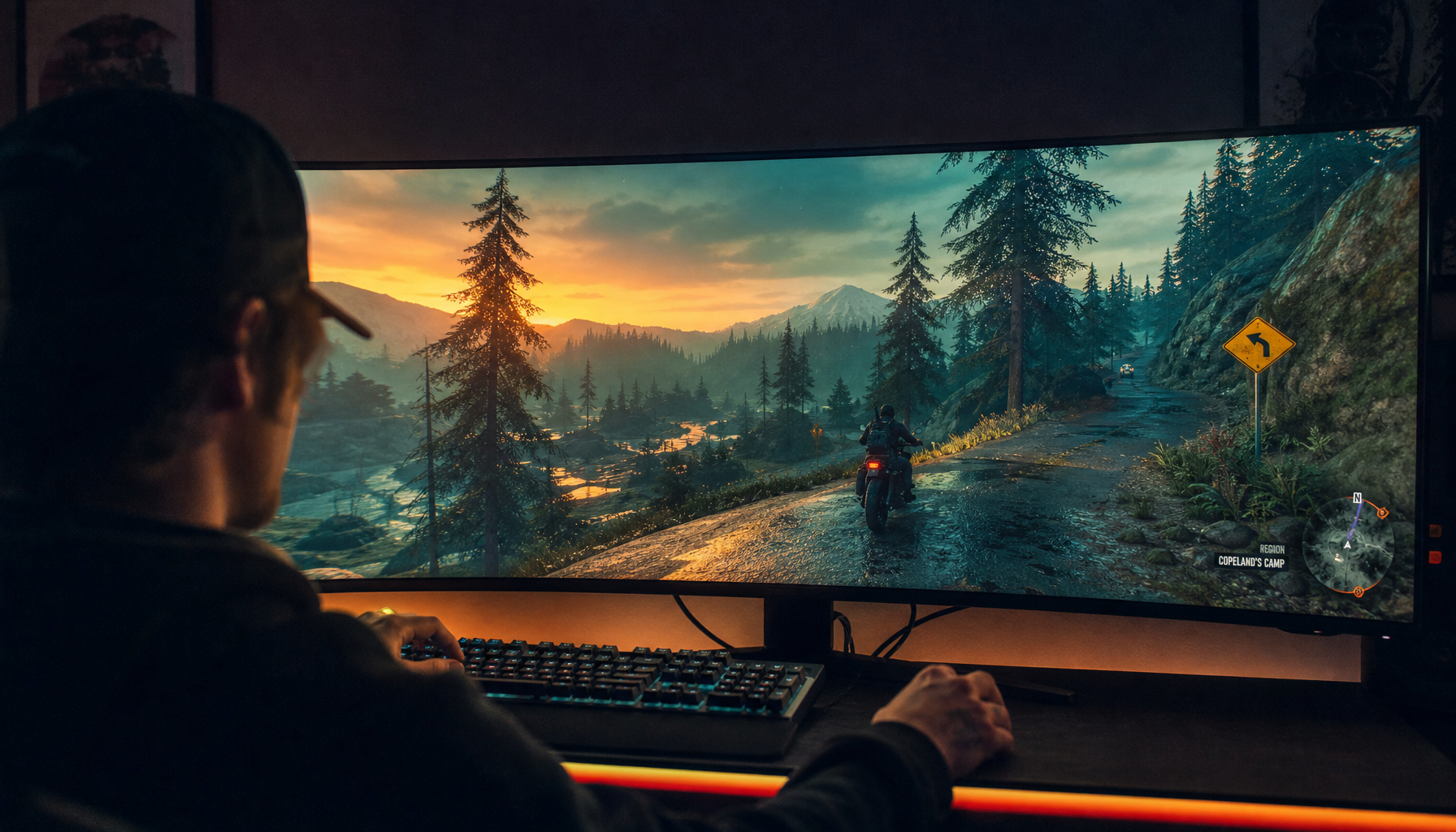
If you play cinematic single-player games, use sRGB for SDR titles and DCI-P3 or HDR mode for games with real HDR support. Check a sunset, a skin-tone close-up, a dark interior, and a bright snow or sky scene. If reds glow unnaturally, faces look sunburned, or grass turns fluorescent, step back to sRGB or reduce saturation. If the world looks richer without losing believable skin tones and shadow detail, DCI-P3 is doing useful work.
If you use one monitor for work, browsing, and gaming, save separate profiles. Use sRGB for email, documents, spreadsheets, web design, and shopping images because predictability matters. Switch to DCI-P3 or HDR only for content that benefits from it. This keeps your office display reliable while still letting your gaming monitor stretch when the game’s art direction actually calls for it.
When Hardware Calibration Is Worth It
Software calibration is enough for many players, but a colorimeter is the better tool when you edit video, compare multiple displays, stream with a calibrated preview monitor, or care about repeatable results. A monitor calibrator sits on the screen while software shows color patches, measures the output, and creates a profile so the computer can compensate. That matters because calibration cannot make a weak panel premium, but it can help the hardware perform as accurately as it allows.
Accuracy is often discussed through Delta E, where lower numbers mean less visible color error. Several monitor guides treat under 3 as good and under 1 as excellent. For gaming alone, you do not need to chase lab perfection, but if your portable smart screen, office display, and main gaming monitor all show the same character art differently, profiling can remove a lot of guesswork.
Final Calibration Judgment
Choose sRGB when you want consistency, readability, and trustworthy SDR color. Choose DCI-P3 when the game, movie, or HDR workflow is built to use wider color and your monitor handles it cleanly.
The best display setup is not the most saturated one. It is the one where the art style feels intentional, the UI stays readable, and the screen disappears into the experience instead of constantly reminding you that a preset is doing too much.