At the same screen size, 4K looks sharpest when pixel density, scaling, coating, subpixel layout, and viewing distance all work together; resolution alone does not decide the result.
You buy two 27-inch 4K monitors, line them up on the same desk, and one somehow makes text and edges look cleaner. A 4K panel carries four times the pixels of 1080p, but day-to-day clarity still changes with scaling, panel treatment, and how far you sit. Here’s how to tell which differences matter when you’re comparing gaming monitors, ultrawides, and portable displays.

Same Resolution Is Only the Starting Point
The baseline is pixel density
On paper, two same-size 4K monitors should start with the same sharpness because pixel density is driven by both resolution and screen size. A 4K monitor is 3,840 × 2,160, and when those pixels are packed into the same diagonal size, the pixel grid is equally tight in theory.
That theory is useful, but it is not the whole buying story. Once you move from spec sheets to real text, game HUDs, and browser windows, perceived sharpness starts depending on how the panel renders edges, how the screen surface diffuses light, and how the operating system presents text at your chosen scaling level.
Why two same-size 4K monitors still differ
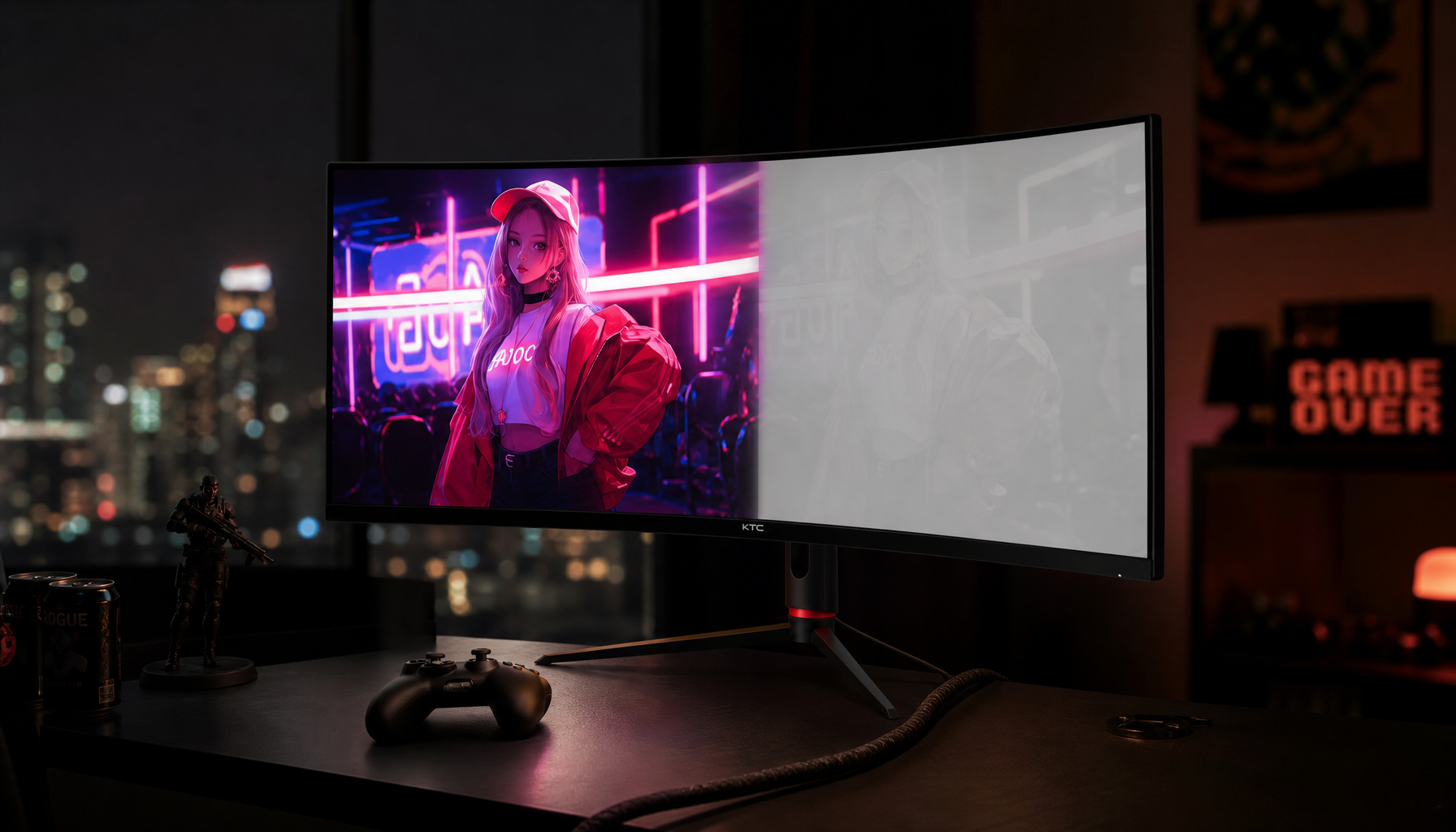
In real use, subpixel layout and screen coating can change text clarity even on same-size 4K panels. A standard RGB LCD usually plays nicely with an operating system’s text rendering, while BGR layouts and some OLED subpixel structures can introduce color fringing or softer letter edges. A heavier matte coating can also add a slight haze that makes white backgrounds and fine text look less crisp.
Panel setup matters too. Even two units of the same monitor model can show noticeably different color and tone if they are uncalibrated. Before blaming 4K itself, reset both screens to factory defaults, match brightness, contrast, RGB, and luminance settings, and confirm you are using comparable ports and graphics outputs.
Viewing Distance Changes What Your Eyes Can Resolve
Sharpness is not only on the screen
At the desk, viewing distance changes how much benefit you actually get from higher pixel density. If you sit farther back, the eye resolves less fine detail, so the jump from “good” to “extremely dense” pixels becomes harder to notice. That is why a 4K upgrade looks dramatic on some setups and modest on others.

A useful example comes from a same-PPI comparison at different distances. In that thought experiment, a 28-inch 2560 × 1440 monitor and a 21-inch 1920 × 1080 monitor both land at 104.9 PPI, but the larger screen placed about 33 inches away still delivers more pixels per degree than the smaller screen at about 25 inches. The takeaway is practical: equal PPI does not guarantee equal perceived crispness once distance and field of view change.
Why this matters for portable and large desktop monitors
In buying terms, the visible benefit of higher PPI shrinks on smaller screens or at longer viewing distances. A 15- to 16-inch portable 4K monitor can look exceptionally sharp because you use it close up, while a 32-inch desktop 4K display often depends more on where it sits on the desk than buyers expect.
This is also why same-size comparisons should happen at your real seating position. If one monitor sits slightly farther back because of its stand depth, curve, or desk layout, the sharpness gap you notice may have as much to do with geometry as with panel quality.
Text Clarity Depends on Scaling, Subpixels, and Coating
Scaling helps readability, but it changes the experience
For desktop use, an operating system often recommends scaling on 4K screens to keep text readable. In one real setup, a 32-inch 4K display ran at 150% scaling, which preserved readability while still offering more usable space than 1080p. On a 24-inch 4K monitor, many users end up much closer to 200% just to make icons, menus, and text comfortable.

That does not mean 4K becomes pointless. It means usable sharpness depends on how well your apps handle scaling and whether the smaller UI elements were the reason you wanted 4K in the first place. A 24-inch 4K panel can look extremely fine, but if you need aggressive scaling, some of the extra desktop space gets traded back for comfort.
Mixed-monitor setups can make a crisp screen feel awkward
In a desktop platform, display arrangement is based mostly on pixel resolution rather than physical inches. That is why a 27-inch 4K monitor and a 27-inch 1440p monitor appear as different-sized rectangles in Display Settings, and why the cursor can jump oddly between them even though the panels are physically the same size.
Lowering the 4K monitor to a 1440p-class output usually solves alignment at the cost of clarity, which is the wrong trade for most buyers. If you mix a 4K gaming monitor with a 1080p side display, it is smarter to keep the 4K screen native, test your scaling, and use layout fixes such as a portrait side panel or a display-alignment utility when needed.

Text rendering can favor one panel over another
Beyond scaling, non-RGB subpixel layouts can reduce compatibility with an operating system’s text tuning. BGR monitors can often be improved by selecting the BGR option in the platform’s font-tuning tool, while some WOLED panels look cleaner with that tool off, even though letters may lose some boldness.
Coating matters in the same way. Two 27-inch 4K monitors can share the same pixel count and still look different if one has a lighter anti-glare finish and the other has a grainier matte layer. Buyers who mainly read, code, or write all day should treat text-clarity behavior as a first-class spec, not a minor footnote.
Color, Contrast, and Motion Can Masquerade as Sharpness
Vivid is not always the same as sharp
When shoppers say one screen looks sharper, they often mean better contrast, HDR, and color accuracy make the image look more vivid. Higher contrast can make edges pop, and stronger factory tuning can make details feel more defined, even though the actual pixel structure has not changed.
That is especially common when comparing a bright gaming monitor to a dimmer office panel. The gaming display may appear “sharper” on a showroom wall simply because it is brighter, cooler, and punchier, not because its text rendering is better.
Motion clarity is a separate buying decision
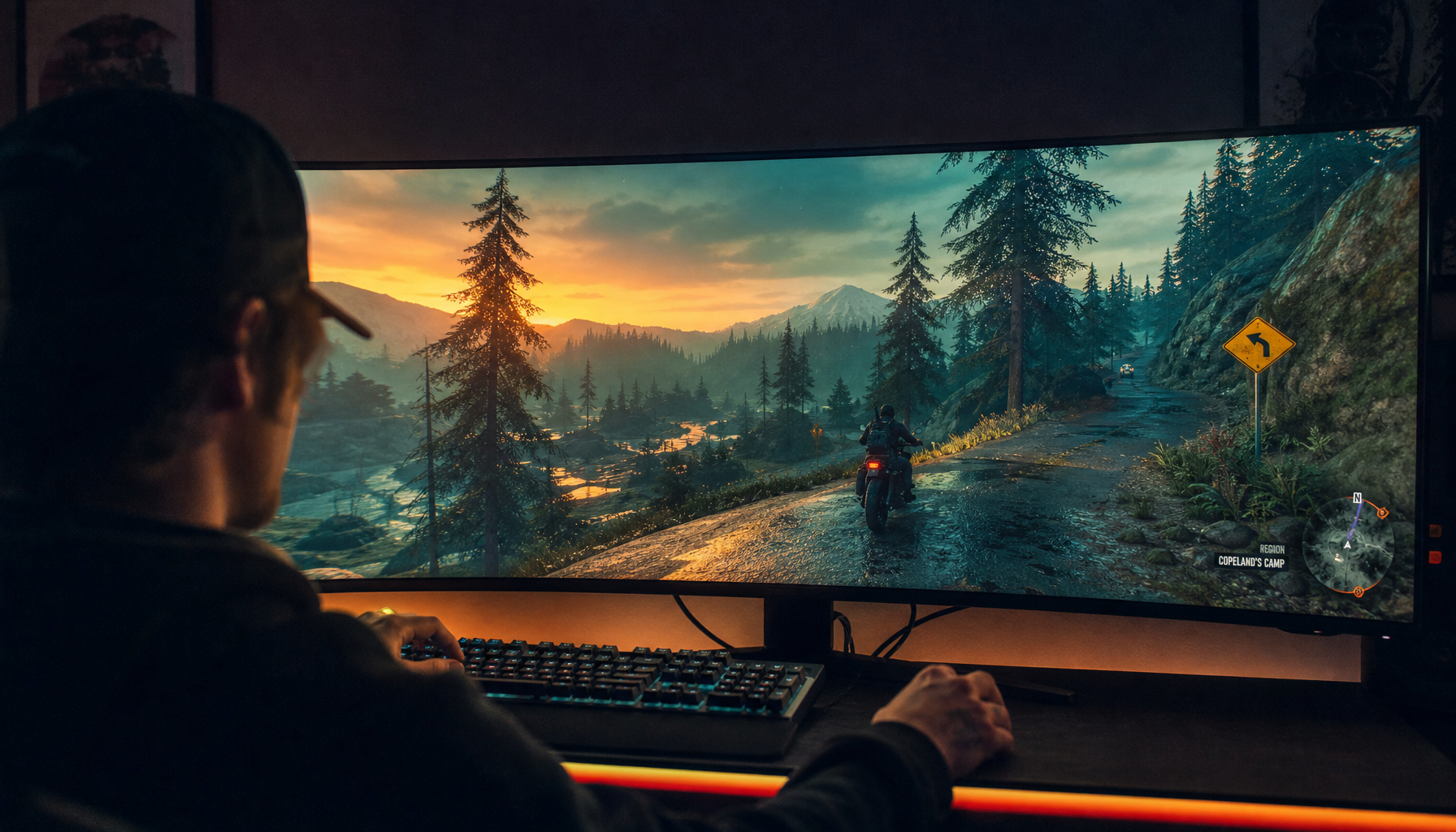
For gaming, high refresh rates improve smoothness, but input lag and response time still control how clear motion looks. That is why a 144Hz or 240Hz monitor can feel dramatically cleaner in a shooter or racing game without making static desktop text any sharper than another same-size 4K panel.
The best 4K gaming monitors balance both worlds. Many 4K monitors still target 60Hz, while faster 120Hz and 144Hz models need more bandwidth and a stronger graphics processor. If you cannot actually drive modern games at high frame rates, paying extra for extreme refresh will not solve a text-clarity problem.
How to Judge 4K Sharpness Before You Buy
Compare the whole stack, not one spec
The most reliable way to shop is to treat 4K sharpness as a stack of factors rather than a single number. Resolution gets you into the right category, but the better buying questions are: What scaling will I use, how close will I sit, how good is text rendering, and what kind of panel surface am I getting?
Parameter |
Why it changes perceived sharpness |
What to check before buying |
Pixel density |
Same-size 4K panels start from the same theoretical sharpness, but different sizes shift PPI fast |
Compare size and resolution together, not resolution alone |
Scaling |
Readability can improve while some apps or UI elements look softer |
Test the monitor at the scaling level you will really use |
Subpixel layout |
BGR and some OLED layouts can affect operating-system text rendering |
Read text-clarity reviews, not just image-quality scores |
Screen coating |
Heavy matte finishes can soften fine edges and white backgrounds |
Look for comments on haze, grain, or sparkle |
Viewing distance |
Extra density matters more when you sit close |
Match the monitor to your desk depth and stand placement |
Brightness and color shifts can make one screen seem “cleaner” |
Match factory settings and, if possible, calibrate |
|
Refresh and response |
Motion can look clearer without changing static sharpness |
For gaming monitors, separate text clarity from motion clarity |
Test the right content
A useful text check comes from a text-clarity method that uses black text on a white background at native resolution and default scaling. That simple test reveals coating, subpixel behavior, and font rendering much faster than a demo reel or wallpaper.

If you are comparing a 4K desktop monitor against an ultrawide alternative, do not let the wider screen distract you from the text test. Check browser tabs, spreadsheet gridlines, and small UI labels at your normal seating distance. For portable monitors, do the same test at the closer distance you would use on a hotel desk or coffee shop table.
Think through the full setup
On a real desk, mixed-resolution layouts can create cursor and window-travel annoyances. If your new 4K panel will sit beside a 1080p or 1440p screen, drag a browser, a code editor, and a game launcher across both monitors before deciding whether the sharper panel also feels practical.
Connection standards matter too. For higher-refresh 4K gaming monitors and USB-C portable monitors, make sure your graphics processor, dock, and cable choice can actually deliver the resolution and refresh you expect. A spec mismatch upstream can make a good display look underwhelming.
FAQ
Q: If two monitors are both 27-inch and 4K, why can one still look blurrier?
A: The usual reasons are different subpixel layouts, heavier matte coating, different factory presets, poor calibration, or text rendering that behaves differently at your chosen operating-system scaling level.
Q: Does a higher refresh rate make a 4K monitor sharper?
A: Not for static text or still images. Higher refresh mainly improves motion clarity, smoothness, and responsiveness, which matters more in gaming than in desktop reading.
Q: Is 4K worth it on a portable monitor?
A: It can be, especially if you sit close and care about dense text or photo detail. The tradeoff is that heavy scaling may reduce the extra workspace you expected from the higher resolution.
Key Takeaways
The sharpest-looking 4K monitor is usually the one that matches your desk distance, your scaling preference, and your text-clarity needs, not simply the one with the most aggressive marketing.
- Check the monitor at the scaling level you will actually use, not only at native 100%.
- Compare black text on a white background before judging movies or game footage.
- Treat coating and subpixel layout as real image-quality factors, especially for office work and coding.
- Keep a 4K monitor at native resolution whenever possible; lowering it to match another screen usually makes it look softer.
- For gaming monitors, separate static sharpness from motion clarity and buy the refresh rate your graphics processor can realistically drive.
- If you mix displays, test cursor travel, window movement, and text size across the full setup before you commit.