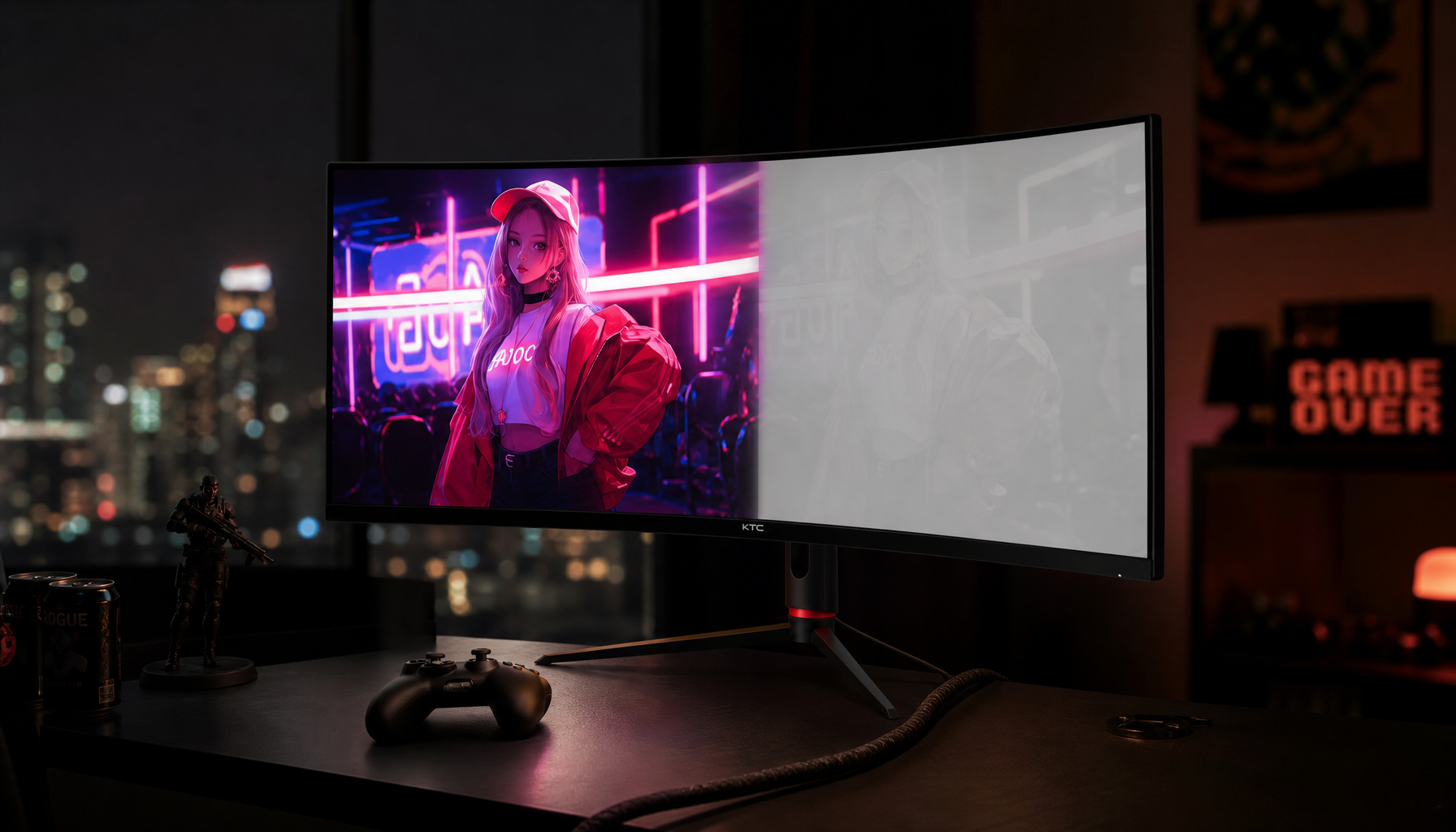
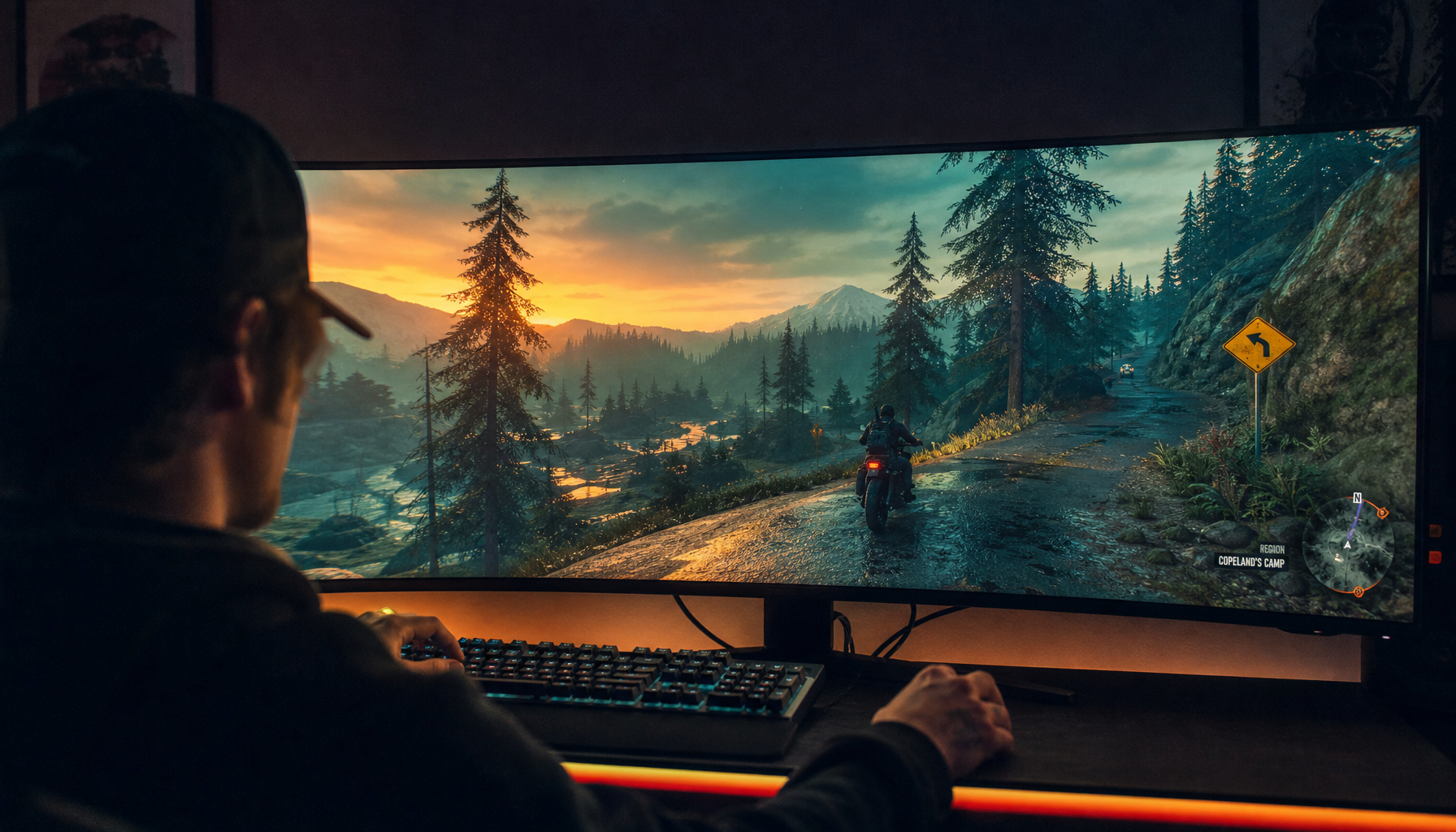
High peak brightness is useful for HDR and bright rooms, but it is rarely the setting that gives the clearest, most comfortable competitive view. In esports, many players lower brightness to keep eye fatigue down, maintain stable contrast, and make the screen fit the room instead of fighting it.

Ever finish a few matches with your eyes feeling cooked even though your gaming monitor is supposed to be an upgrade? That happens because a 350- or 400-nit display can still feel harsh in a dim room, and many long-session players end up performing better when the screen is tuned for comfort instead of maximum punch. The goal is simple: better visibility, less strain, and settings you can repeat every time you play.
Peak Nits Are a Capability, Not a Target
Brightness ratings describe headroom
A monitor’s brightness rating tells you how much light it can emit, not how bright it should be used for every game. For most desk setups, standard SDR brightness is already adequate around 250 to 350 nits, while 400+ nits is more useful when the room is bright or when HDR highlights matter. Competitive play usually happens in SDR, where usable brightness is more about control than maximum output.
A long-session indoor setup often ends up far below the monitor’s peak rating. One practical example from the discussion was a 350- to 400-nit monitor being used around 100 nits for comfort, with little image-quality loss unless brightness is pushed extremely low. That matches how many gaming monitor owners actually use high-refresh displays: they buy the brightness ceiling, then spend most of their time well under it. The same logic applies even on an HDR-capable model like a gaming monitor, where competitive players may still lower SDR brightness to match the room and reduce strain.
HDR priorities are different from esports priorities
Higher brightness matters most when you want HDR highlights to look dramatic or when the display must overcome a bright room. Testing referenced there treats 300+ nits as good for SDR and 600+ nits as a good HDR gaming result, which shows why spec sheets emphasize peak output. Those numbers matter for capability, but they do not mean an FPS player should leave the backlight near max.
Competitive players usually care more about repeatable tracking, shadow control, and visual comfort than cinematic flash. On a high-refresh-rate display, stable visibility across a two-hour session is often more valuable than extra sparkle in white UI elements, muzzle flashes, or bright skyboxes.
Lower Brightness Often Improves Endurance
Eye fatigue rises when the screen outshines the room
Brightness should match ambient light, and that matters even more during long ranked sessions. A company’s eye-strain guidance ties discomfort to brightness, color temperature, and flicker, and notes that long screen exposure can lead to dryness, irritation, blurred vision, and headaches. If your gaming monitor is far brighter than the room, your eyes keep adapting to a light source that feels more like a lamp than a screen.

Dark-room recommendations are much lower than many gamers expect. For low-light conditions, 80 to 120 nits is a common target, while a daylit room often lands closer to 140 to 160 nits. That gap explains why a monitor that looks “vivid” at default settings in a store can feel exhausting at home after 30 minutes of competitive play.
Real users often describe strain before they describe blur
One forum user moved from an older 24-inch 1080p 60 Hz TN monitor to several 240 Hz gaming monitors and reported eye strain within 15 to 30 minutes on every replacement, despite trying brightness changes, blue-light tools, lower refresh rates, driver resets, and different cables. The old display remained comfortable, which is a useful reminder that “newer” and “faster” do not automatically mean “easier on the eyes.”
A similar forum discussion described text becoming slightly easier to read when contrast was pushed very high, but the tradeoff was a glowing, painful image. That pattern is familiar on bright gaming monitors: aggressive brightness or contrast may create a stronger first impression, yet reduce endurance when you are actually grinding matches.
Contrast and Target Visibility Matter More Than Raw Brightness
More light does not automatically reveal more detail
Contrast ratio determines the gap between black and white, which is what gives depth to shadow areas, highlights, and fine detail. If brightness is too high for the room, dark scenes can look washed rather than clearer, and the extra light can reduce the practical benefit of the panel’s native contrast. In competitive shooters, that can make enemy silhouettes less stable instead of more obvious.
Practical calibration advice is to use test images until whites look clean and blacks stay black without a gray haze. That is a better goal than chasing the brightest possible picture. When the monitor is balanced correctly, crosshairs, HUD elements, and moving targets tend to stay readable without blasting your eyes.
Brightness can hide the balance you are trying to preserve
Forum examples from FPS players show a common pattern: default brightness at 100 feels too intense, so users drop it to something closer to 50 while leaving contrast moderate. That does not prove a universal setting, but it does show how often the factory default is brighter than real play demands.
Competitive setups also favor consistency. Many players would rather keep a controlled SDR image with predictable black levels than run a brighter picture that changes their perception of shadows, white text, or recoil flashes from one room condition to another.
The Right Setting Depends on Room, Panel Behavior, and Game Type
Start with the room, not the spec sheet
A practical brightness rule is to make monitor white look close to a sheet of white paper under the same light, or slightly brighter in daylight. That works well for gaming monitors because it anchors the screen to your actual room instead of to the marketing number on the box. If sunlight or a bright ceiling fixture is hitting the panel, the fix is often room control first, then brightness.
Operating system support notes also matter here: external monitor brightness usually has to be changed on the monitor itself, not with the system slider. If your display has content-adaptive brightness or HDR behavior changing how the image looks, turning those variables off during competitive play can make the screen easier to tune and easier to trust.
Different use cases justify different targets
The sweet spot changes with the kind of display and the way you use it. A 24-inch esports monitor in a dim room can be comfortable near 80 to 120 nits. A 27-inch or 34-inch ultrawide monitor in a brighter office-style room may need closer to 140 to 160 nits so the image does not look dull. A portable monitor used on the road may need even more if you cannot control room light.
Here is a practical starting table for high-refresh-rate displays:
Setup |
Starting brightness target |
Why it works |
Watch for |
Dark room, 24-inch to 27-inch esports monitor |
80 to 120 nits |
Reduces glare and fatigue during long sessions |
Washed blacks if contrast is mis-set |
Normal indoor desk with some daylight |
120 to 160 nits |
Keeps whites clean without over-lighting the room |
Reflections from windows |
Bright room or overhead lighting |
160 to 220 nits |
Helps preserve visibility against ambient light |
Eye fatigue if used after dark |
HDR single-player gaming |
220+ nits in SDR menu, HDR as needed |
Uses the panel’s peak capability more effectively |
Overly intense for competitive SDR play |
Portable monitor in uncontrolled lighting |
180 to 250 nits |
Compensates for travel and public-space glare |
Battery drain and comfort tradeoffs |
How to Tune a Gaming Monitor for Competitive Play
Use a short adjustment routine
A forum example shows how easily brightness can end up too high in a bright room, with one user running 80/100 brightness before asking whether the image was really optimal. Menu numbers are not standardized across brands, so the better method is to tune by result, not by percent.
Use this checklist: - Set the room lighting you normally play in before touching the monitor. - Turn off HDR for competitive SDR games unless you specifically need it. - Lower brightness until white menus stop feeling glaring, then fine-tune upward only if dark scenes become hard to read. - Keep contrast near default unless a test pattern shows clipping or gray blacks. - Check a dark map, a bright map, and a text-heavy menu before saving the preset.
Build separate presets when your use changes
Minimum brightness behavior matters because many users prefer very low output in dark rooms, sometimes around 10 to 20 nits, while SDR performance above 300 nits is mainly a capability benchmark. That is a strong case for storing more than one preset on a gaming monitor if it allows it.
A useful setup is one preset for ranked play at night, one for daytime gaming, and one brighter mode for HDR or media. On ultrawide monitors and larger high-refresh displays, this matters even more because a bigger bright surface can feel harsher at the same nit level than a smaller screen at the same desk distance.
FAQ
Q: Does lowering brightness make enemies easier to see?
A: Sometimes, yes. If your current setting is too bright for the room, lowering it can improve perceived contrast and reduce haze in dark areas. It does not create extra detail by itself, but it can make the panel’s native contrast easier to use.
Q: If my monitor is rated for 400 nits, should I use all of it for esports?
A: Usually no. That rating is useful headroom for bright rooms and HDR, but most competitive SDR play is more comfortable well below peak brightness.
Q: Should I change brightness in the operating system or on the monitor?
A: For most external gaming monitors, use the monitor’s on-screen display. Support notes indicate that the built-in brightness slider often does not control external displays directly.

Practical Next Steps
The practical answer is to treat high nit output as reserve power, not as your default setting. Competitive players lower brightness because the best-performing image is usually the one that matches the room, preserves contrast, and still feels comfortable after multiple matches.
If you want one starting point, set your gaming monitor for the room you actually play in, aim around 80 to 120 nits for a dim setup or 140 to 160 nits for a daylit desk, and judge the result on two things: whether dark targets stay readable and whether your eyes still feel normal after an hour.