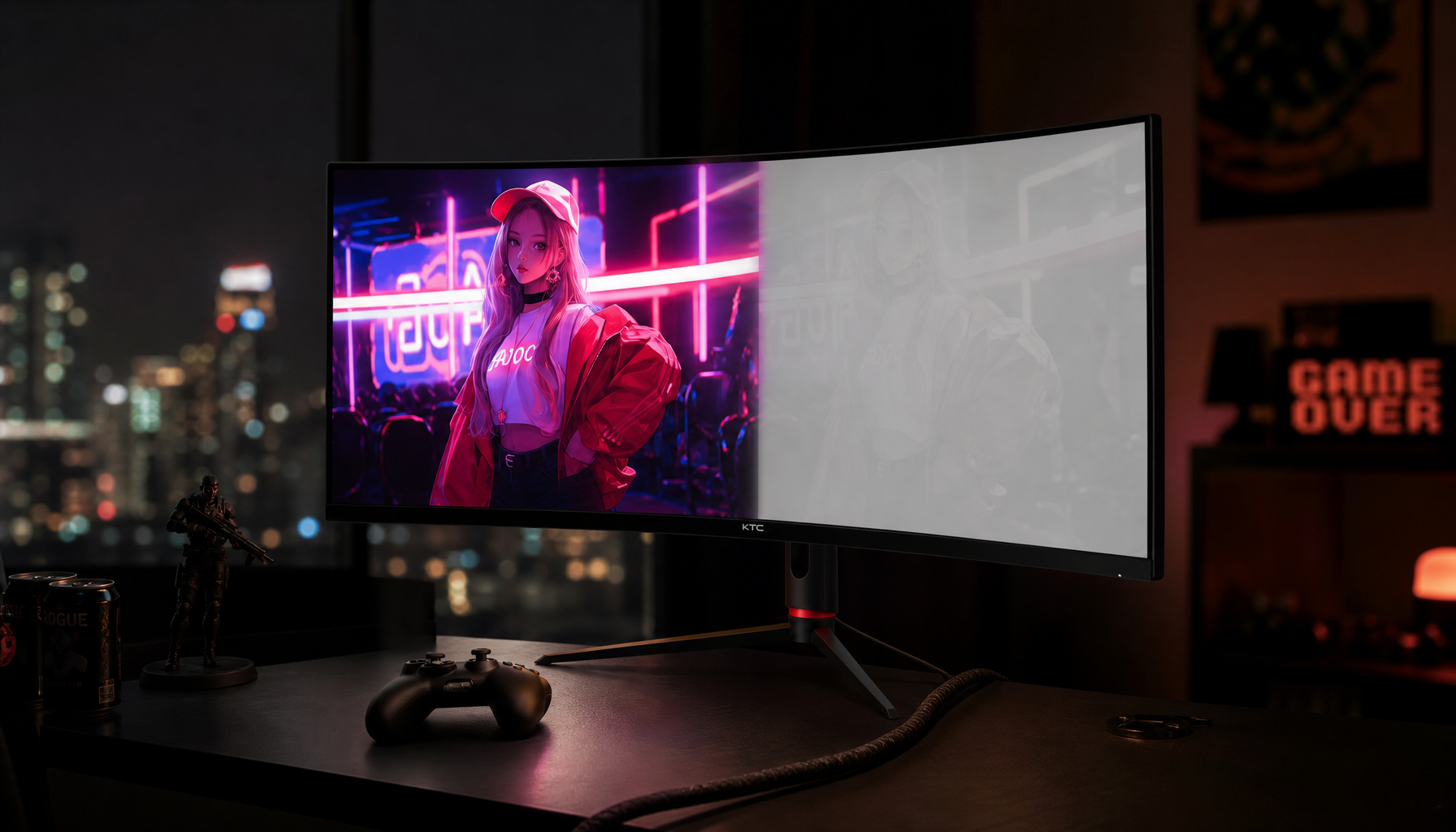
Black levels shift between HDR and SDR because each mode uses different brightness mapping, tone curves, color handling, and display processing. The result depends on the panel, dimming hardware, system settings, and whether the content was actually made for HDR.
Does your OLED game look inky in SDR, then oddly gray on the desktop with HDR enabled? In a well-tuned HDR game or movie, you can gain brighter highlights and deeper scene depth. In ordinary office apps, the same mode can reduce perceived contrast and make blacks look less stable. Here’s how to tell whether the issue is your monitor, your settings, or the content pipeline.
HDR Black Levels Are Not Just “Darker SDR”
The core difference is that HDR expands brightness, contrast, and color range beyond Standard Dynamic Range, while SDR is built around a more limited and predictable image range. HDR does not simply turn the backlight up or make black darker. It changes how the monitor interprets the entire signal, from shadow detail to specular highlights.
In SDR, most desktop content expects a familiar tone response, often close to a 2.2 gamma curve for general computer use. In practice, this makes spreadsheets, browser tabs, dark UI panels, and game menus look consistent because the operating system, app, GPU, and monitor are usually speaking the same visual language.
HDR uses a different transfer behavior, usually designed to represent real scene brightness more directly. When the monitor receives HDR, it has to fit that content into its actual hardware limits. A 1,000-nit HDR scene on a 400-nit portable screen cannot be shown literally, so the display compresses highlights and may also lift or reshape shadows to preserve detail.
That is why black can look better, worse, or simply different. HDR is a larger canvas, but the monitor still has to paint inside its real panel limits.
The Main Reasons Blacks Shift Between HDR and SDR
Tone Mapping Changes Shadow Detail
Tone mapping adapts HDR content to a monitor’s brightness, contrast, color gamut, and black-level limits. If tone mapping is conservative, dark areas may look raised and gray so you can still see shadow detail. If it is aggressive, blacks may look dramatic, but dark textures can disappear.
A simple gaming example is a night scene with a bright campfire. In SDR, the monitor may keep the whole image inside a narrow range, making the fire less intense but the nearby shadows easier to control. In HDR, the fire may appear much brighter, so the monitor has to make harder decisions about the dark areas around it. On a strong OLED or Mini LED display, that can look immersive. On a weak HDR monitor, the same scene can look foggy.
This is why two monitors can both accept HDR10 yet produce different black levels. HDR10 describes the content signal, but it does not guarantee that the panel can reproduce that signal with strong contrast.
Panel Type Sets the Floor
OLED monitors generally offer the best HDR black levels because individual pixels can dim independently, avoiding the haloing and gray glow common on backlit LCDs. Mini LED can also perform very well when local dimming is effective, while standard IPS and many basic portable monitors struggle because their backlight remains active even when the image calls for black.

Panel behavior matters more than the HDR toggle. A 32-inch 4K OLED gaming monitor with pixel-level control can make a starfield look clean and deep. A budget HDR-compatible IPS portable screen may show the same starfield with raised black, especially in a dark room, because its panel cannot physically shut off light behind each star.
Display Type |
Why Black Levels Differ in HDR |
Best Use Case |
OLED |
Pixel-level dimming gives near-black precision and minimal haloing |
HDR games, movies, dark-room immersion |
Mini LED LCD |
Local dimming zones can deepen blacks, but blooming depends on zone control |
Bright HDR scenes, mixed productivity and media |
VA LCD |
Native contrast is usually stronger than IPS, but HDR depends on dimming and tuning |
Budget contrast-focused setups |
IPS LCD |
Wide viewing angles, but weaker native black depth without strong local dimming |
Office work, shared screens, SDR reliability |
Portable HDR screen |
Often limited by brightness, power, and lack of local dimming |
Travel media, demos, SDR productivity |
Local Dimming Can Help or Hurt
Local dimming is important for LCD HDR contrast because it lets one region of the screen darken while another remains bright. Without it, an LCD panel often has to raise the whole backlight for HDR highlights, which can make black areas look washed out.

The catch is zone quality. Edge-lit dimming with only a few zones may darken broad regions but cannot precisely follow small objects. Full-array local dimming is better, but even then, a white cursor over a black desktop can cause a visible glow around the pointer. In SDR, that same cursor may look less dramatic because the monitor is not pushing the backlight as hard.
For office productivity, this is one reason many users prefer SDR for daily work. A black code editor, dark spreadsheet theme, or design tool side panel should look stable for hours, not shift as bright UI elements appear and disappear.
Why System HDR Can Make Blacks Look Gray
System HDR should generally be enabled only when using HDR content, especially games and video, because SDR desktop apps can look inaccurate or washed out when mapped into HDR output. This is one of the most common causes of “HDR blacks look worse” complaints.
Most office apps, web pages, email clients, dashboards, and productivity tools are still designed around SDR. When HDR is left on all day, the operating system has to place that SDR content inside an HDR container. Depending on the SDR brightness slider, monitor firmware, GPU driver, and app behavior, black UI backgrounds may appear elevated while whites feel dimmer than expected.
A practical example is a dark browser tab next to a bright document window. In SDR, the monitor uses one familiar contrast relationship. In HDR desktop mode, the system may prioritize highlight headroom, so normal white backgrounds no longer map to the display’s full punch. The result can feel like the whole desktop is flatter, even though HDR video in a streaming app looks excellent.
For a productivity-first workflow, keep SDR as the default. Switch HDR on for native HDR games, movies, photo review, video work, or visual demos where the content is actually built for it.
Why HDR Games Can Look Better Than HDR Desktop
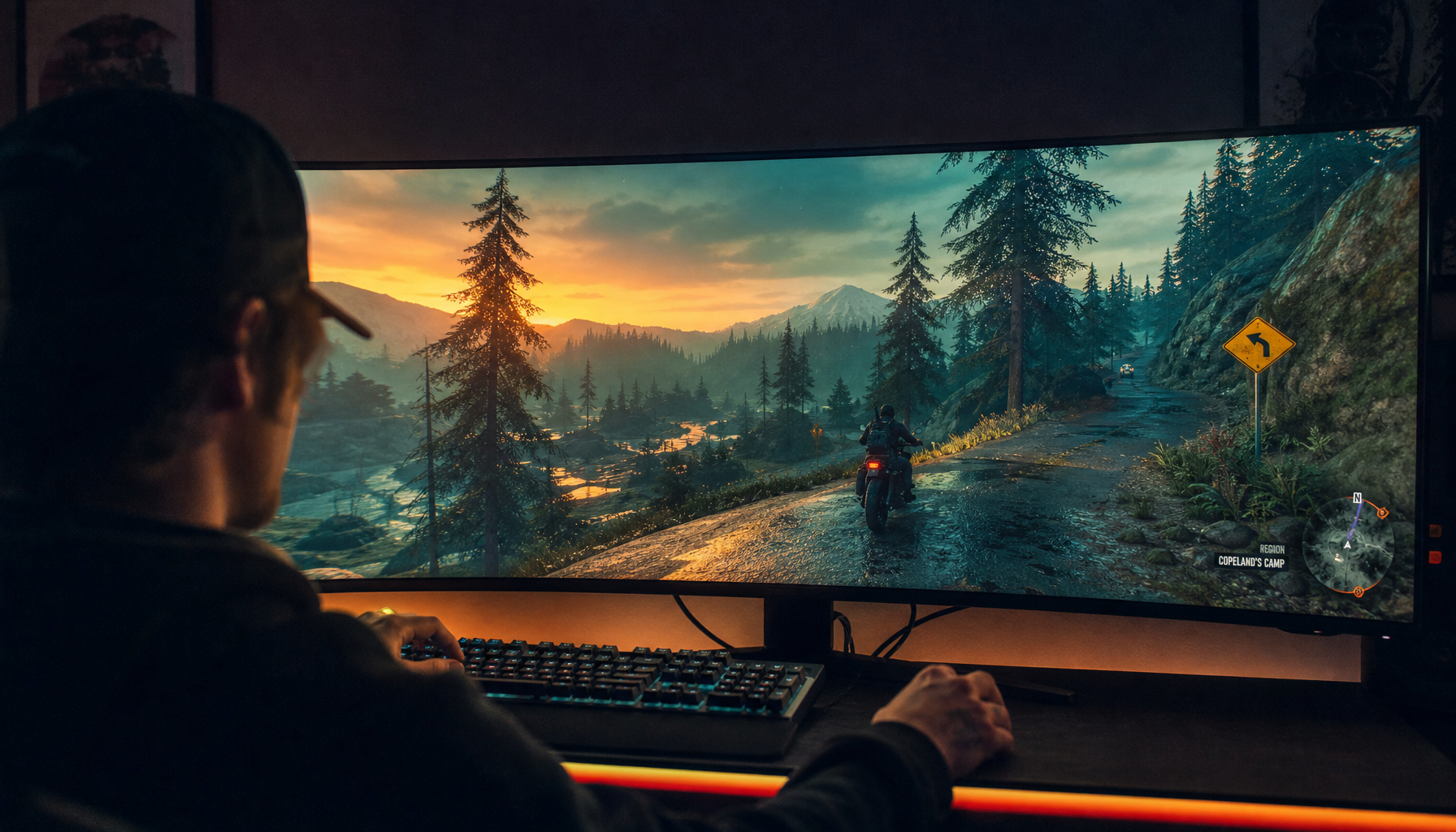
HDR gaming monitors should meet gaming performance needs such as refresh rate, response time, HDR10 support, 10-bit signal handling, wide color coverage, brightness, and local dimming. When those pieces line up, HDR games can make black levels feel more dimensional because shadows, reflections, lamps, neon, skyboxes, and explosions can occupy different brightness layers.
Game engines also often provide HDR sliders for peak brightness, paper white, UI brightness, and black level. These controls matter. If paper white is too high, the whole image may look lifted. If black level is set too low, dark corners can crush and hide detail. If peak brightness is set beyond what the monitor can realistically show, highlights may clip and the rest of the image may look oddly compressed.
For competitive play, SDR can still be the smarter choice. A tactical shooter benefits from consistency, low latency, stable visibility, and predictable gamma more than cinematic highlight impact. For story-driven games, racing, flight simulation, open-world titles, and HDR-mastered media, HDR can be worth the switch.

HDR Badges Explain Some of the Difference
HDR certification sets performance tiers for monitors, laptops, and tablets, but HDR support alone does not guarantee strong HDR image quality. Entry-level certification can mean the monitor accepts an HDR signal and reaches a basic brightness level, but it may not deliver convincing black depth or highlight separation.
Higher tiers, OLED True Black certifications, and strong independent test results are more meaningful for black-level expectations. OLED-focused True Black tiers are especially relevant because they address very low black levels differently than conventional LCD HDR tiers. Still, certification is not a complete review. Local dimming quality, tone mapping, small-highlight handling, and real retail-unit behavior can vary.
A value-oriented buying rule is simple: do not pay extra for the HDR label alone. Look for actual peak brightness, sustained brightness, contrast behavior, DCI-P3 coverage, local dimming type, OLED or Mini LED hardware, and reviewer measurements.
Portable Smart Screens Need Extra Skepticism
Portable monitors can support HDR, but not all HDR-labeled models deliver meaningful HDR performance. Many portable displays are constrained by USB-C power, heat, battery behavior, compact backlights, and limited dimming hardware.
That does not make HDR useless on a portable screen. It can help with client demos, media playback, gaming on the go, and visual previews. But for spreadsheets, coding, browser research, and laptop companion work, SDR brightness stability, text clarity, USB-C reliability, and color consistency usually matter more.
If a portable display advertises HDR but only reaches modest brightness and lacks strong contrast, expect HDR blacks to look lifted in a dark hotel room or airplane seat. In that case, SDR may look cleaner, calmer, and more usable.
Practical Setup: When to Use HDR Versus SDR
A reliable setup starts with mode discipline. Use SDR for desktop work, writing, coding, spreadsheets, dashboards, email, web browsing, and long sessions where stable whites and consistent black text matter. Use HDR for native HDR games, HDR movies, visual review, content creation, and demos where expanded brightness and color are part of the experience.
If blacks look gray in HDR, first lower the SDR content brightness slider in your system settings, then run the built-in HDR calibration tool if one is available. Next, check the monitor’s HDR picture mode. A “Vivid” or “FPS” HDR preset may lift shadows for visibility, while a cinema or accurate HDR mode may preserve deeper blacks. In games, calibrate inside the game after the monitor mode is stable.
If blacks crush in HDR, raise the in-game black level or shadow detail slightly, but avoid using GPU control panels to force broad changes before checking the game and monitor settings. If the screen briefly goes black when switching between SDR and HDR, that can be normal because the display and GPU are renegotiating the signal. Repeated long blackouts, random signal loss, or washed-out HDR after boot point more toward driver, cable, firmware, or handshake problems.
Pros and Cons of HDR Black-Level Behavior
Mode |
Pros |
Cons |
SDR |
Predictable desktop contrast, stable blacks, easy calibration, reliable office use |
Limited highlight impact, narrower color and brightness range |
HDR on strong OLED or Mini LED |
Deeper scene depth, brighter highlights, better cinematic immersion |
Requires correct content, calibration, and mode control |
HDR on basic LCD or weak portable display |
Can accept HDR sources and offer mild visual lift |
Blacks may look gray, highlights may compress, desktop may wash out |
HDR for competitive gaming |
Can improve some shadow and lighting cues in supported games |
May reduce consistency versus a tuned SDR esports mode |
FAQ
Should I leave HDR on all the time?
No, not for most monitor workflows. Leave SDR on for daily desktop use and enable HDR when you launch HDR games, movies, or creative review tasks that benefit from expanded brightness and color.
Why does my OLED look darker in SDR but brighter gray in HDR desktop mode?
OLED can produce excellent black, but HDR desktop mode still depends on operating system mapping, app behavior, and brightness settings. If SDR content is being lifted inside HDR output, black UI areas can look less deep even though the panel itself is capable of true black.
Is entry-level HDR certification enough for good black levels?
Usually not by itself. Convincing black levels depend more on OLED pixel control, effective local dimming, strong contrast, and competent tone mapping than on basic HDR signal support.
Final Word
Black-level differences between HDR and SDR are a signal-chain issue, not a mystery setting. Treat SDR as your precision and productivity mode, treat HDR as your immersion mode, and judge your monitor by real contrast hardware and calibration behavior rather than the badge on the box.