HDR can look grainier in dark scenes because it exposes more near-black detail, follows stricter brightness mapping, and often reveals noise that SDR hides through compression, raised brightness, or simpler tone mapping.
Does your premium gaming monitor make a night scene look textured, speckled, or “dirty” while the SDR version looks smoother? In practical display tuning, switching the same game or movie between SDR, HDR10, and calibrated HDR often shows that the noise is not added by HDR alone; it is usually uncovered by the HDR pipeline. You’ll learn how to tell source noise from setup problems and what to adjust first.
HDR Is Not Just Brighter SDR
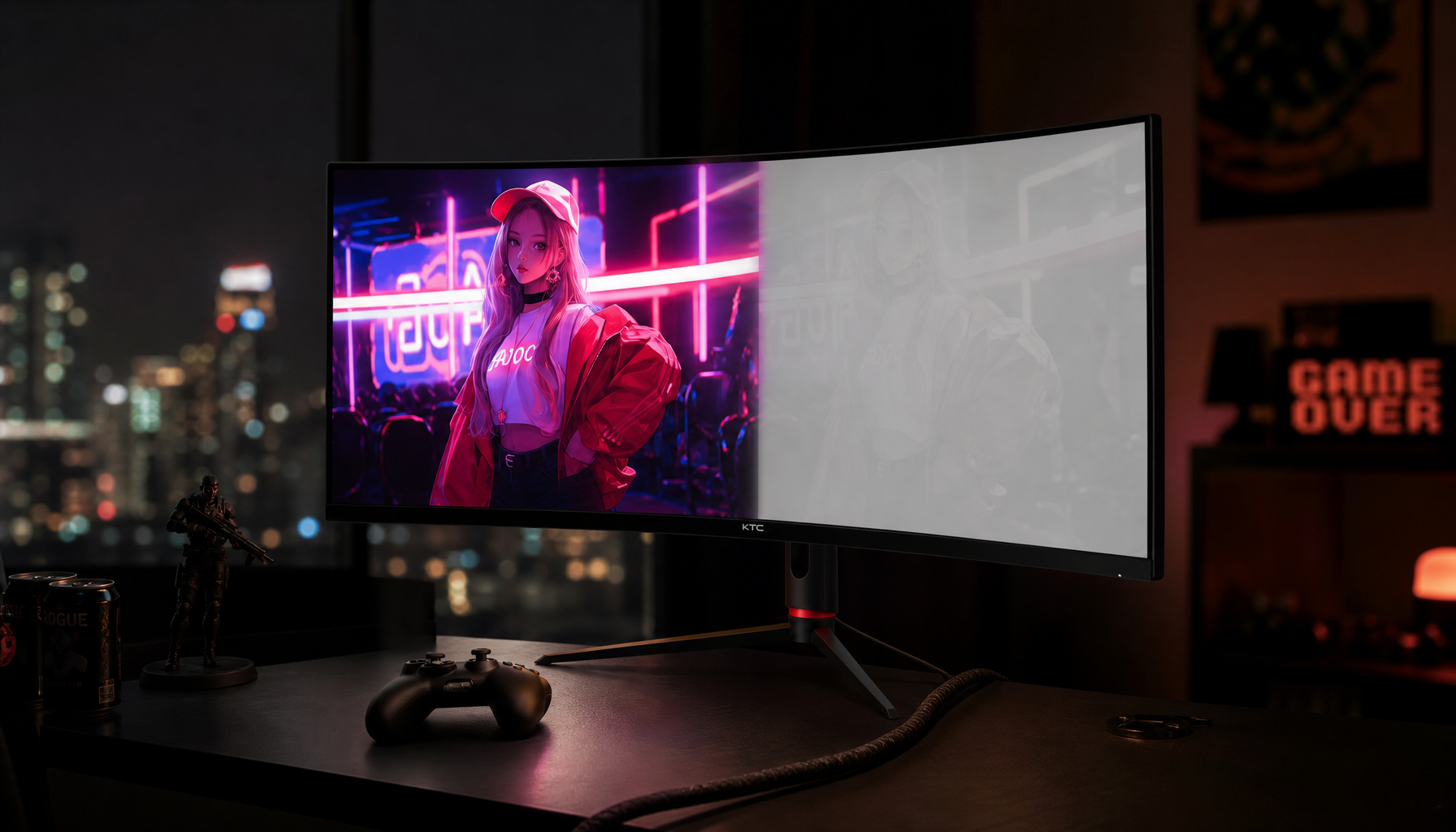
HDR expands the range between deep shadows and bright highlights, while SDR works inside a narrower brightness and color container. That is why HDR can show more intense reflections, neon, sparks, and shadow transitions when the display is capable enough for wider brightness, contrast, and color range. That wider range is the advantage, but it also makes weak parts of the image more visible.
SDR often looks cleaner because it compresses the scene into a smaller range. If a dark wall, black jacket, or cave corner has camera noise, compression artifacts, or low-bit shadow gradients, SDR may bury those flaws in flatter blacks. HDR is more demanding. It tries to preserve subtle differences near black, so the same flaws can become visible as grain, crawling noise, or blocky patches.
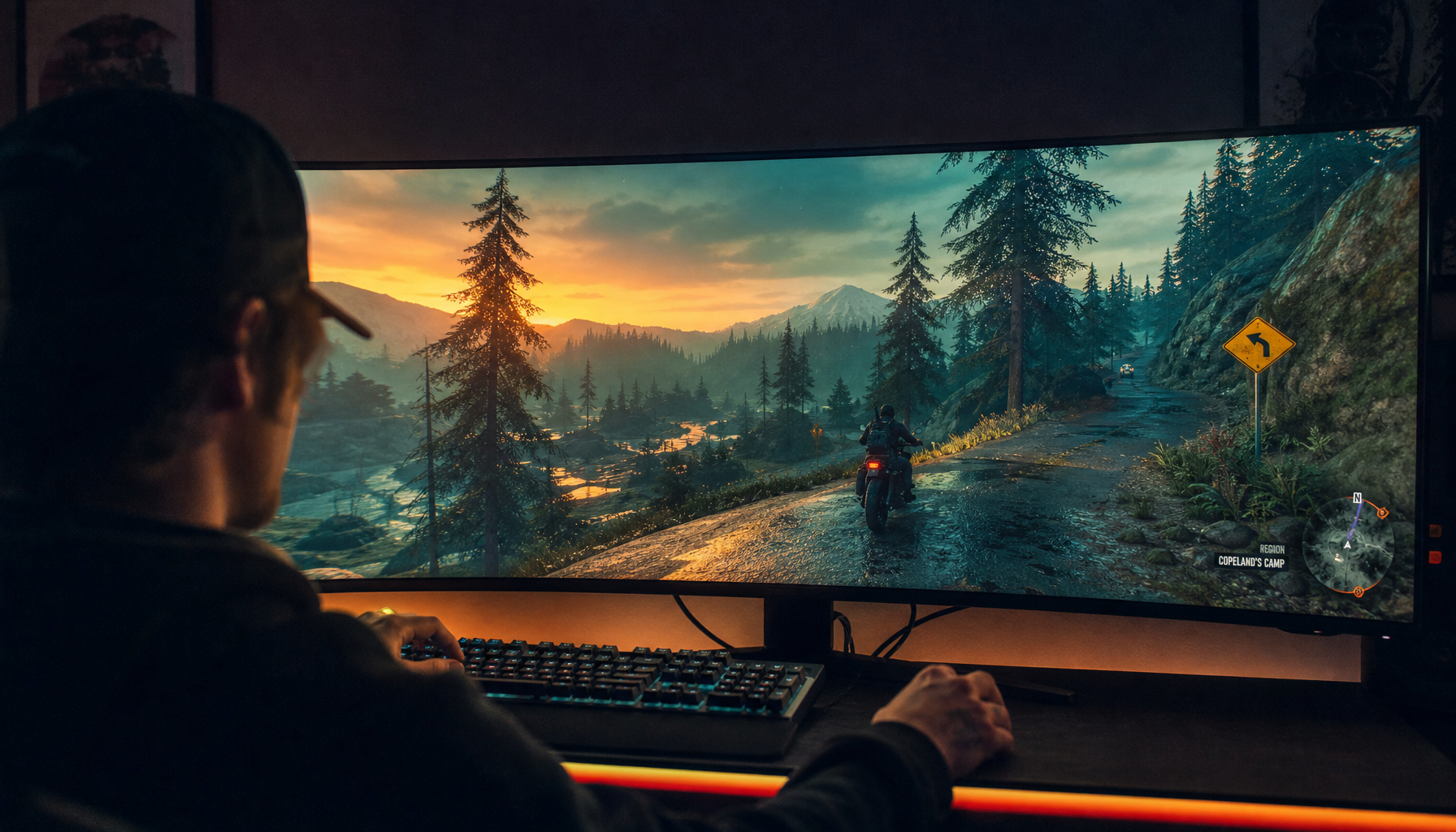
For a simple example, imagine a dark game corridor with a bright sign at the end. In SDR, the corridor may be lifted enough that the whole scene looks evenly visible, but the sign has less punch. In HDR, the sign can stay bright while the corridor sits closer to true dark. If the monitor or game tone mapping then raises the lower shadows slightly, the texture that appears may be real shadow detail, video noise, or a mix of both.
The Main Reasons HDR Dark Scenes Look Noisier
HDR Reveals Noise Already in the Source
HDR does not clean footage by itself. If a movie was shot in low light, if a game uses noisy screen-space effects, or if a stream is heavily compressed, HDR can make those flaws easier to see. Photo HDR workflows show the same principle: combining multiple RAW exposures can carry accumulated noise into a tonemapped 16-bit image, and the cleanup often requires targeted noise reduction rather than a global brightness change.
This matters for streaming and PC playback because dark scenes are hard to encode efficiently. A flat blue sky is easy to compress; a dim room with smoke, film grain, moving shadows, and black clothing is much harder. On a sharp 27-inch or 32-inch monitor viewed from desk distance, compression noise that would be less obvious on a living-room TV can stand out quickly.
A useful test is to pause the same dark scene. If the speckles freeze with the image, you are probably seeing film grain, game rendering noise, or compression artifacts. If the noise changes when you move a window, toggle HDR, or adjust black level, the display pipeline is involved.
Tone Mapping Can Lift the Wrong Parts of the Image
Tone mapping is the process of fitting HDR content into the brightness and color limits of your screen. Baseline HDR formats use static metadata, while dynamic HDR formats can adapt more precisely scene by scene. That difference can help midrange displays handle difficult scenes with fewer compromises.
The problem is that no monitor can perfectly reproduce every HDR master. If the content expects a 1,000-nit or brighter display and your monitor has weaker contrast, limited local dimming, or a conservative HDR mode, the tone-mapping curve has to choose what to protect. It may preserve highlight detail while lifting shadows, or it may crush blacks to keep the image punchy. Either choice can make dark scenes look worse than SDR.
This is why two monitors with the same “HDR supported” label can behave very differently. An entry-level HDR monitor may accept HDR metadata, but without meaningful local dimming or strong contrast, it can raise blacks and expose gray noise. A strong OLED or Mini-LED panel can usually separate near-black tones more cleanly, though OLED can still reveal source grain because its black floor is so low.
Desktop HDR Can Make SDR Content Look Wrong
On a PC, HDR handling depends on the operating system, GPU, monitor EDID data, app behavior, and the monitor’s HDR mode. The operating system can use monitor color information and content metadata for source-side tone mapping before the desktop image is composited, which means different app windows can be mapped before they are combined on screen.
That is technically powerful, but it also explains why the desktop can look dim, washed out, or oddly noisy when HDR is left on all day. SDR apps, browsers, office tools, and non-HDR videos are not always improved by an HDR desktop. In many setups, SDR is still the cleaner mode for productivity, coding, spreadsheets, and web browsing, while HDR should be reserved for native HDR games and video.
A practical rule works well: use SDR for work and competitive play where consistency matters, then toggle HDR before launching a native HDR game or movie app. Built-in HDR calibration tools can also help, and the monitor’s on-screen HDR preset should match the use case instead of relying on a vague “HDR effect” or dynamic contrast mode.
Why SDR Can Look Smoother Even When It Has Less Detail
SDR’s smoother appearance is sometimes a tradeoff, not a win. SDR uses a narrower range, so dark areas can be pushed into fewer visible steps. That can hide mosquito noise, film grain, and shadow dithering. It can also hide real detail.
HDR is more like turning on a brighter inspection light for the image pipeline. In a well-mastered night scene, you should see black clothing separated from a dark wall, faint texture in clouds, and small highlight points that do not wash out the frame. In a weak HDR presentation, you may instead see raised blacks, shimmering shadows, and low-level gray fizz.
What you see |
Likely cause |
Best first move |
Fine, fixed grain in a movie |
Source film grain or low-light camera noise |
Leave it unless it distracts; avoid over-sharpening |
Crawling blocks in streaming |
Compression artifacts |
Raise streaming quality, use wired internet, or test a disc/local file |
Gray haze across blacks |
Raised black level or weak local dimming |
Change HDR preset, lower black level carefully, disable dynamic contrast |
Shadows crushed with no detail |
Tone mapping too aggressive |
Run HDR calibration and adjust in-game black/white points |
SDR looks normal, HDR desktop looks washed out |
SDR content inside HDR desktop |
Use SDR for desktop work and HDR only for native HDR content |

Display Hardware Decides How Clean HDR Can Look
A capable HDR display needs more than a high peak-brightness number. Dark-scene HDR depends heavily on contrast, black level, local dimming behavior, and accurate tone mapping; high brightness alone cannot fix raised blacks or weak shadow separation.

OLED monitors excel in dark rooms because each pixel can dim independently. That gives them excellent black level control, which helps night scenes look deep and stable. Mini-LED monitors can get brighter and often look spectacular in high-impact HDR scenes, but their local dimming zones may create blooming, haloing, or fluctuating shadow detail. Basic edge-lit LCD monitors with HDR input support often deliver the weakest HDR experience because they cannot make highlights bright and blacks deep at the same time.
Certification helps, but it is not the whole story. An HDR tier can tell you something about brightness and capability, yet real HDR quality still depends on the panel, firmware, dimming algorithm, calibration, and content. Independent visual testing remains important because HDR demos can be misleading if the SDR comparison is poorly configured; one comparison found that altered SDR monitor settings made SDR look unfairly weak until the display was reset.
Settings That Usually Reduce HDR Noise
Start with the signal chain. HDR needs compatible content, a capable display, correct source settings, and adequate cabling; for 4K at 60 Hz HDR, HDMI 2.0-class bandwidth is commonly treated as a baseline for the full signal chain. If any part of that chain is wrong, the image can look dull, noisy, or unstable.
Then tune in a consistent order. Confirm that the content is real HDR, not SDR forced through an HDR effect mode. Enable HDR in the operating system, app, and game only when needed. Run HDR calibration or the console HDR setup so minimum black and peak white are not guessed. Use the game’s own HDR sliders in a known scene rather than maxing everything out. Disable dynamic contrast, black stretch, and artificial sharpening if they make shadows pulse or sparkle.
Room lighting is the quiet variable many users miss. HDR dark scenes are mastered for controlled viewing, and a bright room raises your perceived black level. If a monitor is on a desk near a window, the darkest parts of an HDR game may appear both too dim and too noisy. Lowering room light, reducing screen reflections, and avoiding an overly bright bias light can do more than another round of slider adjustments.

For PC gaming, use a repeatable test scene. Stand in the same dark area, keep the camera still, and compare SDR, HDR400, HDR1000, or your monitor’s equivalent modes. Watch the black floor, small highlights, and shadow texture, not just overall brightness. The best setting is the one that preserves dark detail without turning black into glowing gray.
When Grain Is Normal and When It Signals a Problem
Some grain is intentional. Films may include visible grain as part of the grade, and HDR can make that texture more apparent because the display has more room to show subtle luminance differences. Removing all of it can make faces waxy, smoke plastic-looking, and game scenes unnaturally flat.
Noise becomes a problem when it distracts from visibility or changes shape as the display reacts. Pulsing shadows, sudden brightness jumps, smeared near-black gradients, or a desktop that looks worse with HDR enabled point to setup or hardware limitations. A practical use-case split still applies: SDR remains a strong choice for productivity, web browsing, PvP games, and non-HDR content because consistent brightness can be more useful than maximum spectacle.
For a performance-driven monitor setup, HDR should be treated like a precision mode, not a permanent badge. Use it when the content is mastered for it and the display can handle it. Use SDR when you need predictable brightness, clean text, stable colors, and low-distraction work time.
The Practical Bottom Line
HDR dark-scene grain is usually not “HDR adding noise.” It is HDR revealing source noise, compression, tone-mapping stress, weak black levels, or an SDR desktop being forced through an HDR pipeline. A calibrated OLED or strong Mini-LED display with real HDR content can look cleaner and more immersive than SDR, but a basic HDR-compatible monitor may make SDR look more reliable.
If dark scenes look noisy, don’t abandon HDR immediately. Verify real HDR content, calibrate black and peak brightness, use the right monitor preset, control room light, and compare against SDR in the same scene. The goal is not the brightest screen; it is a display that gives you shadow control, highlight impact, and a picture you can trust.