Some local dimming systems hesitate on static desktops because their algorithms are tuned to preserve readable UI, avoid distracting brightness jumps, and prevent artifacts like blooming or black crush. In practice, a spreadsheet, taskbar, cursor, or white window can keep large backlight zones active even when most of the screen looks dark.

Local Dimming Is Scene-Aware, Not Pixel-Aware
On LCD and Mini LED monitors, local dimming controls groups of backlights, not individual pixels. A bright mouse pointer, white document, or menu bar can force an entire zone to stay lit, even if the surrounding desktop wallpaper is black.
This is why full-array local dimming usually performs better than edge-lit dimming: it has more physical control points across the panel, while edge-lit designs often dim in larger bands. A useful baseline is that full-array local dimming gives LCDs the best shot at deeper blacks, but it still cannot behave like OLED.
Static Desktop Content Confuses the Algorithm
Desktop use is a worst-case test because the image barely changes, yet it contains tiny high-contrast elements everywhere: text, icons, window borders, browser tabs, scrollbars, and status indicators. If the dimming engine darkens too aggressively, text can look uneven, shadows can disappear, and windows can pulse as you move the cursor.

Many monitors therefore bias toward stability in SDR desktop mode. They may keep zones brighter than expected to maintain legibility, especially on productivity displays where comfort and clarity matter more than cinematic black levels. For office work, buyers are often better served by sharp resolution, ergonomics, and stable brightness than by chasing HDR labels; most everyday setups still center around 24- to 27-inch monitors with practical desk fit and readable text.
Firmware, Settings, and Power Can Be the Real Culprit
Sometimes the dimming system is not bad so much as poorly configured. Low or medium dimming modes often reduce flicker, blooming, and brightness pumping, but they also make black areas look less dark. Strong modes can deepen blacks, yet may create halos around white UI elements.

A real hardware issue can also mimic algorithm failure. In one monitor case, visible local dimming and haloing problems were traced to a faulty power adapter that could not deliver stable voltage to the backlight system, and the issue cleared after replacement of the power adapter.
Quick checks: - Test local dimming in SDR and HDR separately. - Try low, medium, and strong dimming modes. - Disable dynamic contrast or eco brightness features. - Check the power brick, cable seating, and firmware version. - Compare a dark movie scene against a static desktop.
Mini LED Helps, But Zone Count Is Not Everything
Mini LED can reduce the problem because smaller backlights allow finer control. More zones can mean less haloing, better HDR highlights, and stronger dark-scene contrast, which is why many performance-focused users consider Mini LED a serious OLED alternative.
But more zones do not automatically mean smarter dimming. The algorithm still has to decide whether that white spreadsheet cell, chat badge, or taskbar clock deserves to light a zone. That is why a well-tuned lower-zone display can sometimes look calmer than an aggressive high-zone model during desktop work.
User reports vary because firmware, dimming mode, panel type, brightness setting, and even power delivery can change the result more than the spec sheet suggests.
What to Expect in Real Use
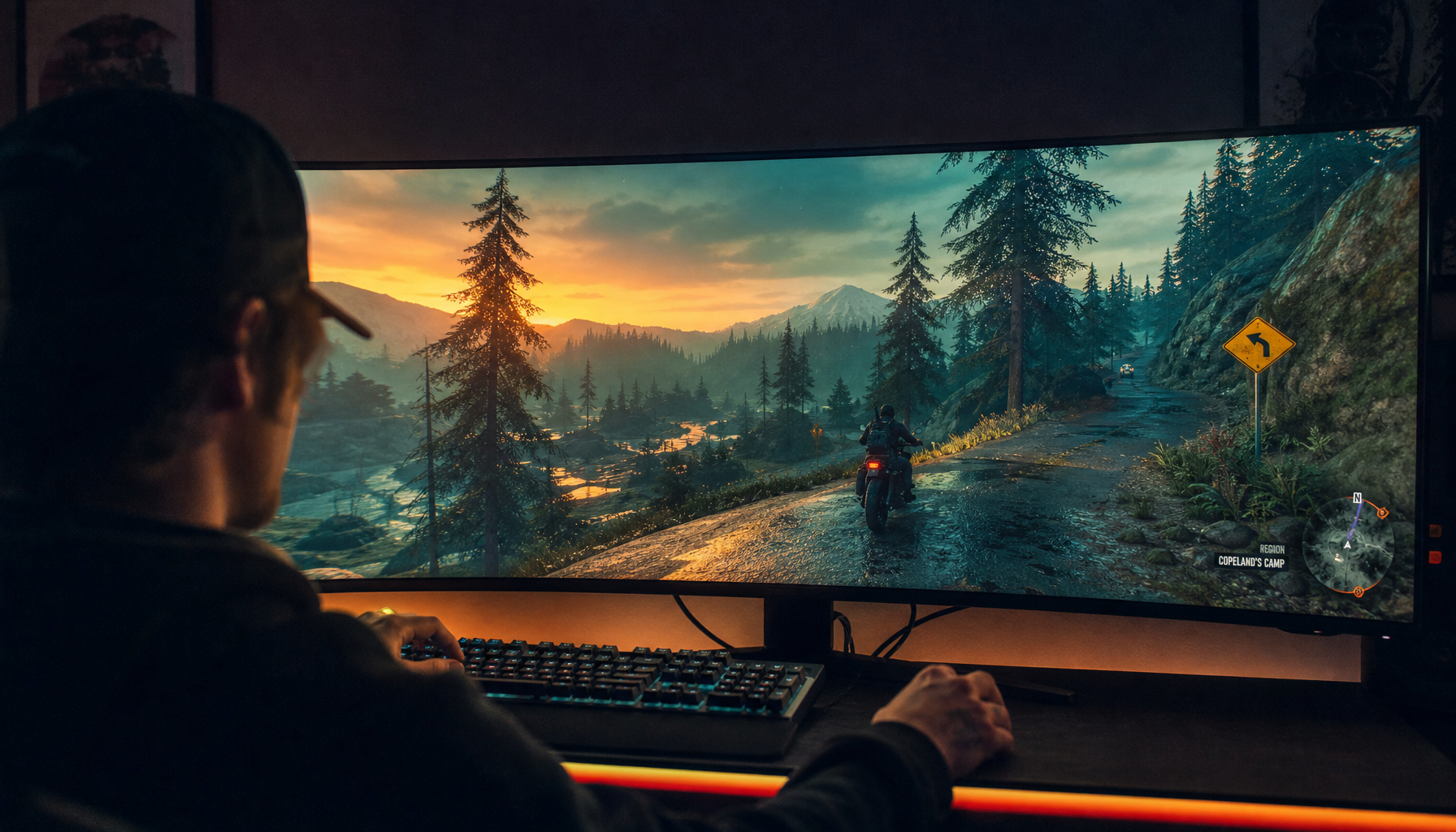
For gaming and HDR video, local dimming can deliver a stronger, more immersive image because scenes move and the brightness map changes naturally. For static desktop use, the same system may hold zones open to keep UI readable and stable.

If your priority is productivity, value text clarity, uniform brightness, and ergonomic comfort first. If your priority is HDR immersion, choose a well-reviewed Mini LED or FALD monitor and accept that static desktop blacks may never behave like per-pixel OLED black.