For most Mac and creator users, a 5K monitor is worth considering when text clarity, macOS scaling comfort, and all-day readability matter more than high refresh rates. If your work is motion-first or budget-tight, a good 4K monitor can still be the smarter buy. 
5K vs 4K for Creator Work
The practical difference is usually sharper text and a cleaner-looking workspace, not a dramatic change in every app. At 27 inches, Apple's display specs put 5K around 218 PPI and 4K around 163 PPI, which is why 5K tends to look closer to "Retina" quality at Mac-friendly scaling levels.
| Decision factor | 4K strengths | 5K strengths | Best fit |
|---|---|---|---|
| Text clarity | Good, especially at larger sizes | Better for small text and UI edges | Writers, editors, designers who stare at text for hours |
| macOS scaling comfort | Often usable, but may feel less crisp at some sizes | Usually cleaner at common Mac scaling choices | Mac users who want a more native-feeling desktop |
| Creative detail work | Strong value for photo and layout work | Better for fine detail and dense toolbars | Creators who zoom, crop, and compare side by side |
| Budget / value | More options at lower prices | Higher cost per monitor | Buyers who want the best value first |
| Refresh rate options | More choice across the market | Usually fixed around 60Hz on value-oriented models | Users who do not need motion-first features |
| Desk footprint | Easier to find lower-cost stands and models | Often more purpose-built | Buyers who want higher pixel density on a 27-inch desk |
For Mac workflows, the main question is whether the extra sharpness is visible enough in your daily use to justify the premium (Apple Studio Display specs). If you mostly work in motion-heavy apps, gaming, or mixed-use sessions, 4K may be the better value. If you spend long hours in text-heavy apps and want a display that feels less compromised, 5K is the safer premium choice.
Why Mac Users Notice 5K More
Mac users tend to notice 5K more because macOS display scaling is built around making the desktop look clean at a chosen workspace size, not just showing the biggest raw resolution number. Apple's own display settings guide shows that the resolution you choose affects how the interface is rendered and presented to you, not just how many pixels exist on the panel (Apple display settings).
What that means in practice is simple: on a good 5K panel, text often looks more like printed material and less like a scaled compromise. That matters most if you spend hours in Finder, Final Cut timelines, Figma, InDesign, Lightroom, code editors, or browser-heavy workflows.
A common misread is to treat 4K and 5K as interchangeable if the screen size is the same. They are not interchangeable for Mac users who care about crisp UI edges. The difference shrinks if you sit farther back or use larger interface scaling, but it usually shows up again when you work up close for long sessions.
In community discussions, Mac users often describe 27-inch 5K panels as the point where scaling feels least annoying, especially when compared with 27-inch 4K panels at similar workspace settings (Apple Stack Exchange discussion). That is a user-experience signal, not a universal rule, but it matches the way many buyers actually judge comfort.
Color Specs That Matter More
Color looks simple until you compare spec sheets. The useful distinction is coverage versus accuracy. Coverage tells you how much of a color space a monitor can reproduce; it does not, by itself, prove the panel is accurate without calibration data.
For design and photo work, the safer buying order is:
- Check the color space you actually need, such as sRGB or DCI-P3.
- Look for factory calibration or a stated Delta E target.
- Treat coverage as a screening tool, not the whole story.
That is why a claim like factory ΔE<2 matters more than a vague "wide color" phrase. Delta E is a color difference measure, so lower numbers generally point to closer matching between intended and displayed color, while coverage tells you how much of the gamut the panel can reach. The two are related, but they are not the same.
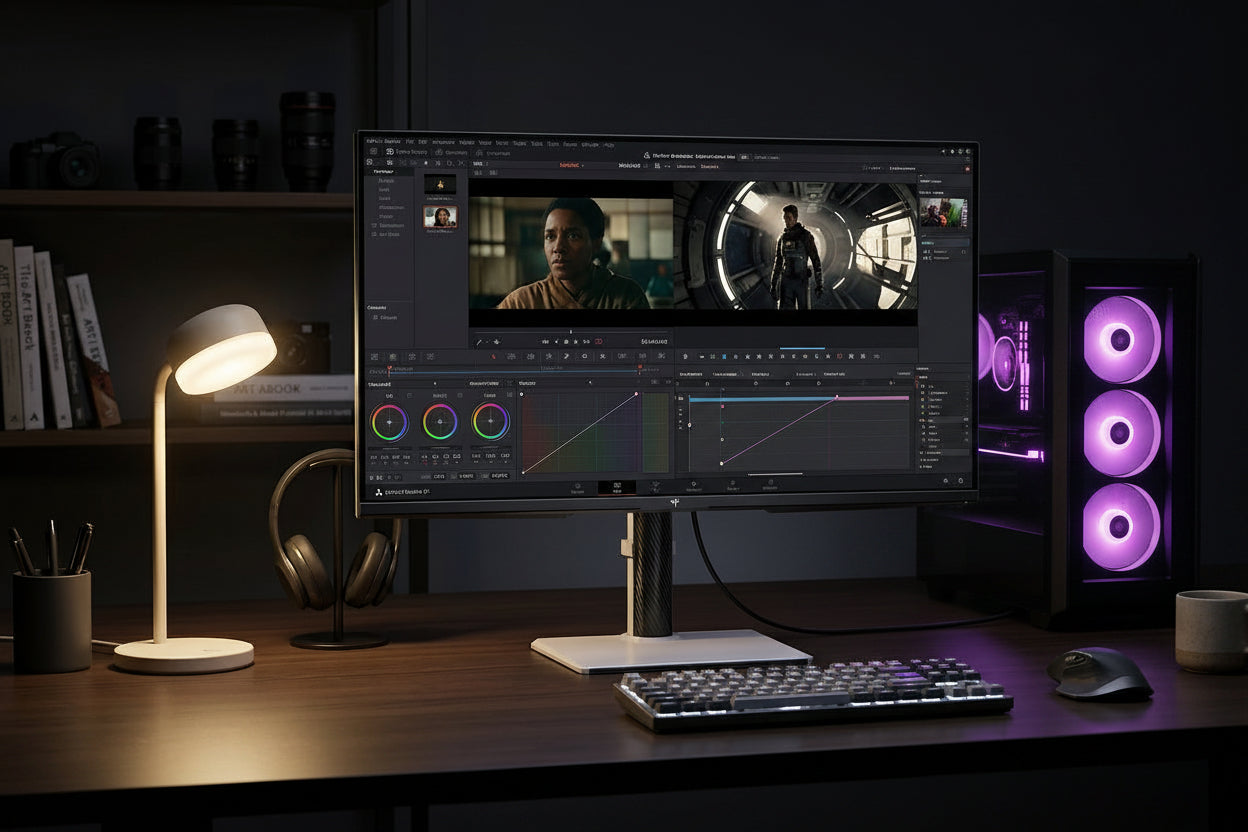
Mini-LED can be useful for some creators, especially where contrast and HDR are part of the workflow, but it is not automatically the right answer for a value-focused 5K monitor. If you are doing print-adjacent work, photo editing, or branded content, prioritize calibration, coverage, and panel behavior first. HDR buzzwords matter less than repeatable color and a stable workspace.
For readers who want a deeper comparison path, this monitor comparison guide for MacBook Pro is a useful place to start, while the 4K versus 5K pixel-density explainer helps frame the real sharpness difference without overcomplicating it.

Connectivity and Refresh Trade-Offs
This is where a 5K monitor can stop being a clean yes and become a conditional choice. Many buyers like the idea of 5K sharpness, then discover that port support, cable quality, and refresh expectations matter just as much as the panel itself.
Start with the connection path. If you are using a MacBook, Mac Studio, or dock, verify that the monitor's input path matches the resolution mode you want. If you rely on a dock, make sure it supports the display mode you are paying for. A 5K panel that only works well in one setup is not a problem if that setup is stable, but it is a problem if you want easy portability.
The second check is refresh rate. A fixed 5K 60Hz mode is fine for writing, design, photo work, and most office use. It is less appealing if you want fluid motion, timeline scrubbing, or gaming. In that case, a high-refresh 4K monitor may be the better compromise.
For buyers who want to browse a broader category instead of committing to one resolution yet, the 4K & 5K High-Refresh Monitors collection is a natural starting point. If you are trying to save money and do not need 5K, the 4K options collection is the better comparison set.
Mac Monitor Choice by Work Style
A simple way to judge whether 5K or 4K is the better fit for common Mac workflows.
Show comparison table
| Work style | 5K fit | 4K fit | Practical read |
|---|---|---|---|
| Text-heavy work | High | Medium | 5K usually feels cleaner on Mac |
| Creative detail | High | High | Either can work, 5K gives more headroom |
| Motion-first use | Low | High | 4K high-refresh usually wins |
| Budget focus | Medium | High | 4K is easier to justify |
How This 5K Monitor Fits Creators
A neutral product fit check is more useful than a hype-driven recommendation. The KTC 27" 5K@60Hz 2K@120Hz Home&Office Monitor | H27P3 fits the article's buyer profile because it combines a 27-inch 5K IPS panel with 5K@60Hz and 2K@120Hz dual-mode support, plus factory-calibrated ΔE<2, 100% sRGB, and 99% DCI-P3 coverage.
That mix makes sense for creators who want sharper text in Mac work, but still want a fallback 2K 120Hz mode for smoother general use. It is not a motion-first monitor, so buyers who care most about gaming speed should treat that as a limitation, not a flaw.
The practical extras matter too. The monitor includes USB-C 65W charging, DP 1.4, HDMI 2.0, USB 3.0 ports, a 3-year warranty, and 30-day returns. Those are the kinds of details that change how easy the monitor is to live with, especially if you want a one-cable desk setup.
The main ergonomic catch is the tilt-only stand. If your desk height is fixed, that may be fine. If you need height, swivel, or portrait rotation, a VESA arm is the safer long-session choice.
For readers who want to compare this product against other category options, the All Monitors collection gives a wider browsing path, while the spec-per-dollar value framework is useful when you want to pressure-test whether the price premium is actually justified.
When 5K Is Worth It
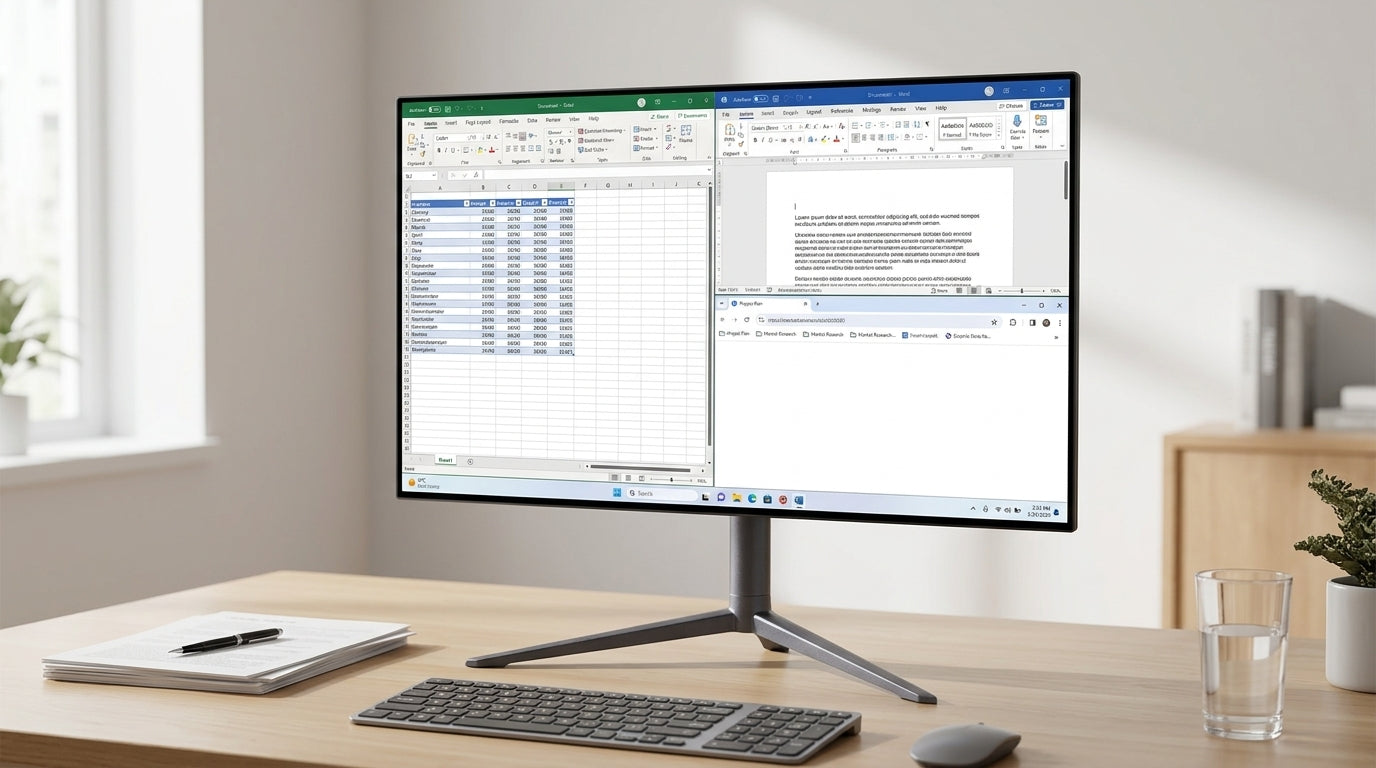
5K is usually worth it when at least two of these are true: you use a Mac, you spend long hours in text-heavy apps, and you want one main monitor instead of juggling two smaller screens. In that scenario, the sharper workspace can reduce fatigue and make the desk feel less cluttered.
It is less compelling when one of these is true: you want the highest refresh rate possible, you already like 4K text clarity, or your budget is tight. In those cases, 4K often gives better value and a wider range of models.
A useful rule of thumb: if your day is mostly reading, writing, editing, and arranging content, 5K can feel worth the premium. If your day is mostly motion, gaming, or price-sensitive general use, 4K usually wins the value argument.
Here are the clearest fit signals:
- Choose 5K if you want cleaner macOS scaling and sharper text.
- Choose 5K if you often keep multiple windows open but still want a single-screen setup.
- Choose 4K if price, refresh rate, or wider model selection matters more.
- Choose 4K if you will not notice the sharper edge rendering in day-to-day work.
Decision Checklist Before You Buy
Before you buy, verify the following in order so you do not overpay for a setup that does not fit:
- Confirm your Mac model and cable path can support the mode you want.
- Decide whether 5K sharpness is more important than a lower price or higher refresh rate.
- Check the panel's color coverage and factory calibration against your actual workload.
- Make sure the stand, VESA plan, and desk depth match your ergonomics.
- Review shipping, return window, and warranty before checkout.
- Compare the H27P3 against a high-refresh 4K alternative only after you know what you are trying to solve.
If you are still undecided after that list, the safer move is usually to compare the 4K monitors collection category against 5K one more time rather than buying on spec pride alone.
Related Resources
Creators evaluating video timelines often start with the video editing monitor guide to match color needs with screen size. Office users who want motion without sacrificing productivity can review the gaming-monitor office-work guide for refresh-rate trade-offs that still support long desk sessions.
FAQs
Q1. How Does 5K Scaling Work on a Mac?
5K scaling matters because macOS can present a usable workspace while rendering with enough pixel density to keep text crisp. The exact feel still depends on screen size, viewing distance, and the scaled mode you choose in Displays settings.
Q2. What Cable Do I Need for 5K on a Mac?
Use a direct cable path that matches your Mac and monitor inputs, then verify that the dock or adapter supports the target resolution mode. If the signal path is uncertain, simplify it before blaming the panel.
Q3. Can a 5K Monitor Replace Dual Displays?
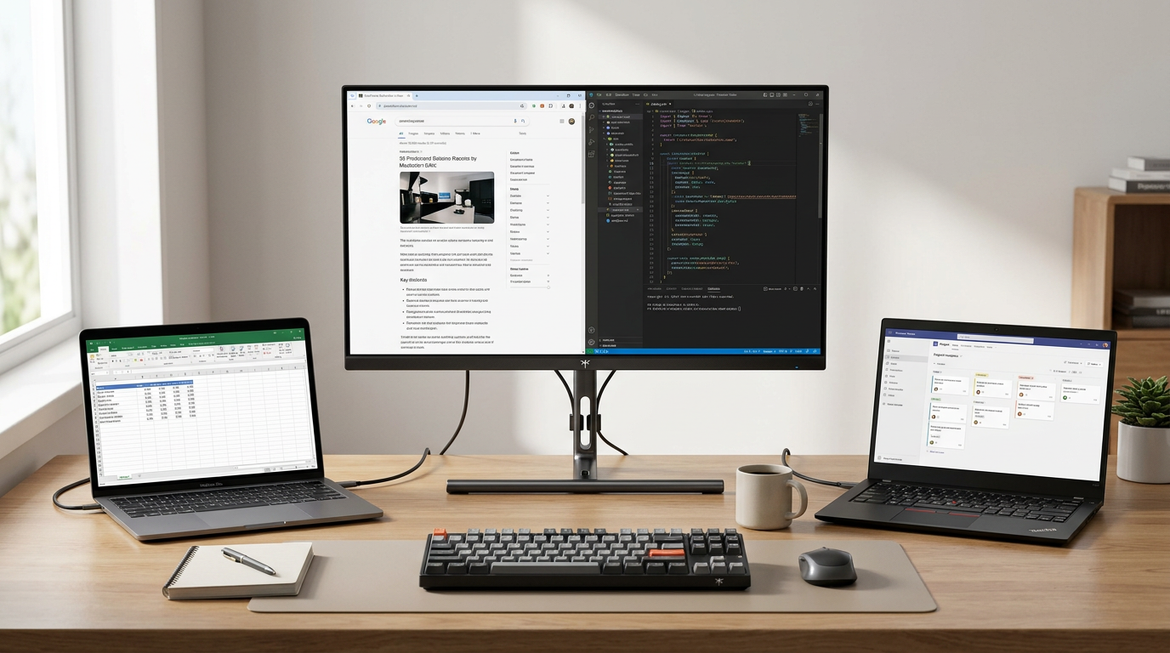
Sometimes, yes. A 5K monitor can feel cleaner than two smaller screens if you want fewer bezels and better text clarity, but dual displays still make sense if you keep many separate windows open all day.
Q4. How Should I Verify Color Accuracy for Design Work?
Look for factory calibration and color coverage that matches your workflow, then confirm with reference files if color is client-facing. Coverage alone does not guarantee that every project will look identical across devices.
Q5. Why Might a 5K Monitor Be Better for Long Desk Sessions?
It can reduce the strain of reading small text and keep the desktop feeling less cluttered. Comfort still depends on height, tilt, desk depth, and whether you use a monitor arm.