




Video editors working with 4K HDR and high-bitrate Log footage need monitors that deliver accurate color reproduction, reliable HDR performance, and enough brightness for consistent grading across long sessions. Professional-grade DCI-P3 coverage, factory Delta E under 2, and 10-bit color depth have become baseline requirements for most prosumer workflows, making high-performance Mini-LED displays a strong value option that avoids the premium pricing of legacy reference brands.

Why 2026 Video Editing Demands More Than Just a "Good" Screen
Video production standards have shifted decisively toward 4K HDR delivery and high-bitrate Log workflows. YouTube and streaming platforms now expect Rec.2100 PQ compliance, which requires monitors that can track the EOTF curve accurately rather than simply offering high peak brightness. Standard SDR panels no longer suffice because they cannot reveal the full dynamic range or subtle color shifts present in modern source material.
This change creates a clear opportunity for freelancers and small studios. High-end panel technology is now available at more accessible price points, allowing creators to achieve professional results without paying the legacy brand premium. The key is matching your monitor to the actual demands of your delivery format—SDR web content versus HDR client deliverables—rather than chasing marketing numbers alone.
For most editors spending 8+ hours daily in Premiere Pro or DaVinci Resolve, the priority is sustained brightness and color stability over perfect blacks. This rules out displays that look impressive in short gaming demos but introduce inconsistencies during extended color-critical work.
Accuracy Specs: Why DCI-P3 and Delta E Are Your Non-Negotiables
Professional color grading requires a monitor covering at least 95% of the DCI-P3 color space. DCI-P3 has become the standard gamut for digital cinema and HDR video production, replacing the narrower Rec.709 space used for traditional web and broadcast delivery.

As this official explanation of Rec. 709 makes clear, Rec.709 remains the foundational standard for SDR content, but HDR workflows demand the wider gamut to reproduce the vibrant colors filmmakers intend. Look for at least 95% DCI-P3 coverage when your projects involve cinema-style grading or YouTube HDR uploads.
Delta E (ΔE) measures the difference between the color a monitor displays and the color it should display. A factory-calibrated Delta E below 2 ensures color inaccuracies remain invisible to the human eye, reducing the need for immediate manual calibration. This threshold matters most when client deliverables must match reference standards exactly.
10-bit color depth is equally critical. It provides 1.07 billion colors instead of the 16.7 million available in 8-bit panels, preventing visible banding in smooth gradients. For 2026 AI-assisted grading and high-bitrate Log footage, 10-bit support is a hard requirement rather than a nice-to-have feature.
What Does Bit Depth Mean, and How Does 8-bit Differ From 10-bit Display? explains the practical difference in gradient smoothness and HDR quality that editors encounter daily.
Mini-LED vs. OLED: Choosing Your Daily Driver for Post-Production
Mini-LED and OLED each solve different problems in post-production. Mini-LED technology delivers higher sustained brightness and carries zero risk of burn-in, making it the safer choice for editors who keep static timeline interfaces visible for hours.
OLED panels achieve perfect pixel-level blacks but suffer from Auto Brightness Limiter (ABL) behavior that can shift overall screen luminance during grading. This inconsistency disrupts color decisions when the same scene looks different depending on the amount of bright content on screen.
Mini-LED monitors with hundreds of local dimming zones maintain more consistent brightness across long sessions. The technology also supports higher peak brightness levels required by DisplayHDR 1400 certification. According to VESA Certified DisplayHDR Standards, DisplayHDR 1400 represents the top tier for high-performance HDR displays, requiring both 1400 nits peak brightness and advanced local dimming.
For hybrid users who switch between color grading and gaming, Mini-LED offers the additional advantage of high refresh rates without compromising the panel's longevity. OLED remains compelling for pure cinematic grading in controlled dark rooms, but Mini-LED wins for most real-world editing desks.
Check out our guide on Mini-LED IPS vs. Standard IPS: Is the Advanced Backlight Worth the Upgrade? for more details on how local dimming affects contrast and blooming control.
Solving the "Halo Struggle": Managing Blooming in Professional Workflows
Local dimming on Mini-LED monitors can create halo or blooming effects around bright UI elements when the background is dark. This "Halo Struggle" appears most noticeably around mouse cursors, timeline text, or tool panels in dark-mode applications.
Many newer Mini-LED models include firmware-based Desktop Modes that automatically adjust dimming behavior for productivity work. These modes reduce the need to manually toggle local dimming on and off throughout the day, though they may slightly lower peak HDR brightness when active.
Practical workarounds include using light or dark-gray interface themes instead of pure black, which masks algorithmic blooming without changing your grading workflow. Positioning your preview window away from high-contrast UI edges also helps minimize distraction.
The trade-off is worth understanding before purchase. Monitors without effective desktop modes create a daily "Toggle Tax" that interrupts focus. For editors who primarily work in bright or mixed lighting, this friction matters less than the overall brightness and color performance gains.
Our article on What “Local Dimming Zones” Mean in Monitor Backlight Technology breaks down how zone count affects blooming in different usage scenarios.
The Best KTC Monitors for Video Editing: Choosing by Workflow and Budget
KTC Monitor Comparison for Video Editing Workflows
Comparison of key KTC models across resolution, HDR performance, dimming zones, and color accuracy to match different editing needs.
View Data Table
| Model | Resolution | Peak Brightness | Dimming Zones | Delta E | Best For |
|---|---|---|---|---|---|
| M27P6 | 4K | HDR1400 | 1152 | <2 | HDR Grading & Hybrid Use |
| H27P3 | 5K | Standard HDR | None (IPS) | <2 | Text Clarity & Mac Workflows |
| H27P6 | 4K | Standard HDR | None | <2 | Budget 4K Editing |
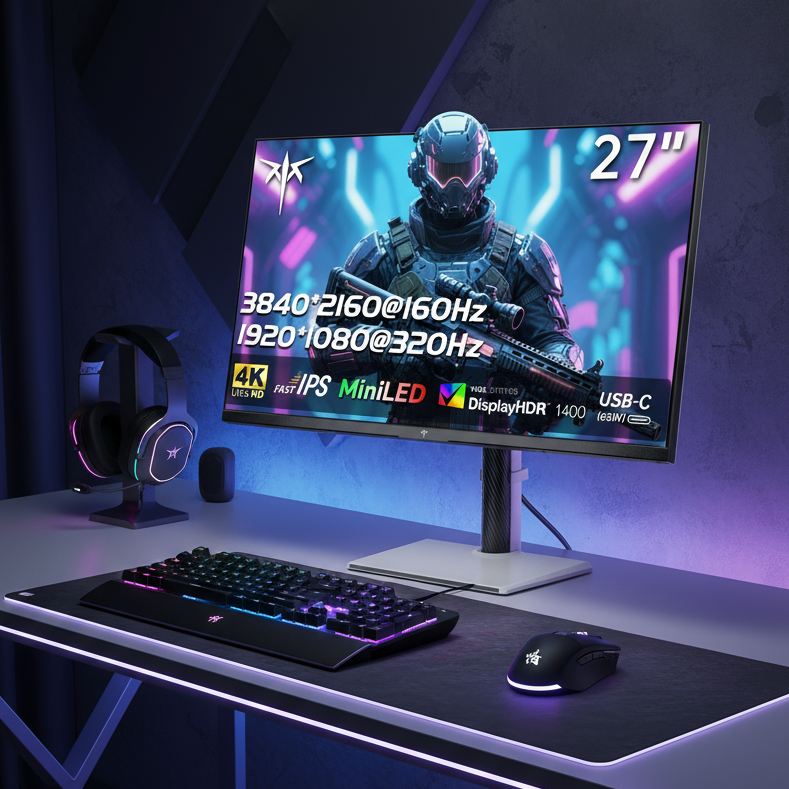
The KTC M27P6 stands out for color grading and HDR workflows. Its 1152 local dimming zones, HDR1400 certification, and 98% DCI-P3 coverage deliver the brightness and contrast needed for accurate shadow and highlight detail. The dual-mode capability (4K 160Hz or 1080p 320Hz) also suits hybrid users who edit and game on the same display.
For Mac users or editors who prioritize text sharpness and pixel density, the KTC H27P3 offers a 5K resolution alternative. Its high PPI makes interface elements crisp and reduces the need for scaling, while maintaining ΔE<2 accuracy suitable for professional work.
Budget-conscious 4K editors should consider the KTC H27P6. It provides strong color accuracy and 90W USB-C power delivery without the higher cost of full Mini-LED arrays. While it lacks the extreme contrast of the M27P6, it remains more than capable for SDR and moderate HDR delivery.
Match your choice to your primary delivery format and operating system. HDR-heavy workflows benefit most from the M27P6's local dimming, while pure productivity and text-heavy tasks favor the H27P3's resolution. Always verify current firmware for optimal Desktop Mode performance on Mini-LED models.
Learn more about verifying your setup in How to Verify Your Display Calibration Is Actually Working.
What Is the Minimum DCI-P3 Coverage Needed for Professional HDR Editing?
Professional HDR editing typically requires at least 95% DCI-P3 coverage. Lower coverage may force you to work in a more limited color space, leading to unexpected shifts when content is viewed on calibrated reference displays or consumer HDR screens. For YouTube and streaming delivery in 2026, this threshold helps ensure your grades translate accurately across platforms.
Does Delta E < 2 Really Matter for Freelance Video Editors?
Yes, especially when client work or collaborative projects are involved. Delta E under 2 means color errors stay below the threshold of human perception in most viewing conditions. While hobbyist editors may tolerate higher values, freelancers who deliver to clients benefit from factory-calibrated accuracy that reduces revision cycles and builds trust in the final output.
Is Mini-LED or OLED Better for Long Editing Sessions?
Mini-LED is generally the better daily driver for long sessions. It avoids burn-in risk from static UI elements and maintains higher sustained brightness without triggering aggressive brightness limiting. OLED excels in pure black levels for cinematic viewing but introduces consistency challenges during extended grading work.
How Important Is 10-Bit Color for 4K Video Editing in 2026?
10-bit color is essential for preventing banding in gradients and handling the expanded dynamic range of modern Log and HDR footage. 8-bit panels often show visible stepping in smooth transitions that become obvious during client review. Most professional 4K workflows in 2026 assume 10-bit support throughout the pipeline.
What Size and Resolution Monitor Works Best for 4K Color Grading?
A 27-inch 4K or 5K monitor strikes the best balance for most editors. 27 inches provides enough screen real estate for timeline, preview, and scopes without forcing excessive head movement. 4K resolution offers sharp detail for pixel-level adjustments, while 5K adds extra clarity for text-heavy interfaces and multi-window layouts.
Should I Buy a Gaming Monitor for Video Editing?
Only if it meets professional color specifications. Many gaming monitors advertise wide color gamuts and high refresh rates but lack factory Delta E calibration and consistent HDR implementation. Prioritize models with verified DCI-P3 coverage, 10-bit support, and effective local dimming modes over raw gaming specs alone.
Check the full range of options in our All-Mini-LED Monitors collection or browse Office Monitor selections suited for creative work.


