In 2026 an OLED gaming monitor is worth the investment only when your setup stays mostly in dim or controlled lighting, your static UI time stays well below several thousand hours per year, and your budget clears roughly $500 after comparing direct options against legacy brands.
The 2026 OLED Reality: Technical Gains and the 'Worth It' Question
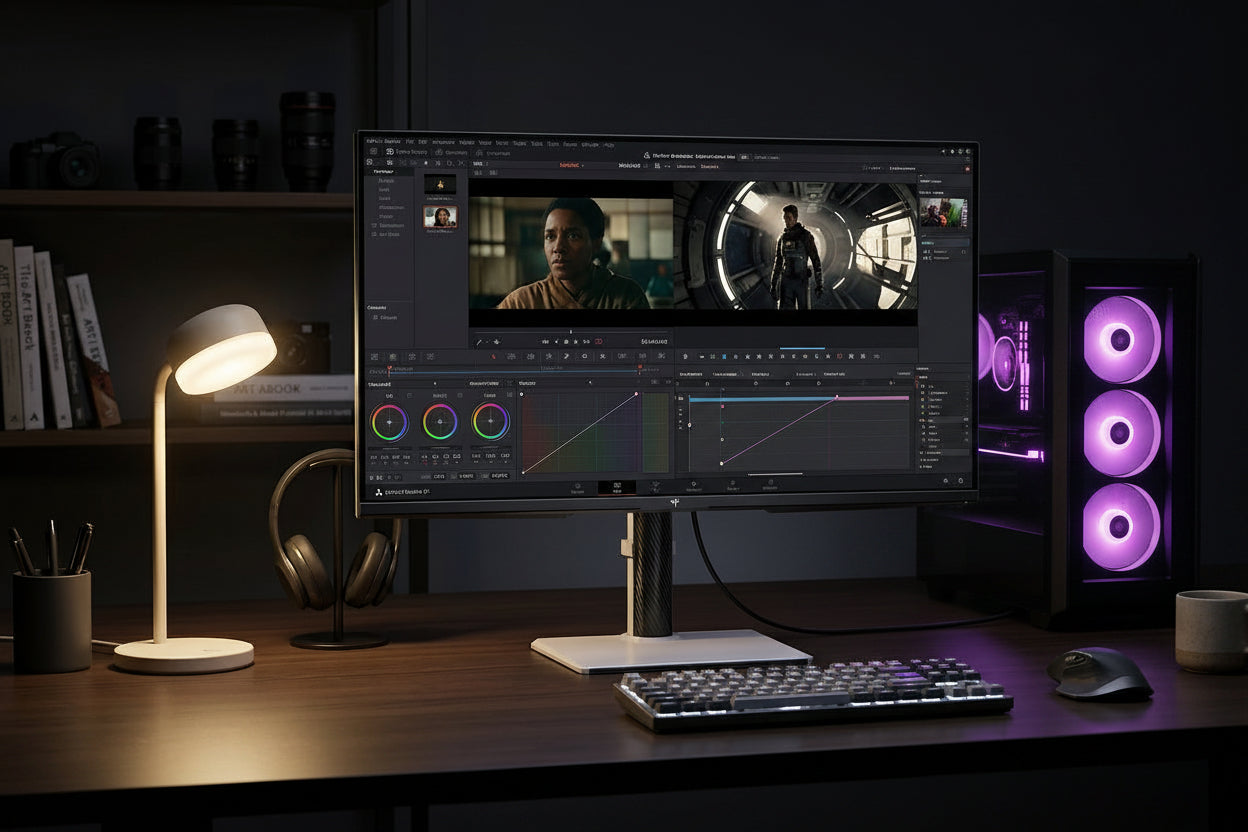
OLED panels have matured into the default choice for high-end gaming displays. Refresh rates now reach 480 Hz in premium models, Micro Lens Array layers boost peak brightness, and Tandem OLED stacks two organic layers to raise sustained output while spreading wear across more emitters.
These advances shrink the old trade-offs, yet the central question remains the same: are you buying measurable image quality or simply paying extra for brand recognition?
OLED vs. Mini-LED: The $600 Boundary Flip
At current street prices the value crossover sits near $600–700. Below that range, high-spec Mini-LED monitors deliver stronger full-screen brightness and zero burn-in worry. Above it, OLED’s near-instant response and perfect black levels usually deliver clearer returns.

Value Crossover Between OLED and Mini-LED Monitors
At roughly $600–700 the balance shifts toward OLED for most gamers in controlled lighting.
Show comparison data
| Price Tier | Mini-LED Score | OLED Score | Key Factor |
|---|---|---|---|
| Under $500 | 85 | 45 | Full-field brightness wins |
| $500–700 | 60 | 75 | Contrast and speed edge |
| Over $700 | 40 | 90 | Immersion advantage |
The VESA DisplayHDR True Black standard explains why OLED’s lower headline nits still produce superior HDR in darker rooms: it measures black-level performance rather than raw peak output. Mini-LED models maintain 1000+ nits across the full screen, but that advantage matters less when ambient light stays low.
Burn-In in 2026: Safety Thresholds and Real-World Durability
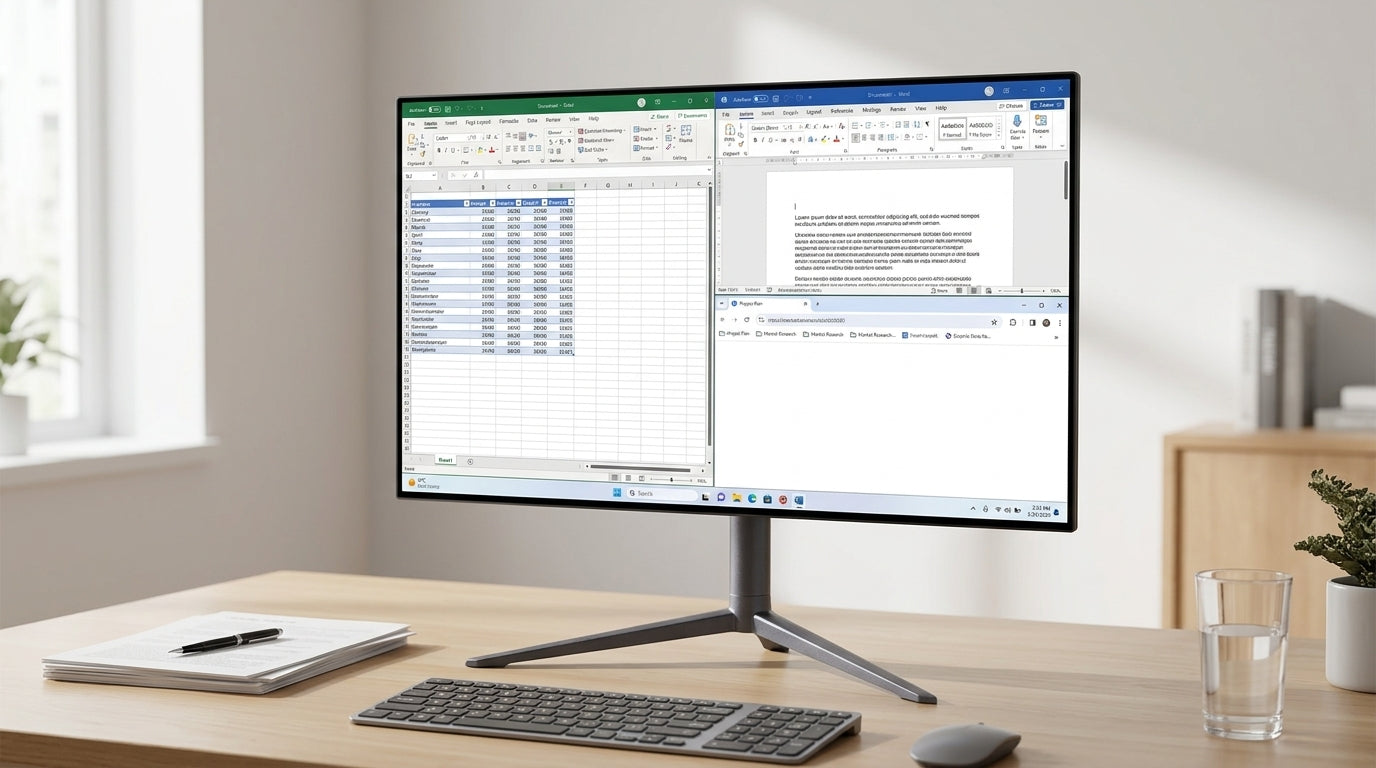
Burn-in risk has dropped but has not disappeared. Accelerated tests show visible retention can still appear after several thousand hours of extreme static content such as taskbars or spreadsheets. Hybrid users who split time between work and gaming now face a safer horizon of roughly 6,000 hours before noticeable change.
Tandem OLED further extends that window by distributing luminance load across two layers. Most gamers who keep varied content on screen and enable pixel-shift or screen-saver features will never encounter issues within a typical five-year ownership period.
Brand Tax vs. Spec Reality: Is KTC the Insider's Choice?
Legacy brands often charge 20–30 % more for the same panel generation. That markup buys polished software, longer warranty replacement programs, and brand recognition, yet the underlying display hardware is frequently identical.
Direct manufacturers such as KTC focus on the panel and basic connectivity. Their G27P6 OLED model pairs 240 Hz refresh with 0.03 ms response in a 27-inch QHD chassis. The trade-off appears in daily use: manual HDR toggling replaces automated profiles, and warranty service uses depot repair rather than advance exchange.
Decision Guide: Which Monitor Should You Buy for Your Setup?
Choose the KTC G27P6 when your room stays dim, competitive motion clarity matters most, and you accept basic OSD controls. Pair it with the All-OLED Monitor collection for future options.
Select the M27P6 Mini-LED when you need sustained high brightness, run long static sessions, or want zero burn-in concern. The All-Mini-LED Monitors collection groups similar high-luminance choices.
If your budget sits below $500 and you want strong HDR without OLED caveats, compare current Mini-LED options inside the Gaming Monitor collection.
Frequently Asked Questions
Does OLED Burn-In Still Occur After 2026 Improvements?
Yes, but the threshold has moved. Heavy static use for more than 6,000 hours can still produce retention on even the newest panels; varied gaming and enabled pixel-shift features keep risk low for most users.
How Does OLED Brightness Compare With Mini-LED In Bright Rooms?
OLED excels at peak highlights inside small windows, yet Mini-LED sustains 1000+ nits across the entire screen. Bright-room users therefore see better results from Mini-LED panels.
Is The Price Difference Between KTC And Legacy Brands Justified?
The gap usually reflects software polish and warranty speed rather than panel performance. When the difference exceeds 30 %, the hardware value of direct models becomes the stronger choice for buyers comfortable with manual controls.
Which Gamers Benefit Most From OLED In 2026?
Players in controlled lighting who prioritize perfect blacks, fast motion, and HDR immersion gain the clearest advantage. Competitive users in bright rooms or heavy productivity setups often prefer Mini-LED instead.
Should I Wait For Further OLED Advances Before Buying?
Current Tandem and MLA+ panels already deliver meaningful gains over prior generations. Waiting mainly makes sense if your budget or room conditions still favor Mini-LED today.