A MegPad for kitchen use makes the most sense when you want one screen to stay visible while you cook, glance at recipes without unlocking a phone, and keep family notes in one place. Consumer Reports notes that larger persistent screens are easier to glance at than phones that sleep or time out, which matters most when your hands are busy and your attention is split.
Why a Rolling Screen Works in the Kitchen
A rolling display is useful in a kitchen for the same reason a phone often falls short: cooking is a moving job. You shift between prep space, stove, sink, and cleanup. A screen on wheels can follow that flow better than a fixed stand, and a larger display usually reduces the need to zoom or scroll.
That does not make it the right answer for every home. If you only need a quick recipe lookup once in a while, a phone may still be simpler. But if you want a persistent place for recipes, timers, shopping notes, or family messages, a rolling screen can reduce the repeated unlock-and-check rhythm that slows cooking down.
For most households, the decision comes down to this: if the screen must stay visible for several minutes at a time, a MegPad-style setup starts to make sense; if it only needs to answer occasional questions, the extra footprint may not be worth it.
What a Kitchen Command Center Actually Needs
A kitchen command center does not need to be complicated. It needs to be easy to see, quick to wake, and simple enough that people actually use it. In real cooking, that usually means three things: a readable screen, a place to set it without crowding the counter, and a layout that does not turn into visual noise.
The Mobile Touch Screen collection is the closer browsing path if you want a portable touch display that can move between rooms. The collection is positioned for work, travel, and home, with portable touch screens in 1080P to 4K and MEGAPAD models that include Google EDLA and battery options. That is not a kitchen-only promise, but it does fit the idea of a display that can stay accessible.
In practice, this setup works best when the screen is treated like a household tool, not a second TV. One recipe, one timer view, and one note source are usually enough. If the display becomes a catch-all for entertainment, alerts, and clutter, the kitchen benefit drops fast.

Set Up the Kitchen Station
Start with the room, not the model. The best place is usually where you can glance at the screen from prep areas without putting it in the main splash or traffic zone. If the unit has wheels, test whether it rolls cleanly between the kitchen and nearby dining space before you fill the screen with apps.
- Place the display where it stays visible from the main cooking area.
- Raise or lower it so you can read it while standing.
- Leave enough clearance for the cart or stand to move without snagging cords.
- Keep the layout simple at first, usually recipe, timer, notes, and one family source.
- Only add more apps if you still want the station to feel calm.
A MegPad for kitchen use should feel easy to ignore until you need it. If you have to fight the angle, the cable path, or the app layout every time you cook, the setup is not doing its job.
The main self-check is simple: if you can stand at the counter and read the screen without shifting your body much, the placement is probably close; if you keep stepping sideways to see it, the setup needs revision.
Recipes, Timers, and Notes at a Glance
For actual cooking, the best use case is a clear, always-visible workspace. Recipes are more useful when ingredients and instructions stay on screen without constant swiping. That matters most when you are multitasking or switching between steps quickly.
Timer use is where a larger screen usually helps most. If several dishes finish at different times, the timer display should be readable from across the room. That is one reason a rolling display often feels better than a small tablet propped near the stove.
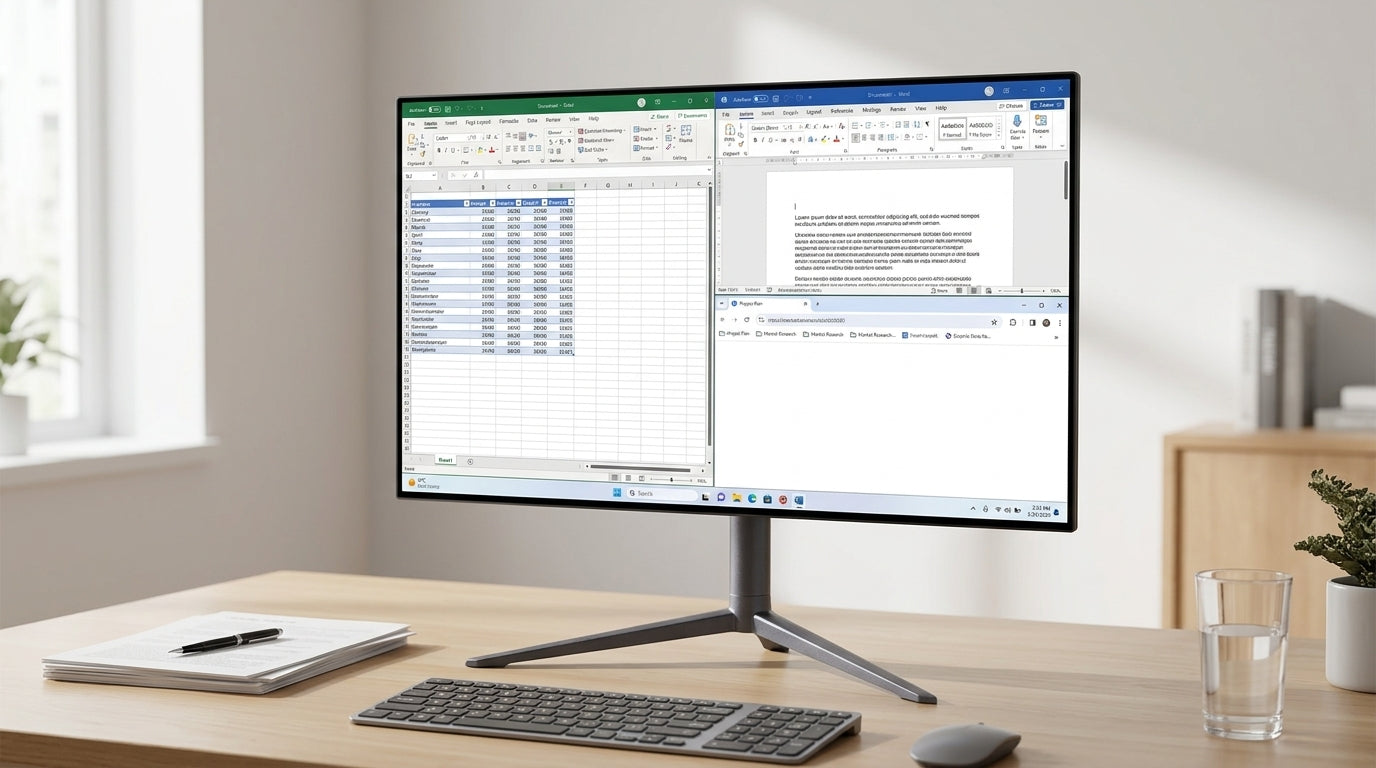
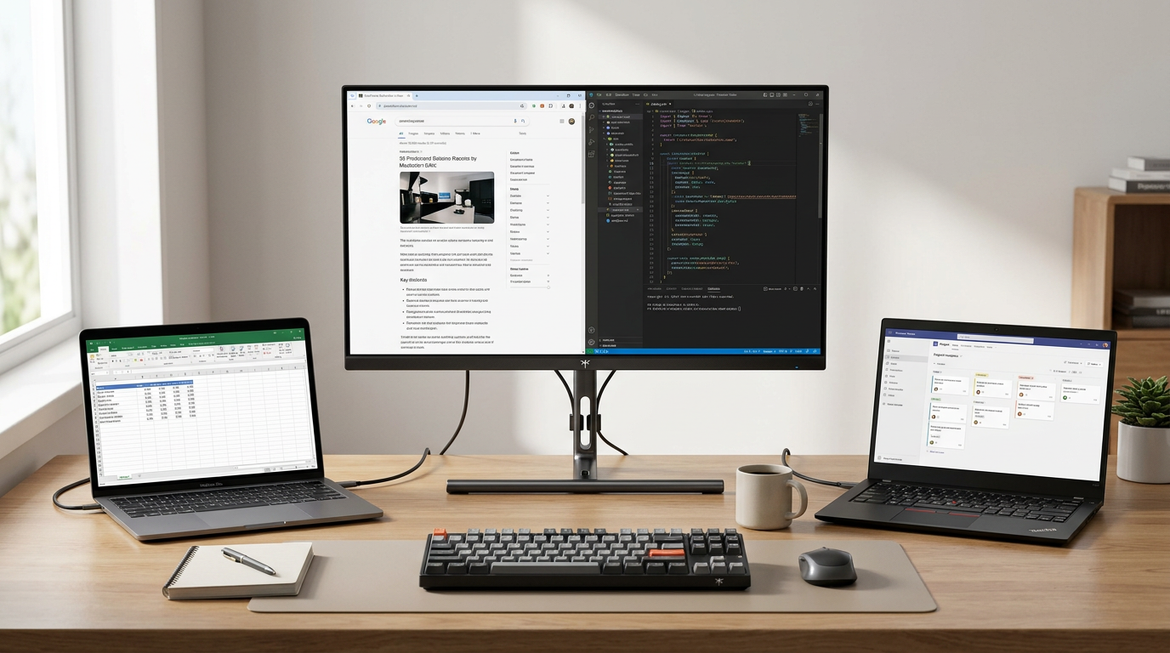
If a household wants faster text entry, a wireless keyboard and mouse can make the display feel closer to a small kitchen workstation. Turning Your Smart Monitor into a PC: Connecting Wireless Keyboards and Mice is a useful follow-up if you want a simpler way to type notes or navigate apps.
The trade-off is clutter. The more peripherals you add, the more the kitchen starts to feel like a desk. For many people, touch input plus one simple accessory is enough.

Family Coordination Without Counter Clutter
A kitchen screen is often most helpful when it replaces several smaller coordination habits. Instead of scattering reminders across phones, sticky notes, and text threads, a shared display can keep meal timing, after-school notes, and shopping reminders in one place.
That works best when the screen stays calm. A good kitchen command center should be glanceable, not attention-grabbing. If everyone in the household can see the same reminder without opening a phone, the display earns its place. If it becomes another place where notifications pile up, the benefit gets weaker.
A rolling display also helps when the information needs to move with the household. Some nights the screen belongs by the stove, and some nights it is more useful near the dining area. That flexibility is part of the appeal.
The question to ask is not whether the screen can do everything. It is whether it helps the family see the right few things at the right time. If it does, it is useful. If it does not, a simpler setup is usually better.
What to Check Before You Buy
The most important buying filter is fit, not feature count. For kitchen use, screen size, battery support, app access, and mobility matter more than marketing language.
| What to check | Why it matters | What to look for |
|---|---|---|
| Screen size | Larger displays are easier to read while cooking | Enough size to glance at from standing distance |
| Mobility | The screen should move without fighting the kitchen layout | Wheels or a stand that rolls cleanly |
| Battery support | Useful if you want less cord dependence | Enough runtime for your daily use pattern |
| App access | Needed only if your recipe or household tools are available | Confirm the apps you actually use |
| Placement | A kitchen screen should not crowd prep space | A spot with clear viewing and safe cable routing |
| Simplicity | Too many apps make the station noisy | One or two primary uses, not a long dashboard |
The Smart Monitor collection is the better browse path if you care more about a 4K smart-display format with Google TV-style convenience. The collection facts describe official Google TV access, Google Play Store, Netflix, YouTube, Chromecast, Bluetooth, and multiple HDMI/USB ports. Those features can simplify setup, but you should still verify whether the model fits your actual kitchen workflow.
For readers who want portability first, browse the Mobile Touch Screen collection.
A Simple Kitchen Command Center Checklist
Use this final check before you call the setup done:
- The screen is visible from the main cooking zone.
- Timers, recipes, and notes are the only things competing for attention.
- The cart or stand rolls cleanly and does not snag cords.
- The display can move when the kitchen needs more space.
- The setup still feels useful on ordinary weeknights, not just during a big cooking session.
A MegPad for kitchen use is worth considering when it removes friction instead of adding it. That usually means the screen stays visible, the layout stays simple, and the placement does not get in the way of cooking. If those conditions are not met, a phone, tablet, or simpler display may be the better choice.
FAQs
Q1. How Is a Rolling Display Better Than a Tablet in the Kitchen?
A larger rolling screen is easier to glance at than a tablet or phone, especially when the device would otherwise sleep or force repeated unlocking. That matters most during active cooking, when you want the information to stay visible without handling another small device.
Q2. What Size Screen Works Best for a Kitchen Command Center?
Larger screens usually feel better for recipes and timers because they are easier to read from standing height. Smaller models can still work in tight kitchens, but they are more likely to feel like a helper device than a true command center.
Q3. Can a Kitchen Display Do More Than Recipes?
Yes, but it works best when you keep the use cases narrow. Timers, shopping notes, household reminders, and lightweight entertainment can all fit well. If too many tasks compete for attention, the setup starts to feel busy instead of useful.
Q4. What Should I Check Before Putting a Display Near the Stove or Sink?
Focus on placement, cord routing, and clearance. The screen should be easy to see from the cooking zone without blocking movement, and it should not sit where daily splashes or heat exposure are likely to become a problem.
Q5. Can I Add a Keyboard or Mouse to Make It Easier to Use?
Yes. Wireless input devices can make typing notes and switching apps easier, especially if the display is also used for shopping lists or household coordination. Just keep the setup simple enough that it still feels practical in a kitchen, not like a desk.
Related Resources
Portable monitors for recipe display are a frequent user topic on forums such as Reddit. Compare rolling 32-inch options against tablets in the linked kitchen-hub comparison, review Android 13 scaling details in the massive-monitor post, and explore mobility parallels from healthcare rolling-display case studies. The 27-inch MEGAPAD model offers a practical starting point for most home kitchens.