A rolling smart display for remote work mobility makes sense only when the same screen has to move between rooms often enough that setup friction becomes part of the job. If your workstation stays put most days, a fixed monitor is still the simpler default. The real question is not whether mobility sounds convenient, but whether it removes more daily hassle than it adds.

Why Remote Work Mobility Gets Messy
Remote work rarely stays in one place. A desk session can turn into a kitchen check-in, then a living-room call, and the screen moves with it. That is where a rolling smart display for remote work mobility can start to matter, because the problem is not only screen size. It is the repeated reset: unplugging, dragging cables, finding power, and clearing temporary clutter.
The ergonomic baseline matters too. Mayo Clinic's office ergonomics guidance is a useful reminder that sitting in the same setup for long stretches can add strain. OSHA's computer workstation guidance makes the same practical point: a workstation works better when it fits the task and the person, not when you keep adapting your body to the furniture.
That is why a rolling smart display for remote work mobility is worth considering only when movement is a real part of the workday. If you mostly want a larger screen on one desk, mobility is probably extra hardware rather than real value.
What a Rolling Smart Display Needs to Do
A good fit starts with four separate checks: mobility, power, display size, and connectivity. Those are not the same thing, and buyers often mix them together.
Mobility and Room-To-Room Movement
The first question is whether the display can move without turning every room change into a mini project. A rolling smart display home office setup should be stable enough to reposition, but still easy enough to move that you actually use the feature. If the screen only moves occasionally, you do not need room-to-room convenience as much as you think.
Power, Battery, and Replugging
Battery support matters when it reduces the number of times you have to stay tethered to an outlet. For the selected MEGAPAD 32-inch model, the built-in 8550mAh battery and Android 14 smart display format can help reduce replugging, but the manual also says runtime varies with brightness, connected devices, temperature, and settings. That means battery should be treated as a convenience layer, not an all-day promise.
Display Size and Stability
Bigger screens can be easier on the eyes for documents, calls, and multitasking, but size also raises the bar for stability. A larger mobile monitor for kitchen office use needs a base and stand that feel steady in everyday room changes. If the display is too awkward to steer or store, the size advantage becomes less useful in a small home.
Inputs, Touch, and Smart Features
Compatibility is another separate check. The selected 32-inch MEGAPAD includes Type-C, HDMI 2.0, USB 3.0, touchscreen support, Android 14, Wi-Fi 6, and Bluetooth 5.2, which helps explain why it can work as more than a basic screen. Still, the right question is whether your laptop, dock, or workflow actually benefits from those functions. Touch and smart apps are useful only when they reduce extra steps.

If you want to browse the category first, the mobile touch screen collection is the broader path. If you already know you want a 32-inch model, the MEGAPAD 32-inch screen is the specific product to check against your room and power needs.
How It Fits a Home Office, Kitchen, and Living Room
A room-mobile display works best when each space has a different job. The home office is usually the main work zone, the kitchen is where short check-ins happen, and the living room is the fallback space when the day shifts around other people or other activities.
Home Office Desk Setup
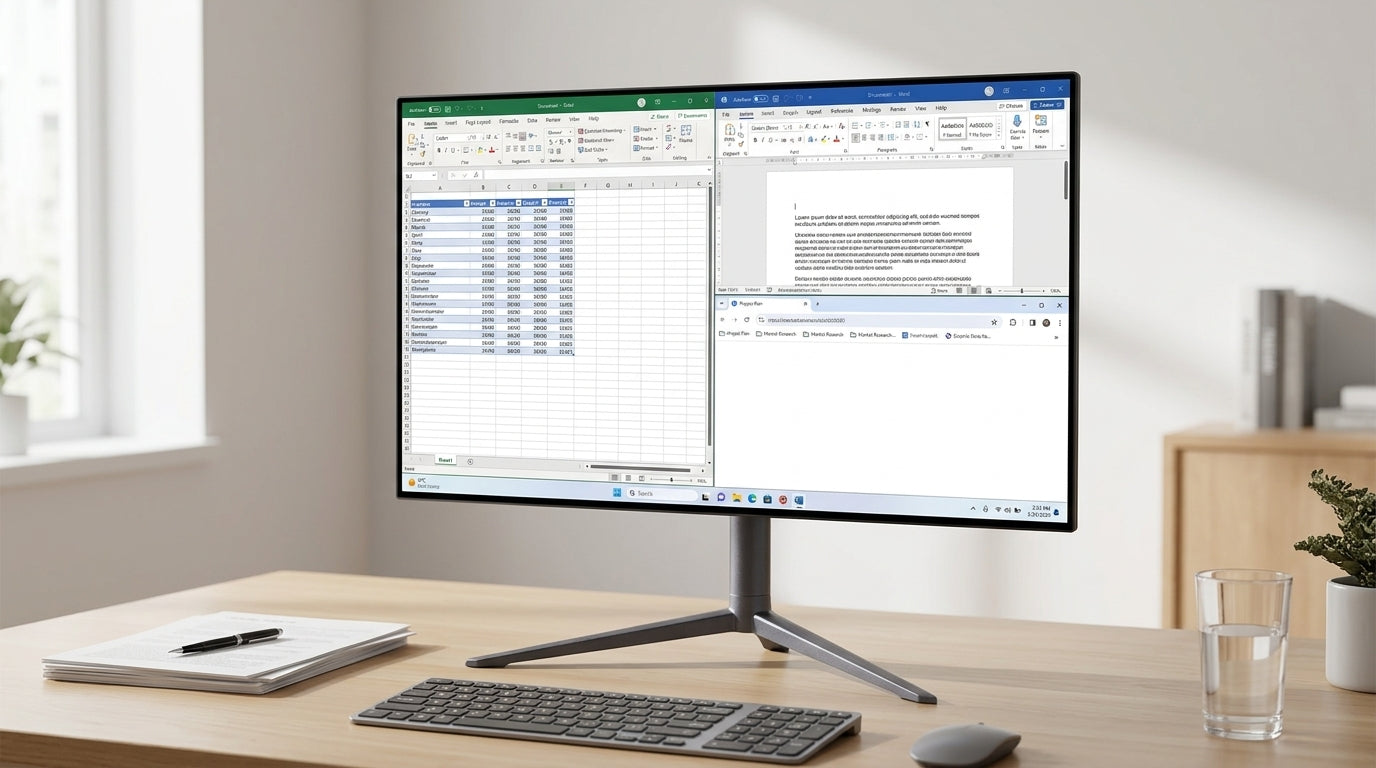
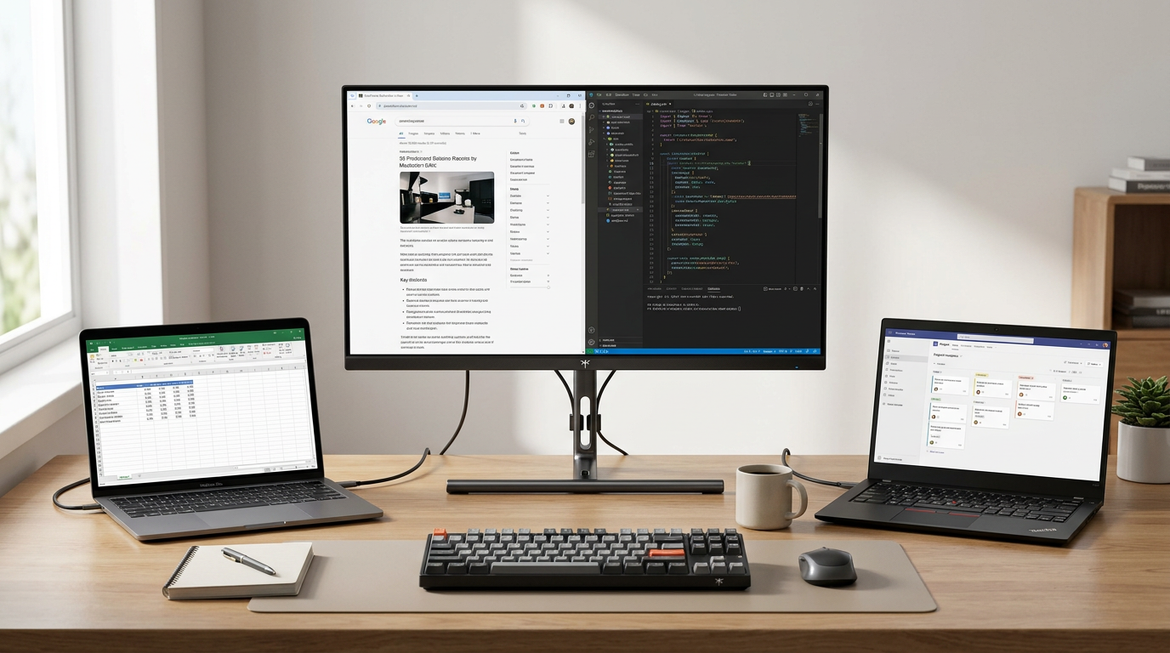
At a desk, the display can act as a primary or secondary screen when you want more room for documents, video calls, or split-screen work. This is where a rolling smart display home office setup can feel most natural. But the fit still depends on desk height, cable reach, and whether the screen can sit where your posture stays comfortable.
Kitchen Counter Check-Ins
In the kitchen, the use case is usually short and practical: answer messages, join a quick call, check a calendar, or review notes. That is where a portable smart display for hybrid workers may reduce the need to keep returning to a fixed office. The tradeoff is that kitchen placement also depends on counter space, nearby outlets, and traffic flow. If the screen blocks movement or crowds the counter, the convenience drops fast.
Living Room Shared-Space Use
The living room is often the most flexible and most conditional room. It can work as a temporary workspace when you need a larger screen outside the office, but it also has the most competing uses. In a small home, the appeal is that one screen can serve several zones. KTC's micro-apartment setup guide frames that same idea clearly: one display can pull double duty when space is tight.
The catch is that shared-space use only helps if the screen can move without becoming a daily obstacle. If you are always shifting furniture, cables, or power access, mobility becomes a chore instead of a benefit.
For a broader room-to-room framing, the hybrid meeting setup guide covers the same basic friction from a different angle: the screen is most helpful when moving it does not feel like a reset every time.
What the MegPad Adds to Remote Work
The selected MegPad is best understood as one response to the mobility problem, not a universal upgrade. For buyers who move between rooms, the relevant facts are the built-in battery, Android 14, touch support, and the 32-inch in-room mobile format. Those features support a workflow where the screen can stay useful as you move from desk to kitchen to living room.
The main advantage is not that the display makes work easier in every case. It is that it may reduce the friction of moving a screen around the home. That is why a rolling smart display for remote work mobility can feel more useful than a fixed monitor for hybrid workers who reset their workspace several times a day.
But the battery should stay in the right category: helpful, not magical. The manual says runtime depends on brightness, connected devices, temperature, and settings, so it is safer to think of the battery as a buffer against repeated replugging rather than a guarantee of untethered all-day work.
The product also weighs 16.5 kg with stand, which matters. That weight makes it room-mobile, not grab-and-go portable. So if you are looking for something to toss in a bag or carry like a lightweight portable monitor, this is not that category.
If you want the broader browsing path, the mobile touch screen collection is the easier place to compare room-mobile options. If you want the exact model, the 32-inch MEGAPAD is the one to inspect for current details.
Tradeoffs Before You Buy
The best way to judge a rolling smart display is to compare it against what you give up with a simpler fixed monitor. The table below shows the practical decision pattern.
| Buyer priority | Simple fixed setup | More mobile setup |
|---|---|---|
| Rare room changes | Usually the safer fit | Often more hardware than needed |
| Frequent room-to-room use | Can feel anchored to one spot | Better when movement is the point |
| Lowest setup friction | Fewer parts to move and reconnect | More flexible, but more moving pieces |
| Cable simplicity | Easier when the desk never changes | Battery helps, but runtime still varies |
| Shared-space flexibility | Limited by one permanent location | Better when one screen must serve several zones |
This is the key flip: if your problem is mostly that the screen stays in one room, a fixed monitor still wins on simplicity. If your problem is repeated room shifting, the rolling display starts to make sense because convenience becomes the product.
Final Room-Fit Checklist
Before you buy, check four things: how often the screen will move in a normal week, whether the room has enough floor and turning space, whether outlet access is convenient, and whether your cable reach is realistic. Those basics tell you more than marketing copy does.
If the display will live mostly in one room, a fixed monitor is probably the cleaner choice. If you are trying to turn one screen into a room-to-room work tool, a rolling smart display for remote work mobility is worth a closer look. The question is not whether it can move. It is whether that movement solves a real setup problem.