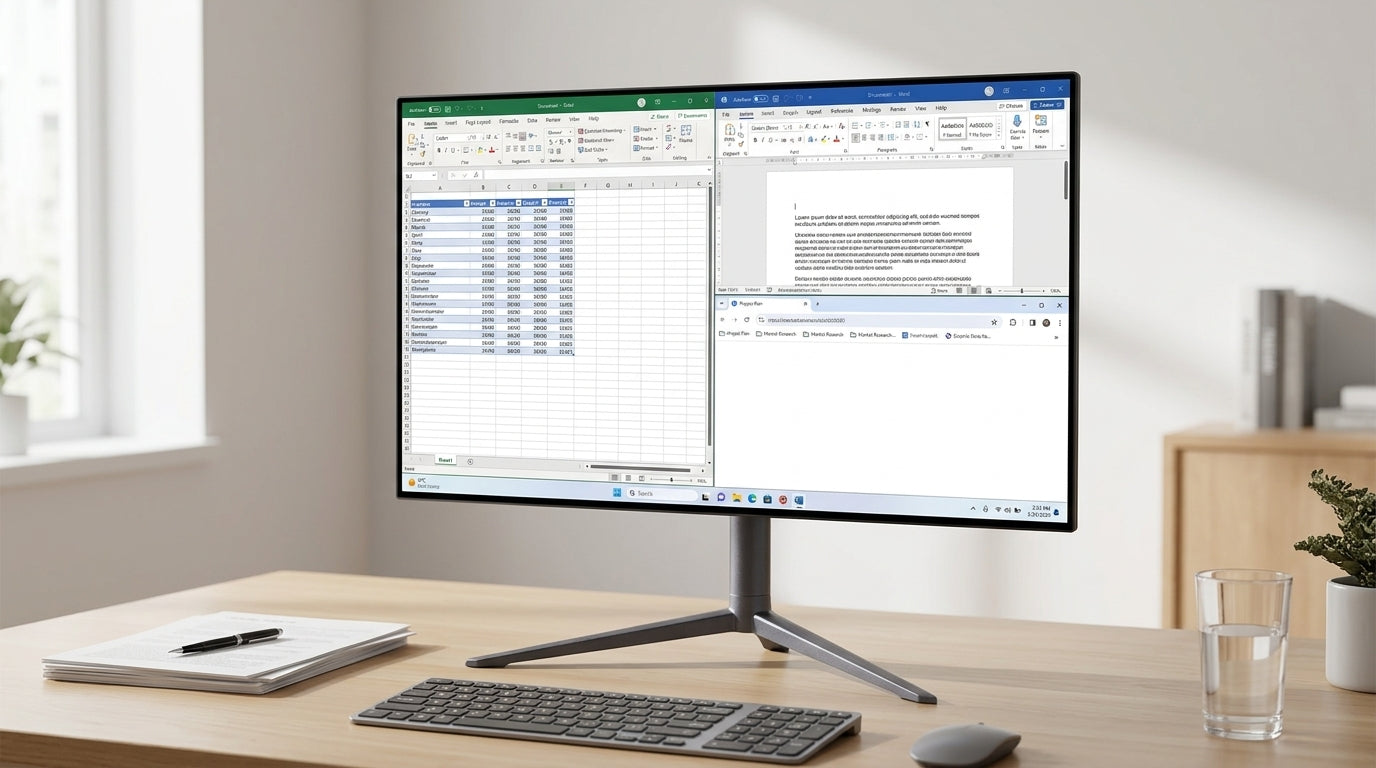
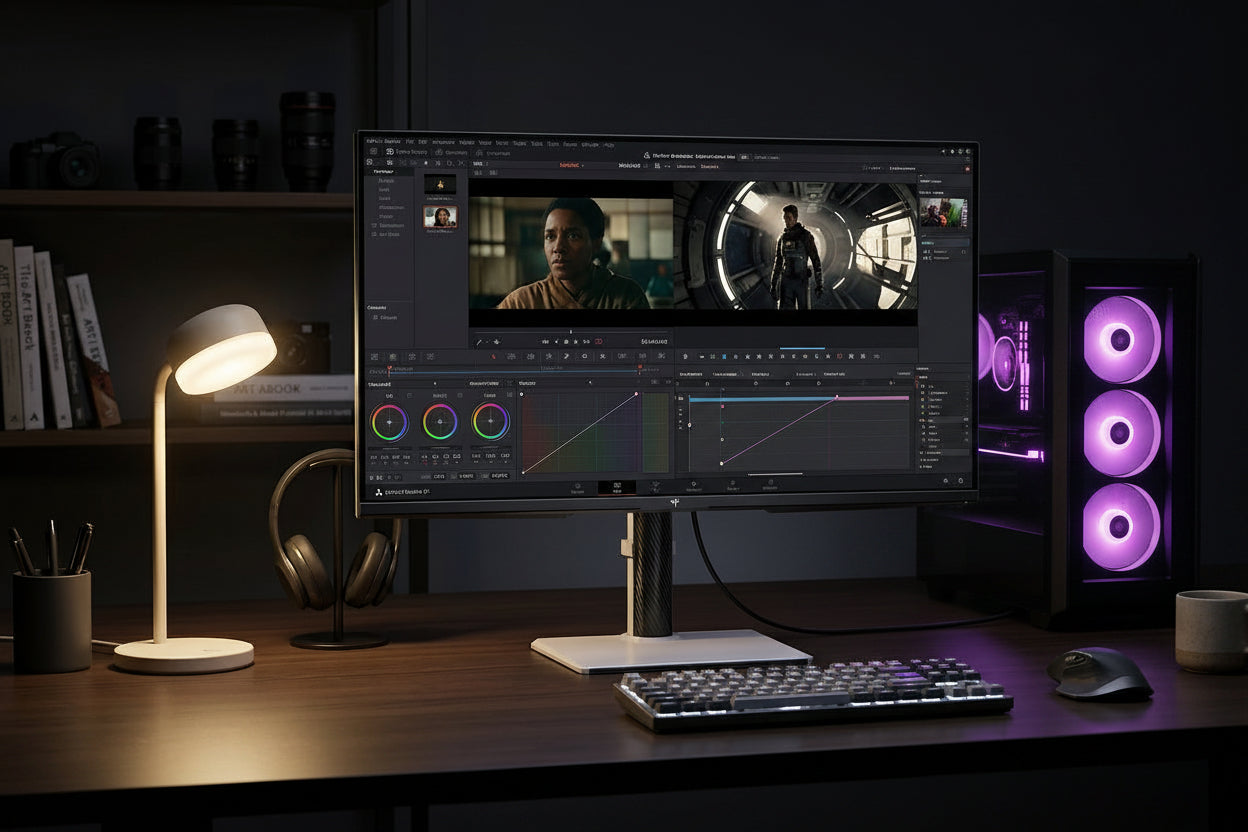
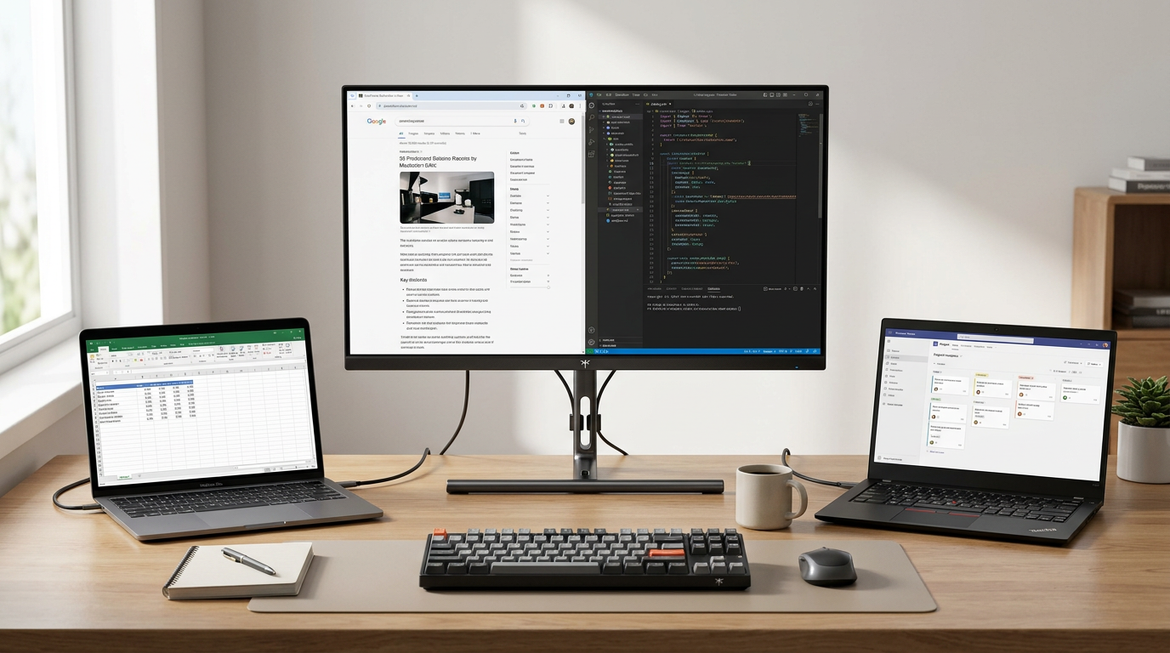
Mini-LED monitors give spec-focused buyers a practical path to strong HDR contrast and high brightness without OLED burn-in risks. They achieve this through thousands of tiny LEDs that enable precise local dimming, so bright highlights stand out while dark areas stay deep.

What Makes a Mini-LED Monitor 'True' HDR?
Mini-LED is a backlight technology, not a panel type. It replaces traditional edge-lit designs with a full-array local dimming (FALD) system that divides the backlight into hundreds or thousands of independently controlled zones. This hardware-level control became mandatory for high-tier HDR under the VESA DisplayHDR 1.2 update, which requires 2D local dimming across both axes for any monitor seeking HDR 1000 certification or higher.
As a result, Mini-LED panels can produce the scene-by-scene contrast that standard LED backlights cannot match. The same VESA update also introduced the DisplayHDR 1400 tier, setting a clear performance floor that separates marketing claims from certified hardware.
Local Dimming Zones: How Many Are Actually Enough?
Zone count matters, yet it is only half the story. On a 27-inch 4K panel, 576 zones already deliver visible HDR improvement in most dark-room tests. Moving to 1152 zones further reduces blooming around bright objects, but the benefit shrinks once native panel contrast rises.

HVA panels with roughly 5000:1 native contrast need fewer zones to mask halos than IPS panels limited to 1000:1. Review data from sources such as RTINGS local dimming tests confirm that zone count alone does not guarantee halo-free performance; panel technology changes how many zones actually feel sufficient.
HVA vs. IPS Mini-LED: The Hidden Trade-off in Your Daily Workflow
The practical difference appears during mixed work and gaming sessions. Many users must toggle local dimming or HDR on and off because desktop interfaces and office apps expose blooming around text and cursors. This repeated switching is often called the "Toggle Tax."
HVA-based Mini-LED models keep blooming low enough for many people to leave dimming enabled full time. IPS Mini-LED models deliver faster pixel response and wider viewing angles, yet the lower native contrast makes halos more obvious, pushing users to disable dimming for daily tasks.
HVA vs IPS vs OLED: Practical Trade-offs for Mixed Use
Relative performance patterns across key buyer priorities in typical 2026 setups.
Show comparison table
| Priority | HVA Mini-LED | IPS Mini-LED | OLED |
|---|---|---|---|
| Contrast & Black Depth | High | Medium | Very High |
| Motion Clarity | Good | Excellent | Very Good |
| Bright-Room HDR | Excellent | Very Good | Limited |
| Desktop Blooming Control | Strong | Moderate | Excellent |
| Toggle Friction | Low | High | Very Low |
The pattern above shows why many hybrid users lean toward HVA panels when they want to reduce daily friction.
Peak vs. Sustained Brightness: Decoding the HDR 1000/1400 Labels
Peak brightness figures are measured in small highlight windows and often drop sharply when the entire screen is bright. VESA DisplayHDR 1400 certification requires a monitor to sustain 900 nits across the full screen for at least 30 minutes, which is the measurement that actually affects long gaming or editing sessions.
This sustained output is where Mini-LED currently holds a clear edge over most consumer OLED panels. The same certification document also lists the 500,000:1 dynamic contrast requirement that only full-array dimming can reliably meet.
The $600 Boundary Flip: When Should You Buy OLED Instead?
Below roughly $500, Mini-LED models usually offer the strongest combination of brightness and contrast for the money. Once prices cross the $600–700 range, OLED panels become competitive for users who prioritize perfect blacks in dark rooms and do not need sustained high brightness.
Buyers who work in bright rooms, worry about burn-in during static productivity use, or want to keep local dimming active all day still find Mini-LED the safer long-term choice even above that price line.
How to Choose Your Mini-LED Monitor: A 3-Step Decision Guide
Step 1: Assess your tolerance for the Toggle Tax. If you prefer to leave local dimming enabled during desktop work, start with an HVA model. If motion clarity and color-critical tasks matter more, choose an IPS panel and plan to toggle settings.
Step 2: Match the monitor to your room. Mini-LED excels when ambient light is high or when you need HDR highlights that remain visible throughout the day. OLED remains preferable in controlled, darker environments.
Step 3: Align resolution and refresh rate with your GPU. A 4K 160 Hz Mini-LED such as the KTC M27P6 suits high-end PCs and consoles, while 1440p options like the KTC M27T6 or KTC M27T6S deliver smoother frame rates on mid-range hardware.
Review the full All-Mini-LED Monitors collection to compare current zone counts, brightness tiers, and stand ergonomics side by side before deciding.
For deeper background on how local dimming zones actually work, see this guide on local dimming zones in monitor backlights. A separate comparison of Mini-LED versus OLED gaming performance explores motion and longevity trade-offs in more detail.