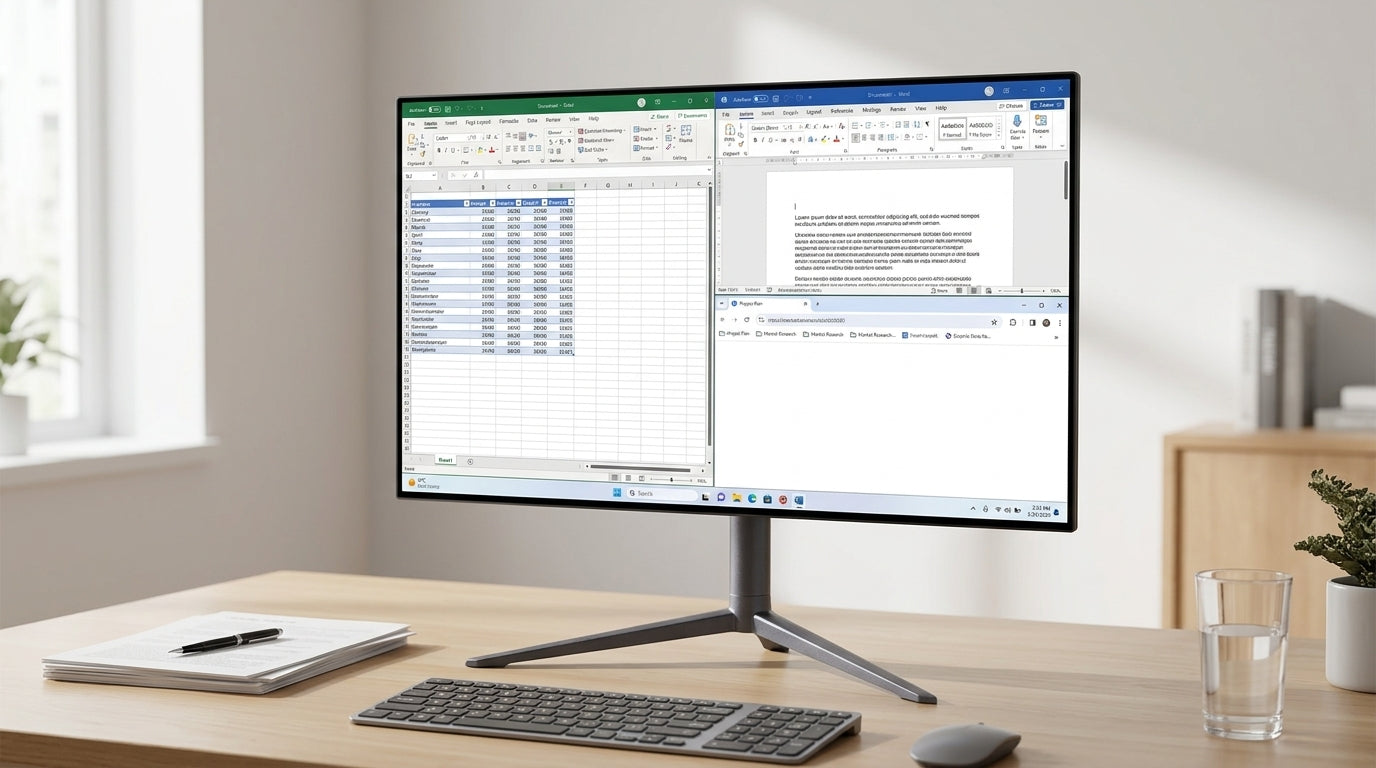
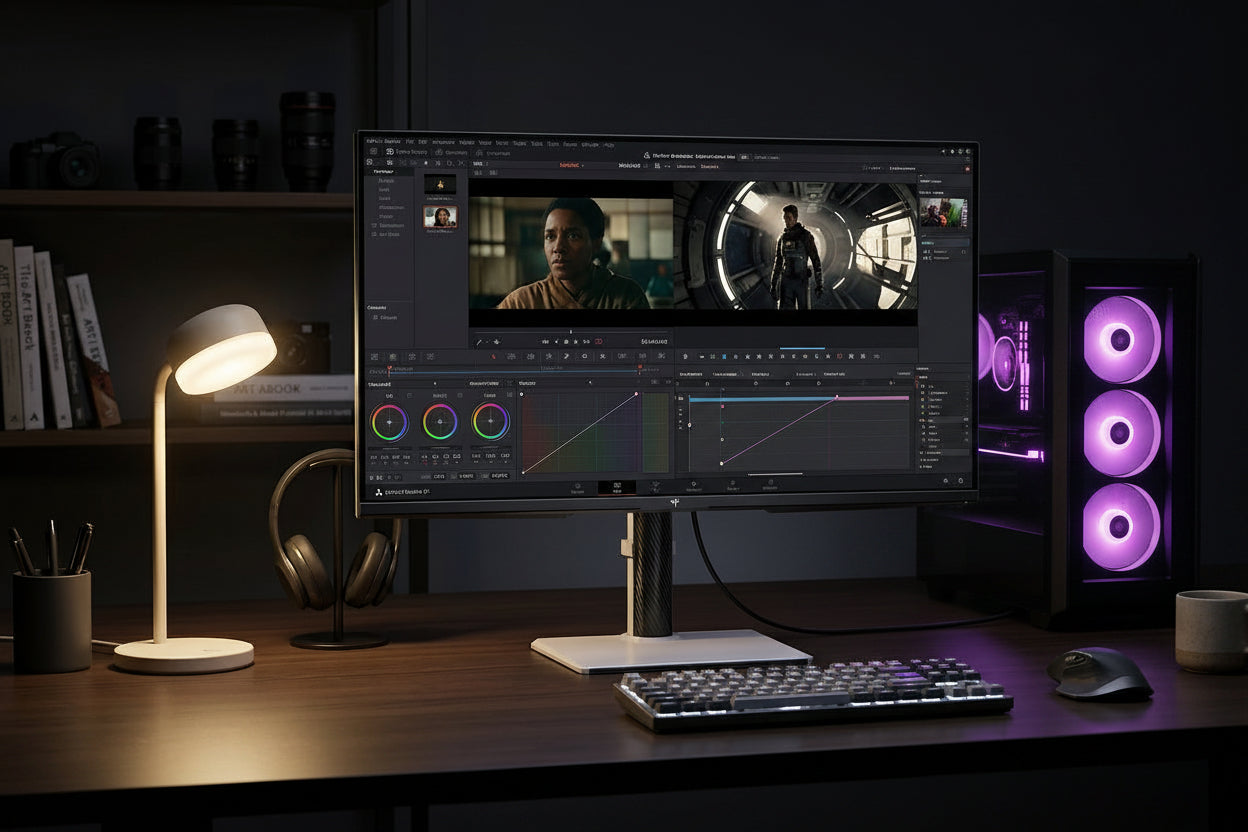
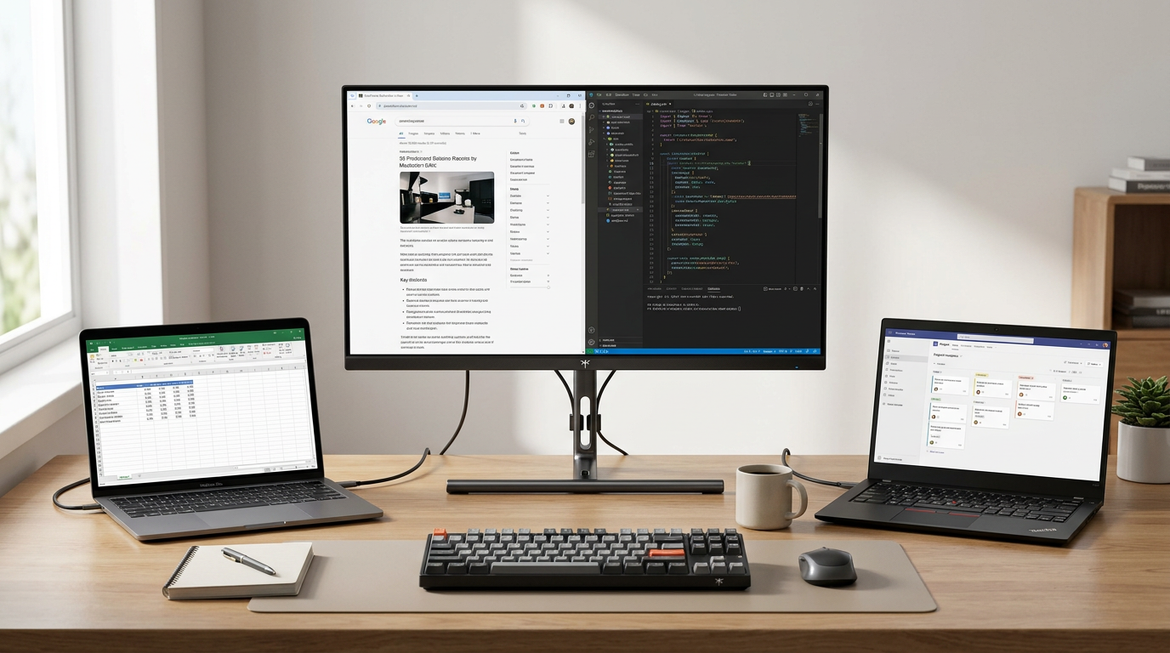
For international travel, the best portable monitor is not just the sharpest screen; it is the one your laptop, charger, adapter, and destination outlets can reliably power. Prioritize USB-C power delivery, low-to-moderate wattage, broad input compatibility, and a bright but efficient panel.
Start With Power: USB-C, Pass-Through, and Adapter Reality
A travel monitor should simplify your cable map. USB-C is the cleanest option because many portable displays can carry video and power through one cable, and several travel-focused monitors are built around single-cable power and display.

Before buying, confirm the monitor’s power input, your laptop’s USB-C output, and whether your wall charger supports the country’s voltage range. Many modern chargers handle 100-240V, but plug shape still changes by region, so a compact universal adapter remains essential.
Pass-through charging matters if you work long sessions. A monitor with USB-C power pass-through lets wall power feed the laptop while the laptop drives the display, reducing battery drain during hotel work, airport delays, or train rides.
Pick Efficient Display Specs Before Chasing Premium Ones
For most mobile professionals, 14 to 16 inches is the sweet spot. That size gives enough room for spreadsheets, decks, code, or browser windows without turning your carry-on into a desktop kit; travel testing often judges portability and connectivity alongside image quality.
Resolution is also a power decision. A 1080p panel is usually enough for office work and uses less energy than 4K, while 1440p or 1600p can be a strong upgrade for text clarity on 14- to 16-inch screens. A 4K portable monitor is excellent for visual work, but it asks more from the laptop GPU and battery.
Brightness is where travelers should not underbuy. Around 300 nits is practical for airports, cafes, and hotel rooms; 400 nits or higher is better for bright lounges or window seats. The tradeoff is simple: brighter screens look better in uncontrolled light, but they pull more power.

Match Ports to Every Device You Actually Carry
USB-C with DisplayPort Alt Mode should be your first requirement, but HDMI is the useful backup. Some laptops, handheld gaming systems, cameras, and work-issued machines still behave better over HDMI, though HDMI usually means a separate power cable.
Check the cable, too. Not every USB-C cable supports video, and a charge-only cable can make a perfectly good monitor look broken. For travel, pack one known-good USB-C video cable, one short HDMI or mini-HDMI cable, and one compact charger with enough wattage for your laptop and display. Also confirm USB-C video support on your laptop, tablet, or handheld; USB-C PD pass-through for long work sessions; a charger voltage range printed as 100-240V; and a protective sleeve that holds cables, not just the panel.

Battery Monitors Help, But They Are Not Always Better
A built-in battery can be useful when outlets are scarce or plug adapters are awkward. It is especially valuable for presentations, short editing sessions, or gaming from a handheld device.

But batteries add weight, cost, and another device to recharge. If you already travel with a capable USB-C PD power bank or high-wattage charger, a lighter non-battery monitor may be more reliable over a full week abroad.
Wireless or battery-powered models reduce cable clutter, but some portable monitors still perform better when wired, especially for sharpness, latency, and consistent brightness.
The Best Travel Formula
Choose a 14- to 16-inch IPS or OLED portable monitor with 1080p to 1600p resolution, at least 300 nits, USB-C video with power delivery, and HDMI backup. For creative work or premium gaming, step up only if your laptop, charger, and travel power setup can support the extra load.
That balance gives you the real win: immersive second-screen productivity without gambling your workflow on unfamiliar outlets, weak chargers, or battery anxiety.