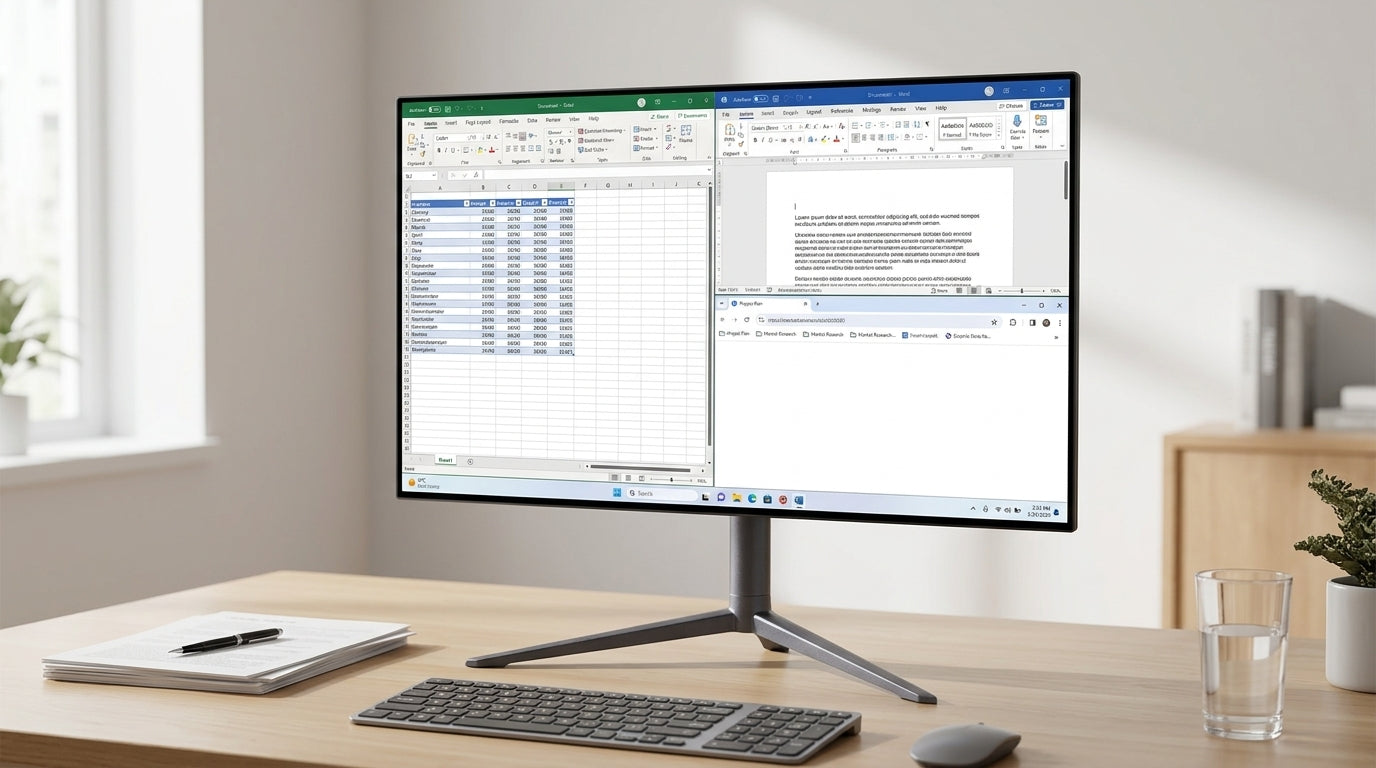
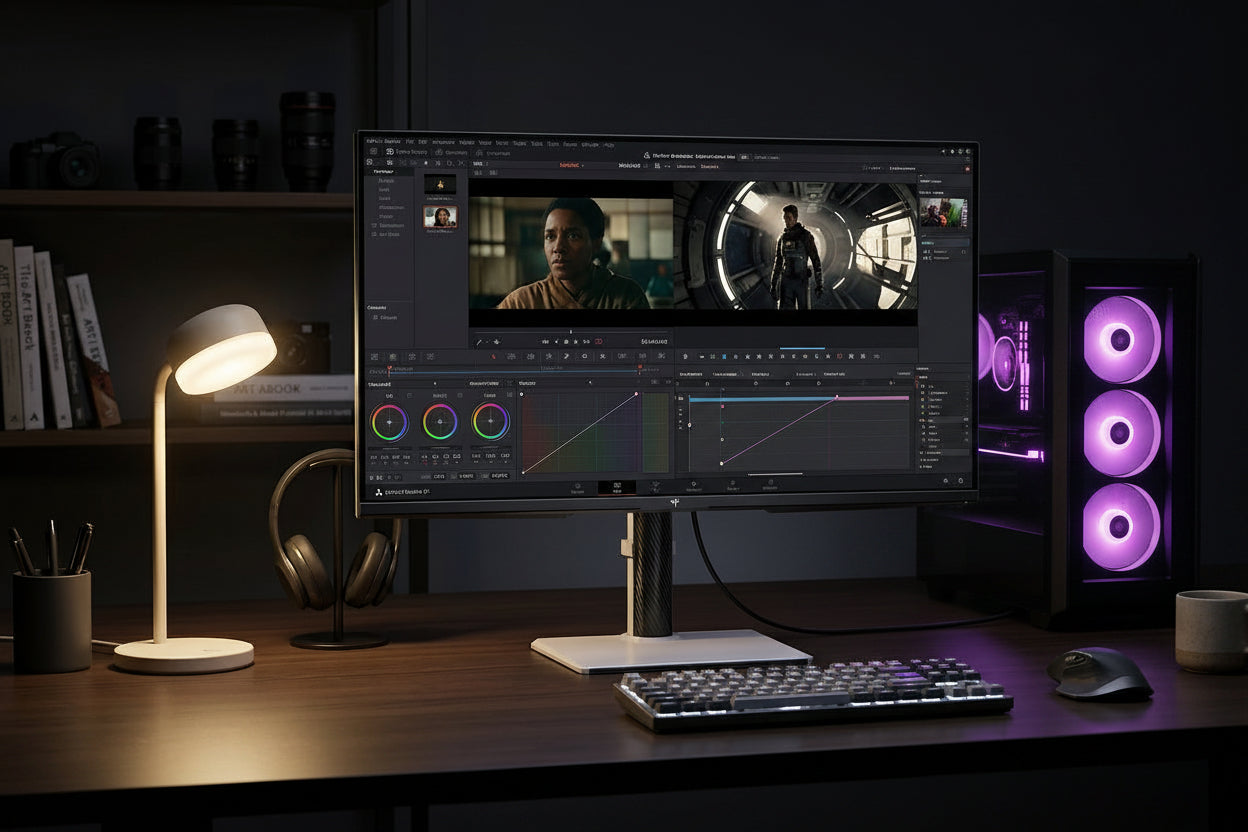
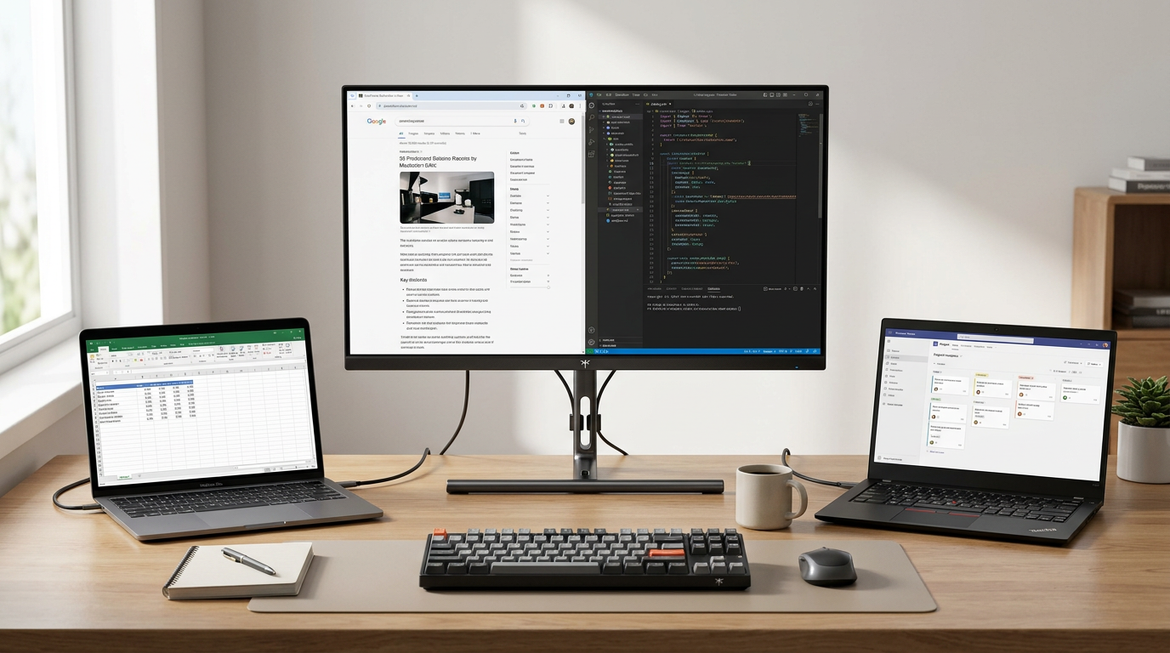
USB-C docking specs can look simple on the box, but real-world USB-C docking monitor performance depends on the full chain: the laptop port, cable, dock or monitor, and the device's supported modes. In practice, USB-C monitor specs are only a starting point; wattage and resolution do not guarantee stable charging, video handoff, or USB switching in daily use. The safest buying move is to check compatibility first, then treat the headline number as a clue, not a promise.

Why USB-C Docking Specs Mislead Buyers
For most buyers, the problem is not that the spec sheet is wrong. It is that the spec sheet leaves out the parts that decide whether a setup actually behaves well at a desk. A monitor or dock may advertise strong power, sharp video, and plenty of ports, yet still fail if the laptop, cable, or supported display path does not line up.
That is why the first question is not "How big is the wattage number?" It is "Does my laptop support this charging and video path in the first place?" Plugable's note on USB Power Delivery and real charging behavior is a useful reminder that stated PD numbers can be theoretical ceilings, not a promise of sustained output under every load.
A practical decision rule is this: if you need one cable for work every day, choose the setup only when the laptop, cable, and display path all support the same mode; if any link is uncertain, assume you will need a fallback. That is not pessimism. It is how you avoid black screens, slower charging, or a dock that only works on some ports.
The Specs That Actually Affect Daily Performance
Power Delivery Under Real Load
Wattage matters, but it does not tell the whole story. In practice, the monitor or dock has to supply a charging profile the laptop can accept, and it has to keep doing that while the laptop is under real workload. USB Power Delivery safety guidance also makes the cable side clear: higher-power charging depends on the right cable design, not just the wall adapter or the port label.
For buyers, that means a "100W" label should be read as a capability signal, not a guarantee. If your laptop already pulls a lot of power for editing, gaming, or heavy multitasking, verify the accepted PD profile and check whether the display's own power use may reduce the amount left for the laptop. The practical question is not whether charging starts; it is whether charging stays stable while the machine is busy.
Video Output Limits and Mode Support
Resolution and refresh rate are also conditional. The monitor may support a mode, but the source device and cable still have to carry it. If the chain cannot sustain the full mode, you may see fallback behavior such as lower resolution, lower refresh, or no image at all until the settings are reduced.
That is especially important for buyers comparing real-world USB-C docking monitor performance across Mac and Windows setups. One important boundary is that macOS does not support DisplayPort MST the way many Windows docks do, so a single USB-C path can behave differently depending on the laptop. If you want multiple displays or a more complex handoff, verify the laptop's behavior before you trust the label on the dock.
Data Paths, KVM Switching, and One-Cable Use
USB sharing and KVM behavior are convenience features, not universal guarantees. A monitor can have a KVM function and still fail to switch peripherals cleanly if the upstream USB path is not connected the way the system expects, or if the active source is not selected correctly.
This is where many buyers get misled. They assume the monitor's feature name is enough, then blame the monitor when a keyboard or mouse does not follow the video input. In reality, the upstream cable, source selection, and connected devices all affect the result. If you are comparing a desk that mixes work and play, the safer approach is to read KVM as "possible if the setup is aligned," not "automatic in every configuration." For a more detailed wiring path, see the one-cable USB-C setup guide.
Cable Quality and Signal Stability
Cable quality is the quiet failure point in many desks. A cable that charges a laptop can still be a poor fit for high-bandwidth video or for longer runs where flicker, dropouts, or mode loss show up.
Use a direct, full-function cable for the first test. That keeps the diagnosis simple. If the setup fails with a direct cable, the problem is easier to isolate. If it works only after removing adapters or docks, the chain is telling you something useful: the weakest link is likely not the monitor itself. KTC's notes on monitor cable length and picture quality also reinforce the basic rule that longer or lower-quality cables can reduce signal stability.

How to Read USB-C Docking Specs
Use this sequence when you compare a spec sheet or product page:
- Check the laptop first. Confirm that your laptop supports the charging and video behavior you want. A dock cannot add a mode the source device does not support.
- Check charging as a profile, not a slogan. Look for the accepted PD behavior, then ask whether the laptop can sustain that under load.
- Check video mode support next. Make sure the source device, cable, and monitor all support the resolution and refresh rate you expect.
- Check peripheral and KVM behavior. Treat USB sharing as a setup feature that depends on the upstream path and the active input.
- Check the fallback path. If the "one cable" claim looks uncertain, decide now whether you are fine using a second cable or a direct video path later.
A practical rule of thumb is this: if a product page only gives you a big wattage number or a headline resolution, stop there and verify the source-device details before buying. That is especially true for mixed Mac and Windows desks, where one setup may work cleanly and another may need a different path. If you want the logic in more detail, the USB-C KVM monitor setup guide for Mac and Windows is the right kind of follow-up.
Where a Monitor Fits in the Docking Decision
The monitor matters most when you want the display to act like part of the dock, not just the thing at the end of the cable. In that case, the buyer question is not only "How sharp is the panel?" It is also "How much charging does the monitor provide, what modes does it support, and how much switching do I want to depend on it?"
| Desk scenario | What usually matters most | What to verify first | Common watch-out |
|---|---|---|---|
| Office or mixed-use desk | Stable charging, clean single-cable use, basic peripheral sharing | Laptop PD support and USB-C video support | A number that looks good on the page but does not match the laptop's real charging behavior |
| Creator or high-resolution desk | Mode support, color, and a dependable display path | Source-device video mode and cable quality | Expecting the highest mode to work through every adapter or dock |
| Mixed laptop + gaming switch | Switching behavior, refresh support, and fallback flexibility | Upstream USB path and source selection | KVM or one-cable behavior that works in one mode but not another |
| Simple single-laptop desk | Convenience and stable basics | One direct cable and the laptop's supported mode | Buying extra features you will not use |
For office and creator desks, a product like H27P3 can be a fit-check example because it is built around 5K@60Hz or 2K@120Hz dual-mode use and 65W Type-C PD, which makes it relevant when the desk needs display clarity plus laptop charging. For more gaming-leaning mixed use, H27P6 shows a different priority set with 4K@160Hz, 1080p@320Hz, and 90W USB-C PD.
If you are browsing by category instead of one model, the 4K and 5K high-refresh monitor range is the broader place to compare desks that need sharper panels and stronger USB-C support.
The Final Compatibility Checklist
Before you buy or keep a USB-C docking setup, check these five things:
- Confirm the laptop's supported modes. Verify charging and video behavior separately so you do not assume one port does both.
- Use a direct cable for the first test. If the setup only works after adapters or hubs are removed, that tells you where the problem lives.
- Match the video mode to the source device. If the image falls back to a lower resolution or refresh rate, treat that as a compatibility result, not an automatic defect.
- Treat KVM as conditional convenience. If peripheral switching is inconsistent, check the upstream USB path and source selection before blaming the display.
- Expect a fallback plan. A good desk can still use a second cable, a direct DisplayPort path, or a different input if the all-in-one path does not hold up.
If you are unsure, test before the return window closes. That is the cleanest way to separate a bad cable, a mismatched port, and a monitor that simply is not the right fit for your laptop. For troubleshooting, the USB-C KVM connection guide is the best next stop.
FAQs
How Can I Tell If My Laptop Supports USB-C Video and Charging at the Same Time?
Check the laptop's USB-C documentation for both display output and charging support. If either one is missing, the one-cable setup will not behave the way the marketing page suggests. The safest assumption is that you need explicit support for both, not just a USB-C port.
What Does USB-C Power Delivery Wattage Actually Tell Me?
It tells you the charging ceiling, not the full charging experience. Real-world behavior still depends on the laptop's accepted PD profile, the cable, and how much power the laptop is using during the session. High wattage helps, but it is not a complete compatibility check.
Can a USB-C Dock or Monitor Reduce My Refresh Rate or Resolution?
Yes. If the source device, cable, or path cannot sustain the full mode, the setup may fall back to a lower resolution or refresh rate. That is often a compatibility issue rather than a defect, so the first move is to simplify the chain and retest.
Why Does KVM Work for One Setup but Not Another?
KVM behavior depends on the upstream USB path, the selected source, and the devices attached to the monitor. A working KVM feature on one desk does not guarantee the same result on another, especially if the laptops or cables differ.
Can I Trust a Single Cable to Handle Gaming, Charging, and Peripherals?
Only if the whole chain supports that workload together. For some desks, one cable is a clean daily solution. For others, it is smarter to use a fallback path for gaming or heavy work and keep charging and peripherals separate.
Final Takeaway
The best USB-C docking setup is the one that matches your laptop, not the one with the biggest number on the page. If you verify power, video, cable quality, and switching behavior in that order, you will avoid most of the common regrets around real-world USB-C docking monitor performance. When the all-in-one path is uncertain, choose the setup with a clear fallback plan instead of hoping the headline spec will carry the whole desk. USB-C monitor specs are useful only when you test them against the full chain, not in isolation.