A one-cable USB-C KVM setup can simplify a Mac-and-Windows desk, but a true USB-C KVM monitor path only works when the computer, monitor, cable, and power path all agree on video, data, and charging. USB Power Delivery is what makes the charging side possible, while display support still depends on the device and port behavior. For most people, the smart move is to verify compatibility first and treat a two-cable fallback as a normal plan B.

What One-Cable USB-C KVM Actually Requires
The phrase "one cable" sounds simple, but the real requirement is a chain of support. Your source device, monitor or KVM, cable, and upstream path all have to handle the same mix of display, data, and power. A cable that charges a laptop does not automatically carry video, and a video-capable port does not always keep full USB hub behavior alive at the same time.
That is why this topic is less about USB-C existing and more about whether the full path is compatible. Apple's Mac port identification guide is useful here because MacBook support varies by port type and chip generation. On the power side, USB Power Delivery explains why a single USB-C link can charge a laptop while moving data. The catch is that charging success alone does not prove the setup can also switch video and peripherals cleanly.
A useful rule of thumb is simple: if any link in the chain is uncertain, the setup is not really one-cable yet. In that case, the fallback is not a failure, it is the safer version of the desk.
USB-C video bandwidth and charging dropouts are the two checks that usually separate a smooth hybrid desk from a frustrating one.
Which Port Layout Makes Hybrid Work Possible
Not every Mac and Windows pairing should be wired the same way. The best path depends on whether the computer and monitor can share a single USB-C link for video, power, and USB devices, or whether one of those jobs needs a separate path. The table below helps separate the cleanest layouts from the ones that usually need an adapter or extra cable.
| Connection path | What it usually handles | What to verify first | Best fit | When it breaks down |
|---|---|---|---|---|
| USB-C to USB-C direct | Video, charging, and some USB data on supported devices | Does the computer output USB-C display video, and does the monitor support the same mode? | A laptop-first hybrid desk where one verified cable can do most of the work | If the laptop charges but does not show video, or if USB peripherals lag or disappear |
| USB-C plus separate video cable | Video is separated from charging or USB switching | Whether the monitor input and the computer's video output both match | Mixed-device desks where one machine is easier on USB-C and the other is not | If you want the cleanest single-cable route and this path still needs two links |
| USB-C with separate USB upstream path | Video is handled one way, peripherals another | Whether the monitor or hub supports independent USB routing | Desks that care more about stable keyboard and mouse switching than cable count | If switching works only for video but not for the USB hub |
| Adapter or dock in the chain | Depends on the adapter or dock, not just the cable | Whether the adapter preserves video, power, and data together | Edge cases where the laptop port is limited or the monitor needs a different input type | If the adapter becomes the weak link and creates dropouts |
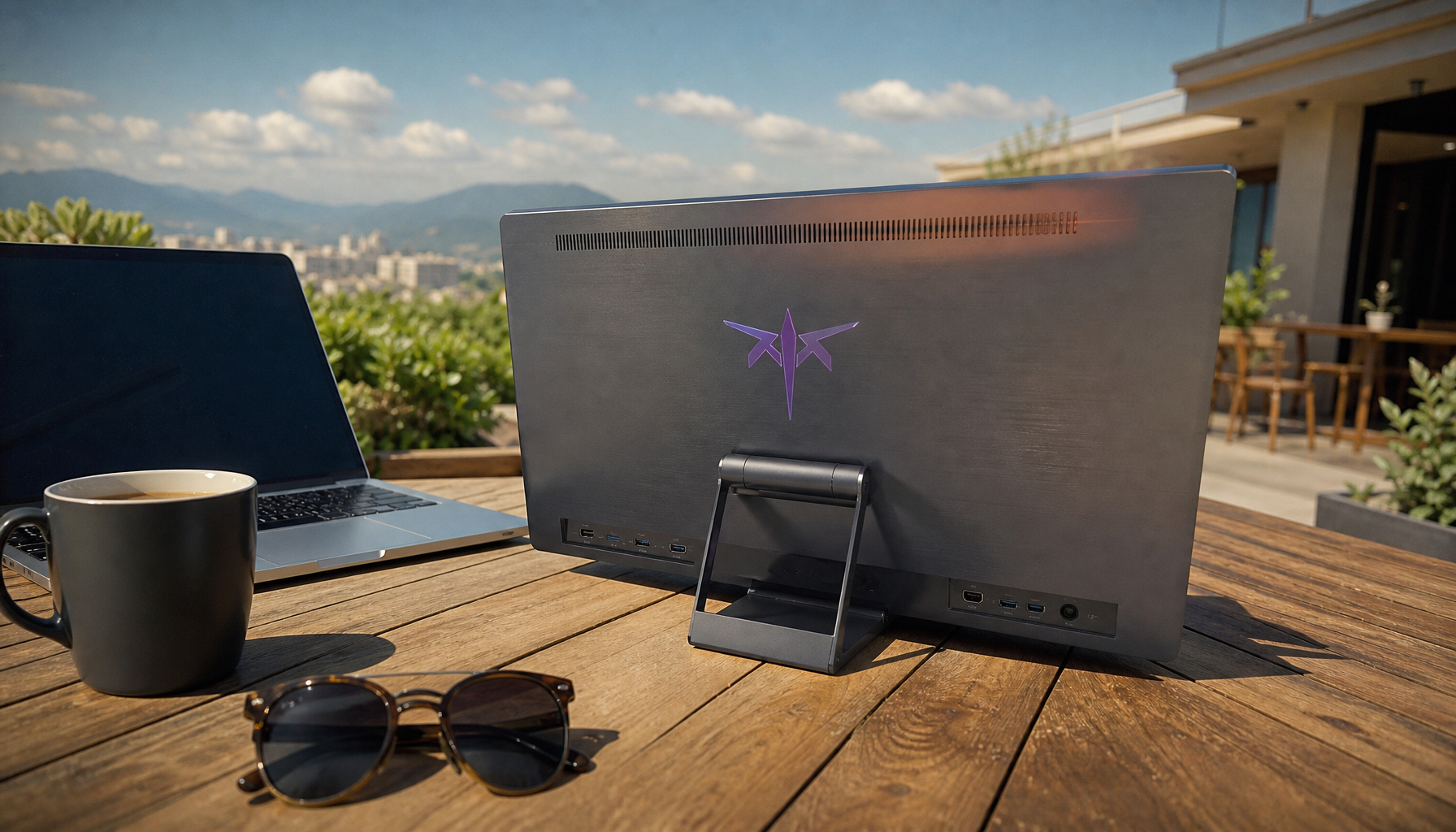
The tradeoff to watch is bandwidth. KTC's USB-C video bandwidth guide explains the basic split: a display-first path can favor video bandwidth, while a lane setup that protects USB 3.x behavior can be better for hubs and peripherals. In plain English, the prettier or more display-heavy path may leave less room for fast USB devices.
That matters for a USB-C KVM monitor Mac Windows setup because the desk can flip from "looks clean" to "feels incomplete" if the hub side gets too weak. If you need external drives, webcams, or frequent peripheral use, do not judge the setup by video alone.
USB-C video bandwidth is the right lens when the desk looks perfect on paper but the mouse, keyboard, or USB devices feel slower than expected.
A Monitor That Fits the One-Cable Path
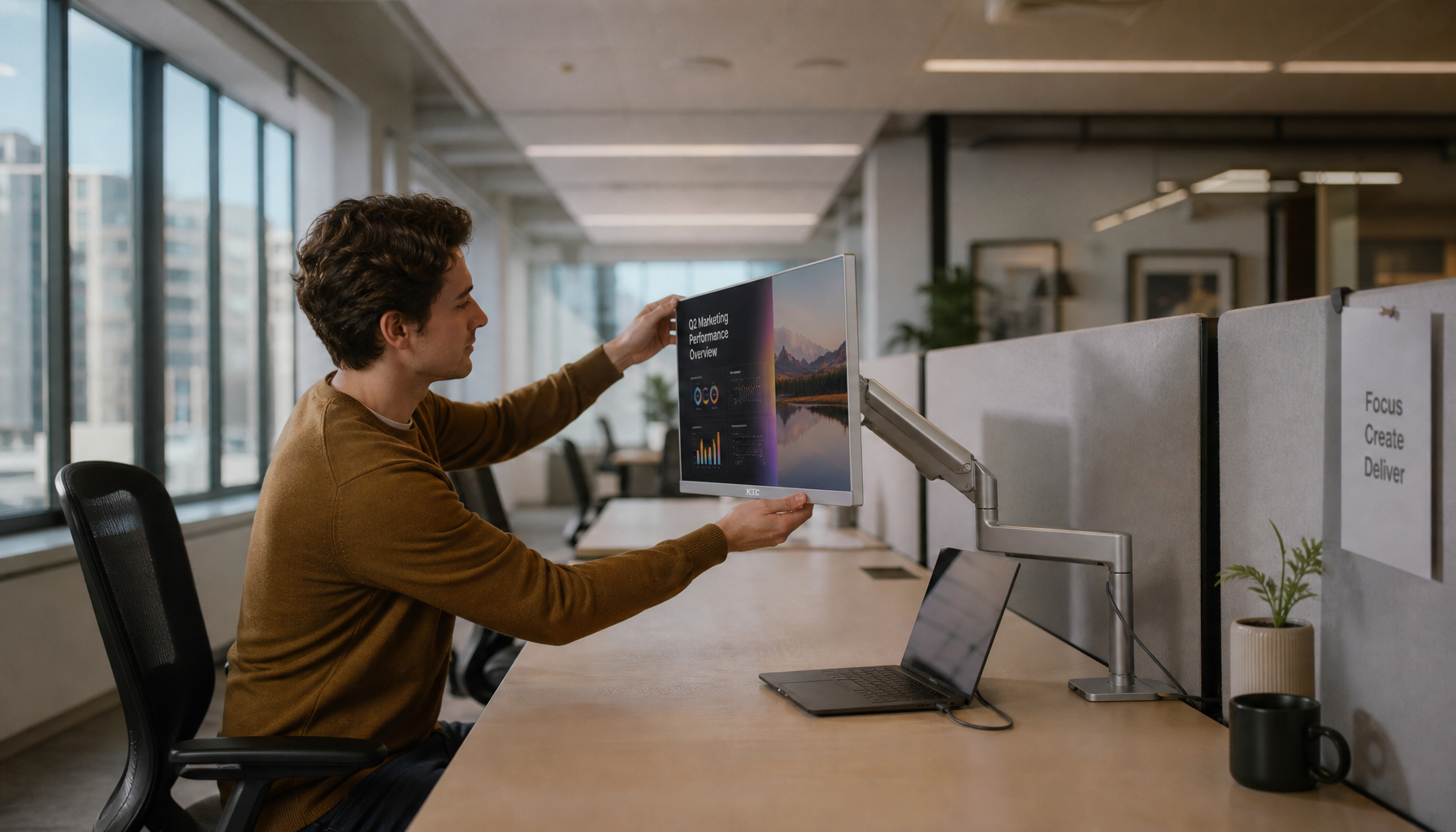
For a desk that wants a simpler hybrid layout without pretending every Mac or Windows PC behaves the same, the KTC 32" 4K 60Hz Smart Monitor with Google TV in Netflix Audio Licensed is a reasonable fit to check. The product facts say it supports a 65W USB-C hub and KVM switch, so one cable can handle video, data, and power when the source device supports that path. It also says the built-in KVM lets one keyboard and mouse control both a PC and a laptop.
That makes it relevant for a shared work-and-play desk where the goal is less cable clutter and less replugging. It is not a universal compatibility promise, though. The monitor-side workflow can be ready while the computer side still needs a verified USB-C display mode, a compatible charging profile, or a different port path.
In practice, this kind of monitor fits best when the MacBook or Windows PC already has a known-good USB-C video output and the user wants the monitor to do more of the switching work. It is less compelling if you already know one machine will need HDMI, DisplayPort, or a separate upstream cable. In that case, the monitor can still be useful, but the desk stops being a true one-cable setup.
The product page also supports a few helpful checks: 4K resolution, 60Hz output, and built-in USB-C hub behavior. Those details matter if your priority is a stable hybrid desk rather than a high-refresh gaming panel. If you want to browse broader options first, the Office Monitor collection is the cleaner navigation path than forcing a gaming monitor into a work-focused KVM setup.
Build the Wiring Path Step by Step
Start with the simplest version of the setup and add pieces only after each layer works. That sounds obvious, but it is the fastest way to avoid blaming the wrong part.
- Connect one computer directly to the monitor with the USB-C cable you plan to use.
- Confirm that the monitor shows video and that the device actually charges.
- Test keyboard and mouse through the monitor's KVM path before adding any extra hub or adapter.
- Switch to the other computer and repeat the same test without changing the rest of the desk.
- Add a dock, adapter, or secondary cable only if the direct path fails a specific check.
- Once the setup is stable, tidy the cables and leave the fallback cable in a drawer, not hidden behind the monitor.
This order matters because cable quality, power delivery mismatch, and bandwidth limits are common causes of disconnects or charging dropouts, according to KTC's USB-C disconnect and charging guide. If the desk fails, isolate the failure by removing pieces rather than adding more.
A good habit is to test one variable at a time. If the image drops after adding a dock, that dock is now the first suspect. If charging works but the mouse stops following the active machine, the USB upstream path is the first thing to check.
charging dropouts usually point to the weakest link in the chain, not to the whole desk design.

Why Setups Fail and How to Fix Them
The most common failure is simple: the laptop charges, but no video appears. That usually means the port or cable is not carrying display output, even though power delivery works. The first check is the source device's USB-C display support, not the monitor setting.
Another common issue is the reverse. Video works, but USB peripherals drop out or do not switch with the active machine. That often points to the upstream USB path or lane allocation, especially if the setup is trying to preserve video quality and USB hub behavior at the same time.
If switching does not follow the active computer, confirm the selected input and the KVM source are matched to the machine you actually want to use. Then retest with only one cable path in place. When the problem disappears after simplification, the missing piece was probably the adapter, dock, or cable in the middle.
For a Mac-and-Windows hybrid desk, the safest habit is to assume each machine may need a different path until it proves otherwise. That is especially true when one computer uses a USB-C direct path and the other needs HDMI, DisplayPort, or a separate USB upstream line. KTC's hybrid desk setup guide is a useful companion if you are mapping two systems to one desk.
If you want more background on the lane tradeoff itself, the 2-lane vs 4-lane USB-C breakdown explains why a setup can look clean and still compromise peripheral behavior.
For broader single-cable context, Thunderbolt 5 and USB4 v2 show how newer standards expand what a single link can carry, but the basic compatibility check still matters before you buy.
Compatibility Checklist Before You Buy
Use this quick filter before buying parts for a one-cable USB-C KVM setup:
- Confirm that the Mac or Windows PC supports USB-C display output, not just charging.
- Check that the monitor or KVM supports the same video mode and switching behavior you want.
- Use a cable that is known to handle video, data, and power together.
- Expect some setups to favor display quality over USB hub speed.
- Treat adapters and docks as possible failure points, not automatic upgrades.
- If either computer needs a different path, plan for a two-cable fallback from the start.
If you are still comparing displays, the 4K monitor collection is a practical place to start, especially if you want a monitor that can double as the center of a hybrid workspace.
FAQs
How Do I Know If My MacBook Supports a One-Cable KVM Setup?
Check whether your MacBook's USB-C or Thunderbolt port supports display output and the charging behavior you need. Apple's port guide is the safest starting point because support can vary by model and chip generation. If the Mac charges but does not send video cleanly, a one-cable setup is not ready yet.
Can a Windows PC Use the Same USB-C Cable as a Mac?
Sometimes, but only if both computers support the same display and power path. A Windows PC may work through USB-C, HDMI, or DisplayPort depending on the model. The shared desk goal is fine; the exact cable path may need to differ by machine.
Why Does USB-C Charge My Laptop but Not Show Video?
Because charging and display are separate functions. A port can support USB Power Delivery without supporting video output, or it may support video only in a specific mode. That is why power alone is not enough to call the setup compatible.
Do I Need a Special Cable for KVM Switching?
You need a cable that matches the whole job, not just charging. A charging-only USB-C cable will not reliably carry video or USB data for KVM use. If the desk feels unstable, the cable is one of the first things worth replacing.
When Should I Use a Two-Cable Fallback Instead?
Use it when the single-cable path keeps losing video, charging, or USB switching on one of your devices. A two-cable fallback is often the cleaner choice for mixed Mac and Windows hardware, because it removes the weakest link without sacrificing the whole desk.
Final Takeaway
A one-cable USB-C KVM setup is worth pursuing when the whole chain supports it, not just when the port says USB-C. If your Mac and Windows devices both verify cleanly, the setup can stay simple and tidy. If any piece is unclear, use the fallback path early and avoid turning a good desk into a troubleshooting project. The right USB-C KVM monitor is the one that matches your devices' actual behavior, not the one that promises universal simplicity.