For video editing, resolution is only part of the decision. A dependable monitor also needs consistent brightness, color, and tone across the screen and through the full signal chain.
Resolution Gets Attention, Consistency Wins Edits
A 4K panel helps you inspect focus, noise, titles, and fine texture, which is why 4K resolution is a smart baseline for editing. But resolution only tells you how many pixels you have, not whether those pixels agree with each other.
For video editing, the bigger risk is making a correction based on a screen that misleads you. If the left side of the panel is warmer than the right, or the corners are dimmer than the center, skin tones and shadow detail can drift without you noticing.

That is the display requirement many spec sheets bury: uniformity. A monitor can advertise 99% DCI-P3 and still be frustrating for grading if brightness and color shift across the panel.
The Spec to Look For: Uniformity
Screen uniformity means the monitor shows consistent color temperature and luminance across the display. For an editor, that matters because timelines, scopes, viewers, and reference frames often sit in different parts of the screen.
If your preview window is centered but your reference image sits near the edge, weak uniformity can make one shot look slightly brighter, greener, or flatter than another. You may start correcting footage that is already fine.

Color accuracy still matters. Many serious editing monitors target Delta E under 2, and factory-calibrated displays can reduce guesswork out of the box. But calibration at the center of the screen does not automatically guarantee even performance everywhere else.
Some affordable monitors are accurate enough for cutting, social video, and office production, but finishing paid color-critical work demands a stricter standard.
Why HDR Makes This Harder
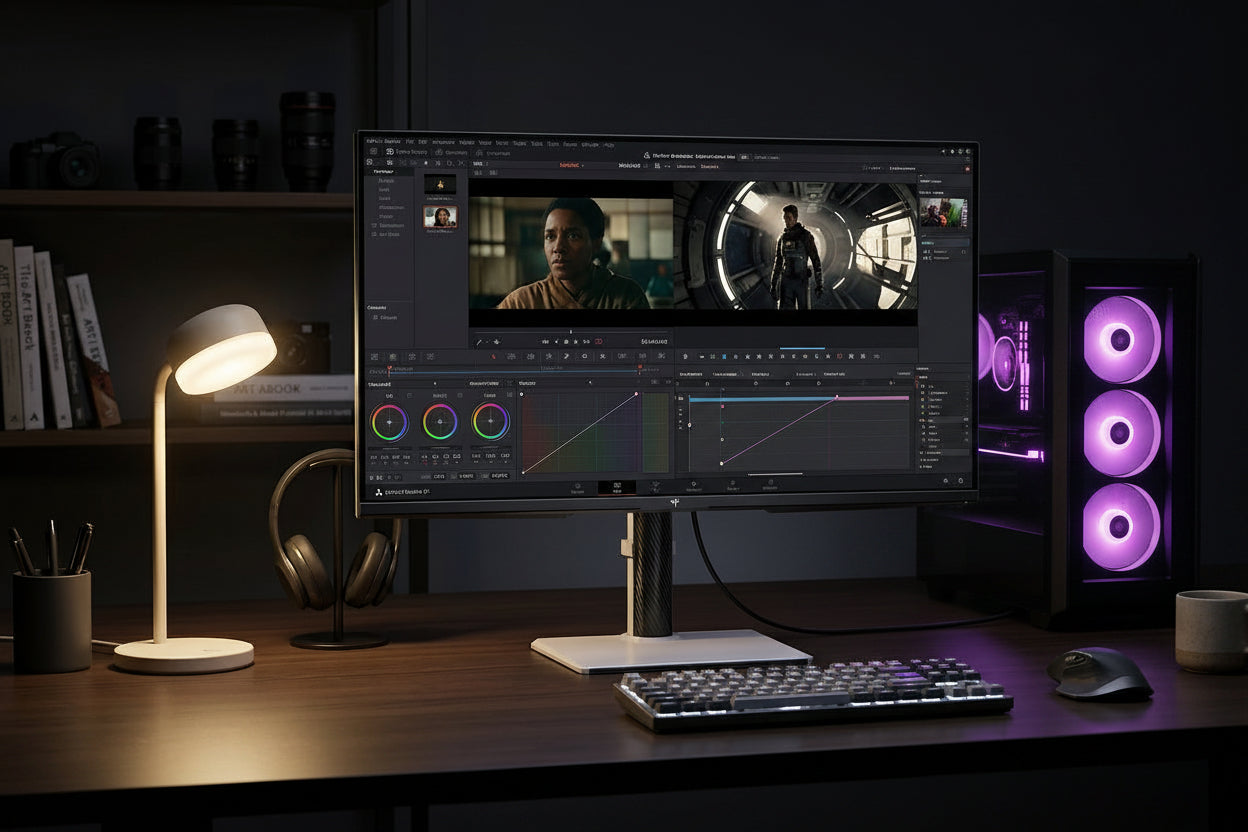
HDR raises the stakes because the display must handle deeper blacks, brighter highlights, and wider color volume at the same time. A monitor that looks fine in SDR can reveal uneven backlighting, blooming, or weak tone mapping once you push high-contrast footage.

For true HDR decisions, brightness is not just a marketing number. Video reference guidance often points to high peak luminance, with 1,000-nit brightness appearing in serious HDR monitor discussions.
That does not mean every editor needs a 1,000-nit mastering display. It means you should match the monitor to the job. Social edits, corporate videos, and SDR online video can run well on a strong 4K IPS display; HDR grading needs a more disciplined panel.
A Practical Buying Checklist
Before you buy, scan past the flashy terms and ask whether the monitor supports repeatable decisions.
- Look for uniformity compensation or published uniformity testing.
- Prioritize Delta E under 2 for color-sensitive work.
- Choose near-100% Rec.709 for SDR and strong DCI-P3 for cinematic work.
- Confirm true 10-bit support across the monitor, GPU, cable, and software.
- Use IPS or professional OLED/Mini LED when color consistency matters.
Size also affects how useful that consistency feels. A 27-inch screen gives editors more room for timelines and panels, and more screen space can make daily work easier without overwhelming a normal desk.

The Bottom Line for Editors
Do not buy an editing monitor on resolution alone. The real performance layer is whether the display stays honest across the screen, holds calibration, and supports the signal your footage needs.
A reliable editing display should help you make decisions once, not recheck them on three other screens. That is where a good monitor stops being a spec sheet and starts becoming part of your creative control system.