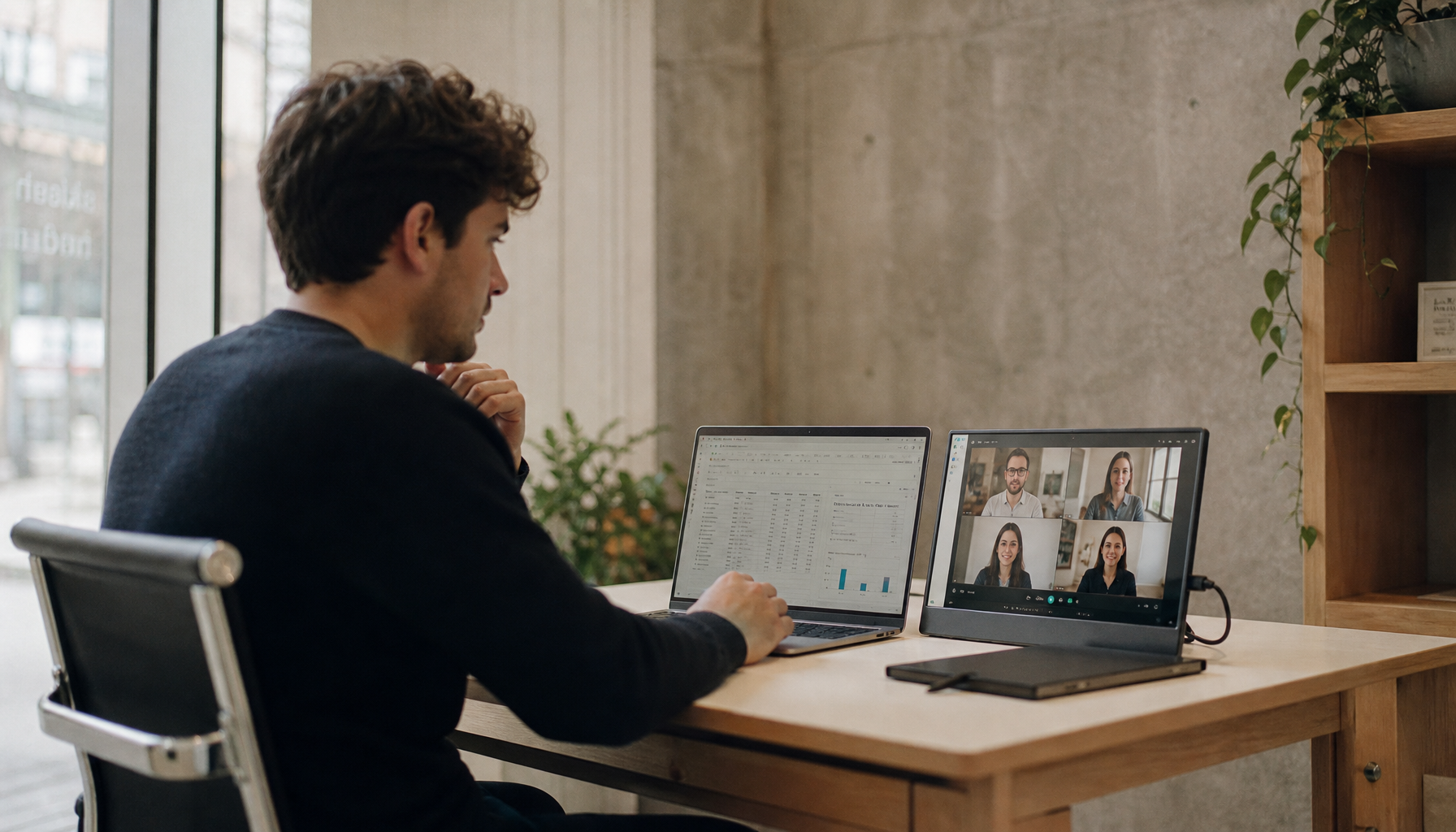
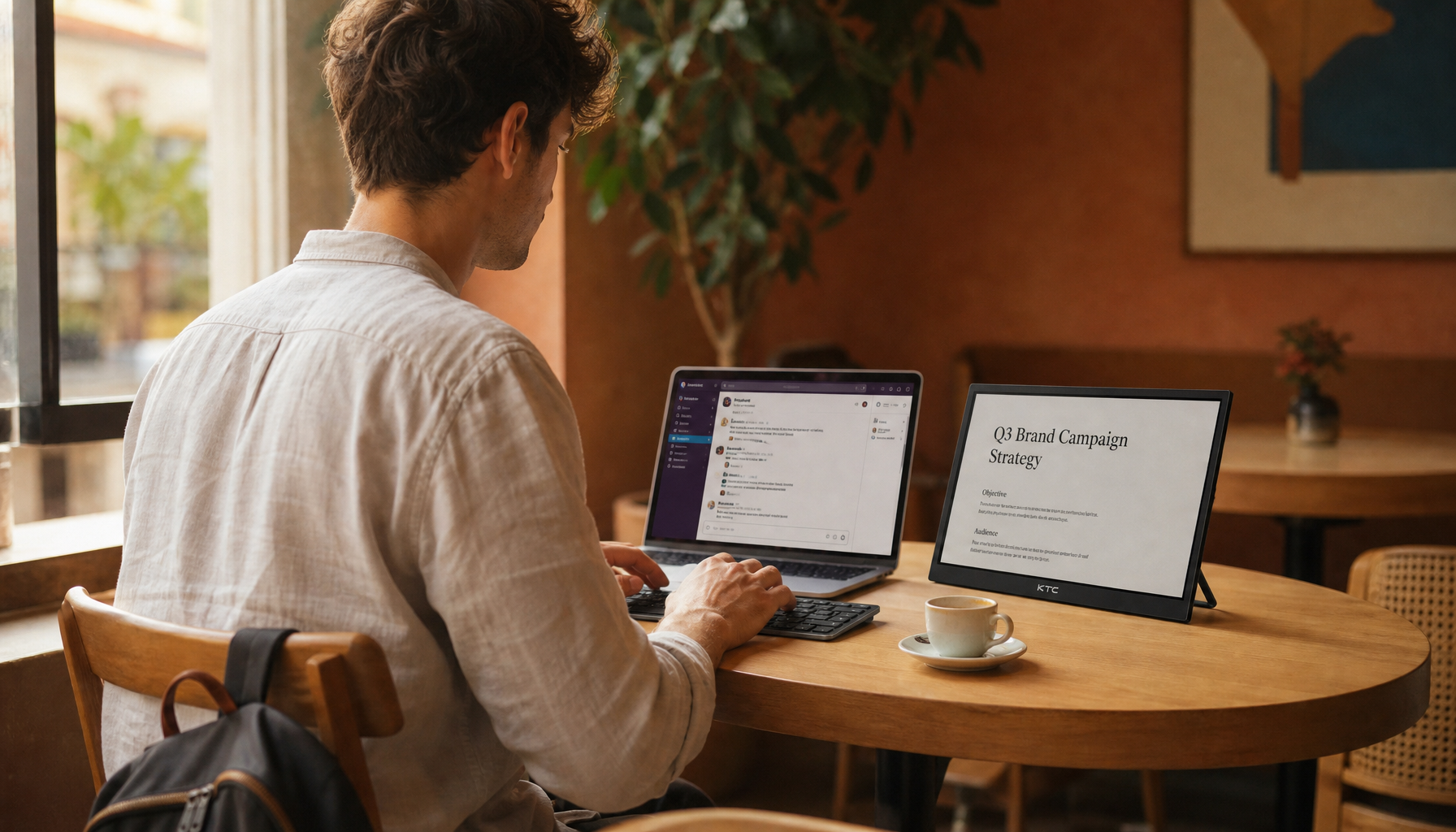
Scrolling through TikTok or Instagram Reels on a standard horizontal monitor often feels awkward, with black bars eating up most of the screen and breaking the immersive flow that mobile users expect. A vertical touch monitor solves this by delivering native 9:16 viewing, responsive touch interaction, and easy rotation, letting desktop users enjoy an infinite scroll experience that feels closer to their phone while keeping the power of a full computer setup.

The Horizontal Waste: Why Standard Monitors Fail the Scroll
Vertical video dominates platforms like TikTok and Instagram, yet most desktop monitors force this content into a 16:9 frame. The result is letterboxing that wastes roughly 70% of the available screen space, shrinking the video and surrounding it with distracting black bars. This creates a disconnected browsing experience that lacks the full-screen immersion mobile users take for granted.
Horizontal monitors also require constant zooming and panning to read captions or engage with comments, which interrupts the natural scrolling rhythm. In contrast, a vertical orientation matches the native aspect ratio of short-form content, filling the screen edge to edge and allowing seamless top-to-bottom navigation.
As this PCWorld guide to vertical monitors explains, vertical orientation is ideal for full-screen social media feeds, providing an immersive 'infinite scroll' experience for platforms like TikTok and Instagram Reels that horizontal monitors cannot match.
KTC's rotating monitors make switching orientations effortless, so you can flip to portrait for social browsing and back to landscape for work or gaming without swapping devices. This flexibility addresses the core frustration many creators and power users face every day.
The Psychology of Portrait: Why Vertical Feeds Feel Natural
Research shows users have a strong preference for portrait orientation when dealing with high-density vertical content such as social feeds. Portrait mode aligns with how people naturally hold phones, creating a more intuitive interaction pattern that reduces cognitive friction.
Vertical scanning requires less horizontal eye movement than wide displays, which can help minimize fatigue during long sessions. While individual results vary, many users report that top-to-bottom reading feels more efficient for endless feeds, supporting sustained attention without constant refocusing.
This IDSA study on portrait versus landscape preferences confirms a natural inclination toward portrait orientation for tasks involving high-density vertical content, such as browsing social feeds.
The psychological flow state that comes with infinite scrolling becomes smoother when the hardware matches the content format. Instead of fighting the monitor layout, your eyes and attention stay engaged with the videos themselves.

For heavy social media users, this natural feel can make desktop sessions more comfortable and productive compared to forcing mobile content onto a landscape screen. The setup bridges the gap between phone-like intuition and desktop capability.
From Viewing to Creating: The Vertical Touch Workflow
Beyond passive scrolling, a vertical touch monitor transforms creator workflows by enabling tactile quality control on desktop. Touch interaction mimics the mobile editing experience while delivering the rendering power and multi-window capabilities of a full PC.
Editors working in CapCut or Premiere can scrub timelines, adjust captions, and preview 9:16 output directly with finger gestures, reducing the need to constantly switch between mouse, keyboard, and phone. This tactile feedback helps catch framing issues early in the process.
Streamers benefit from the Aitum Vertical plugin for OBS, which lets them manage 9:16 and 16:9 canvases simultaneously. Touch-based scene switching becomes intuitive when monitoring TikTok Live alongside traditional streams.
The Creator’s Dual-Stream Workflow shifts the value from simple viewing to practical production advantages. Real-time safe-zone validation prevents UI overlap errors that only appear in vertical format, while desktop horsepower handles encoding that phones struggle with.
If your day involves both consuming and creating short-form content, the combination of rotation, touch, and PC connectivity creates measurable workflow efficiency. Check our guide on dual monitor setup vertical vs horizontal for more ideas on hybrid creator stations.
Smart Display vs. Desktop Monitor: Choosing Your Scroll Engine
Not every vertical setup requires a full PC connection. The choice between a dedicated gaming-style vertical touch monitor like the H27E6 and a standalone smart display like the MegPad depends on your rotation habits and software needs.
PC-connected monitors deliver high refresh rates and full desktop application support, making them ideal when you need precise editing, high-bitrate streaming, or integration with professional tools. However, Windows touch mapping in portrait mode often requires manual calibration, creating a "Windows Tax" of extra setup steps.
Standalone smart displays running Android offer instant app access without boot times or scaling issues. They function as self-contained social satellites perfect for quick checks or dedicated scrolling stations, though they lack the raw power for heavy desktop editing.
If you rotate between orientations three or more times daily, a monitor with easy mechanical rotation provides better long-term ergonomics. For mostly portrait social use with occasional landscape tasks, a smart display reduces friction.
When to Choose a PC-Connected Vertical Touch Monitor vs a Standalone Smart Display
A decision aid for TikTok/Instagram vertical scrolling workflows: the fit changes with how often you rotate into desktop use and whether you want a self-contained setup.
View chart data
| Category | Best fit under | Less suitable when |
|---|---|---|
| Choose PC-connected vertical touch monitor | 2.0 | 1.0 |
| Choose standalone smart display | 1.0 | 2.0 |
This comparison clarifies that heavy creators editing on desktop should lean toward PC-connected options like the KTC 27" 2K 300Hz/1ms Gaming Vertical Monitor | H27E6, while lifestyle scrollers may prefer the convenience of MegPad models.
The Practical Setup: Ergonomics and Touch Mapping Hacks
Proper placement prevents common regrets with vertical touch monitors. Position the monitor so the middle third of the screen sits at eye level to avoid neck strain from looking too high or low. A slight 15-30 degree backward tilt improves touch reach and reduces "gorilla arm" fatigue during extended sessions.
Windows users often encounter touch coordinate problems after rotating the display. Access Tablet PC Settings in the Control Panel to recalibrate the touch mapping specifically for portrait orientation. This quick adjustment usually resolves misalignment issues.
As detailed in this vertical monitor ergonomic setup guide, the optimal position for a vertical monitor is to have the middle third of the screen directly in your horizontal line of sight.
Browser extensions such as Mobile View Switcher can force websites to display their mobile layouts, enhancing the phone-like experience on desktop. Combine these tweaks with our home office ergonomic monitor guide for a complete workstation.
Touch-enabled models from the Mobile Touch Screen collection work particularly well once calibrated correctly. Always test touch response in your primary apps before committing to a full-day workflow.
Final Verdict: Is a Vertical Touch Monitor Right for Your Desk?
A vertical touch monitor becomes a strong fit when short-form video consumption or creation occupies a significant part of your daily desktop time. Power users who edit, preview, and monitor vertical content will notice the biggest gains in comfort and efficiency. Casual browsers who check feeds for under an hour daily may find the setup a nice-to-have rather than essential.
Prioritize rotation flexibility if your workflow mixes gaming, productivity, and social media throughout the day. Choose PC-connected models for demanding creative software and standalone smart displays when you want frictionless app access without a computer.
Explore the full range of options in the Gaming Monitor or Mobile Touch Screen collections to match your exact needs. Models like the KTC MEGAPAD 27" FHD Android 14 Google EDLA Smart Touch Monitor with 9500mAh Battery or the H27E6 offer different paths to the same vertical scrolling goal.
The right vertical touch monitor aligns your desktop with the mobile-first reality of today's social platforms, turning a point of friction into a genuine workflow advantage.
Frequently Asked Questions
Does a Vertical Touch Monitor Improve TikTok Algorithm Performance? No, the monitor itself does not influence platform algorithms. It improves your personal viewing and creation experience through better ergonomics and native aspect ratio, but engagement metrics depend on content quality rather than display hardware.
Can I Use a Vertical Touch Monitor for Regular Gaming? Yes for games that support portrait mode or vertical shooters, but most standard games work better in landscape orientation. The setup shines primarily for social media and creative tasks rather than replacing a dedicated horizontal gaming monitor.
How Do I Fix Touch Input Issues After Rotating the Monitor? Use Windows Tablet PC Settings to recalibrate touch mapping after rotation. This one-time adjustment usually resolves coordinate problems and restores accurate touch response in portrait mode.
Is the MegPad Suitable as a Second Monitor for Creators? The MegPad works well as a dedicated social scrolling display but lacks the direct PC integration some creators need for timeline editing. It excels in standalone mode for quick checks and multitasking away from the main workstation.
What Screen Size Works Best for Vertical Social Media Browsing? 27-inch models provide a good balance of immersion and desk space for most users. Smaller portable options suit travel or secondary setups, while larger sizes may increase the risk of gorilla arm if not positioned correctly.
Do Vertical Monitors Reduce Eye Strain During Long Sessions? Many users report reduced eye movement and potential comfort benefits from top-to-bottom scanning, though results depend on proper ergonomics, lighting, and taking regular breaks. Proper placement remains more important than orientation alone.