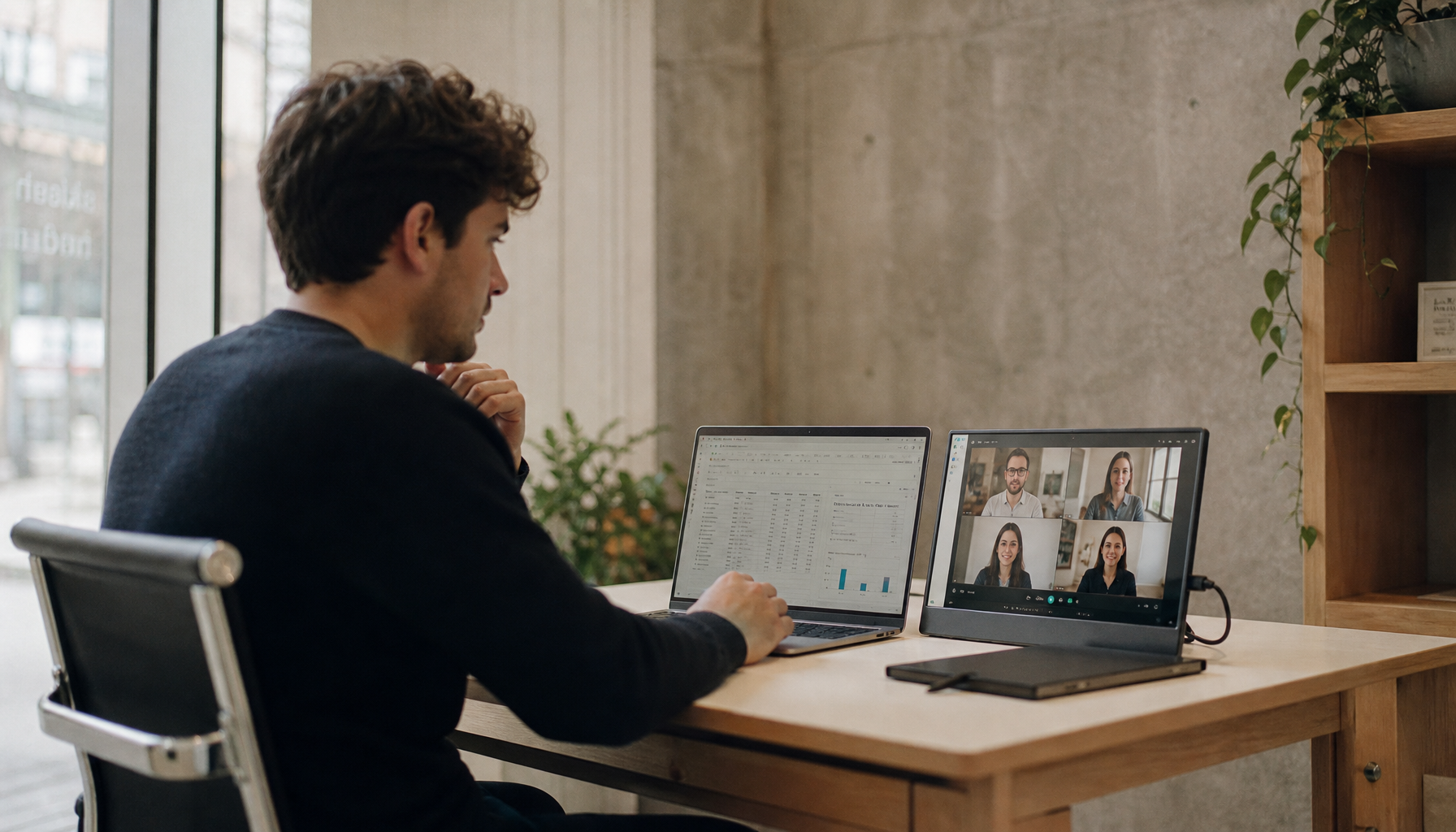
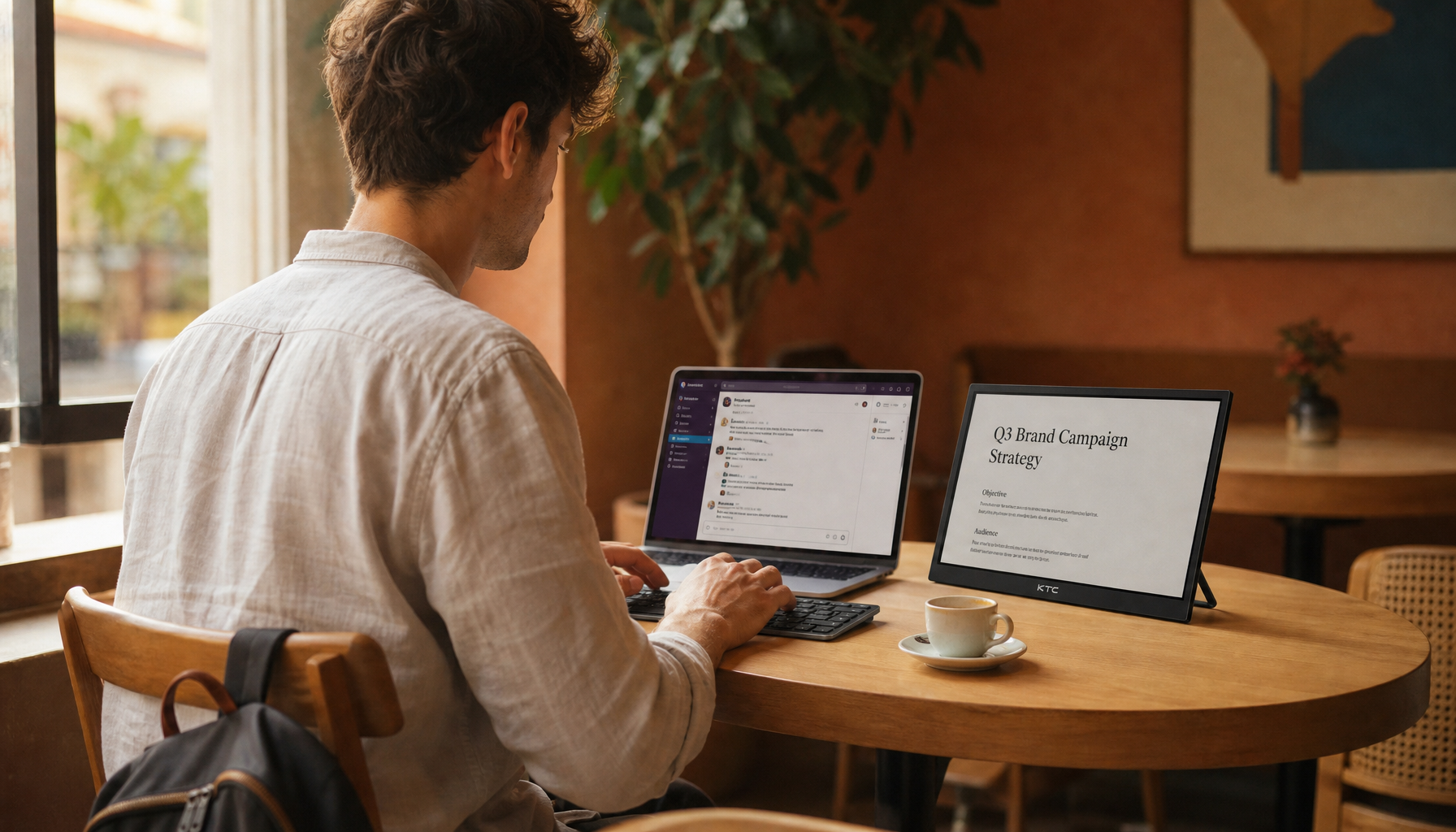
A rolling smart display setup for conference rooms works best when you treat it like a repeatable room workflow, not a one-off AV project. The right setup is usually the one that moves easily, casts reliably, and stays safe to roll between rooms. That matters most for huddle spaces, client presentations, and training rooms that change often.

Why Rolling Displays Fit Conference Rooms
Rolling displays make the most sense in shared rooms that change often and do not justify a fixed install. AVIXA's conference room design guidance points readers toward room purpose and flexibility first, which is why a mobile display often fits better than a wall-mounted screen in ad hoc spaces.
The main advantage is flexibility. You can move the screen from a huddle room to a client room or training space without waiting on permanent AV work. That said, the setup only feels simple if the base is stable, the cable path is clean, and presenters know how they will cast before they walk in.
A useful decision rule is this: if the room changes more often than the content does, a rolling display is usually easier to live with than a fixed screen. If the room is permanent and the viewing angle never changes, a wall-mounted option may be the cleaner fit. For a deeper comparison, see the Rolling Smart Display vs Wall Tablet Decision Guide.
Plan the Room Before You Roll In
Before the display enters the room, check the basics that usually cause setup friction later: power, Wi-Fi, and the travel path. AVIXA's small conference room AV guidance is a good reminder that the best-looking setup still fails if the presenter has no reachable outlet or the cart has to squeeze past furniture.
Map the room from the presenter's point of view. Where will the laptop sit? Where will the first attendee stand? Where will the cart park without blocking a door or forcing someone to step around it? Those questions matter because the unit may be mobile, but the room still needs a clear operating zone.
For access and sightlines, Section 508's guidance on accessible meetings is a useful boundary. Position the screen so most attendees can view it without blocking walkways or creating awkward sightlines. That is not just a comfort issue, it also reduces the chance that people keep rearranging the cart during the meeting.
A practical self-check:
- Can the unit reach power without crossing a main path?
- Is Wi-Fi strong enough at the place you plan to park it?
- Can the presenter stand where the room naturally expects them to stand?
- Can the farthest viewer still read the screen without leaning?
If any of those answers is no, fix the room layout before you start worrying about the display itself. For browsing options, explore the portable touch screen options.
Set Up Casting, Touch, and Inputs
The biggest presentation delay is usually not the screen itself. It is the handoff between the presenter device, the display input, and the casting app. A reliable rolling smart display setup for conference rooms starts with a known-good path, whether that means wired HDMI or a wireless method you have already tested in that network environment.
For most teams, the best rule is simple: pre-test the exact device that will present. A laptop that works in one room may still fail in another if the app version, network, or input switch is different. That is why the room should be treated like a short rehearsal space, not a place to troubleshoot in front of visitors.
Touch is similar. When one person taps and another annotates, response can feel inconsistent if the app, network load, or input state is not ready. That does not mean touch is unreliable in general. It means the workflow is more sensitive to setup discipline than a plain display.
What to check first:
- Confirm the source device can see the display input.
- Open the casting app or wireless path before attendees arrive.
- Test one annotation or touch action from the presenter position.
- Keep the fallback path simple, usually a direct cable.
If touch feels slow or inconsistent, the issue is often in the workflow, not the panel alone. For troubleshooting follow-up, see Fixing Smart Display Glitches: Troubleshooting Touch Screen Unresponsiveness.

Keep Cables Safe During Movement
Cable management is where mobile setups either feel polished or start feeling improvised. Route power and signal cables with enough slack for movement, but not so much slack that they drag across the floor. That keeps the unit easier to move and lowers the chance of a snag when the cart crosses thresholds or carpet.
Use clips, ties, or holders to keep connectors from pulling loose during repositioning. The goal is not perfect invisibility. The goal is stable movement, fewer surprises, and less chance that somebody has to stop the meeting because a cable was tugged loose.
A good working rule is that every cable should have a purpose and a path. If a line has to cross a walkway, it should be rerouted. If it has to stay connected while the display moves, the slack should be controlled and the base should still feel stable after the move.
For a deeper explanation of why cable routing matters, see how power cables can affect display signals. That is especially relevant when the display is moved between rooms and the cable path changes more often than the setup itself.
The KTC MEGAPAD 32" 4K Android 14 Google EDLA Smart Touch Monitor with 8550mAh Battery can serve as a concrete example of the kind of mobile display many teams look at for this workflow. Its 32-inch smart touch monitor page shows a 31.5-inch 4K panel, Android 14, built-in battery, HDMI 2.0, USB 3.0, and adjustable height. In practice, that kind of spec mix matters most when the unit needs to roll between rooms without becoming dependent on a single wall outlet.
For larger groups, the 32-inch format can be easier to see from farther back, while smaller rooms may benefit from something lighter to reposition. Explore the portable touch screen options.
Choose the Right Display for the Room
The best display size depends on room size, viewer distance, and how demanding the content is to read. AVIXA's conference room design guidance makes the same core point in a more general way: room purpose and viewing distance should shape the display choice, not the other way around.
Here is the practical split. Smaller rooms usually reward easier maneuvering and faster setup. Larger rooms usually need a screen that stays readable from the back. Training rooms and mixed-use meeting spaces tend to need both, which is why the choice often comes down to how often the display moves and how many people need to read it at once.
| Room Type | Main Need | Useful Display Traits | Setup Watchout |
|---|---|---|---|
| Huddle room | Fast setup and easy movement | Smaller or lighter mobile display, simple casting path | Too much screen can feel bulky in tight spaces |
| Boardroom | Clear visibility from farther back | Larger screen, stable stand, reliable input switching | Sightlines matter more than style |
| Training room | Shared viewing and occasional annotation | Touch, easy repositioning, repeatable casting workflow | Multi-user touch can feel slow if the app is not ready |
If a room serves both meetings and training, treat the decision as a workflow choice, not just a size choice. A display like the KTC MEGAPAD 32" 4K Android 13 Google EDLA Smart Touch Monitor with 9500mAh Battery can be a reasonable fit when you want a larger mobile screen and battery-backed portability. A smaller room or a more frequent move pattern may still point you to a lighter category instead of a larger panel. The KTC MEGAPAD 27" FHD Android 14 Google EDLA Smart Touch Monitor with 9500mAh Battery offers another compact option for tighter spaces.
Explore the portable touch screen options to narrow room-fit choices without forcing a purchase decision too early.
FAQs
Q1. How Do You Cast From a Laptop to a Rolling Smart Display?
Use the method that matches the display input and the casting app already on the unit, then test it before the meeting starts. The exact path can differ by laptop and network, so the safest habit is to rehearse the connection with the same presenter device that will be used live.
Q2. What Is the Best Way to Manage Cables on a Mobile Display Cart?
Give every cable enough slack for turning and repositioning, then secure the loose sections so they do not drag across the floor. After each room change, check the route again. That habit matters more than any single accessory because movement is what usually creates the problem.
Q3. Why Does Touch Input Feel Delayed During Group Annotation?
Touch delay often shows up when the app, network, and number of simultaneous users all change at once. If the room has multiple people annotating, simplify the workflow first. A direct cable or a cleaner app path can help more than changing the display itself.
Q4. Can One Rolling Display Work for Meetings and Training Sessions?
Yes, if the size, mobility, and setup routine fit both room types. It breaks down when the room is too large for the screen to stay readable or when the setup becomes too slow to repeat between sessions. In that case, a smaller or more fixed approach may be better.
Q5. What Should IT Check Before Rolling the Screen Between Floors?
Check power access, wheel clearance, cable security, and whether the next room uses the same casting or input path. The biggest operational mistake is assuming every room behaves the same. In reality, one blocked outlet or one different presenter device can change the whole workflow.
Final Checks Before Meeting Time
Before the first presentation, do one last live check from the presenter position. Confirm power, the selected input, and the casting path. Then walk the cable route, make sure no slack will catch a foot or wheel, and verify touch response, brightness, and volume from the front of the room.
If those checks pass, the setup is ready. If they do not, fix the room now rather than during the meeting. A rolling smart display setup for conference rooms should feel repeatable, not improvised, and the last five minutes are usually what decide that.
The Safest Way to Make the Setup Repeatable
The easiest conference room setups are the ones that stay predictable from room to room. If you keep the path clear, test casting early, and match display size to the room, a rolling smart display becomes a useful part of the meeting workflow instead of another thing to troubleshoot. When the room changes, repeat the same checks before every move. Add a quick visual inspection of wheels, battery level, and input settings to the routine so the next user can start without surprises.
| Scenario | Small Room | Medium Room | Large Room |
|---|---|---|---|
| General presentation | Prioritize easy movement and quick setup | Balance size with readability | Favor larger screen for back-row visibility |
| Video calls / hybrid meetings | Keep sightlines open for camera | Ensure stable network and input switching | Position for group visibility without glare |
| Detailed technical visuals | Use smaller panel to avoid bulk | Choose higher resolution for clarity | Select largest readable size with touch support |