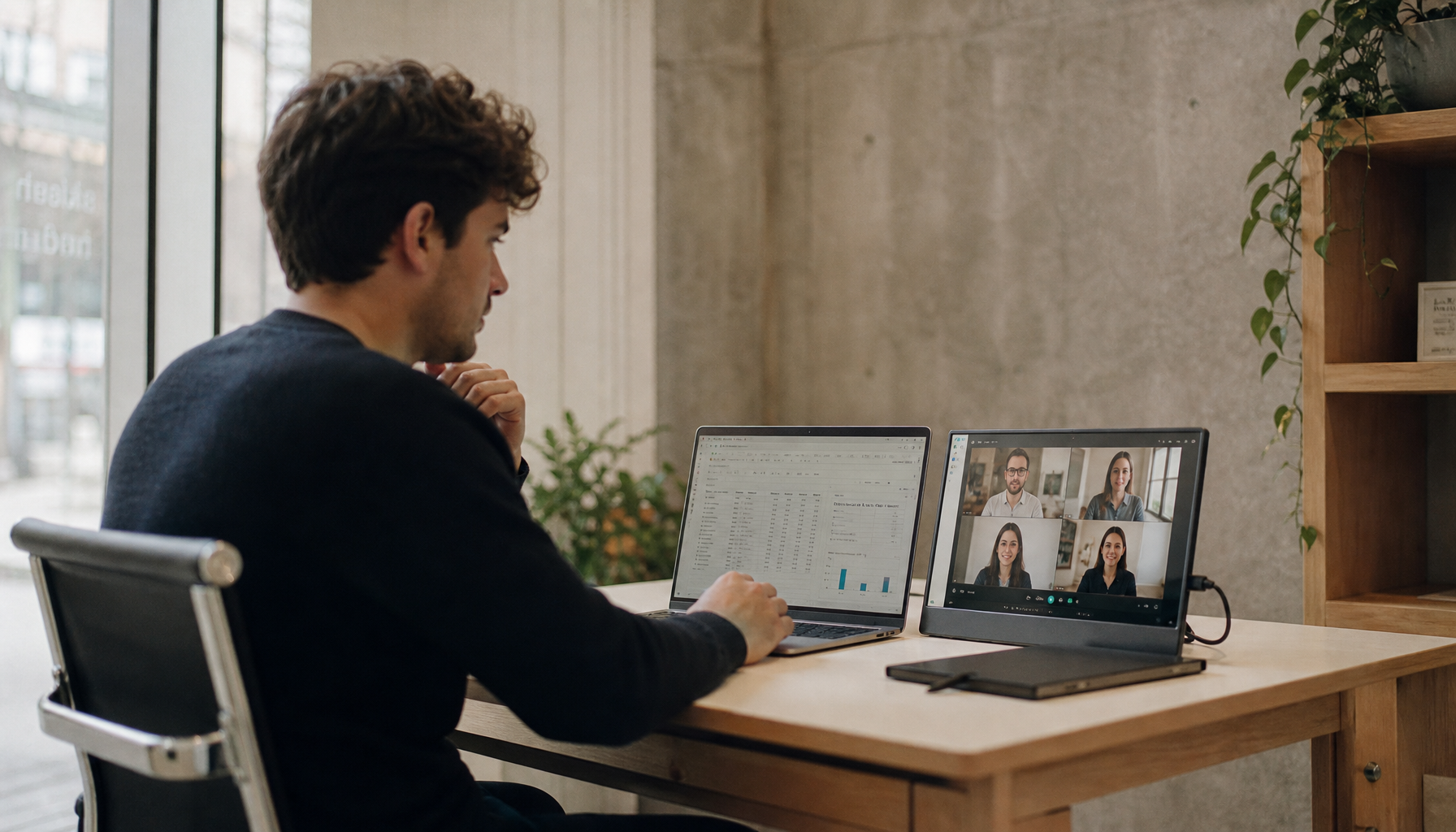
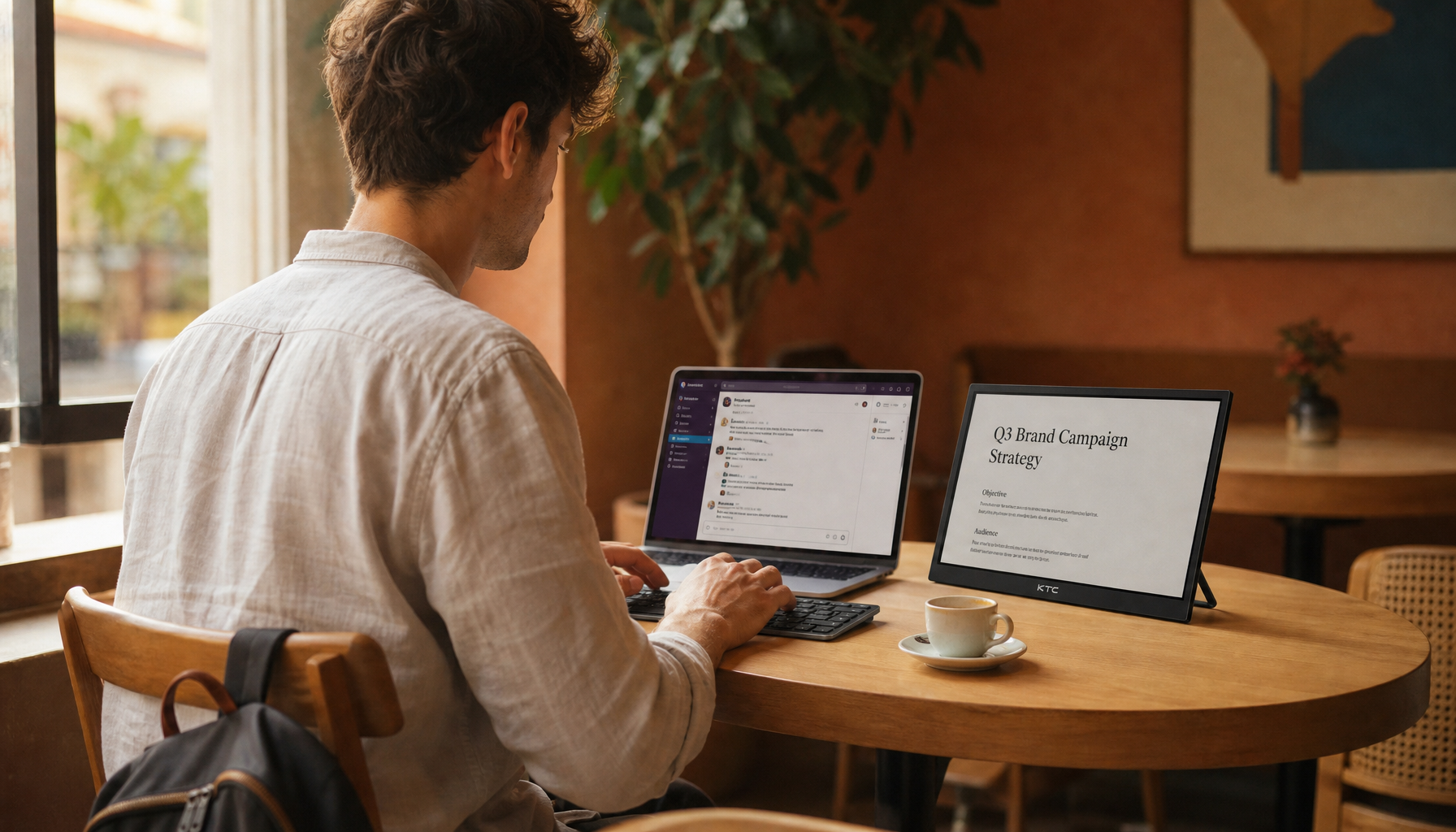
A smart display for home office use works best when it saves space and stays easy to move, not when it tries to replace every fixed screen in the apartment. If you split your day between calls, recipes, and light productivity, one rolling display can make that routine simpler, as long as your Wi-Fi, battery habits, and room layout support the move.

Why One Rolling Screen Works in Small Homes
A single rolling screen is useful when you want one device to follow the workday instead of building a second desk in every room. In a studio or one-bedroom apartment, that usually means fewer compromises than carrying a laptop to the kitchen, then resetting everything again for a call.
The main benefit is flexibility, not permanence. A smart display for home office use can become a recipe screen in the morning, a call screen at midday, and a casual viewing screen later on. That is why the best fit depends less on the word “portable” and more on whether your rooms allow easy movement, stable signal, and a comfortable viewing position.
If your setup stays in one room most of the time, a fixed monitor may be the cleaner choice. If you regularly move between kitchen, desk, and living space, a rolling display is often the more practical compromise.
For a broader look at how mobile screens fit into a connected home, the 2026 Smart Home & Rolling Display Integration Guide is a useful next step.
Set Up the Base, Power, and Network
Before you start using the display room to room, make the first route simple. Clear the path, check where the cable will sit, and make sure the stand is stable on the floor you will actually roll across.

- Place the stand where the first move is easiest, not where it only looks tidy.
- Check that the wheels roll freely and that no cable will snag on furniture edges.
- Charge the screen or keep it near power before the first move.
- Confirm Wi-Fi and app access before you treat it like a mobile hub.
- Test wake, volume, and input switching while the screen is still in the main work area.
The manual for the KTC MEGAPAD 32" 4K Android 13 Google EDLA Smart Touch Monitor with 9500mAh Battery shows the kind of setup checks that matter here, including upright handling, stable assembly, and battery checks before moving. That does not make every rolling display the same, but it does show why first-time setup should focus on stability before convenience.
For battery-powered mobile screens, runtime is never a fixed number. Brightness, speaker volume, casting, and wake cycles all change how long the device lasts, so a display that looks generous on paper can still feel short on a busy day. If you want fewer interruptions, plan around the way you actually use it, not the headline runtime alone.
Room-To-Room Workflows That Stay Practical
For most people, the real test is not whether the display works in one room. It is whether it still feels smooth after the third move of the day. In practice, the best routine is to keep each room’s job simple and avoid reopening every app or hunting for the same settings again.
Desk Calls and Shared Work
At the desk, the display should feel like a normal work screen first and a mobile screen second. That means a comfortable viewing angle, clear camera placement if you use video calls, and a stable position that does not shift while you type.
If your workday includes long calls or document review, keep the screen at a height that feels close to eye level. That is the easiest way to reduce neck strain during repeated use. A room-to-room display is convenient only when it does not force a worse posture than the laptop it replaced.
Kitchen Recipe Viewing
In the kitchen, the display becomes more like an appliance hub than a desk monitor. You usually want a larger text area, enough brightness to fight ambient light, and audio that stays understandable over a sink or stove.
This is where battery and Wi-Fi matter most. If the screen loses connection every time you roll it into the kitchen, or if you have to raise brightness and volume just to hear a recipe, the convenience starts to fade. A helpful rule is simple: if the device takes longer to reconnect than the recipe step you are following, the setup is not yet smooth enough.
For kitchen-heavy use, the rolling kitchen display guide is a relevant follow-up because it focuses on meal-prep workflows rather than desk use.
Living Room Break Mode
In the living room, the display is usually doing the least demanding job. It may show a video, follow a workout, or stay open for background viewing while you relax.
That makes it the easiest room for a mobile display, but also the place where people overestimate how much flexibility they need. If you mostly watch in one corner and rarely move the screen, a simpler stationary setup may be better. If you want the same screen to shift from work to downtime without a second device, rolling convenience is the real reason to keep considering it.
When focus or accountability matters more than room movement, the body-doubling rolling display guide is a useful background read. It is most relevant for readers who want one screen to support task visibility across changing spaces.
What to Compare Before You Buy
This comparison section is less about raw specs and more about what can break the routine. A smart display for home office use can look similar across listings, but the best choice changes depending on whether you move it daily, cast wirelessly, or leave it in one room for long stretches.
A simple way to read this: apartment remote work usually puts ergonomics first, kitchen use puts battery and roaming stability first, and living-room use pushes convenience higher than precision. That does not mean one room is always better. It means the hidden trade-off changes with the room.
| Factor | Apartment remote work | Kitchen flexibility | Living-room flexibility |
|---|---|---|---|
| Battery/runtime variability | Low | High | Medium |
| Wi‑Fi roaming risk | High | Low | Medium |
| Ergonomic trade-off | Medium | Medium | High |
Wi-Fi is a major decision point because roaming can become messy when devices move between rooms or access points. Microsoft’s guidance on Surface wireless connect behavior and Apple’s note on Wi-Fi roaming support both point to the same practical issue: roaming is smoother when the network supports fast transition between access points. If your apartment Wi-Fi is inconsistent, the best display can still feel annoying.
Battery is the other common regret trigger. A built-in battery is useful for room-to-room movement, but higher brightness, louder audio, and repeated wake-ups shorten the useful window. That is why a 9500mAh battery matters less as a bragging point than as a planning boundary. If you expect long unplugged sessions, check how you actually use brightness and sound before assuming the runtime will hold up.
For buyers comparing categories rather than a single device, the Mobile Touch Screen collection is the closest browsing path, while the Smart Monitor collection is better if your use leans more toward fixed desk or entertainment use than room-to-room movement. If you want a desk-first option with less mobility trade-off, the Office Monitor collection is the better filter.
Final Checks for a Smooth Daily Routine
Before you rely on one screen every day, do a quick reality check in the rooms you actually use most.
- Confirm that the screen can roll without cable strain or a blocked path.
- Check that battery, brightness, and audio still feel comfortable in your main room.
- Verify that your most-used apps open reliably before you depend on the device for calls or recipes.
- If the display will sit in one room for long stretches, confirm that the stand still feels stable and easy to view.
- If Wi-Fi drops during movement, fix the network first before blaming the display.
The KTC MEGAPAD 27" FHD Android 14 Google EDLA Smart Touch Monitor with 9500mAh Battery is an example of a smaller mobile option that fits this kind of daily-room movement, while the KTC MEGAPAD 32" 4K Android 14 Google EDLA Smart Touch Monitor with 8550mAh Battery is a larger example when the display is likely to stay in use for longer stretches.
FAQs
Q1. How Do I Keep a Rolling Smart Display Stable Between Rooms?
Keep the path clear, tighten the stand before regular use, and avoid moving the screen with loose cables still hanging. If the base feels wobbly on a carpet edge or threshold, slow down and recheck the route before daily use. Stability matters more than speed once you start moving it often.
Q2. What Size Smart Display Works Best for a Studio or One-Bedroom Apartment?
Compact screens are easier to reposition and fit on tighter paths, while larger screens are better when you want one shared hub for work and media. The better choice depends on desk depth, viewing distance, and how often you plan to move it. If it rarely leaves one room, size matters less than ergonomics.
Q3. Can I Use One Display for Video Calls and Kitchen Recipes?
Yes, if the device handles app switching, audio, and network changes without much delay. That is the real test. A good setup should open your call app in one room and your recipe app in another without making you repeat a lot of steps each time.
Q4. Why Does Battery Life Change When I Move the Display Around?
Battery use rises when you increase brightness, raise speaker volume, cast wirelessly, or wake the device repeatedly. That means two users with the same model can get very different runtime. For planning, the important question is not the listed number alone, but how aggressively you use the screen in each room.
Q5. What Should I Check If Wi-Fi or Apps Feel Unstable?
Check router placement, signal strength, app updates, and whether the device supports the casting path you are using. If the display works near the router but struggles in another room, the network is often the limiting factor. In that case, improving Wi-Fi coverage may help more than changing the screen.
A Cleaner Way to Use One Screen
The best smart display for home office use fits your rooms without forcing daily workarounds. Test the full route once with your typical apps open, note any Wi-Fi drop points, and confirm the stand stays level on every threshold you cross. Keep brightness and volume settings saved per room so the screen feels ready the moment it stops rolling. When these checks become habit, one device handles calls, recipes, and light tasks across spaces without extra friction or second screens.