

In 2026, DisplayPort 2.1 with UHBR20 delivers 80 Gbps of raw bandwidth, enough for uncompressed 4K at 240 Hz with 10-bit HDR, while HDMI 2.1a tops out at 48 Gbps and requires Display Stream Compression (DSC) for the same mode. The real-world difference comes down to workflow friction rather than visible image quality: DSC often adds a 2–5 second black screen during mode switches like Alt-Tabbing in exclusive fullscreen, but modern borderless-windowed gaming largely eliminates this. DP 2.1 is a luxury choice for enthusiasts chasing a fully uncompressed chain; most 4K 240 Hz gamers will find HDMI 2.1a plus DSC perfectly stable once they understand the actual causes of flicker and dropouts.

Bandwidth Reality: UHBR20 vs. 48Gbps in 2026
A 4K 240 Hz 10-bit HDR signal needs roughly 72 Gbps of uncompressed data. As the official VESA DisplayPort specification update confirms, DP 2.1 UHBR20 provides 80 Gbps total (77.37 Gbps effective data rate), giving comfortable headroom without compression. HDMI 2.1a, limited to 48 Gbps (42.67 Gbps effective), must rely on VESA DSC to reach the same resolution and refresh rate.
This gap matters most when you want zero compression in the signal chain. For the majority of users, however, the choice hinges on whether your GPU, cable, and monitor form a complete DP 2.1 ecosystem. Without full end-to-end support, you will still fall back to DSC or lower settings. Check your GPU's DP version first: many 2026 flagship architectures now include full UHBR20 support, but older cards remain limited to UHBR13.5 or HDMI.
DisplayPort Alternate Mode Over USB-C: How Video, Data, and Power Share the Same Lanes explains how lane allocation affects real-world bandwidth when using USB-C docks or laptops.
The chart below visualizes when each interface needs DSC and where VRR flicker risk is more likely to appear.
DSC Anxiety vs. Reality: The 4K 240Hz Handshake Gap
DSC itself is visually lossless at these high data rates; even trained observers struggle to spot artifacts in side-by-side testing. The anxiety usually stems from the handshake latency it introduces. When switching display modes in exclusive fullscreen, the GPU and monitor must renegotiate the compressed stream, producing a black screen that commonly lasts 2–5 seconds. This duration can vary with firmware and driver versions, so treat the exact timing as a rule of thumb rather than a guarantee.
The practical workaround is simple: use borderless windowed mode for most gaming. Because the game and desktop share the same display state, the link stays stable and the black-screen trigger disappears. For users who stay in this mode, HDMI 2.1a plus DSC becomes a non-issue and delivers the full advertised 4K 240 Hz experience without needing a complete DP 2.1 upgrade.
If you frequently switch between exclusive fullscreen applications or run productivity workloads alongside games, the handshake cost may justify investing in a full DP 2.1 chain. Otherwise, the extra bandwidth mainly serves as future-proofing rather than an immediate necessity.
Stability Audit: VRR Flicker and Cable Drops
Many users blame VRR brightness flickering on the cable or port, yet the root cause is usually panel behavior. As explained in the DisplayNinja VRR flicker guide, flicker appears when frame rates fluctuate near the Low Framerate Compensation (LFC) threshold. The panel’s gamma curve shifts with rapid refresh-rate changes, especially on VA and OLED panels. Neither DP 2.1 nor HDMI 2.1a changes how the panel maps voltage to brightness, so upgrading the port alone will not eliminate this symptom.
Stabilizing your frame rate—through in-game caps, RTSS, or driver tools—reduces the frequency of those jumps and is usually the more effective fix. DP 2.1 can still lower overall system latency, which may make occasional frame-rate dips feel less jarring, but it does not address the flicker mechanism itself.
Cable quality introduces a separate set of problems. UHBR20 is highly sensitive to length and signal integrity. Standard passive DP 2.1 cables are generally reliable only up to about one meter. For longer runs, VESA-certified active DP80LL cables are required to prevent sparkles, link training failures, or unexpected fallbacks to lower bandwidth. Always verify cable certification rather than assuming any “DP 2.1” label will suffice.

What Happens When Your GPU Can’t Keep Up With Your Monitor’s Refresh Rate? covers the interaction between frame pacing, VRR range, and perceived smoothness in more detail.
Choosing Your Port: GPU, Monitor, and Workflow
Start by listing your hardware realities: GPU DP version, preferred cable length, primary game mode (exclusive fullscreen or borderless), and tolerance for occasional black screens. If you have a 2026 flagship GPU with full UHBR20 support, a certified active cable under one meter, and a monitor that exposes DP 2.1, you can run uncompressed 4K 240 Hz. This setup removes DSC handshake latency and gives maximum headroom, but it remains an expensive and sometimes cumbersome path due to cable constraints.
For the majority of gamers, HDMI 2.1a remains the pragmatic choice. Pair it with borderless windowed mode and you avoid the main DSC pain point while still hitting the advertised refresh rate. Consoles and many PC titles already default to this configuration and perform reliably. The guide on connecting PS5 or Xbox Series X to a gaming monitor walks through the exact settings that deliver stable 4K 120 Hz or 4K 240 Hz over HDMI.
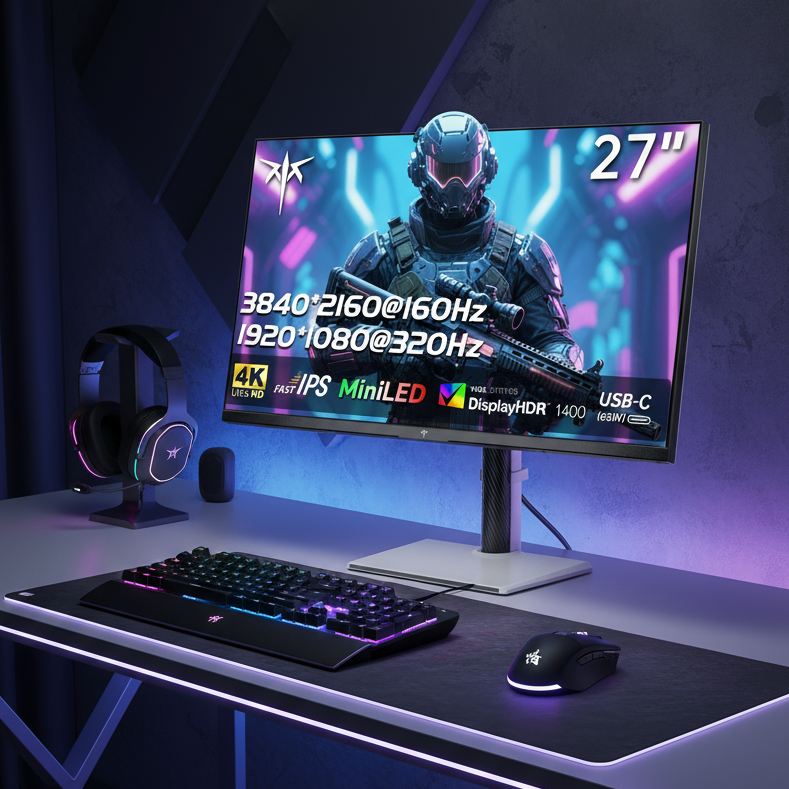
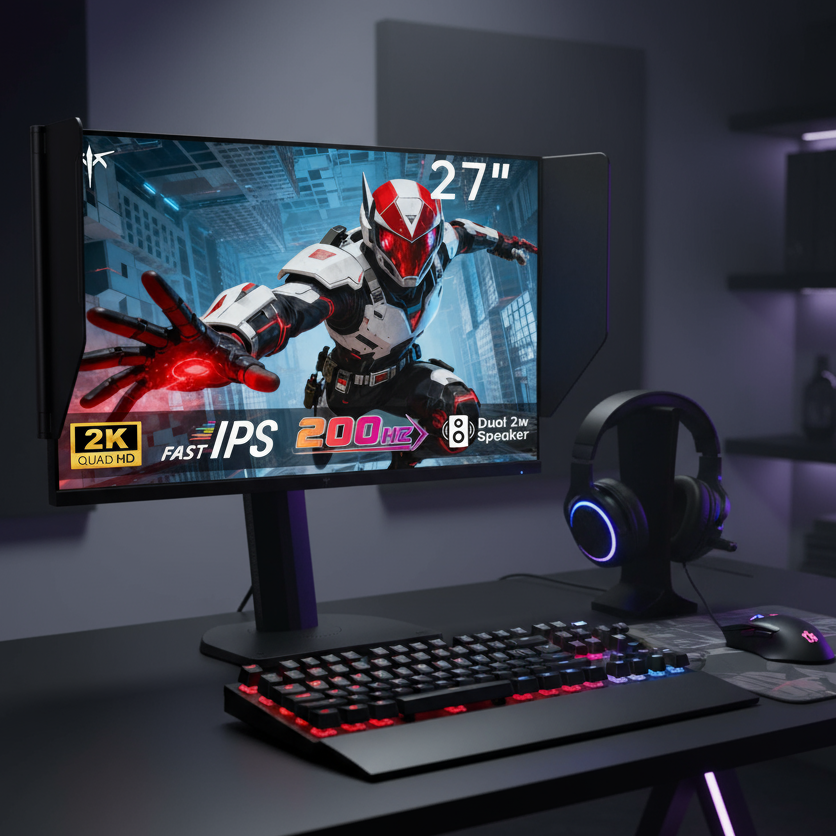
When evaluating KTC monitors, match the port capabilities to your workflow. The H27P6 dual-mode model, for example, offers 4K at 160 Hz or FHD at 320 Hz through its HDMI 2.1 and DP 1.4 ports. In most real-world tests it performs well with DSC on HDMI when the GPU and cable are high quality; the DSC penalty appears only during aggressive mode switches. Users who stay in borderless windowed mode or play primarily on console rarely notice the compression step. The M27P6 Mini-LED version follows the same pattern but adds strong HDR performance that benefits from the higher bandwidth headroom when available.
A clear “not-a-fit” filter helps avoid regret. Skip a full DP 2.1 investment if your current GPU lacks UHBR20, you need cables longer than one meter, or you rarely exit borderless windowed mode. In those cases, a well-implemented HDMI 2.1a monitor paired with stable frame-rate tools will deliver smoother day-to-day gaming than an under-supported DP 2.1 setup.
FAQs
Does DSC reduce image quality at 4K 240 Hz?
At these data rates DSC is considered visually lossless by most professional testing. The visible trade-off, if any, appears as the handshake latency during mode changes rather than compression artifacts on screen. Borderless windowed mode largely removes the latency concern.
Will a DP 2.1 cable fix VRR brightness flickering on my monitor?
No. Flicker is caused by the panel’s response to rapid refresh-rate changes near the LFC threshold, not by the transport protocol. Stabilizing your frame rate or adjusting the VRR range in software is the correct first step.
How long can a UHBR20 cable be without signal drops?
Passive DP 2.1 cables are generally reliable up to one meter. For runs up to three meters, use VESA-certified active DP80LL cables to maintain full bandwidth and avoid link-training fallbacks.
Is HDMI 2.1a good enough for 4K 240 Hz gaming in 2026?
Yes, for most users. When combined with borderless windowed mode and a quality HDMI 2.1 cable, it delivers the advertised refresh rate with minimal practical drawbacks. Only workflows that demand zero compression and instant mode switching benefit from a complete DP 2.1 chain.
Which KTC monitor should I choose if I want to avoid DSC?
Look for models that advertise full DP 2.1 UHBR20 support and pair them with a 2026 flagship GPU and certified active cable. The H27P6 and M27P6 can run with DSC disabled in the right ecosystem, but confirm your exact GPU output and cable length before purchase.
What causes black screens when Alt-Tabbing on high-refresh monitors?
The GPU and monitor renegotiate the DSC parameters when the display mode changes. This handshake takes 2–5 seconds on many systems. Staying in borderless windowed mode keeps the display state constant and prevents the renegotiation.