

For day traders spending 8–12 hours monitoring static charts, watchlists, and price ladders in bright offices, Mini-LED monitors deliver more consistent visibility and lower long-term risk than OLED. Sustained full-screen brightness, zero burn-in from persistent UI elements, and standard RGB subpixel layouts for crisp text make Mini-LED the pragmatic choice in 2026 for these demanding workflows.
Day trading platforms often use light-mode interfaces with white backgrounds that fill the screen. These setups expose a key limitation in OLED technology: automatic brightness limiting (ABL). As explained in this detailed breakdown of OLED dimming behaviors, ABL is a hardware safety feature that reduces overall luminance when the average picture level rises. A full white chart can drop an OLED panel to roughly 150–250 nits, making fine gridlines and small labels harder to read quickly in a bright room.
Mini-LED backlights avoid this constraint. High-performance 2026 models typically sustain 600–1,000+ nits across the entire screen, keeping charts punchy and readable without sudden dimming. This difference matters most during extended sessions where consistent visibility directly affects how fast traders can scan spreads or spot anomalies.
Automatic Brightness Limiting: The Hidden Enemy of Light-Mode Charts
Most professional traders rely on light-mode charting tools such as TradingView or terminal-style layouts that keep large portions of the screen bright. OLED panels respond to this high average picture level by activating ABL, which dims the display to manage heat and power. The result is a noticeable drop in chart legibility that can force traders to squint or adjust room lighting repeatedly.
Mini-LED monitors maintain high brightness even on 100% white fields. This stability eliminates distracting fluctuations and supports better performance in typical home-office or shared workspace lighting. For anyone whose workflow depends on light backgrounds, this sustained output removes a daily frustration that OLED cannot easily overcome.
The 10,000-Hour Test: Why Static UIs Demand Mini-LED
Financial dashboards contain highly static elements—fixed taskbars, persistent tickers, price ladders, and window borders. These patterns represent a worst-case scenario for OLED panels, where uneven pixel wear leads to permanent image retention. Real-world testing shows visible burn-in can appear after roughly 3,400–3,800 hours of heavy static use, which translates to about 15–24 months at 8–10 hours per trading day.
Safe Usage Thresholds for Static Trading UIs
Shows the rough usage window where static trading layouts tend to remain safer on Mini-LED, while OLED enters a higher-risk zone sooner under heavy daily use.
View chart data
| Category | OLED visible degradation window | Mini-LED low-degradation window |
|---|---|---|
| 1 year | 1.0 | 1.0 |
| 2 years | 2.0 | 1.0 |
| 3 years | 2.0 | 1.0 |
| 4 years | 3.0 | 1.0 |
Mini-LED backlights demonstrate far greater stability. Industry benchmarks indicate less than 3% brightness degradation after 10,000 hours of continuous operation. This makes Mini-LED a safer long-term investment for professional workstations where the same layout stays on screen day after day. While newer OLED models now include burn-in warranties, the hassle of potential replacement still represents real friction for traders who cannot afford downtime.
The 140 PPI Rule: Solving Text Blur on Price Ladders
Dense financial data demands sharp, unambiguous text. Even minor color fringing or edge fuzziness forces extra visual effort over long sessions and contributes to eye fatigue. Mini-LED panels use a standard RGB stripe subpixel layout that aligns cleanly with Windows ClearType, delivering print-like sharpness at both 1440p and 4K resolutions.
OLED panels typically employ non-standard subpixel arrangements that can produce green or magenta shadows on small fonts and numbers. To reduce this effect to an acceptable level, users generally need at least 140 pixels per inch—roughly a 32-inch 4K panel. At common 27-inch 1440p sizes (around 109 PPI), the issue remains noticeable enough to create fatigue during 10-hour days. This examination of OLED text rendering in office applications confirms that the 140 PPI threshold remains the safest guideline for professional financial work, even as newer QD-OLED generations have made incremental improvements.
For traders constrained to 1440p by budget or graphics hardware, Mini-LED avoids the compromise entirely. The standard subpixel structure ensures every character stays legible without forcing a jump to higher-resolution (and higher-cost) hardware. Read more about how subpixel layouts affect clarity in this guide to RGB versus other arrangements.

The 'Toggle Tax' and the Light-Mode Loophole
One practical drawback of Mini-LED is blooming—halos of light that appear around bright elements on dark backgrounds when local dimming is active. Traders who prefer dark-mode charts often face a choice: tolerate the halos or manually disable local dimming through the on-screen display (OSD) menu each time they switch tasks. On budget models without strong software control, this “toggle tax” can cost 30–60 seconds of menu navigation during active market hours.
The light-mode loophole offers a cleaner solution. White-background charting platforms keep the average picture level high, so all backlight zones remain active. This eliminates visible blooming without any need to touch settings. For high-velocity trading, many professionals simply run light-mode layouts during market hours and only re-enable full local dimming for evening analysis or entertainment. This approach turns a known Mini-LED weakness into a non-issue for the exact workflows that matter most.
If you frequently switch between modes, look for monitors with robust DDC/CI support so software can handle the change instead of manual OSD navigation. Otherwise, committing to light-mode charts during the trading day removes the friction for most users.
Choosing the Right Mini-LED Monitor for Your Trading Desk
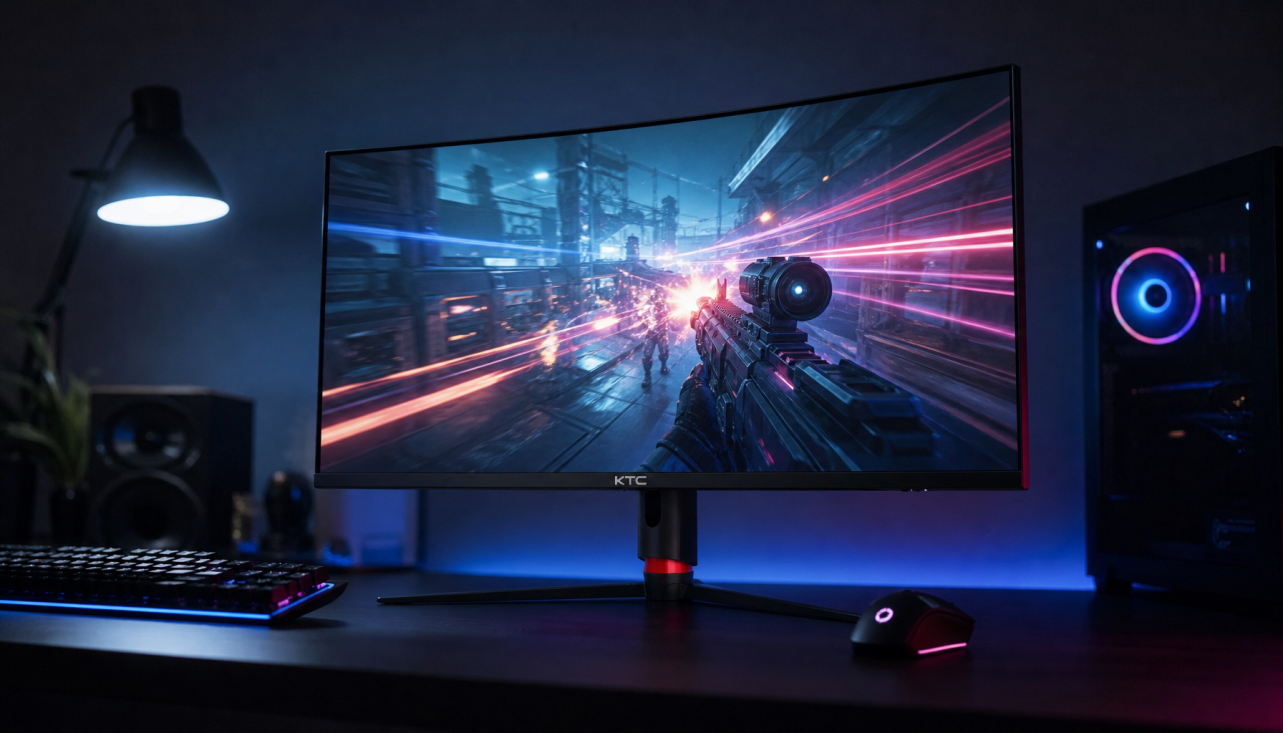
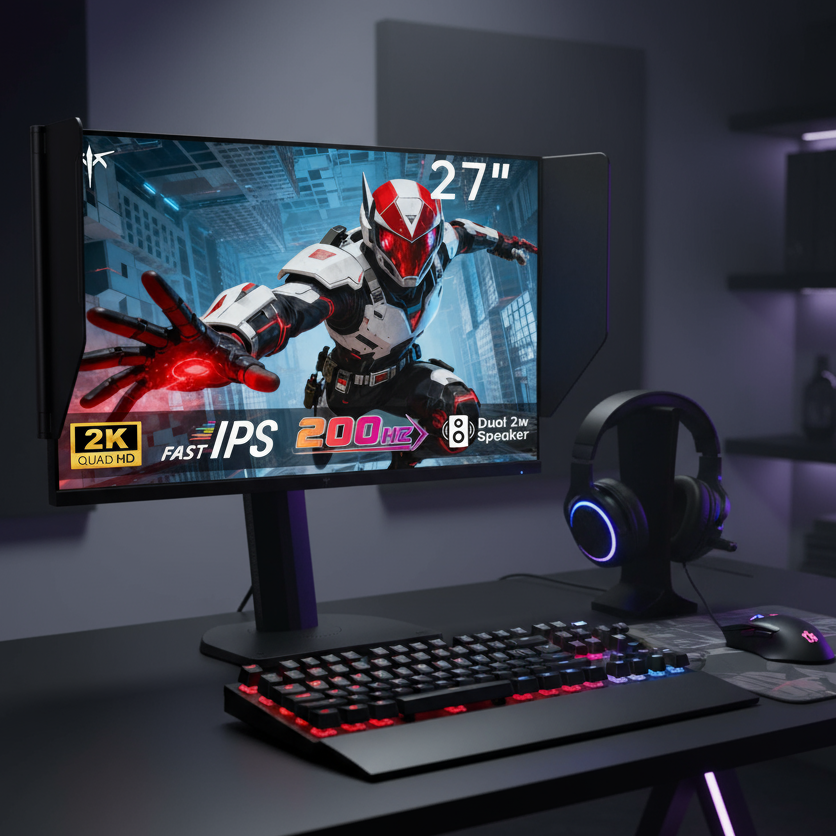
Build your setup around the resolution and brightness needs of your primary charts. For budget-conscious traders or multi-monitor arrays, a 27-inch 1440p Mini-LED such as the KTC Mini LED 27" 180Hz 2K HDR1400 Gaming Monitor | M27T6 delivers sharp text and strong sustained output without the 4K premium. Its standard RGB layout ensures price ladders and small labels stay readable all day.
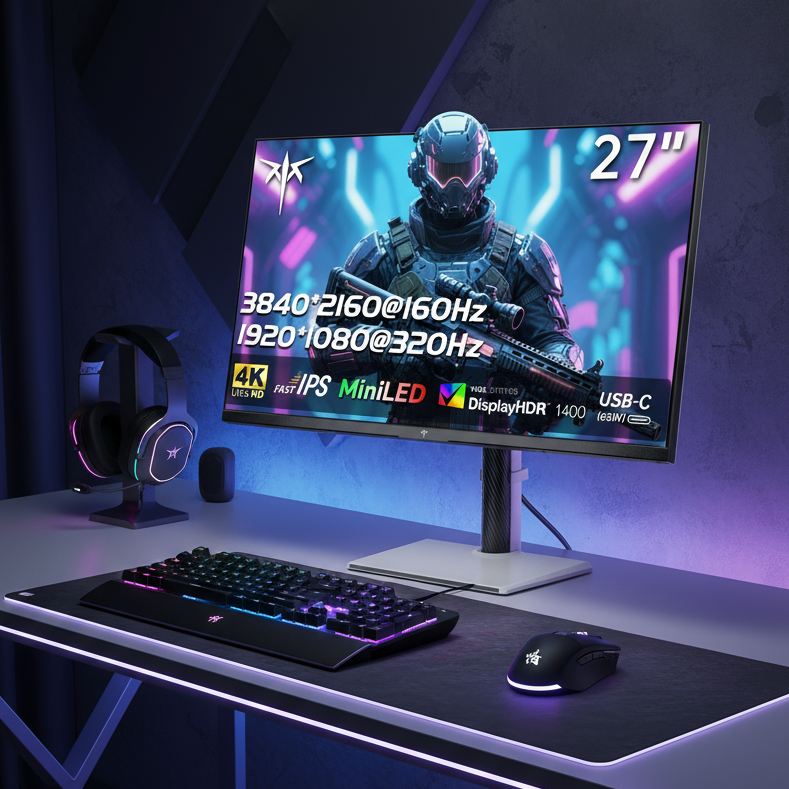
For maximum data density in a single-monitor command center, step up to a 27-inch 4K Mini-LED like the KTC Mini LED 27" 4K 160Hz HDR1400 Gaming Monitor | M27P6. The higher pixel count pairs perfectly with Mini-LED’s brightness and longevity advantages, letting you fit more watchlists and charts without scaling compromises.
Mac users or those who prioritize absolute text sharpness over refresh rate may prefer a 5K IPS panel such as the KTC 27" 5K@60Hz 2K@120Hz Home&Office Monitor | H27P3. While it lacks Mini-LED local dimming, the extreme density and factory color accuracy make it an excellent alternative when burn-in risk and sustained nits are the deciding factors.
In all cases, verify that your chosen model offers full ergonomic adjustment or pair it with a monitor arm. Consistent screen height and angle reduce neck strain during marathon sessions. Traders should also consider overall system power draw and heat output, as bright Mini-LED panels consume more electricity than dimmed OLEDs when running light-mode charts.
The decision ultimately comes down to workflow priorities. If your charts stay predominantly light and static for 8–12 hours daily, Mini-LED removes the brightness drop and burn-in worries that OLED cannot fully escape in 2026. Check your dominant chart background and typical session length first; that single variable usually determines which technology fits best.
Is OLED safe for day trading monitors with static charts?
No, not for heavy daily use. Persistent UI elements such as tickers and taskbars can produce visible burn-in within 15–24 months at typical trading hours, even with modern mitigation and warranties. The hassle of replacement and potential data visibility loss make it a poor fit for professional static workflows.
How much brighter are Mini-LED monitors than OLED for full-screen charts?
Mini-LED models commonly sustain 600–1,000+ nits on full white screens, while OLED panels often limit to 250–400 nits under the same conditions due to ABL. This gap keeps light-mode financial charts clearly visible in bright rooms without sudden dimming.
Does Mini-LED solve text clarity problems for price ladders and small fonts?
Yes, in most cases. Its standard RGB subpixel layout aligns perfectly with ClearType, delivering sharp edges at 1440p and above. OLED requires roughly 140 PPI (typically 32-inch 4K) to mask color fringing on dense data; below that threshold, Mini-LED remains the clearer option for extended reading.
What is the 'Toggle Tax' on Mini-LED monitors and how do traders avoid it?
The Toggle Tax refers to the time spent navigating OSD menus to disable local dimming when using dark-mode charts to prevent blooming. Traders avoid it by running light-mode charting platforms during market hours, which keeps all backlight zones active and eliminates halos without any manual changes.
Should I choose 1440p or 4K Mini-LED for a trading setup?
Choose 1440p Mini-LED if budget or graphics power is limited; the RGB layout still provides excellent text clarity for price ladders. Move to 4K Mini-LED when you need maximum data density on a single screen or plan to run many overlapping windows. Both options outperform OLED at 1440p for long-session legibility.
Can a 5K IPS monitor replace Mini-LED for day trading?
It can for users who value extreme pixel density and color accuracy over local-dimming contrast. The KTC H27P3 offers outstanding text sharpness that rivals or exceeds Mini-LED without burn-in risk, making it a strong alternative for Mac-based or color-critical trading desks.