Auto-brightness is good for eye comfort when it gently keeps your monitor close to the room’s lighting, but it can be bad when it changes too often, fights your content, or disrupts color-critical work and gaming.
Ever open a bright gaming monitor at night and feel like the screen is shining straight into your eyes? A practical home-office setup often lands around 30% to 50% brightness, while darker rooms may need much less than factory defaults. This guide explains when auto-brightness helps, when to turn it off, and how to set up a monitor so your eyes are not constantly adjusting.
What Auto-Brightness Actually Does on a Monitor
Auto-brightness adjusts the display’s light output so the screen stays readable as the room changes. On laptops and some portable monitors, this usually depends on an ambient light sensor. On desktop monitors, the feature may be built into the monitor, controlled through software, or absent entirely, which is why many external displays still require physical buttons or an on-screen display menu for brightness changes.
It is also important to separate ambient auto-brightness from content adaptive brightness. A platform can adjust brightness manually from the taskbar or Settings > System > Display, while some PCs can also change brightness automatically based on lighting conditions through current lighting conditions. Separately, content adaptive brightness control may adjust brightness and contrast based on what is on screen, such as a dark video scene or a bright document.
Ambient-Based vs. Content-Based Adjustment

Ambient-based auto-brightness is usually the better eye-comfort feature because it responds to the room, not the movie, spreadsheet, or game scene. If sunlight hits your desk in the afternoon, a good sensor can raise brightness enough to keep text readable. If the room gets darker at night, it can reduce the screen from a harsh light source to something closer to the surrounding environment.
Content-based adjustment is more mixed. It can save battery life on portable monitors, laptops, and travel displays, but it can also make a white document pulse brighter after a dark window, or make a game scene feel inconsistent. For users who care about stable contrast, accurate color, or predictable shadow detail, content-based dimming is often the first auto setting to disable.
When Auto-Brightness Helps Eye Comfort
Auto-brightness helps most when your monitor is used in changing light. A portable monitor used between an airport lounge, hotel room, and kitchen table is a strong example. So is a work-from-home setup beside a window where morning sun, blinds, overhead lighting, and evening lamps all change the brightness balance during the day.
The core eye-comfort principle is simple: the monitor should not be dramatically brighter or dimmer than the room. Bright factory presets are often tuned for retail display floors, not long sessions at a desk, and can exceed 300 nits with aggressive contrast; factory monitor presets may cause glare stress, burning eyes, headaches, crushed blacks, or blooming halos during extended use.
Best-Case Scenarios
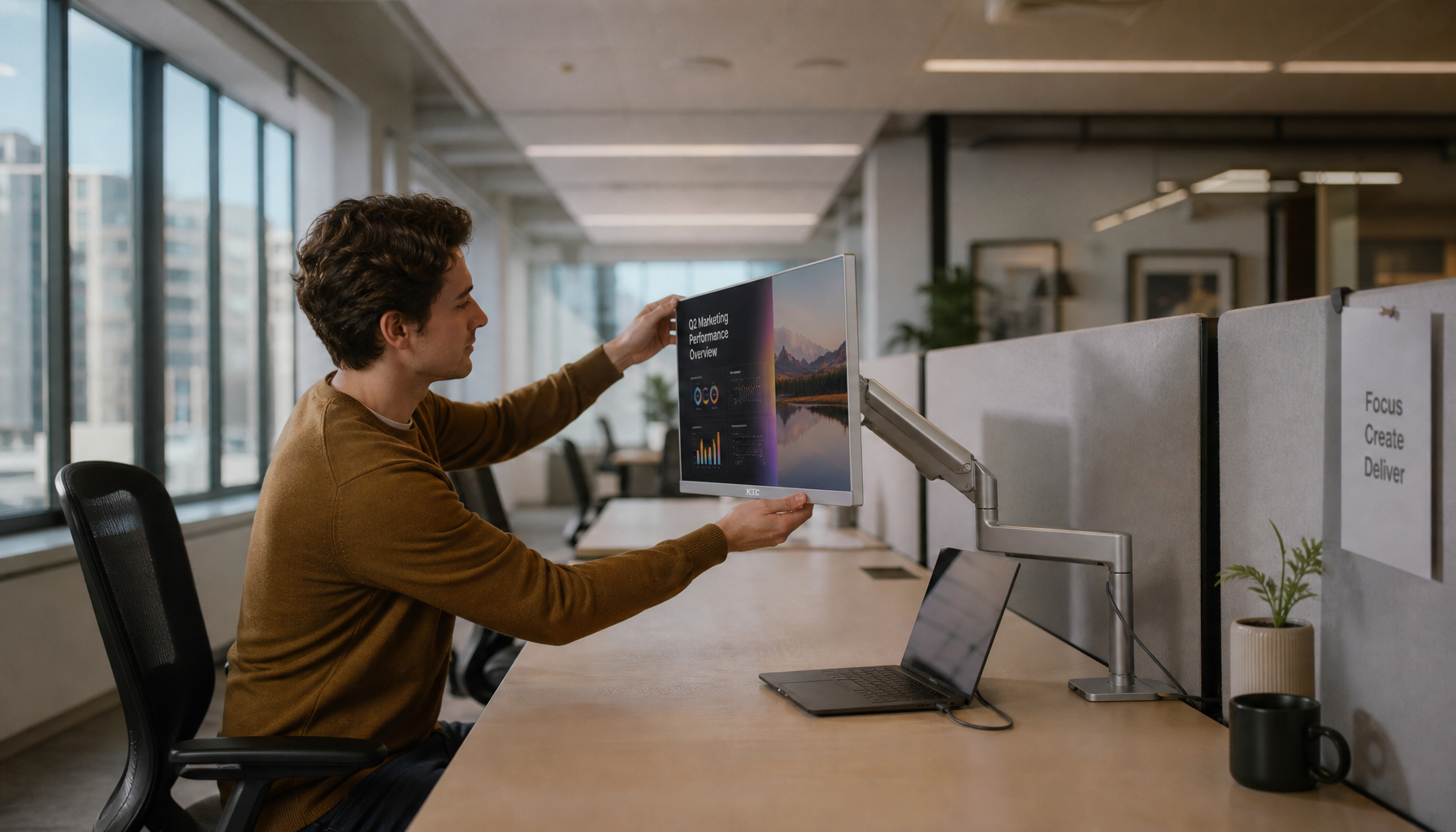
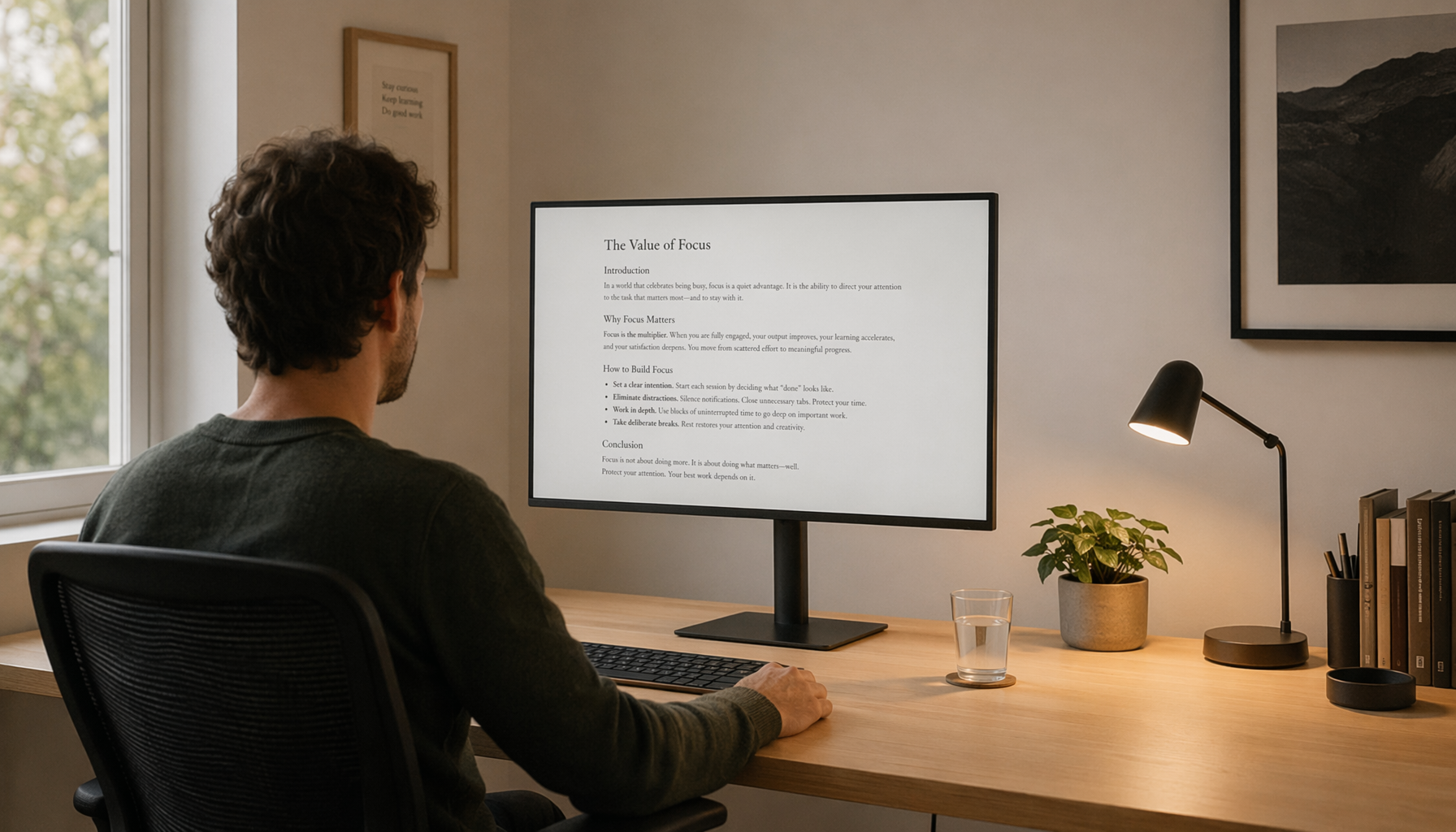
For office work, auto-brightness can reduce the “screen as a lamp” feeling that happens when a monitor stays at daytime brightness after sunset. A 27-inch productivity display at 75% brightness may feel fine at noon, but it can feel harsh at 9:30 PM in a dim apartment. In that case, auto-brightness or a scheduled manual adjustment can make reading emails, editing documents, and using spreadsheets more comfortable.
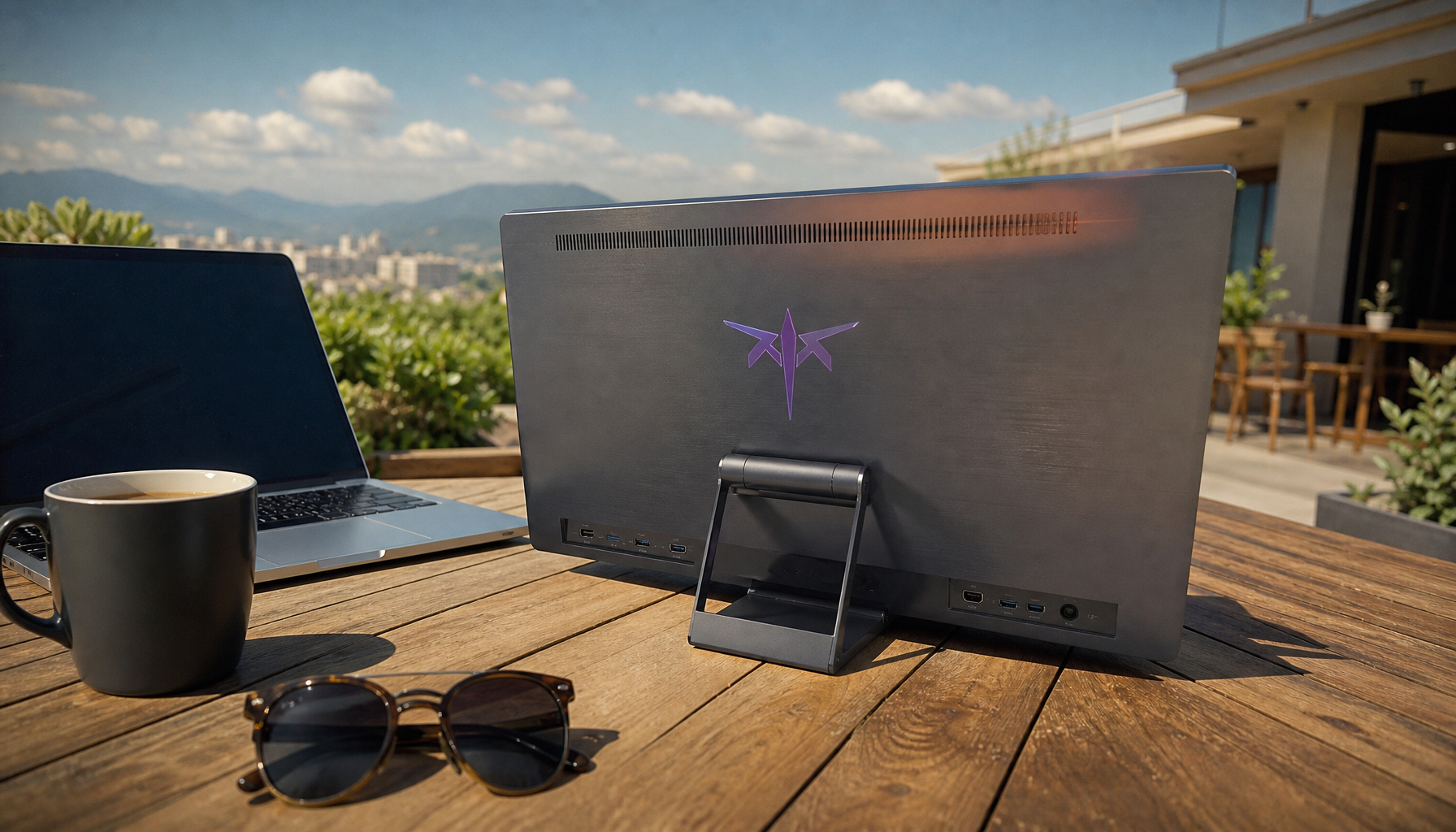
For portable monitors, auto-brightness is especially useful because the display may be powered by a laptop or battery pack. A 14-inch or 16-inch travel display does not need to run near maximum output in a hotel room at night. Lower brightness can improve comfort and may also reduce power draw, which matters when one cable is handling both video and power.
For ultrawide monitors, the comfort benefit is about surface area. A 34-inch or 49-inch display fills more of your visual field than a small laptop screen, so excessive brightness is more noticeable. If auto-brightness smoothly lowers luminance in a dim room, the whole desktop feels less glaring across large white browser windows, code editors, and productivity dashboards.
When Auto-Brightness Can Be Bad
Auto-brightness becomes bad for eye comfort when it draws attention to itself. If the display brightens and dims while you scroll a webpage, switch tabs, open a white settings panel, or move through dark game scenes, your eyes and brain keep noticing the display instead of the task. That is not comfort; it is visual instability.
A company notes that content adaptive brightness can extend battery life, but sudden changes may distract users or affect color-sensitive photo and video work; content adaptive brightness is therefore a poor fit when image consistency matters. This applies to photo editing, video grading, design work, product listing images, and any workflow where one shade of gray should not look different because the display decided to change the backlight.
Gaming and High-Refresh-Rate Use
For gaming monitors, auto-brightness is most risky in dark or competitive titles. In a fast shooter, racing game, or battle royale, a sudden brightness shift can change how you perceive shadow detail, enemy movement, HUD contrast, and muzzle flashes. Even if the refresh rate is 144 Hz, 240 Hz, or higher, brightness instability can still make the image feel less steady.

HDR gaming adds another layer. HDR displays are meant to show a wider brightness range, but desktop use and dark gaming scenes can become fatiguing if contrast, local dimming, and SDR brightness are too aggressive. For mixed SDR and HDR use, reducing SDR content brightness, using a lower local dimming setting for desktop work, and lowering hardware contrast slightly in dark games can reduce halo fatigue.
Color Work and Media Editing
If you edit photos, videos, thumbnails, product images, or brand assets, disable content adaptive brightness and any dynamic contrast modes. A monitor that changes brightness based on content makes it harder to judge exposure, white balance, black levels, and color saturation. Even a small shift can make you compensate incorrectly.
For creative work, a stable manual brightness target is better than a constantly adapting one. Set the room lighting first, then set the monitor brightness, then leave it alone while working. If the room changes dramatically, adjust the room or recalibrate your brightness manually instead of letting content-based automation make decisions frame by frame.
Better Brightness Targets Than “Set It and Forget It”
A comfortable brightness setting depends on the room, not just the monitor size or price. A good starting range is about 120 to 150 nits for a bright office around 46 foot-candles or more, 100 to 120 nits for a typical room around 14 to 28 foot-candles, and 80 to 100 nits for a dark room under about 5 foot-candles. Those ranges align with ergonomic monitor guidance that cites a display ergonomics standard for typical office and darker environments through 120-150 nits.

Most people do not own a light meter, so use a practical test. Open a white document or blank browser page and hold a sheet of white printer paper beside the screen under your normal room lighting. If the screen looks like it is glowing compared with the paper, reduce brightness. If the screen looks dull gray and you start leaning forward, raise it slightly.
Practical Brightness Comparison
Use Case |
Suggested Brightness Behavior |
Auto-Brightness Recommendation |
Watch For |
Bright home office near windows |
About 120-150 nits, or higher only if needed |
Useful if changes are gradual |
Reflections, glare, washed-out contrast |
Typical indoor room |
About 100-120 nits; many users land near 30%-50% brightness |
Useful if sensor is accurate |
Overly bright factory presets |
Dark room or night work |
About 80-100 nits |
Useful only if it dims smoothly |
Eye fatigue from white pages and HDR highlights |
Competitive gaming |
Stable brightness chosen manually |
Usually disable |
Sudden luminance shifts, shadow inconsistency |
Photo or video editing |
Fixed calibrated brightness |
Disable content adaptive brightness |
Exposure and color judgment errors |
Portable monitor |
Lower brightness when indoors to save power |
Often useful |
Battery drain, dimming that becomes distracting |
The percentage slider is not universal. On one monitor, 35% may equal a comfortable office setting; on another, 35% may still be too bright. That is why the paper test and room-based adjustment matter more than copying a percentage from someone else’s display.
Settings That Matter More Than Auto-Brightness
Auto-brightness is only one part of eye comfort. A poor setup can still feel uncomfortable even with adaptive brightness enabled. Glare from a window behind you, an ultra-bright HDR mode on the desktop, harsh local dimming, very high contrast, or a monitor placed too close can all cause fatigue before auto-brightness has a chance to help.
A better setup starts with the room. Use side-positioned windows when possible, control sunlight with blinds or curtains, add diffuse room light instead of a bare bright bulb, and consider bias lighting behind a large monitor. Good home-office brightness guidance recommends setting the room first, then choosing Standard or sRGB mode, then adjusting brightness; screen brightness should match ambient light because your eyes respond to relative luminance.

Contrast, HDR, and Local Dimming
High contrast can improve text readability, but too much contrast in a dark room can make white text, bright UI panels, and HDR highlights feel piercing. On advanced backlight monitors, aggressive local dimming can also create blooming around bright objects on dark backgrounds. For desktop productivity, a lower local dimming mode is often more comfortable than the most dramatic HDR setting.
If your monitor supports HDR, do not assume HDR should be on all day. HDR is excellent for HDR games and movies, but many people find SDR desktop work more comfortable. On a platform, HDR brightness behavior can be optimized differently than SDR behavior, and changes may take longer as lighting changes, so test your real workflow instead of judging only from a demo scene.
Refresh Rate, Flicker, and Ergonomics
A high refresh rate can make motion smoother, especially on gaming monitors, but it does not automatically solve brightness discomfort. A 240 Hz panel that is too bright at night can still feel harsh. Likewise, a 49-inch ultrawide at a comfortable brightness may still be tiring if it is too close or if the edges require constant head turning.
Check for flicker-free backlight behavior when buying. Some users are sensitive to pulse-width modulation, especially at lower brightness levels. If a monitor becomes uncomfortable only after dimming, the issue may not be the brightness target itself but how the backlight achieves that lower level.
Buying Guidance for Eye Comfort
When shopping for a monitor, treat auto-brightness as a useful bonus, not the main reason to buy. The strongest eye-comfort package includes easy brightness controls, a good sRGB or Standard mode, flicker-free dimming, matte or low-glare coating, stable contrast, adjustable stand ergonomics, and predictable HDR controls. For gaming, also check whether local dimming, dynamic contrast, and HDR modes can be tuned separately.
Portable monitors and premium productivity displays are the categories where ambient auto-brightness is most valuable. A travel display that can react to different rooms is convenient, and a large office monitor that gently adapts across the day can reduce manual adjustment. For esports monitors, color work displays, and HDR-heavy gaming setups, manual control is usually the better default.
What to Check Before You Buy
Look for clear controls in the monitor’s on-screen display. If changing brightness takes six button presses, you are less likely to adjust it when your room changes. A joystick control, software utility, or display control support can make everyday brightness changes much less annoying.
Also check whether the monitor separates these settings: brightness, contrast, dynamic contrast, local dimming, blue-light reduction, HDR mode, and ambient auto-brightness. A monitor that bundles everything into one vague “eye care” preset may be less flexible than one that lets you tune each item independently.
FAQ
Q: Should I leave auto-brightness on all the time?
A: Leave ambient auto-brightness on if it changes smoothly and keeps the screen comfortable as the room changes. Turn it off if you notice pulsing, sudden jumps, or brightness changes while reading, gaming, or editing images. For color-sensitive work, keep brightness fixed during the session.
Q: Is auto-brightness useful on gaming monitors?
A: It can help for casual gaming in changing room light, but competitive gaming usually benefits from manual brightness. Stable luminance makes shadow detail, HUD elements, and motion easier to judge consistently. If your gaming monitor has dynamic contrast or content adaptive brightness, test those settings carefully and disable them if the image shifts mid-game.
Q: What brightness percentage is best for eye comfort?
A: There is no universal best percentage because monitor sliders are not standardized. Many indoor users settle around 30% to 50%, but a bright room may need more and a dark room may need less. Use the white paper test: a white screen should look close to a sheet of white paper under the same room light, not dramatically brighter.
Practical Next Steps
Auto-brightness is good when it reduces the gap between your monitor and the room. It is bad when it creates visible changes, unstable contrast, or unreliable color. For most people, the best setup is ambient-based auto-brightness for changing environments, manual brightness for gaming or creative work, and content adaptive brightness turned off when consistency matters.
Action checklist:
- Set your room lighting first with blinds, diffuse light, or bias lighting behind a large monitor.
- Switch the monitor to Standard or sRGB mode before judging brightness.
- Use the white paper test with a blank white document and a sheet of printer paper.
- Start around 30% to 50% brightness for a typical indoor room, then adjust by comfort rather than the number.
- Enable ambient auto-brightness only if changes are gradual and not distracting.
- Disable content adaptive brightness, dynamic contrast, or aggressive local dimming for editing, reading-heavy work, and competitive gaming.
- Recheck your setup at night, because a comfortable daytime setting is often too bright after dark.