For sensitive users, the practical eye-comfort threshold usually starts around 75Hz to 100Hz, with 100Hz the safer target for long workdays. The biggest relief often comes from moving beyond 60Hz; above 144Hz, comfort gains become more situational.
Why 60Hz Can Feel Tiring
A 60Hz monitor refreshes the image 60 times per second. That is usable for documents, email, and basic office work, but sensitive users may notice more visual drag during scrolling, cursor movement, window switching, and fast page scanning.
That extra effort matters because digital eye strain is not only about blue light. It is also shaped by brightness, glare, posture, text clarity, blink rate, and how hard your eyes work to refocus during screen use. Eye-care guidance commonly connects screen discomfort with digital screen habits, including long sessions without breaks.
For productivity displays, refresh rate becomes a comfort feature, not just a gaming spec. If a 60Hz panel feels choppy when you scroll spreadsheets, timelines, dashboards, or long web pages, your eyes may be reacting to motion instability as much as brightness.
The Noticeable Threshold: 75Hz to 100Hz
The first meaningful step is 75Hz. It gives you 25% more screen updates than 60Hz, which can make scrolling and pointer movement feel cleaner. For mildly sensitive users, that may be enough.

For more sensitive eyes, 100Hz is the stronger everyday threshold. It smooths common office motion without requiring the cost, GPU load, or power draw of esports-grade displays. It can improve scrolling, app switching, and long-session comfort.
Think of it this way: 60Hz refreshes about every 16.7 milliseconds, 75Hz about every 13.3 milliseconds, and 100Hz every 10 milliseconds. That smaller visual gap can make the screen feel steadier when your work is motion-heavy.
Where 144Hz Fits
For mixed work and gaming, 144Hz is the value-performance sweet spot. It is dramatically smoother than 60Hz and still realistic for many desktops and gaming laptops.
This is especially useful if your day blends office work with fast visual tasks: CAD navigation, video timelines, live dashboards, high-speed scrolling, or competitive gaming after hours. Gaming-focused research consistently notes that higher refresh rates can reduce blur and improve responsiveness, with 144Hz monitors delivering a major jump over 60Hz.

But 144Hz is not automatically required for eye comfort. If your workload is mostly writing, spreadsheets, browser tabs, and video calls, a good 100Hz office monitor with sharp text, anti-glare coating, and ergonomic adjustment may feel better than a cheap 144Hz panel with poor brightness control.
Why Higher Hz Is Not the Whole Fix
Refresh rate helps most when the rest of the display is tuned correctly. A high-refresh monitor can still feel harsh if it is too bright, too dim, reflective, badly positioned, or paired with tiny text.

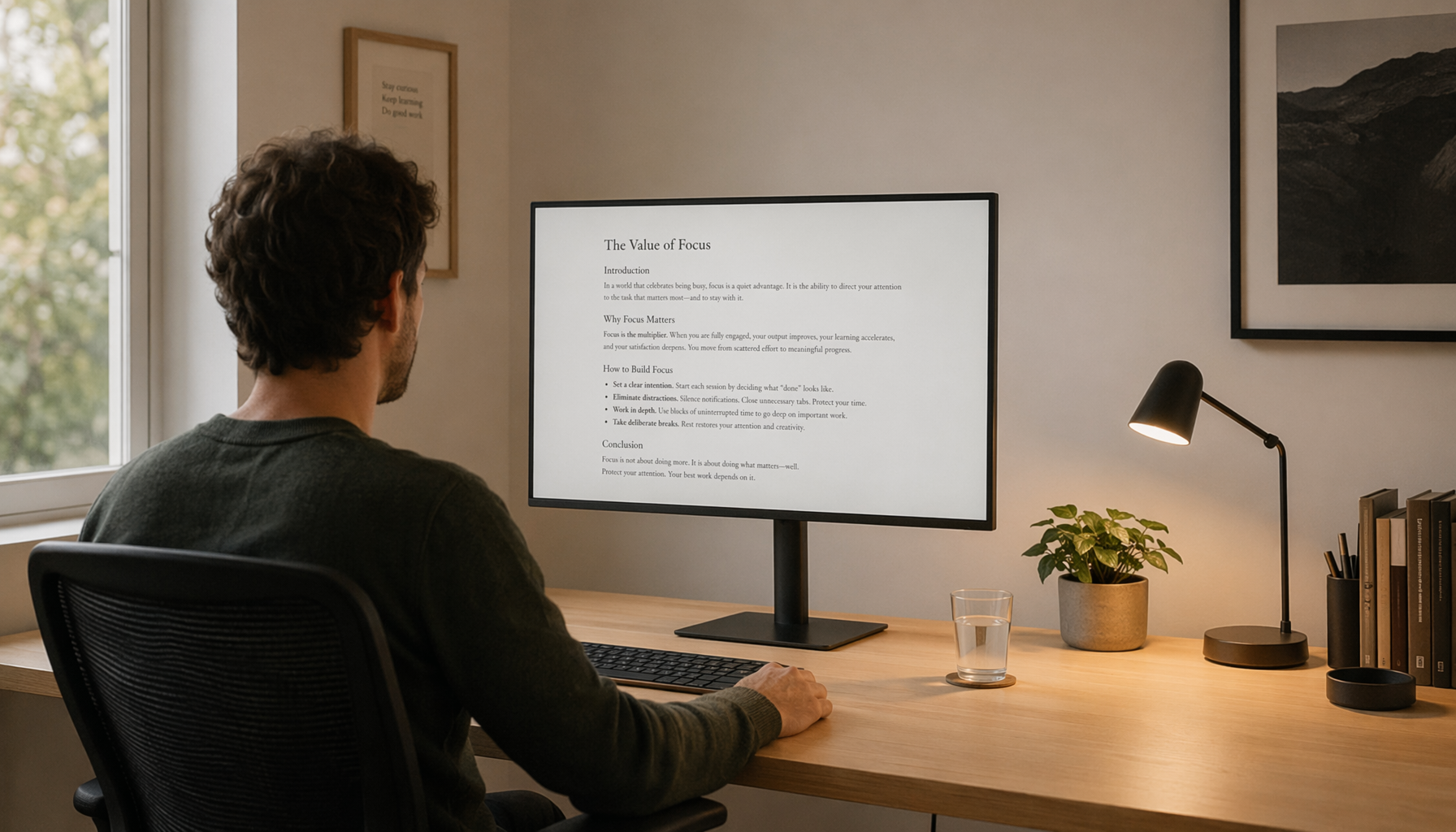
Use this quick comfort setup:
- Match brightness to the room, not maximum output.
- Keep the screen about 2 ft away.
- Set the top of the display at or slightly below eye level.
- Increase text scaling before leaning forward.
- Take 20-second distance breaks every 20 minutes.
Refresh rate can reduce perceived motion strain, but medical and ergonomic guidance still emphasizes lighting, breaks, and positioning as core defenses against eye fatigue. Workplace eye-strain advice generally focuses on setup and behavior, not panel specs alone.
Best Buying Target for Sensitive Users
If eye comfort is your priority, avoid treating 60Hz as the default unless budget or battery life is the main constraint. For portable smart screens, 60Hz to 75Hz is acceptable; for a daily desk monitor, aim higher.
Best practical targets:
- Minimum comfort upgrade: 75Hz.
- Best office threshold: 100Hz.
- Best work-plus-gaming value: 144Hz.
- Competitive gaming tier: 240Hz or higher.
For most sensitive users, the smartest buy is a 27-inch 1440p monitor at 100Hz to 144Hz with flicker-reduced backlighting, anti-glare treatment, height adjustment, and USB-C if you use a laptop. That combination delivers smoother motion, sharper text, cleaner ergonomics, and better long-session reliability without paying for refresh rate you may rarely use.