


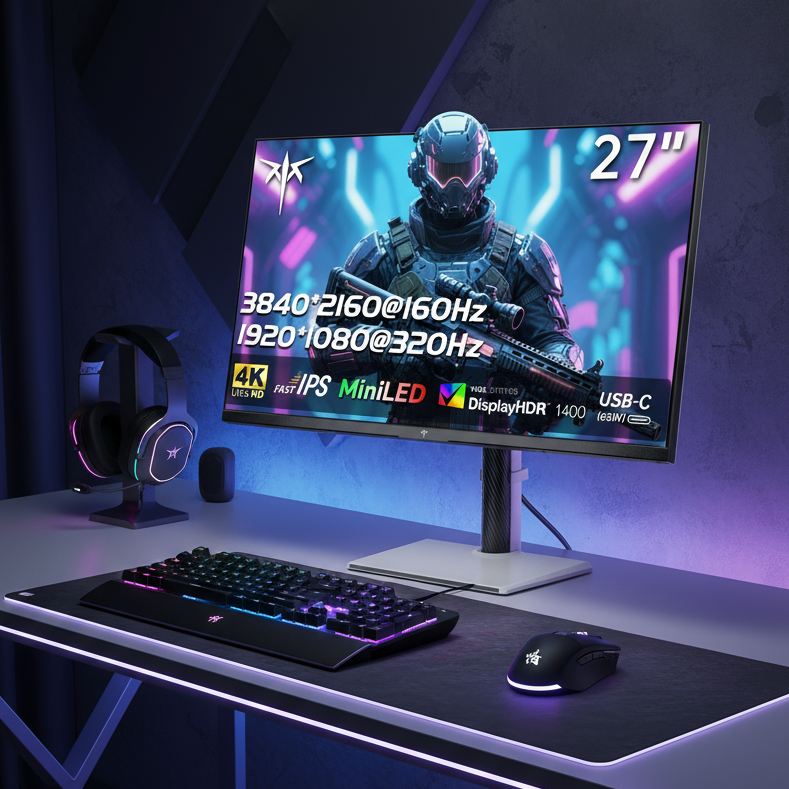
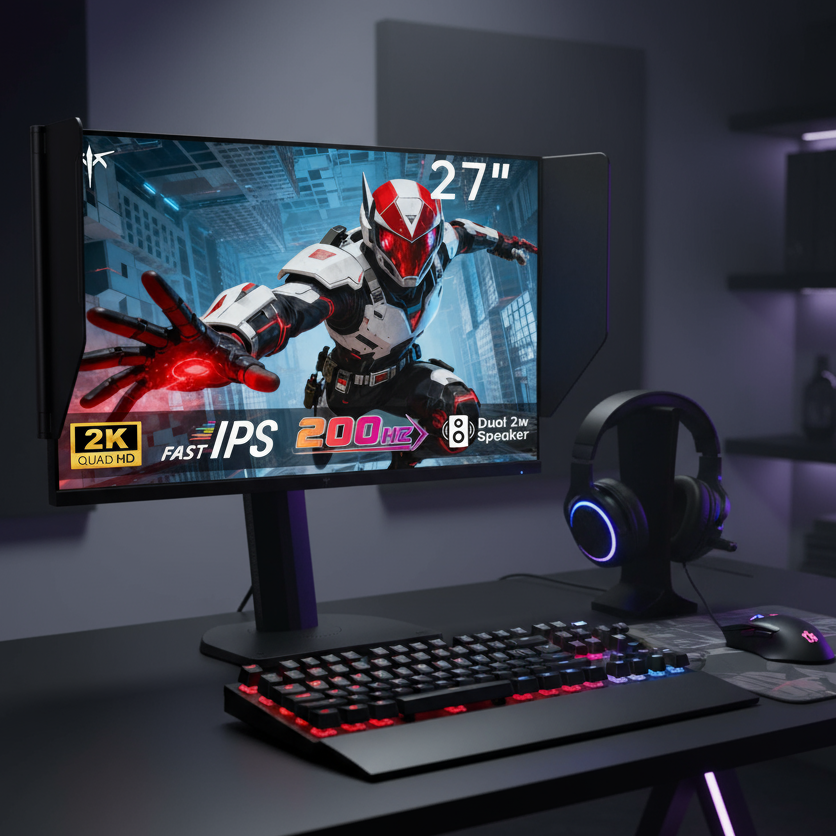
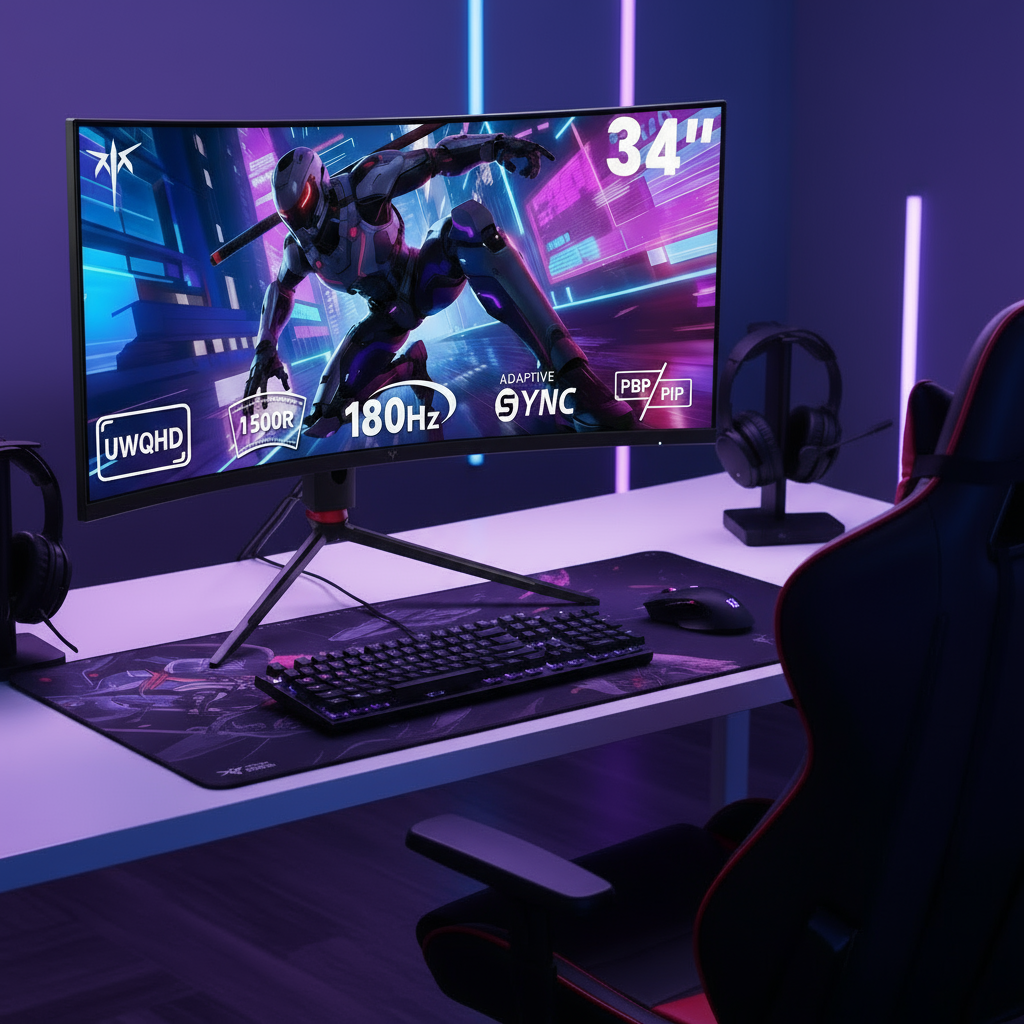


Most failures happen because the display is waiting for a new signal event, not just a powered-on console, and many monitors treat HDMI, DisplayPort, USB-C, and standby states differently.
You turn on a console, the monitor stays on the wrong input, and the joystick menu becomes part of the routine. Across cases involving multiple brands, the pattern is consistent: one source may switch correctly on power-up, but the display often will not switch back or may need 3 to 5 retries to reconnect. The fix is usually to identify whether the problem is source detection, HDMI control, or the signal path between the console and the panel.

How Auto-Input Switching Actually Works
Signal detection and HDMI control are different jobs
On smart displays, auto-input switching usually comes from two separate mechanisms: basic signal sensing and HDMI-CEC control commands. Signal sensing looks for a live video handshake on a port, while CEC lets devices send control messages over HDMI; it also tends to work best with direct HDMI connections, same-brand gear, and simple one-source setups.
Why power-on can work while switch-back fails
One brand’s auto source switching behavior shows the limitation clearly. In one display setup, the monitor switched from a DisplayPort PC to a console when the console powered on, but it did not switch back to the already-running PC when the console powered off.
CEC support on monitors is often partial, not uniformly broken or fully TV-like. Power and input switching are usually the first things to work, while HDMI paths are commonly better supported than DisplayPort return paths, which is why a console on HDMI may behave more predictably than a gaming PC on DP.
Why Consoles Often Fail to Trigger It
Standby is not the same as off
A monitor case with USB-C and DisplayPort showed that leaving a powered-down laptop connected over USB-C prevented automatic switching to DisplayPort until the USB-C cable was removed. Consoles can create a similar problem when rest mode, HDMI device link, or another always-connected source keeps the monitor from seeing a truly new event.
Some monitors never had the feature you expected
A support thread about a gaming monitor is a good reminder that auto switching is not universal even when buyers think it is. The owner expected the display to jump between DisplayPort and HDMI, but the on-screen menu exposed no auto-switch option at all, and support eventually pointed toward warranty support because the behavior did not match the user’s expectations.
Handshakes and accessories can block the trigger
EDID negotiation can make input changes slow or inconsistent, especially when the target device is waking from standby or when a KVM, adapter, or switch sits in the middle. Reported switching times ranged from roughly 10 to 20 seconds down to about 2 to 2.5 seconds with different hardware, which is why a direct console-to-monitor HDMI run is the cleanest test before you blame the monitor.
What to Check Before Replacing Your Monitor
Start in the monitor menu
The most useful settings to inspect in the OSD are Auto-Switch Input, Input Priority, DP Hot-Plug Detection, and any option that keeps DisplayPort Always Active. In mixed setups, setting the preferred gaming input first often matters more than simply toggling auto select on.

Simplify the signal path
For console gaming, 4K at 120Hz depends on the right HDMI path, and the safest troubleshooting step is a direct Ultra High Speed HDMI connection from the console to the monitor. This is also where soundbars, HDMI audio extractors, capture devices, and docks become suspects, because many desk monitors do not include HDMI eARC and those extra boxes can interrupt the wake and handshake behavior auto switching relies on.

Long passive HDMI runs beyond about 25 ft can reduce reliability, and firmware can change how aggressively a monitor polls inputs or reacts to hot-plug events. If a dock, KVM, or USB-C chain is anywhere in the setup, update that hardware too before deciding the console is the problem.
Quick action checklist
- Turn on the monitor’s Auto-Switch Input or equivalent and set your preferred gaming port first.
- Test the console with a direct HDMI cable to the monitor, with no switch, dock, extractor, or capture device in line.
- Disconnect any always-connected secondary source for one test cycle so the monitor can see a clear new signal event.
- Power the console fully off once, not just into rest mode, and test again.
- If the other source uses DisplayPort, look for DP Hot-Plug, Always Active, or input-priority controls.
- Update monitor firmware and any dock or KVM firmware before deciding the hardware is defective.
What Feature Differences Matter When You Shop
Do not treat “HDMI 2.1” as a complete answer
For console-focused displays, feature support matters more than the HDMI label. You want explicit confirmation of 4K at 120Hz, VRR over HDMI, and ideally ALLM, because those features are optional in practice and not every gaming monitor implements them the same way.
Buy for the desk, not just the spec sheet
A 27-inch 4K monitor can look much sharper than a 55-inch 4K TV at desk distance, and the same guidance suggests 27 inches for desks under 30 inches deep and 32 inches for desks 30 inches deep or more. That is a practical way to shop for a smart monitor, especially since many current consoles cap console output at 120Hz, so 144Hz or 160Hz adds little unless you also use a PC.

Monitor support for auto source switching varies widely, which is why forum threads on the topic have drawn more than 11,000 views in one case and more than 26,000 in another. When comparing monitors, look for a manual or menu screenshot that explicitly shows input auto select, input priority, or CEC-related controls instead of assuming every smart display behaves like a TV.
Buying check |
Good sign on a monitor |
Why it matters |
HDMI gaming support |
Explicit 4K/120Hz and VRR over HDMI |
Confirms the console path is fully supported, not just physically present |
Input controls |
Auto Select, Input Priority, DP Hot-Plug, or similar menu items |
Lets you tune switching behavior instead of living with defaults |
HDMI-CEC |
CEC is listed in the manual or menu under a vendor name |
Helps with power-on and input-change commands on HDMI devices |
Port strategy |
Enough full-bandwidth HDMI ports for each console |
Reduces adapter use and odd behavior from shared accessories |
Signal path |
Direct console-to-monitor connection during setup |
Makes it easier to prove whether the display or an accessory is causing the fault |
FAQ
Q: Does a console guarantee automatic switching on any smart monitor?
A: No. Console gaming monitors vary widely in HDMI behavior, and many displays only switch when they detect a fresh signal on the port rather than a device merely waking or remaining connected in standby.
Q: Why does my monitor switch to the console but not back to my PC?
A: This exact pattern shows up on some gaming monitor models. The console wake looks like a new event, but the already-running DisplayPort PC does not, so the monitor stays on the last HDMI input until you switch manually or re-trigger the PC connection.
Q: Will a KVM or HDMI switch fix the problem?
A: Sometimes. Reported results with switches and EDID-emulation hardware ranged from slow and unreliable to much faster, so they are best treated as targeted fixes, not guaranteed upgrades. If you add one, choose it for verified 4K/120Hz and VRR support, not just convenience.
Final Takeaway
If your console refuses to trigger auto-input switching, assume the display needs a clearer event than “console is on.” The best next move is to test a direct HDMI connection and verify the monitor’s own input controls. If that direct test works, the problem is usually the cable path or accessory chain; if it does not, shop for a monitor that explicitly documents HDMI gaming features and input-priority behavior instead of assuming every smart display handles consoles like a TV.
References
- A brand community: auto source switching label page
- A support site: gaming monitor not auto switching inputs
- A brand: best console gaming monitors for current consoles
- A support site: monitor auto switching
- A brand community: auto source switching not switching back
- A brand community: business monitor input source not switching automatically
- A brand: HDMI-CEC on monitors troubleshooting
- A support site: using HDMI-CEC to control your display
- A platform-hosted PDF on automatic input signal pickup and EDID delay
- A discussion thread summarizing console monitor buying checks


