A better viewing setup starts with controlled light, reduced reflections, correct screen angle, and balanced display settings, not maximum brightness.
Does your screen look washed out in the afternoon, while white web pages feel harsh enough to make you squint? A practical setup can make text easier to read, dark scenes more visible, and long work or gaming sessions more comfortable without buying a new monitor first. Here is how to tune the room, desk, and display so the screen wins against glare without fighting your eyes.
Why Bright Walls and Reflective Surfaces Make Displays Feel Worse
A bright wall behind or in front of your display acts like a second light source. If your screen faces that wall, the panel can reflect a pale glow back at you, especially on glossy or semi-gloss coatings. If the wall is behind you, it can bounce light directly into the display and lower perceived contrast.
Glare is not only a brightness problem. It is a contrast problem. A monitor can be technically bright, but if reflected light lifts the black level, dark UI panels, game shadows, spreadsheets, and photo edits all lose depth. That is why a sharp productivity screen can still feel tiring in a badly lit room, while a modest office monitor can feel clean in a controlled environment.
For gaming, the penalty is sharper. Competitive displays rely on fast motion clarity, readable shadows, and consistent focus. For office work, the penalty shows up as more squinting, tab fatigue, and the temptation to enlarge everything because the screen no longer looks crisp.
Start With Display Position Before Touching Settings
The strongest fix is physical placement. If possible, rotate the desk so the monitor is perpendicular to the bright wall or window rather than facing it directly. A side-lit setup usually produces less direct reflection and lets you control intensity with blinds, curtains, or a task lamp.

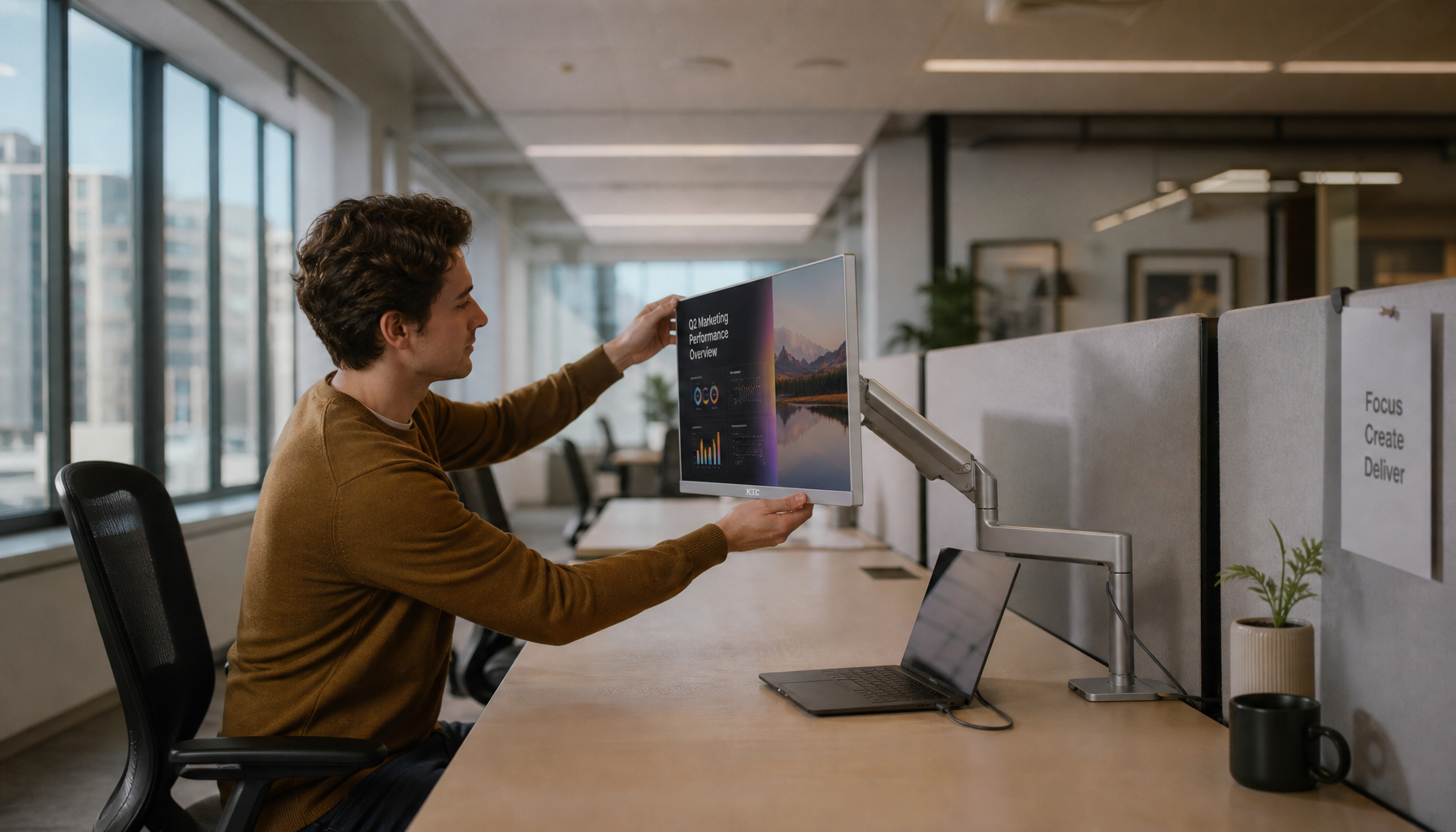
If you cannot move the desk, change the screen angle. A small tilt can move the reflection away from your direct line of sight. With a monitor arm, this takes seconds; with a fixed stand, use the stand’s tilt and height adjustment as far as it allows. A monitor arm is especially useful because standard mounting gives you height, tilt, and depth control while freeing desk space.
Here is a quick test for setting up a bright-wall workstation: turn the monitor off and sit in your normal position. Whatever you see reflected on the dark screen is what your eyes will fight during use. Adjust the display until the reflection is a darker, less detailed part of the room.
Control the Wall, Not Just the Monitor
A bright white wall can be excellent for room openness, but it is rarely ideal directly opposite a screen. If the wall is too reflective, you have three practical options: soften the wall, darken the reflection zone, or redirect the light.
A matte finish helps more than a glossy finish because it scatters light instead of sending a sharp reflection back into the panel. If repainting is not realistic, place a fabric pinboard, acoustic panel, matte poster, curtain panel, or shelving behind the reflection zone. The goal is not to make the room dark; it is to stop one surface from overpowering the display.

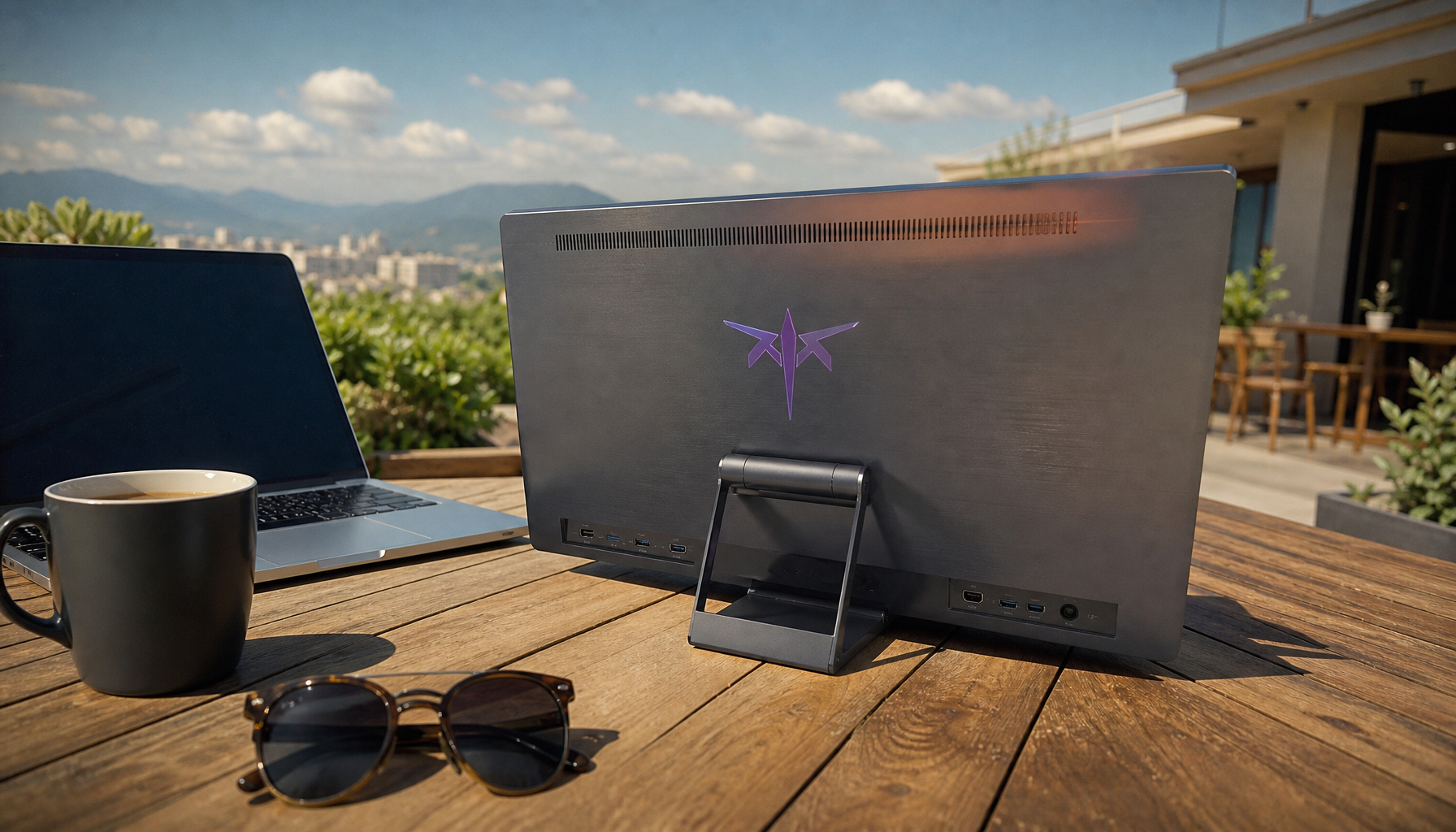
This matters most with glossy screens, portable smart displays, and self-emissive laptops used as second screens. Portable monitors often sit lower and closer to reflective desks or walls, so even a small angle change can make the difference between readable and washed out.
Surface Facing the Display |
Main Problem |
Best First Fix |
White painted wall |
Broad reflected glow |
Add matte texture or rotate screen slightly |
Window or glass door |
Sharp reflection and changing light |
Use blinds and place display perpendicular |
Glossy desk |
Lower-screen reflection |
Use a matte desk pad |
Bright cabinet or shelf |
Local hot spot |
Move object or change monitor tilt |
Balance Room Light and Screen Brightness
Do not run the monitor at maximum brightness all day unless the room demands it. Excessive brightness can create glare and discomfort, while brightness that is too low makes text and detail harder to see. Practical brightness guidance recommends adjusting throughout the day instead of locking one setting forever, and most systems let you change brightness and color.
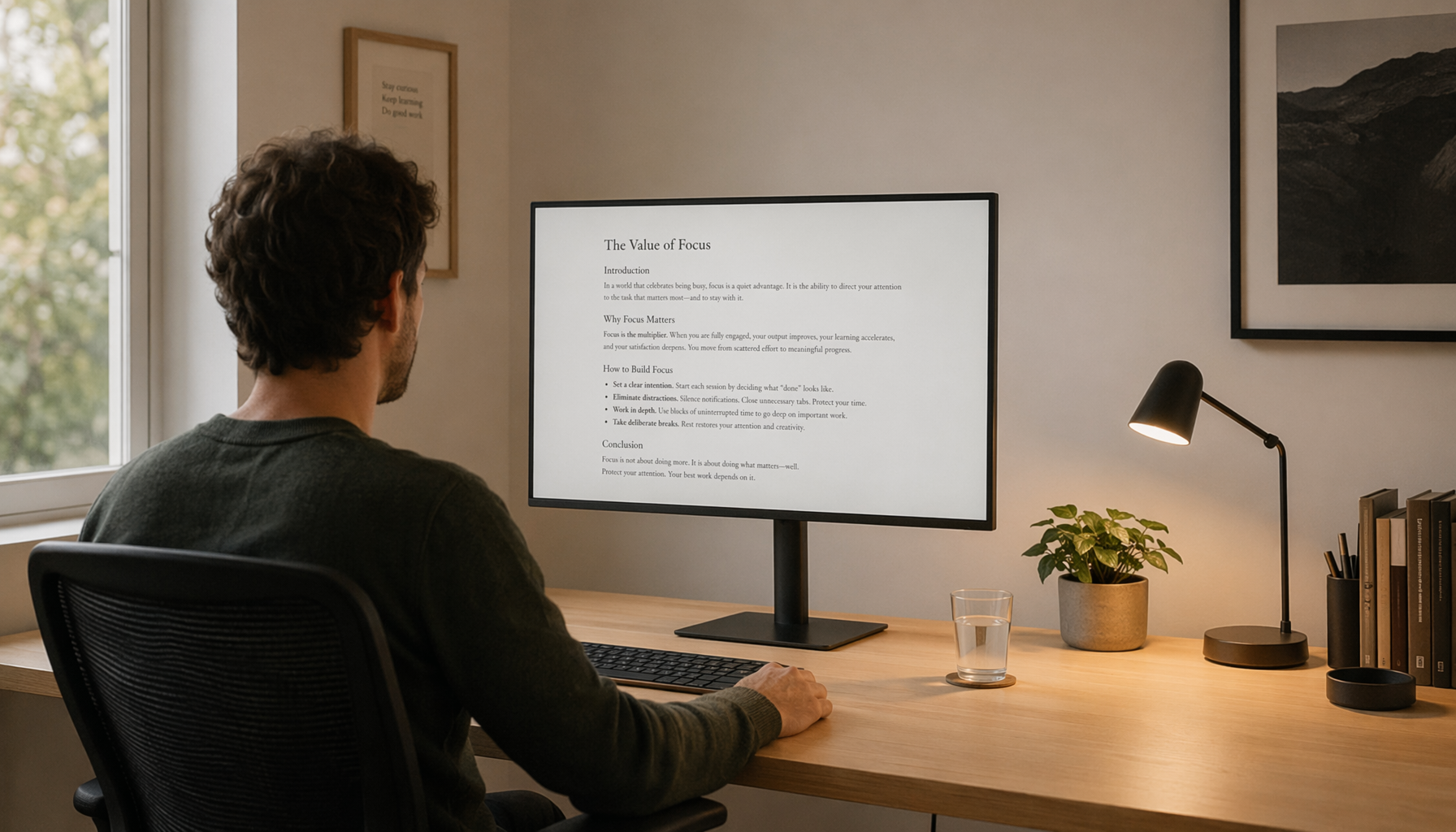
A simple paper-match method works well. Put a white sheet of paper beside the screen under the same room lighting, open a white document, and adjust the screen until the white page on the monitor feels similar to the paper rather than glowing like a light panel. If the display still feels harsh, lower contrast slightly or choose a warmer color temperature.

For gaming, avoid crushing visibility. Some gaming advice recommends brightness around the 250-350 nit range, but that only works if your room is bright enough and the game needs that luminance. In a dim room with a bright wall reflection, pushing brightness higher can make menus and white flashes painful while still failing to restore true black depth.
Use Bias Lighting or a Monitor Light Bar Carefully
Bias lighting is soft light behind the monitor that reduces the contrast jump between the display and the surrounding wall. It is valuable when the wall behind the screen is too dark compared with the display, but it must be subtle. The light should not shine into your eyes or onto the screen.
A monitor light bar can also help, especially for office work where you need to read notes, use a keyboard, or sketch beside the display. The best use is downward desk illumination, not blasting light onto the panel. Monitor light bars are designed to direct light onto the desk while limiting screen reflections, making them useful when you want better workspace visibility without adding more glare.

For a bright wall scenario, aim for controlled, low-glare lighting rather than dramatic colored ambient effects. Saturated colors behind a productivity display can skew how you judge whites, grays, and creative work.
Tune Color Temperature, Contrast, and White Intensity
Color temperature controls how warm or cool white appears. Around 6,500K is a common neutral target, but if white pages feel piercing against a bright wall, a warmer mode can be easier to tolerate for long sessions. The tradeoff is color accuracy: warmer whites may look calmer, but they can make images and brand colors less precise.
Brightness changes the light output. Contrast changes the relationship between bright and dark tones. Color temperature changes the character of white. If your monitor’s brightness and contrast controls do not solve harsh white glare, test a warmer preset, lower color gain, or an eye-comfort mode. Make changes one at a time, then use the display for 10 minutes before judging.
For creators, enable proper system color tools where available. Automatic color management can improve consistency across apps and help supported displays render color more accurately, including gradients, shadows, and darker scenes. For gaming, keep your monitor at native resolution and the highest stable refresh rate before fine-tuning visual modes, because smoothness and clarity depend on the full signal chain, not only the panel menu.
Choose the Right Screen Role in Multi-Monitor Setups
Dual and triple displays can make a bright-wall problem worse if one screen is angled into glare while another is clean. Keep the primary display in the lowest-reflection position and move support screens slightly inward. A practical layout uses one screen for focus and another for references, chat, dashboards, or tools, which aligns with the productivity logic behind multi-monitor setups.
If one monitor is glossy and one is matte, put the matte panel in the harder lighting position. If one screen is used for competitive play, put it dead center and reserve the reflective side position for static content like chat, notes, or a browser. In office workflows, a 4K display can give sharper text and more workspace, while 1440p often remains the better value for high-refresh PC gaming; 4K renders about 8.3 million pixels per frame compared with about 3.7 million for 1440p.
When an Anti-Glare Film or New Monitor Makes Sense
Anti-glare film is a reasonable fallback when you cannot move the desk, change the wall, or replace the display. The upside is lower reflection intensity. The downside is possible softness, sparkle, reduced contrast, or altered touch feel on portable smart screens.
A new monitor makes sense when the existing panel is glossy, too dim for the room, lacks tilt or height adjustment, or has poor contrast. For productivity, prioritize a matte or low-reflection coating, enough brightness for your workspace, stable ergonomics, and resolution that fits your work. For gaming, prioritize refresh rate, response time, adaptive sync, and the right resolution for your graphics hardware. A brighter monitor helps only if reflections are controlled; otherwise, you are paying for more light to fight more light.
A Practical Setup That Works
For a bright wall home office, place a 27-inch or 32-inch monitor perpendicular to the window, set the top edge near eye level, and use a matte desk pad if the desktop reflects the lower bezel. Add a low-output bias light behind the screen or a monitor light bar aimed downward. Then match brightness to the room, warm the color temperature slightly for long document sessions, and keep your primary app on the least reflective screen.
For an immersive gaming station, center the high-refresh display away from the brightest reflection, use a capable cable connection, set the native resolution and maximum refresh rate, and tune black equalizer or shadow controls only after glare is physically reduced. Software settings cannot recover detail that a bright reflection has already erased.
A display facing a bright wall is not doomed; it just needs the environment treated as part of the system. Control the reflection path first, balance light second, and calibrate settings last. That order gives you a cleaner image, calmer eyes, and a setup that performs the way the screen was built to perform.