


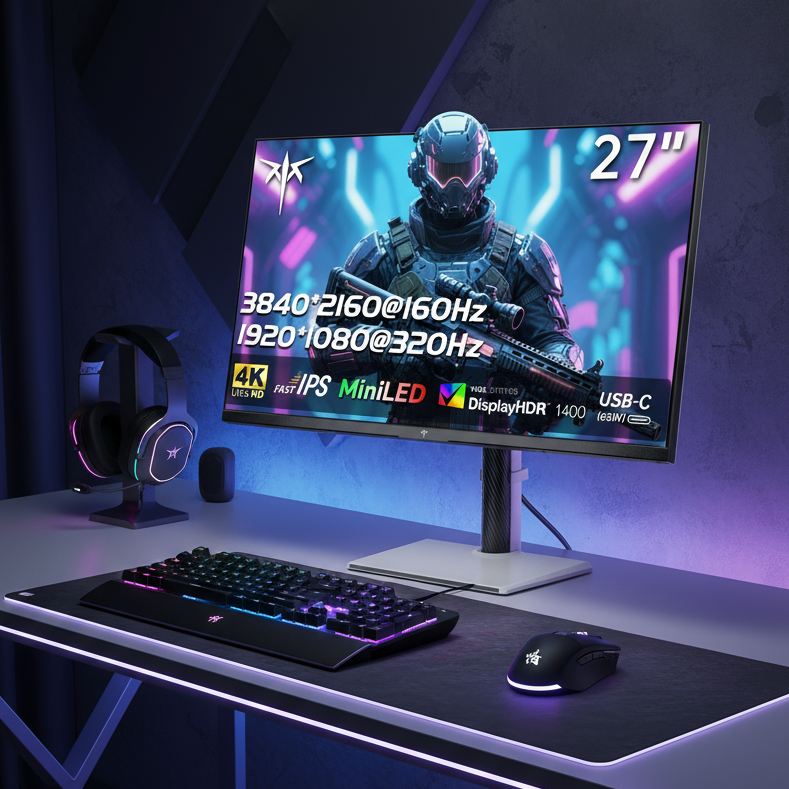




A strong pixel-defect claim needs clear photos, repeatable test screens, exact defect location, proof of purchase, and a short timeline that matches the seller or manufacturer’s pixel policy.
Is that tiny black dot sitting on your crosshair, spreadsheet grid, or design canvas every time the screen turns white? A clean evidence set can make the difference between a vague complaint and a claim support teams can verify quickly. Use the steps below to identify the defect, photograph it without glare or noise, and package the claim clearly.
Why Pixel Defect Documentation Matters
Modern displays contain millions of pixels, so warranty teams usually judge defects by type, count, position, and policy threshold rather than frustration alone. A 1080p panel has 2,073,600 pixels, and LCD quality standards often separate hot, dead, and stuck pixel behavior because each failure mode points to a different issue.
For high-refresh gaming monitors, office productivity displays, portable smart screens, and color-sensitive workstations, location can matter as much as count. A single black pixel near the center of a 27-inch gaming monitor can be more distracting than two edge defects on a conference-room display. That is why your evidence should show both the close-up defect and its position on the full screen.
Professional inspection services use structured screening because pixels affect brightness, color accuracy, and uniformity. Pixel screening is not just a cosmetic pass; it is a quality-control process that checks whether individual pixels behave consistently enough for the display’s intended use.
Know What You Are Photographing
A dead pixel is usually black because it does not light up, while a stuck pixel stays locked on one color, such as red, green, or blue. One monitor-testing article describes dead pixels as permanently black and stuck pixels as fixed-color points, which is why testing against several solid backgrounds is more useful than one casual photo.
A hot or bright pixel appears white or overly lit. ISO 13406-2 separates pixel faults into Type 1 hot pixels, Type 2 dead pixels, and Type 3 stuck subpixels, with Class I allowing zero faults and Class II allowing limited defects per million pixels.
The practical difference is important before you contact support. Stuck pixels may sometimes respond to color-cycling tools, while true dead pixels are typically hardware failures that need warranty review, professional service, or panel replacement. For a brand-new monitor, keep troubleshooting conservative because aggressive pressure, heat, or unofficial repair attempts can complicate a return.
Defect Type |
What It Looks Like |
Best Test Background |
Claim-Relevant Note |
Dead pixel |
Fixed black dot |
White, light gray, bright colors |
Often treated as a hardware defect |
Stuck subpixel |
Fixed red, green, or blue dot |
Black, white, red, green, blue |
May be recoverable, but still document first |
Hot or bright pixel |
Fixed white dot |
Black or dark gray |
More visible in dark scenes and video work |
Cluster |
Several defects close together |
Multiple solid colors |
Usually stronger evidence than one isolated edge defect |
Set Up a Reliable Pixel Test
Start with the display in normal operating conditions. Let the screen warm up for several minutes, clean the panel with a microfiber cloth, turn off animated wallpapers, and disable screen savers. Use full-screen solid colors: white, black, red, green, blue, and mid-gray. This exposes different defect types and helps rule out dust, reflections, and image content.

Resolution and pixel density affect what you can see. Pixel pitch measures the distance from the center of one pixel to the center of a neighboring pixel, and smaller pitch usually means higher density. In real terms, a defect on a dense portable 14-inch 4K screen may need a sharper close-up photo than the same defect on a lower-density 32-inch office monitor.
Use the same test sequence every time you photograph. For example, if the dot is black on white, missing on black, and still visible on red or green, that pattern supports a dead-pixel claim. If it glows blue on black and disappears on blue, you may be looking at a stuck blue subpixel.
Photograph the Defect Clearly
Use a cell phone camera or a camera with manual focus if available. Turn off flash, reduce room glare, and place the camera straight in front of the screen. A slight angle can create reflections that look like defects or hide the real one. Set screen brightness to a normal visible level rather than maximum unless the defect only appears at high brightness.

Take three kinds of photos. The first should show the entire display with the test color filling the screen, so support can see the monitor context and defect location. The second should be a mid-range photo with the defect area and nearby screen edges or UI markers visible. The third should be a close-up, focused enough to show the pixel or subpixel behavior without turning it into a blurry glowing spot.

Do not rely on digital zoom alone. Move the camera closer, lock focus, and take several shots from slightly different distances. If your phone keeps hunting for focus, place a small sticky note near but not over the defect for focus lock, then remove it and shoot again. The goal is a clean image where the defect remains fixed while dust and reflections change or disappear.
Record Location, Count, and Pattern
A claim is stronger when the support agent can recreate what you saw. Write down the screen size, resolution, refresh rate, connection type, computer or device used, and test colors where the defect appears. For location, use plain language and a rough coordinate: “one black pixel about 2 inches right of center and 1 inch above center on a white screen” is more useful than “bad pixel in the middle.”
For larger LED displays and video walls, distinguish isolated dots from rows, columns, blocks, or repeated shapes. Not every dark area is a dead LED because driver IC or data path failures can create geometric patterns that need a different diagnosis. If you see a vertical line, repeating block, or whole module section, photograph the full pattern before zooming in.
For a simple calculation, a 27-inch 1440p monitor has 3,686,400 pixels. A Class 2 example counts defect thresholds per million pixels, so a few isolated defects may fall below some seller policies even when they are personally annoying. That makes exact count and location essential, especially if the defect sits in a central viewing area used for gaming, editing, trading dashboards, or document work.
Build a Warranty-Ready Evidence Package
Your claim should include the purchase receipt, order number, product serial number, model name, photos on multiple solid-color backgrounds, a short video if the defect is hard to capture, and a concise description of when you first noticed the issue. One hardware warranty process, for example, may require proof of purchase, diagnostic information, contact details, and the product serial number when a hardware claim is made.

Keep the writing factual. Instead of saying “the panel is terrible,” write: “One fixed black pixel appears on white, gray, red, green, and blue full-screen tests. It is approximately 2 inches right of center. The defect was present on first setup on May 21, 2026, using HDMI and USB-C from two devices.” That wording gives support a repeatable path.
If the retailer has a short return window, file quickly even if you are still testing. Users should check for dead pixels early after purchase because warranty claims and return options are easier while the product is still inside the eligible period.
Should You Try to Fix It First?
For stuck pixels, cautious software-based color cycling can be reasonable after documentation. The upside is that it is low effort, does not require opening the device, and may revive a stuck subpixel. The downside is that it can take time, may not work, and does not create a better warranty record unless you captured the defect before running the tool.
For dead pixels, expectations should be conservative. A true black pixel usually means the pixel is not receiving or passing light, and dead pixels are generally not fixable. Gentle pressure methods are often discussed online, but the risk is obvious: too much force can damage the panel or create new defects. On OLED, portable smart screens, touch displays, and expensive gaming panels, a warranty-first approach is cleaner.
Pixel correction is more common in imaging devices than consumer monitors. Scientific camera workflows document pixel defects and bad imaging regions, which illustrates a broader principle: serious imaging systems identify defects systematically rather than judging them by one casual image.
Claim Language That Works
Use short, verifiable statements. Name the defect type only if you are confident; otherwise, describe the behavior. “Fixed black dot visible on white and gray screens” is safer than incorrectly calling every defect a dead pixel. Attach images with descriptive names such as full-screen-white-defect-center.jpg, close-up-black-dot-white-test.jpg, and serial-number-label.jpg.
Mention whether the defect appears across inputs. If the same dot appears using HDMI, DisplayPort, and a built-in smart-screen interface, the evidence points more strongly to the panel. If it appears only from one laptop, cable, or app, test again before filing because the problem may be signal, scaling, software, or GPU related.
For premium displays, state the use case without exaggerating. “This monitor is used for FPS gaming and the defect sits near the aim point” or “This display is used for spreadsheet review and the black pixel interrupts text rows” gives support practical context. It does not guarantee approval, but it explains why the defect affects real use.
Common Mistakes That Weaken a Claim
The most common weak evidence is a single blurry close-up with no full-screen reference. Support cannot tell whether the spot is dust, camera noise, panel damage, or a content artifact. Another weak claim is testing only on one wallpaper or one app, because fixed image content can mimic a display fault.
A second mistake is waiting too long. Return windows, seller policies, and manufacturer warranties are not the same thing. A hardware warranty may result in repair, replacement, or refund at the provider’s choice, while statutory rights can vary by region and may sit alongside a manufacturer warranty.
A third mistake is ignoring the policy threshold. Some displays are sold under zero-defect expectations, while others allow a limited number of pixel or subpixel faults. Zero pixel inspection exists for industries that require a zero-fail pixel standard, but many consumer monitors are not sold under that promise unless the retailer or manufacturer states it clearly.
Final Check Before You Submit
Before sending the claim, open your photo set and confirm that a person who has never seen the screen can identify the defect, its location, and the test condition. Include the serial number and receipt in the same support thread so the agent does not have to ask for basics later.
A pixel defect claim is won with precision, not volume. Clean test screens, sharp photos, exact location notes, and policy-aware language give your gaming monitor, office display, or portable smart screen the strongest possible case for a return, replacement, or warranty repair.


