If your portable monitor shows the desktop but ignores taps, Windows is receiving video without correctly receiving or mapping the touch signal. Fix the connection first, then enable the HID touch device, and finally map touch input to the correct screen through Tablet PC Settings.
Is your portable touchscreen acting like a normal second monitor while every tap lands on your laptop screen, moves the cursor, or does nothing? In most setups, the problem comes down to whether Windows has both a display path and a USB touch-data path. Use this workflow to restore touch, map it to the right display, and avoid the connection issues that make portable monitors feel unreliable.
Why Windows Sees the Screen but Not the Touch Layer
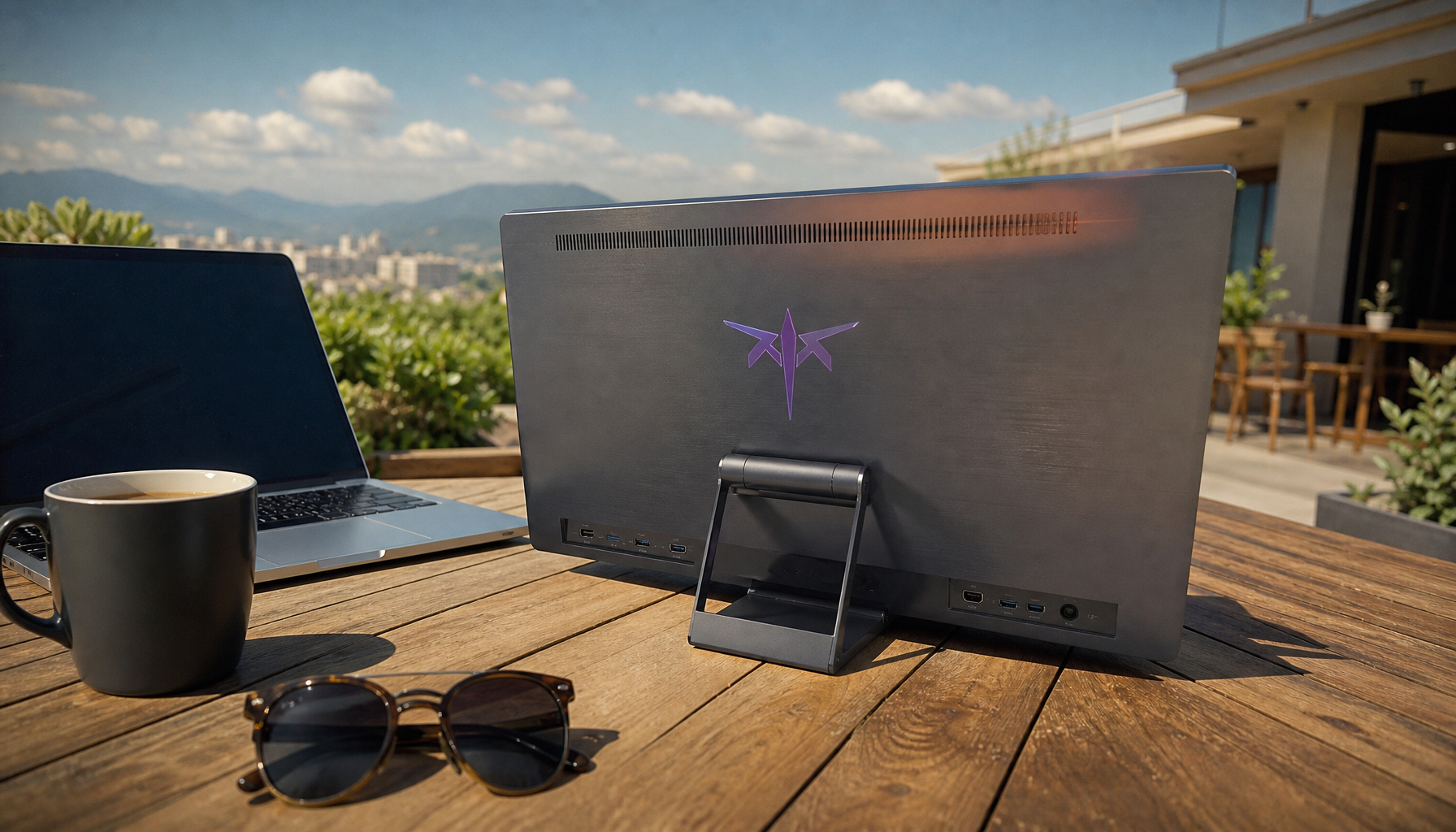
A portable touch monitor is really two devices sharing one panel: a display and a touch input device. The display side sends the image through USB-C DisplayPort Alt Mode, HDMI, mini-HDMI, or DisplayPort. The touch side usually travels as USB data and appears in Windows as an HID device.
That split matters because HDMI only carries video. If your portable monitor is connected by HDMI and power only, Windows can extend the desktop perfectly while having no touch device to use. Many touch models need an additional USB cable from the monitor to the laptop for touch input, while a fully compatible USB-C connection can often carry video, power, and touch data together. Portable monitor buying guidance repeatedly emphasizes that USB-C can carry video, data, and power, but only when the laptop port and cable support the needed modes.

The practical example is simple: if a 15.6-inch portable touchscreen works as an extended 1080p screen over mini-HDMI but never registers a tap, add the USB touch cable before changing Windows settings. If the same monitor uses one USB-C cable, try the manufacturer’s full-featured USB-C cable rather than a charge-only cable from a phone or accessory drawer.
Start With the Physical Connection
Before opening Windows settings, confirm that the monitor has a real touch-data path. A one-cable USB-C setup needs a laptop USB-C port that supports DisplayPort Alt Mode and data, not just charging. A two-cable setup usually needs HDMI or mini-HDMI for video plus USB-A-to-USB-C or USB-C-to-USB-C for touch and sometimes power.
Many “Windows problem” cases are actually cable problems. Portable monitor buying advice highlights compatibility as a core buying check because laptops vary widely: some USB-C ports handle video, some only charge, and some need separate power when the screen is bright. If the monitor flickers, power-cycles, or touch drops when brightness is high, plug the monitor into a wall charger or use pass-through charging if your model supports it.
For troubleshooting, avoid unnecessary hubs at first. Connect the portable monitor directly to the laptop, test touch, then reintroduce docks, adapters, and extension cables one at a time. On a crowded desk with a laptop dock, external drive, webcam, and portable display, this isolates whether the touch controller is being lost through the hub rather than Windows itself.
Enable the Touchscreen Device in Device Manager
Once the cable path is correct, check whether Windows has disabled or failed to initialize the touch controller. In Device Manager, the touchscreen normally appears under Human Interface Devices as HID-compliant touch screen. To reach it, right-click Start, open Device Manager, expand Human Interface Devices, right-click HID-compliant touch screen, and choose Enable device if that option appears. When multiple entries are present, repeat the action for each HID-compliant touch screen.

If the entry is missing, unplug the monitor, restart Windows, reconnect the monitor directly, and watch Device Manager while it reconnects. If it appears as a generic mouse or the cursor moves without true multi-touch gestures, Windows may be treating the touchscreen as basic pointer input. In that case, install any monitor firmware, USB controller, chipset, or display driver updates from the PC or monitor maker, then retest.
This step also gives you a clean diagnostic split. If Device Manager never shows a touch-related HID device, focus on cable, port, power, firmware, or monitor support. If the HID device is present and enabled but taps go to the wrong display, move to touch mapping.
Map Touch Input to the Portable Monitor
When Windows detects the touchscreen but sends taps to the laptop panel or the wrong external display, the issue is per-monitor touch mapping. That means Windows has the touch controller, but it has not associated that controller with the correct physical screen.
Open the Run dialog with Windows key + R, type control tabletpc.cpl, and press Enter. In Tablet PC Settings, use the Display tab and select Setup. Windows will show a full-screen prompt that asks you to identify the screen for touch input. Follow the prompt carefully: press Enter to skip screens that are not touch-enabled, and physically tap the portable monitor when the prompt appears on it.

This is the key fix for the classic second-display-only problem. Imagine your laptop is Display 1 and your portable touchscreen is Display 2. If Windows thinks the touch layer belongs to Display 1, every tap on the portable panel may select items on the laptop display. The setup wizard remaps those touch coordinates so taps, swipes, and pinch gestures land on the portable screen instead.
Calibrate Only After Mapping Works
Calibration is not the first fix. Use it after touch input is already landing on the portable monitor but feels offset, inaccurate, or inconsistent near the edges. Calibration teaches Windows where the panel’s touch coordinates sit relative to the visible image.
Search Windows for “calibrate” and open the option for pen or touch input. In Tablet PC Settings, choose the portable monitor from the Display menu, select Calibrate, choose Touch Input, and tap the on-screen targets. Save the calibration data when Windows asks. If the calibration button is unavailable on newer Windows 11 builds, use the monitor maker’s recommended calibration utility or command-line method if provided.
For a real desk example, calibration is useful when a tap on a small toolbar lands a few pixels high or low, especially on a 15.6-inch Full HD panel where interface elements are dense. It will not fix a missing USB touch cable, a disabled HID device, or touch being mapped to the wrong monitor.
Use the Right Display Mode for Touch Work
Extended mode is usually best for productivity because it lets the portable monitor act as a separate interactive workspace. Mirror mode can be useful for presentations, demos, or signing workflows where the same content must appear on both screens. If touch mapping behaves strangely, switch temporarily to extended mode, map touch again, then return to your preferred layout.
Portable monitor research often treats 15.6 inches and 1080p as the practical sweet spot because it gives enough room for multitasking without making the kit bulky. Touch adds the most value when the second screen holds tools you actually interact with: annotation, chat, dashboards, reference documents, media controls, or creative app panels. KTC’s touch monitor guidance frames 10-point multi-touch as useful for gestures such as pinch-to-zoom and rotation, which is exactly why mouse emulation is not enough for modern Windows workflows.

Symptom |
Most Likely Cause |
Best First Fix |
Screen works, touch does nothing |
No USB touch-data connection |
Add the USB touch cable or use a full-featured USB-C cable |
Touch works on laptop screen instead |
Wrong per-monitor mapping |
Run control tabletpc.cpl and use Setup |
Touch moves cursor only |
Generic pointer behavior or driver issue |
Update Windows, chipset, USB-C, and monitor firmware |
Touch works after restart but not cold boot |
HID initialization problem |
Re-enable HID device, then update drivers and firmware |
Touch is slightly offset |
Calibration issue |
Calibrate touch input after mapping |
Pros and Cons of Portable Touch Input on Windows
Touch on a portable monitor can make a compact workstation feel more direct. It is useful for scrolling long documents, marking up slides, controlling media timelines, reviewing photos, and keeping communication apps off the laptop’s main screen. For travel productivity, a slim secondary display reduces tab juggling and keeps reference material visible without burying your main task.
The tradeoff is that touch adds another device layer. A non-touch portable screen can often run with one simple video cable, while a touch model may need USB data, more power, better cables, firmware updates, and correct Windows mapping. Wireless portable monitors can reduce cable clutter, but wired connections remain the reliability choice for low-lag touch and stable power. Portable monitor advice also favors wired connections for dependable use and lower battery demand.
For gaming, touch is usually secondary to refresh rate, response time, and input lag. A portable gaming display may prioritize 120Hz, 144Hz, or higher refresh instead of touch. For office and creative work, touch can be the feature that turns a second screen from passive space into an active control surface.
When to Disable and Re-Enable Touch
If touch input becomes erratic, starts causing cursor jumps, or interferes with typing, temporarily disabling and re-enabling the HID touchscreen can reset the device without unplugging the full monitor setup. This is also a useful test after Windows updates or dock changes. Some troubleshooting advice recommends disabling one HID entry at a time when multiple touch devices appear, because Windows may list the laptop panel, portable monitor, pen layer, or generic touch controller separately. Windows 10/11 touchscreen control is commonly handled through Device Manager for exactly this reason.
If the problem returns after every cold boot, the root cause is likely initialization rather than mapping. Update Windows, monitor firmware, laptop BIOS, chipset drivers, and USB-C controller drivers. If your portable monitor works correctly on another Windows laptop, the panel is probably fine and the host system deserves closer attention.
FAQ
Why does my portable monitor display video but not touch?
Video and touch are separate signals. HDMI or mini-HDMI can show the image, but touch usually needs USB data. Use a full-featured USB-C connection or add the monitor’s USB touch cable.
Why does tapping the portable monitor control the laptop screen?
Windows has mapped the touch controller to the wrong display. Run control tabletpc.cpl, open Setup in Tablet PC Settings, and tap the portable monitor only when the prompt appears on it.
Do I need drivers for every portable touchscreen?
Many modern Windows portable monitors are plug-and-play, but drivers, firmware, USB-C controller updates, or manufacturer utilities may be needed when multi-touch, calibration, rotation, or cold-start detection fails.
Is USB-C always enough for touch?
No. USB-C is a connector shape, not a guarantee. The laptop port, cable, and monitor must support the right combination of video, power, and USB data.
Final Check
A Windows portable touchscreen should behave like an interactive second display only after three things are true: the monitor has a touch-data connection, Windows sees an enabled HID-compliant touch screen, and Tablet PC Settings maps that input to the correct display. Get those right, and the portable screen stops being a passive add-on and becomes a fast, direct workspace you can actually control.