Set the body first, then place the screen: feet supported, elbows relaxed, and the monitor slightly below eye level at about arm’s length. For children and shorter adults, the best fix is usually a better chair-and-desk match, a footrest, and an adjustable monitor arm or riser, not forcing them to fit adult-sized furniture.
Does your child crane toward a laptop, or does a shorter adult end the day with tight shoulders because the desk feels built for someone else? A setup check can quickly reveal whether the screen, chair, or desk is causing strain, and small changes such as raising a laptop while lowering the keyboard can make the workstation more comfortable within one focused work session. Here is how to build a screen setup that respects ergonomic guidelines without overbuying or guessing.
Start With the User, Not the Monitor
The most common mistake is adjusting the display before the person is seated correctly. A monitor can be technically “eye level” and still be wrong if the child’s feet are dangling, the chair is too deep, or the desk forces raised shoulders.
A reliable ergonomic baseline starts with support. The user should sit with the lower back supported, shoulders relaxed, elbows close to the body, and feet flat on the floor or on a footrest. Office setup guidance gives the same core sequence: adjust the chair so the feet are supported, keep thighs roughly parallel to the floor, and position the monitor directly in front at a practical viewing distance; this chair height principle matters even more for smaller bodies.

For a child, that might mean using a firm footrest under a dining table rather than buying a new desk immediately. For a shorter adult, it might mean raising the chair enough for typing comfort, then adding a footrest so the legs are not left hanging. In both cases, the screen follows the posture.
Use a Relaxed Downward Gaze
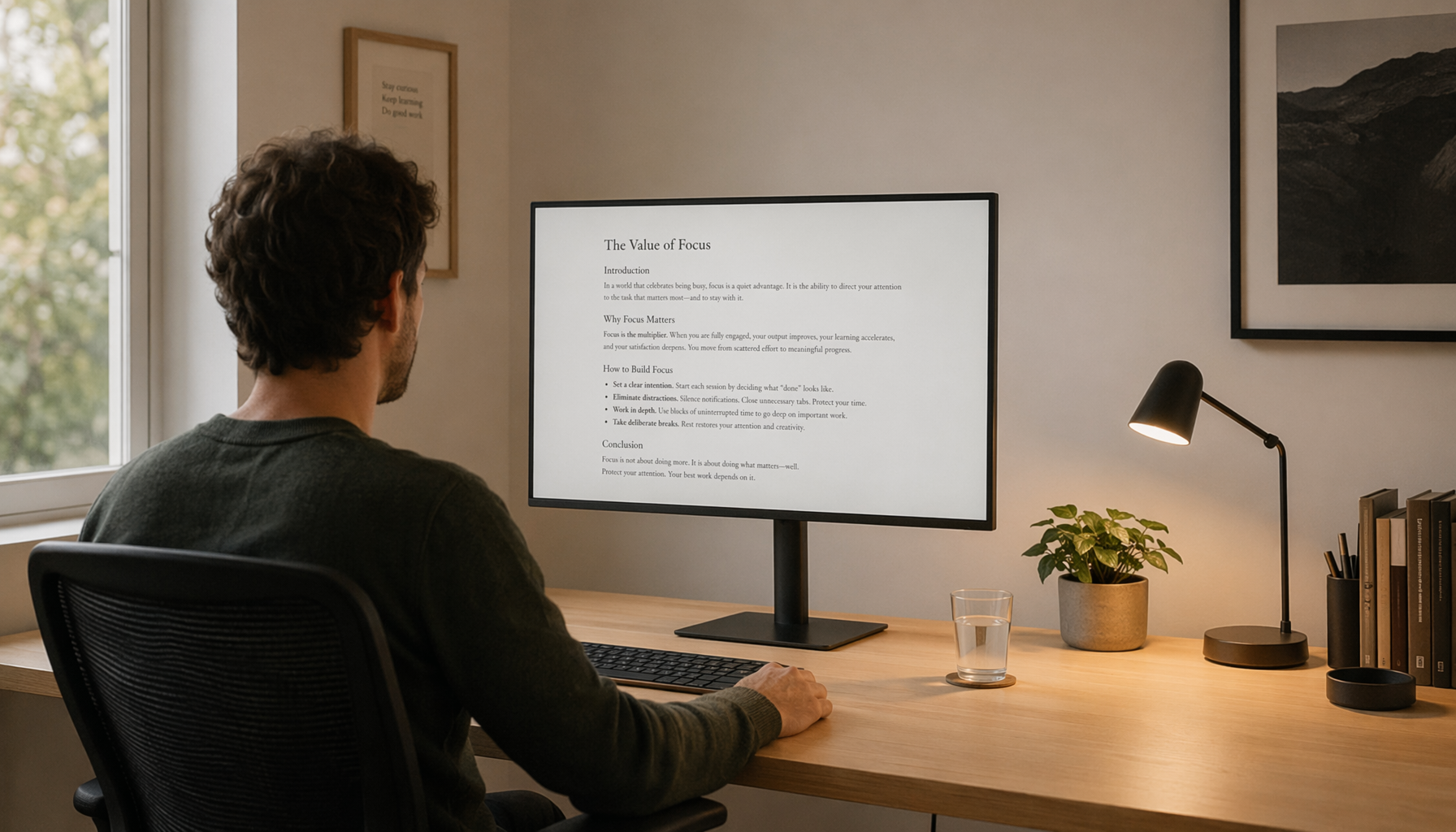
The classic rule says the top of the screen should be at or slightly below eye level. That is still a useful starting point, but it should not be treated like a rigid measurement. For most seated users, the goal is a relaxed, slightly downward gaze, with the most-used content in the upper-to-middle portion of the display.

A practical setup is to place the top third of the monitor near eye level, so the center of the screen sits a little below the eyes. Ergonomic monitor guidance commonly favors a slight downward viewing angle, with the screen center below eye level rather than straight ahead; that screen center approach is especially useful with 24-inch to 32-inch displays.
Here is a simple real-world check. Seat the child or shorter adult normally, with the keyboard where the hands can rest comfortably. Ask them to look straight ahead, then relax their eyes slightly downward. If their gaze lands around the browser address bar or the top third of the active document, the height is close. If they must lift the chin, the monitor is too high. If they fold the neck forward to read, the monitor is too low or the text is too small.
Fit the Desk and Chair Before Buying a New Screen
Shorter adults often struggle because many standard desks are too tall for neutral typing. Petite home office guidance notes a clear mismatch: a 5-foot-1 person may need a desk around 23 inches high, while many standard desks are closer to 29 inches; that desk around 23 inches high gap can push shoulders up and make even a perfectly placed monitor feel uncomfortable.
Children face a similar problem, but with growth added. Pediatric study-space guidance recommends reassessing a child’s study space every few months because growth and school workload change the fit; this reassessing a child’s study space habit is more valuable than chasing a one-time perfect setup.
The value-oriented path is usually modular. Use an adjustable chair if available, add a footrest when feet do not reach the floor, raise the monitor with a stable riser, and use a separate keyboard and mouse. This lets the screen move independently from the hands, which is the central ergonomic advantage.
Laptops Need Separation
A laptop is convenient, but it creates a design conflict: if the screen is high enough, the keyboard is usually too high; if the keyboard is comfortable, the screen is usually too low. For children and shorter adults, that conflict becomes sharper because their shoulder height and reach are lower.
School-space guidance recommends raising a laptop screen while using a separate keyboard and mouse, because the built-in screen and keyboard cannot both sit at ideal heights; this separate keyboard and mouse setup is one of the highest-impact low-cost upgrades.
For example, a child doing homework on a 13-inch laptop at the kitchen table may hunch because the screen sits far below eye level. Place the laptop on a stand or a stable stack of books, then put a compact keyboard and mouse on the table surface. If the table is still too high, raise the chair and add a footrest. The monitor image improves posture only when the hands also stay relaxed.

Viewing Distance, Text Size, and Screen Size
Monitor distance should be far enough to reduce eye strain but close enough to prevent leaning. A useful adult range is no closer than 20 inches and no farther than 40 inches, with the monitor directly behind the keyboard. For most 24-inch to 27-inch displays, arm’s length is a good starting point; for a 32-inch display, move it farther back if the user has to turn the head to see the edges.
Do not fix small text by pulling the monitor close. Increase display scaling or font size first. In display settings, select the external display, then adjust scale or resolution carefully; lowering resolution can make content look larger, but it may reduce sharpness. For a child reading web lessons or a shorter adult using spreadsheets, a crisp native resolution with higher scaling is usually better than a blurry oversized image.
Monitor Arms, Risers, and Portable Screens
A monitor riser is simple, stable, and inexpensive. It works well when only a few inches of lift are needed and the desk is shared by one user. The downside is limited adjustment: if the child grows or a shorter adult alternates between sitting and standing, a fixed riser can become a compromise.
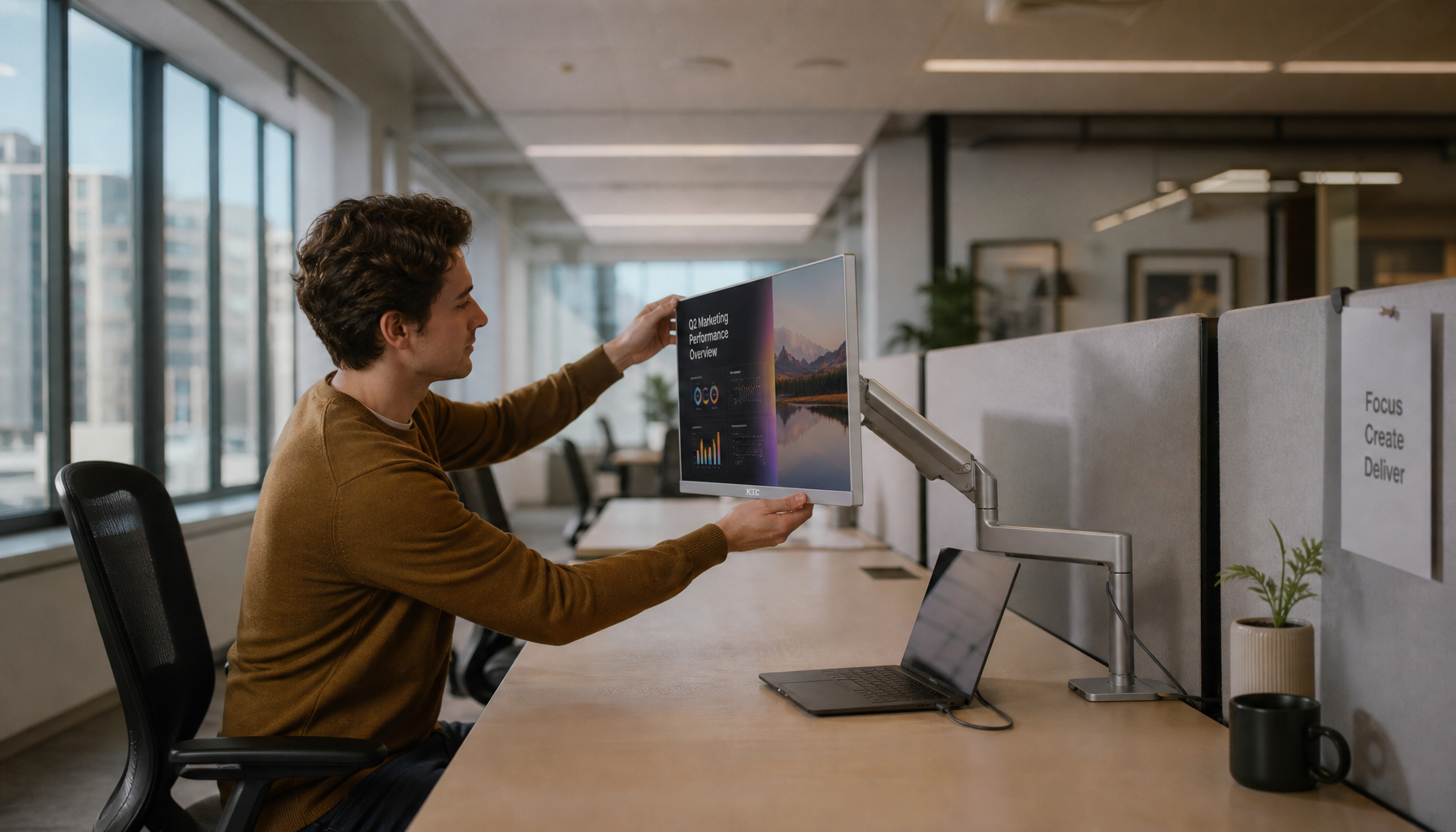
A monitor arm offers more adjustment. It can change height, depth, tilt, and sometimes rotation, which is useful for shared family workstations, sit-stand desks, and multi-monitor setups. Home office setup advice emphasizes neutral posture and placing the monitor near eye level and arm’s length away; an adjustable arm makes that monitor near eye level easier to preserve across different users.

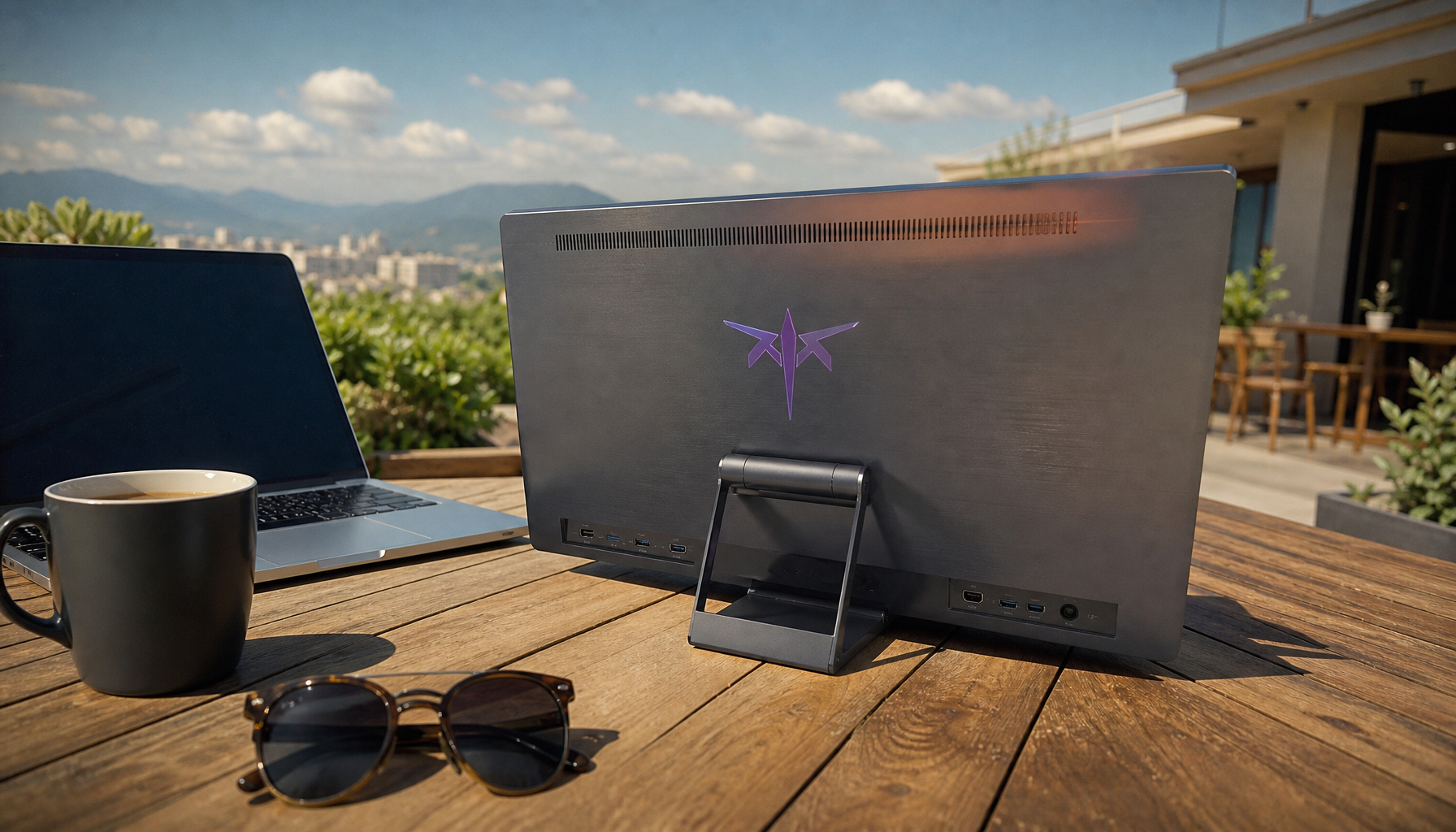
Portable screens need the same discipline. A portable display propped flat beside a laptop often creates neck twist and downward gaze. Put it on a folding stand, align its top third with the main screen, and keep the primary content directly in front. If the second screen is only for chat, notes, or reference material, angle it inward and avoid making the child or adult hold a rotated neck position for long periods.
Setup Tool |
Best Use |
Tradeoff |
Footrest |
When the chair must be raised for desk height |
Takes floor space and must be stable |
Monitor riser |
Fixed desk with one main user |
Limited height and depth adjustment |
Monitor arm |
Shared desks, growing children, shorter adults, sit-stand setups |
Costs more and requires installation |
External keyboard and mouse |
Any raised laptop setup |
Adds devices and cable management |
Keep the Screen Comfortable During Real Use
A setup that looks correct for five seconds may fail during a 45-minute class, gaming session, or spreadsheet block. After positioning the monitor, run a short trial. Have the user type, read, click, and look between materials for three to five minutes. Watch for chin lift, rounded shoulders, leaning forward, crossed legs, or wrists resting on a hard desk edge.
Lighting matters because glare can quietly undermine posture. Study-room guidance connects poor lighting and incorrect screen placement with eye strain and headaches, and its poor lighting recommendation is practical: combine room lighting with task lighting so the screen does not become the brightest or hardest-to-read object in the room.
Movement is the final safeguard. Even a premium monitor cannot cancel prolonged stillness. Home workstation guidance recommends microbreaks and periodic self-checks, and that periodic self-checks habit applies cleanly to students and shorter adults alike. For children, pair screen setup with movement breaks at least every 30 minutes and a simple eye reset: look across the room or out a window before returning to close work.
FAQ
Should a child’s monitor be exactly at eye level?
Not exactly. The top of the screen can sit at or slightly below eye level, while the active viewing area sits a little lower. The goal is a relaxed downward gaze without neck bending.
Is a bigger monitor better for a shorter adult?
Only if the desk depth and height support it. A 32-inch monitor can be immersive and productive, but it should sit farther back than a smaller screen so the user does not scan by turning the neck all day.
Can books be used as a monitor riser?
Yes, if the stack is stable and the screen cannot slide. It is a good temporary fix, but an adjustable riser or arm is better for a growing child, a shared desk, or a sit-stand routine.
Setup Check
A child or shorter adult does not need a watered-down ergonomic setup. They need the same performance standard scaled to their body: supported feet, relaxed shoulders, neutral wrists, a screen slightly below eye level, readable text, and movement built into the session. When the workstation fits the person, the display stops pulling posture out of position and starts doing what a great screen should do: make focus feel natural.