Your eyes can feel worse after a screen break because the break reveals strain that built up while you were focused on the monitor. Dryness, focusing fatigue, glare, brightness mismatch, tiny text, and poor monitor placement can keep affecting your eyes even after you look away.
You step away from a gaming session or a long spreadsheet, expecting relief, but your eyes burn more, distance vision looks blurry, or the monitor feels harsh when you come back. That reaction is common enough that digital eye strain is linked to as little as 2 hours of continuous screen use, and one workplace study found symptoms in 51.5% of screen-heavy staff. Here is how to tell whether the problem is your break habit, your monitor setup, or the display you are using.
Why a Screen Break Can Make Eye Strain More Noticeable
The break may reveal symptoms that built up earlier
Digital eye strain is not always strongest while you are working. When you are locked into a ranked match, editing a timeline, or reading dense text on a 27-inch monitor, attention can mask discomfort until you stop. Common symptoms include dry eyes, irritation, blurry vision, light sensitivity, headaches, and neck or shoulder pain, all of which are part of digital eye strain.
That is why the “break made it worse” feeling can be misleading. The break did not necessarily damage your eyes; it gave your visual system a chance to report the cost of the previous hour. A short pause after 90 minutes of scrolling on a bright display may feel worse than no pause at all because dryness and focusing fatigue were already there.
Your tear film needs more than a glance away
While looking at screens, many people blink less often. A medical center notes that screen users may blink only about 3 to 7 times per minute, which is far below the normal pattern and can dry the eye surface. Once the tear film is unstable, a quick walk to the kitchen or a 30-second pause may not immediately restore comfort.

This matters for monitor users because dry eyes make brightness, contrast, and motion feel sharper. If your 32-inch gaming monitor is set very bright in a dim room, dry eyes can make the return to the screen feel like a glare spike, even if the panel itself has not changed.
Focusing muscles do not reset instantly
Your eyes constantly adjust focus when reading text, tracking a cursor, scanning a minimap, or switching between a laptop and external monitor. Digital eye strain symptoms can include slow focus changes, blurred near or distance vision, and double vision, especially when sustained screen work pushes focusing and binocular vision demand beyond comfort limits a medical wiki.
This is one reason your distance vision may look soft after a break. If you stare at a 24-inch display for a long session, then look across the room, your focusing system may lag. That lag is usually temporary, but if it repeats daily, your monitor setup and eye correction should be reviewed.
The Monitor Factors That Make Post-Break Discomfort Worse
Brightness mismatch is one of the biggest triggers
A monitor should not feel like a lamp in a dark room or a dull gray box in a bright office. When screen brightness is much higher than the room, returning from a break can feel harsh. When it is much lower than the room, you may squint and lean forward. Both patterns increase strain.

For practical setup, match apparent brightness rather than copying a percentage from another person’s monitor. A 30% brightness setting on one gaming display may look brighter than 60% on a portable monitor. If you step away for 5 minutes and the first thing you notice is a painful “flash” when you return, lower the monitor brightness, add soft room lighting, or reduce reflections behind you.
Glare and reflections keep working during the break
Screen glare is a known contributor to computer vision symptoms, along with poor lighting, improper viewing distance, posture, and uncorrected vision problems an optometric association. Glossy screens, bright windows, overhead lights, and reflective desk surfaces can all create small visual conflicts that your eyes keep fighting.
This is especially noticeable on ultrawide monitors. A 34-inch or 49-inch ultrawide can catch light from more angles than a smaller 24-inch display. If one side of the screen reflects a window and the other side is clean, your eyes keep adapting as you scan across the panel, which can make symptoms linger after the break.
Text clarity matters more than people expect
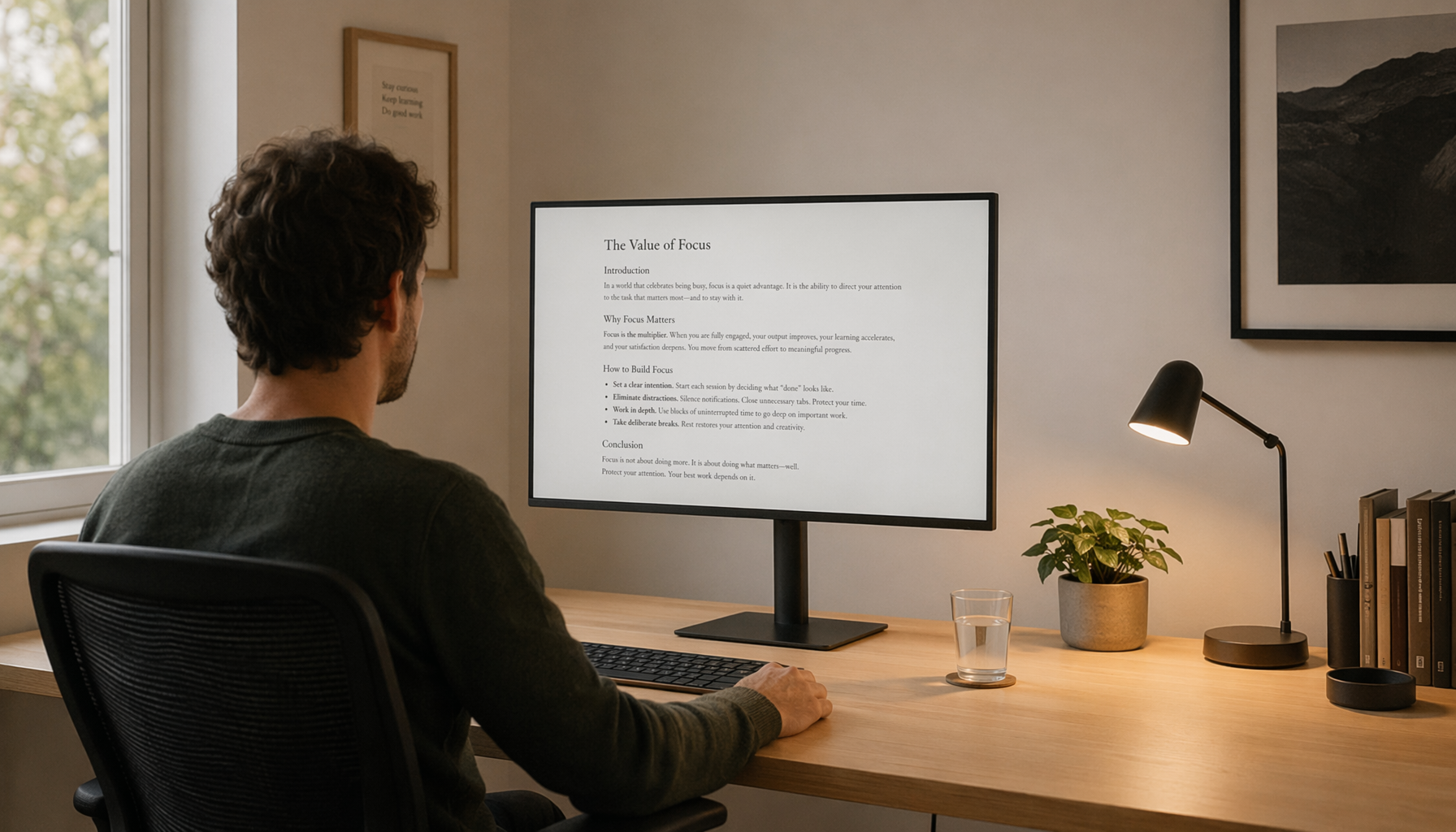
For office work, coding, research, and strategy games with dense UI, text clarity often matters more than extreme refresh rate. Low contrast, small fonts, poor scaling, and soft subpixel rendering make the eyes work harder because fine detail requires sustained focus.
If you lean in toward a 1440p or 4K monitor, increase text scaling before blaming the panel. A common practical range is 125% to 150% scaling on high-resolution displays, especially if the monitor is more than arm’s length away. On a laptop plus external monitor setup, try to make text size and apparent brightness similar across both displays so your eyes do not have to re-adapt every time you switch. When comparing a 27-inch QHD office monitor such as a 27” 2K 100Hz/120Hz home and office monitor, judge it alongside OS scaling, font size, brightness, and viewing distance rather than by the panel label alone.

Breaks That Help Versus Breaks That Backfire
A useful break changes distance, not just activity
The 20-20-20 rule works because it changes visual distance: every 20 minutes, look at something 20 ft away for about 20 seconds. An optometric association recommends this pattern for screen users, and it is especially useful during long monitor sessions where your gaze stays fixed at one distance 20-20-20 rule.

A break that switches from a 27-inch monitor to a cell phone does not give your eyes the same recovery. You may stop using the monitor, but you are still doing near work, often with smaller text, higher contrast, and a closer viewing distance. If your eyes feel worse after “taking a break,” check whether the break was actually another screen session.
Two-hour blocks need longer recovery
A few seconds away from the screen may be enough to interrupt strain, but it is not always enough to recover from it. A medical center recommends 15 minutes of rest after 2 hours of device use, along with glare reduction, frequent blinking, and proper screen distance 15 minutes of rest.
For a real-world monitor schedule, treat short and long breaks differently. During a workday, use 20-second distance breaks as maintenance. After a 2-hour block of coding, editing, or gaming, take a longer off-screen break where you walk, hydrate, and avoid reading on a cell phone.
Blinking should be part of the break
A screen break is more effective when you deliberately blink. In one study of university administrative staff who used screens at least 5 hours daily, researchers recommended blinking 12 to 18 times per minute, workstation adjustment, lighting control, posture changes, stretching, and the 20-20-20 rule as ways to reduce computer vision symptoms 12 to 18 times per minute.
Try this during a break: look across the room, blink fully 10 times, then close your eyes gently for 10 seconds. Do not squeeze your eyelids shut. The goal is to refresh the eye surface, not add muscle tension.
How to Tune Your Monitor Before Buying a New One
Start with distance, height, and angle
Many eye strain problems come from setup, not specs. A comfortable monitor position is usually about 20 to 28 inches from the eyes, with the top edge at or slightly below eye level and the screen center slightly below straight-ahead gaze. A medical center lists wrong screen distance or angle as a contributing factor in computer vision syndrome screen distance or angle.

For larger monitors, distance often needs to increase. A 24-inch display may feel comfortable near 24 inches away, while a 32-inch screen or 34-inch ultrawide may be better closer to 30 inches or more, depending on text size. If you turn your head constantly on an ultrawide, sit farther back or use window zones so the most important content stays near the center.
Adjust brightness, contrast, and color temperature by environment
A screen that is technically accurate can still feel uncomfortable. Start with brightness low enough that white backgrounds do not glow, then raise it only until text is easy to read. For contrast, avoid extremes: overly high contrast can feel sharp and fatiguing, while overly low contrast makes text muddy.
Color temperature is personal, but the key is consistency. If your portable monitor looks cool blue and your main display looks warm yellow, switching between them can feel jarring. Match the displays by eye under your normal room lighting, then test the setup for 20 minutes of reading rather than judging it from a desktop wallpaper.
Fix text before chasing premium specs
High refresh rate improves motion, but it does not automatically fix dry eyes, glare, poor scaling, or bad posture. For reading and office work, pixel density, text scaling, brightness, glare control, and viewing distance can matter more than 240Hz refresh rates refresh rate.
Before replacing a monitor, run a simple test. Increase scaling by one step, lower brightness slightly, remove glare, and sit 2 to 4 inches farther back. If symptoms improve within a day or two, the issue was probably setup-related, not a need for a new panel.
Monitor Buying Guidance for Eye Comfort
Match the display to the work you actually do
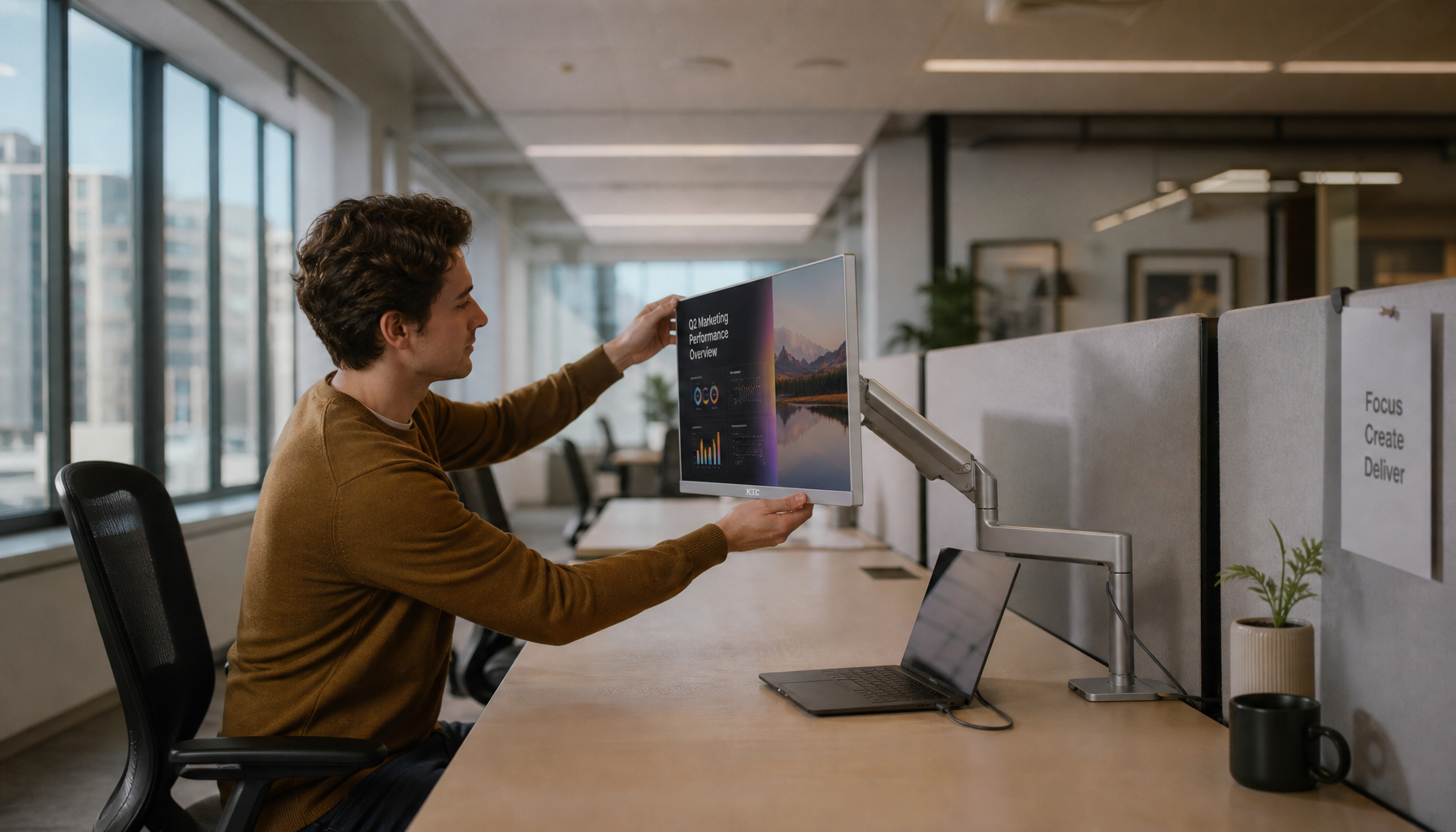
If your eyes feel worse after breaks, do not shop by refresh rate alone. Choose based on your main visual load: static text, fast motion, split-screen multitasking, travel use, or mixed work and gaming. A programmer, a competitive FPS player, and a remote worker using a portable second screen have different comfort priorities.
A digital eye strain review groups symptoms into ocular surface symptoms, focusing and binocular symptoms, and posture-related symptoms, which is a useful way to think about monitor buying digital eye strain review. Dryness points toward brightness, airflow, and blink habits. Blurry refocusing points toward text size, distance, and eye correction. Neck and shoulder pain points toward screen height, stand adjustability, and monitor size.
Use this comparison when choosing or tuning a display
Monitor situation |
Comfort risk after a break |
Settings to try first |
Buying priority |
24-inch office monitor |
Small text, harsh white backgrounds, fixed posture |
100% to 125% scaling, moderate brightness, top edge at or below eye level |
Height-adjustable stand, good text clarity, matte coating |
27-inch 1440p or 4K monitor |
Leaning in, focus lag, brightness mismatch |
125% to 150% scaling, lower brightness, sit about 24 to 30 inches away |
High pixel density, clear text rendering, flicker-reduction features |
32-inch gaming monitor |
Large eye movements, high brightness, desk too close |
Sit farther back, reduce contrast extremes, center key UI elements |
Adjustable stand, good uniformity, comfortable brightness range |
34-inch ultrawide |
Side glare, neck movement, scanning fatigue |
Use window zones, keep main content centered, reduce side reflections |
Curvature that fits desk distance, matte surface, ergonomic mount |
49-inch super ultrawide |
Excessive horizontal scanning, uneven lighting |
Sit farther back, split work into zones, avoid full-width text lines |
Strong stand or arm, moderate curve, good brightness uniformity |
Portable monitor |
Mismatched brightness, cramped posture, tiny UI |
Match laptop brightness, increase scaling, raise screen height |
Matte panel, usable brightness range, stable stand |
144Hz to 240Hz gaming display |
Motion feels smooth but eyes still burn after breaks |
Check brightness, PWM flicker behavior, room lighting, text scaling |
High refresh plus low-flicker dimming, good overdrive tuning |
High-refresh-rate monitors help motion, not every kind of strain
For gaming, a 144Hz, 165Hz, or 240Hz display can make camera pans, aiming, scrolling, and fast UI movement feel smoother. That can reduce the visual stress of motion compared with a basic 60Hz panel, especially when your PC can deliver matching frame rates.
But high refresh rate does not solve everything. If your eyes burn after a break, look first at brightness, glare, dry eyes, tiny HUD text, aggressive contrast, flicker, and how close you sit. A high-refresh gaming monitor with poor setup can still feel worse than a modest office display that is correctly positioned and tuned.
A Practical Recovery Checklist for Monitor Users
Use this checklist for 3 workdays or gaming sessions before deciding that your monitor is the problem. Keep the changes consistent so you can tell what actually helps.
- Set the monitor about 20 to 28 inches from your eyes, then move larger screens farther back if you scan with your head instead of your eyes.
- Lower brightness until white windows no longer glow, then adjust room lighting so the screen and surroundings feel balanced.
- Increase text scaling one step if you lean forward, squint, or feel blur after looking away.
- Remove glare by turning the monitor away from windows, moving lamps, or switching to softer side lighting.
- Use 20-second distance breaks every 20 minutes, and take about 15 minutes off-screen after 2 hours of continuous use.
- During breaks, look 20 ft away, blink fully several times, and avoid replacing the monitor with a cell phone.
- If symptoms persist, schedule an eye exam and mention screen use, monitor distance, blur after breaks, headaches, and any double vision.
FAQ
Q: Why do my eyes burn more after I stop looking at my monitor?
A: Burning often points to dryness. Screen use can reduce blinking, and fewer blinks can destabilize the tear film. When you stop concentrating, the dryness becomes more noticeable. Bright displays, low humidity, airflow from vents, contact lenses, and glare can make the burning feel stronger.
Q: Can a high-refresh-rate gaming monitor still cause eye strain?
A: Yes. Higher refresh rates can make motion smoother, but they do not automatically fix brightness mismatch, glare, small text, poor viewing distance, dry eyes, or flicker. If your eyes feel worse after breaks, tune brightness, scaling, room lighting, and distance before assuming you need a different refresh rate.
Q: Is an ultrawide monitor bad for eye comfort?
A: Not necessarily. An ultrawide can be comfortable when it is far enough away, slightly curved for your viewing distance, and free of side glare. Problems start when the screen is too close, windows are spread too far to the edges, or you read full-width text lines that force constant horizontal scanning.
Practical Next Steps
If your eyes feel worse after a screen break, treat it as a signal that your visual system has not recovered yet. The most useful first changes are not complicated: reduce brightness, balance room lighting, enlarge text, sit farther from large monitors, blink during breaks, and make every break an actual distance break.
For buying decisions, prioritize comfort features that match your use. Office users should care about text clarity, scaling, ergonomics, and glare control. Gamers should still value high refresh rate, but pair it with a comfortable brightness range, low-flicker behavior, good motion tuning, and a setup that keeps the display from overpowering the room. Ultrawide and portable monitor users should pay extra attention to distance, screen height, brightness matching, and whether the display encourages awkward posture.
If symptoms continue after setup changes, especially recurring blurred vision, double vision, headaches, or eye pain, get a comprehensive eye exam. Small refractive errors, astigmatism, presbyopia, dry eye, or binocular vision issues can make an otherwise good monitor feel uncomfortable after every break.
References
- Association between Poor Ergophthalmologic Practices and Computer Vision Syndrome among University Administrative Staff in Ghana
- Computer Vision Syndrome: Cleveland Clinic
- Computer Vision Syndrome: American Optometric Association
- Computer Vision Syndrome: Cedars-Sinai
- Eye Strain from Laptop and External Monitor: Causes and Fixes
- Digital Eye Strain: A Comprehensive Review
- Computer Vision Syndrome: EyeWiki
- How Monitor Refresh Rate Affects Eye Strain and Comfort