Yes. HDMI 2.0 ports are still perfectly usable for console gaming on a monitor, but they are usually best for 4K at 60Hz or lower-resolution 120Hz rather than full 4K at 120Hz.
If your gaming monitor has one premium HDMI 2.1 input and the rest are HDMI 2.0, the real frustration is deciding which device gets the best port and what the other devices give up. In practice, many desk setups still play beautifully over HDMI 2.0, especially when the goal is sharp 4K at 60Hz or smooth 1080p at 120Hz instead of the absolute maximum console spec. The breakdown below will help you assign ports, cables, and settings without wasting the monitor’s best input.
What HDMI 2.0 Still Does Well on a Gaming Monitor
Bandwidth in practical monitor terms
HDMI 2.0 tops out at 18 Gbps and was designed for 4K at up to 60 fps. On a monitor, that means it still fits a lot of real-world console use: previous-generation systems, comparable hardware, and any setup where you are happy with 60Hz at 4K.
A practical bandwidth breakdown shows 4K at 60Hz needs about 11.94 Gbit/s, while 4K at 120Hz needs about 23.88 Gbit/s. That is why HDMI 2.0 usually handles 4K60 cleanly but runs out of room for full 4K120 on modern high-refresh-rate displays.
On a 27-inch or 32-inch gaming monitor at normal desk distance, 4K60 can still look excellent for story-driven games, sports titles, racing games, and general console use. If your second console is older, or if it rarely pushes beyond 60 fps, an HDMI 2.0 port is not a compromise you are likely to notice every session.

When the Single HDMI 2.1 Port Actually Matters
The features most likely to be tied to that port
A current-generation console and another current-generation console can use 4K at 120Hz with HDR, and that full combination needs HDMI 2.1. If your monitor has only one HDMI 2.1 input, that port should usually go to the device that is most likely to use 120Hz modes in supported games.
HDMI 2.1 raises bandwidth to as much as 48 Gbps and adds gaming-focused features such as VRR, ALLM, and Dynamic HDR. On many monitors, those features work best, or only work fully, on the HDMI 2.1 input. That is the real difference between “playable” and “fully unlocked.”
The key point for monitor buyers is that HDMI labels do not tell the whole story. A port marked HDMI 2.0 can still be great for console gaming, but if you care about 4K120, broader VRR support, and the lowest-latency console mode your panel offers, the single HDMI 2.1 port is the one that deserves priority.
Which Device Should Get the HDMI 2.1 Port?
Best port assignment by use case
Most HDMI 2.1 gaming monitors are backward compatible with HDMI 2.0 devices, but those devices stay limited to HDMI 2.0 capabilities. In plain terms, give the HDMI 2.1 port to the device that actually benefits from 4K120, VRR, and the monitor’s highest console-grade feature set. That is usually a current-generation console, another current-generation console, or a gaming PC if you are using HDMI instead of DisplayPort.
Anecdotal reports from console players show some HDMI 2.0 monitor setups still run 120Hz and even VRR at lower resolutions. That makes HDMI 2.0 a sensible home for a secondary console, a handheld dock, or an older system that mainly targets 60 fps or 1080p/1440p high-refresh modes.
Setup goal |
Best port |
What usually works |
Main tradeoff |
A current-generation console or another current-generation console at 4K 120Hz |
HDMI 2.1 |
4K, 120Hz, HDR, better chance of full VRR support |
Uses your only top-spec port |
A current-generation console or another current-generation console at 4K 60Hz |
HDMI 2.0 or HDMI 2.1 |
Sharp 4K image at 60Hz |
No full 4K120 path on HDMI 2.0 |
Console at 1080p 120Hz or 1440p 120Hz |
Often HDMI 2.0 |
Smooth high refresh on some monitors |
Support varies by monitor and console |
An older console, comparable hardware, or a media box |
HDMI 2.0 |
Easy 1080p or 4K60 use |
Little downside in most cases |
PC for desktop work or casual gaming |
HDMI 2.0 if 60Hz is enough |
Good image quality and simple setup |
Competitive high-refresh use may need HDMI 2.1 or DP |
If you are shopping for a new monitor rather than working around an existing one, multiple HDMI ports matter more than many buyers expect. A company’s monitor guidance notes that extra HDMI connectivity improves setup flexibility, which is especially true when one desk has a console, a second console, and a PC all competing for the same display.
How to Share One HDMI 2.1 Port Without Constant Cable Swapping
A switch can be cleaner than reaching behind the monitor
A bidirectional HDMI 2.1 switch can route two sources into one display at up to 48 Gbps, but it shows only one source at a time. For a monitor with one HDMI 2.1 input, that is often the neatest fix if you alternate between two high-end devices, such as a current-generation console and another current-generation console.

That same switch listing claims support for 4K at 120/144/165 Hz, VRR, ALLM, HDR10+, and a branded HDR format, while also stating that it does no scaling or upscaling. For a practical desk setup, that is exactly what you want: source A or source B, with the monitor receiving the signal as-is.
Cable choice still matters
Full HDMI 2.1 functionality requires an Ultra High-Speed HDMI cable. If you add a switch, every link in that chain matters more, not less.
An HDMI 2.0 cable listing that targets 4K at 60Hz also highlights the unchanged HDMI-A connector format across versions. The plug shape may fit everywhere, but the path only performs as well as the slowest port, cable, or accessory in it. For short monitor runs, that means keeping the HDMI 2.1 path on certified 48 Gbps cables and leaving HDMI 2.0 cables for 4K60 duties.
What to Check Before You Blame the Port
Monitor and console settings often decide the result
Recommended console monitor setup steps include setting output to 3840 x 2160, enabling HDR10, selecting 120Hz if supported, and turning on VRR or Game Mode. Many gaming monitors also hide high-bandwidth options behind menu items like “HDMI mode,” “Input compatibility,” or “Console mode,” so the correct port can still behave like the wrong one until those settings are enabled.

Low input lag and fast refresh support are core reasons people choose gaming monitors over TVs for console play. If the experience feels off, verify the basics before replacing hardware: make sure the console is on the intended port, the monitor is in its low-latency preset, and the refresh target is actually enabled in both the console and the display menu.
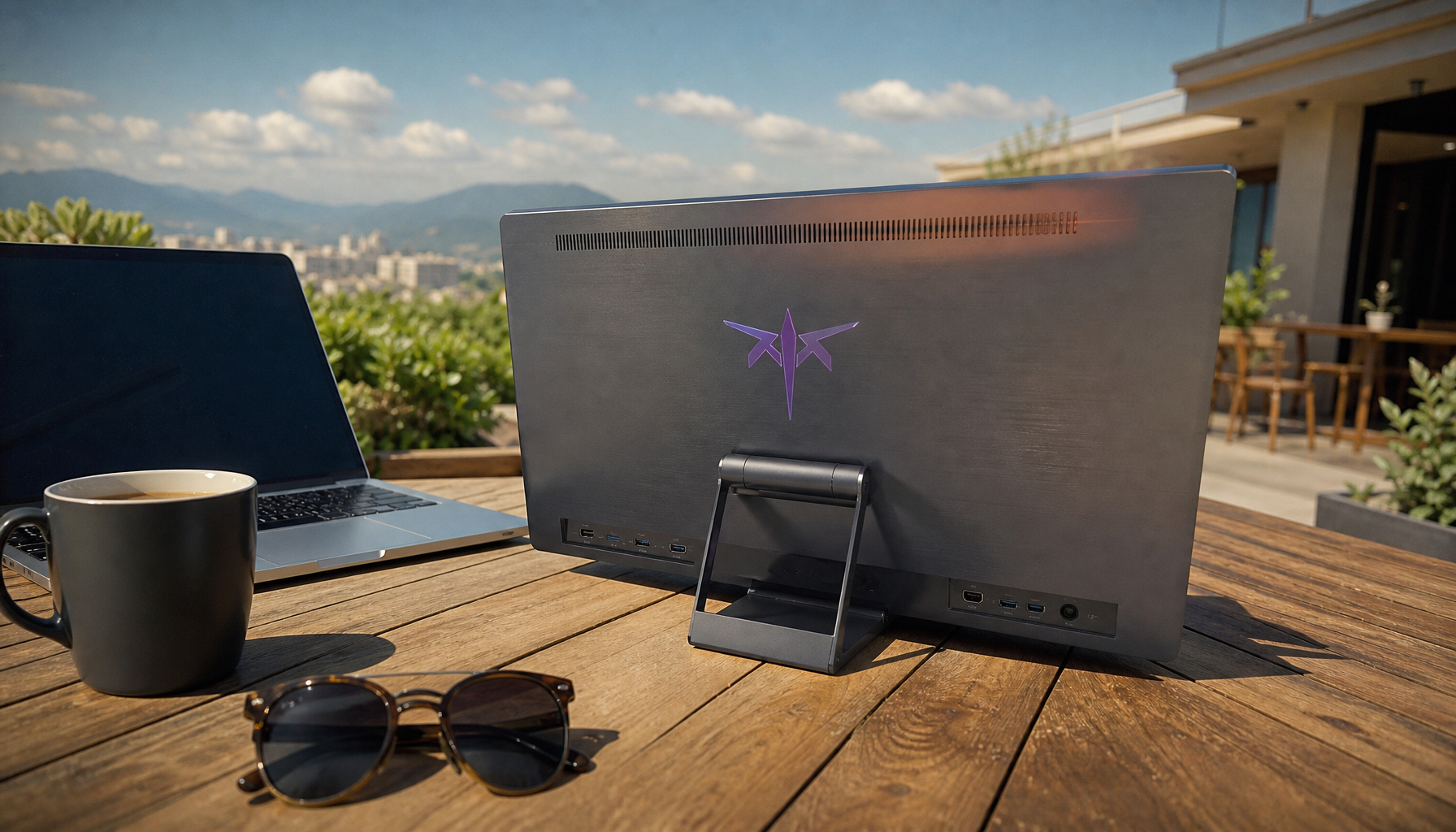
This is also where buyers should be careful with monitor product pages. Many listings advertise “HDMI 2.1” prominently, but that does not always mean every HDMI input is 2.1-grade. On multi-device desks, the exact port map matters almost as much as panel size, resolution, or response time.
FAQ
Q: Can I still enjoy a current-generation console or another current-generation console on an HDMI 2.0 port?
A: Yes. HDMI 2.0 is usually fine for 4K at 60Hz, and some monitor-console combinations also support 1080p or 1440p at 120Hz. The main thing you give up is full 4K at 120Hz, plus some monitor-specific VRR or HDR flexibility.
Q: Will an HDMI 2.1 cable make an HDMI 2.0 port perform like HDMI 2.1?
A: No. A better cable can help signal reliability, but it cannot raise the limit of an HDMI 2.0 port. The port and the monitor’s internal implementation still set the ceiling.
Q: Is one HDMI 2.1 port enough on a gaming monitor?
A: It is enough for many people, especially if only one device truly needs 4K120. If you regularly swap between two current-gen consoles or between a console and a high-refresh PC, two HDMI 2.1 ports or an external 48 Gbps switch is much more convenient.
Practical Next Steps
Use this checklist before you reorganize your whole setup:
- Identify exactly which monitor input is HDMI 2.1 and which are HDMI 2.0.
- Give the HDMI 2.1 port to the device that needs 4K at 120Hz, VRR, or the monitor’s best low-latency mode.
- Move older consoles, streaming boxes, or 4K60-only devices to HDMI 2.0.
- Use Ultra High-Speed HDMI cables on the HDMI 2.1 path, especially if you add a switch.
- Turn on 120Hz, HDR, VRR, and Game Mode in both the console and the monitor menu.
- If two devices both need HDMI 2.1, use a 48 Gbps switch instead of manually swapping cables.
- If you are buying a new monitor, check the spec sheet for per-port capabilities, not just the headline “HDMI 2.1” label.