


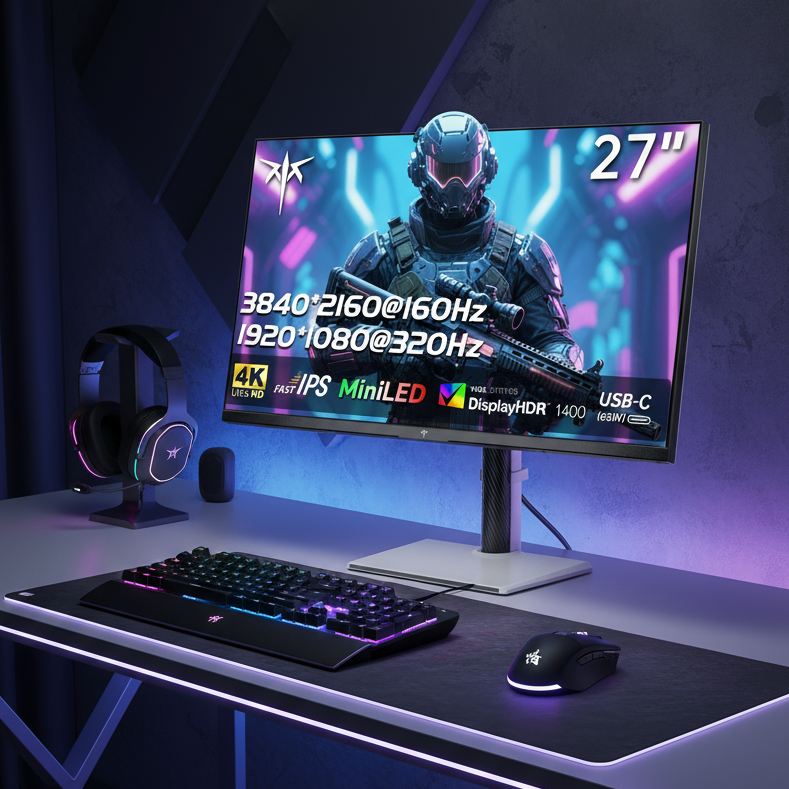
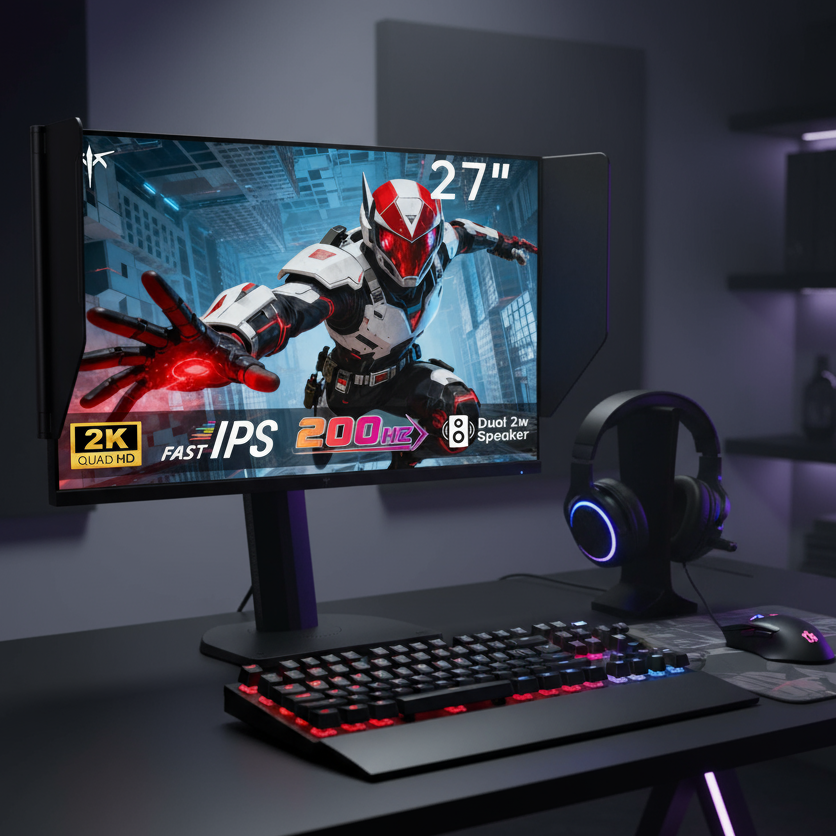
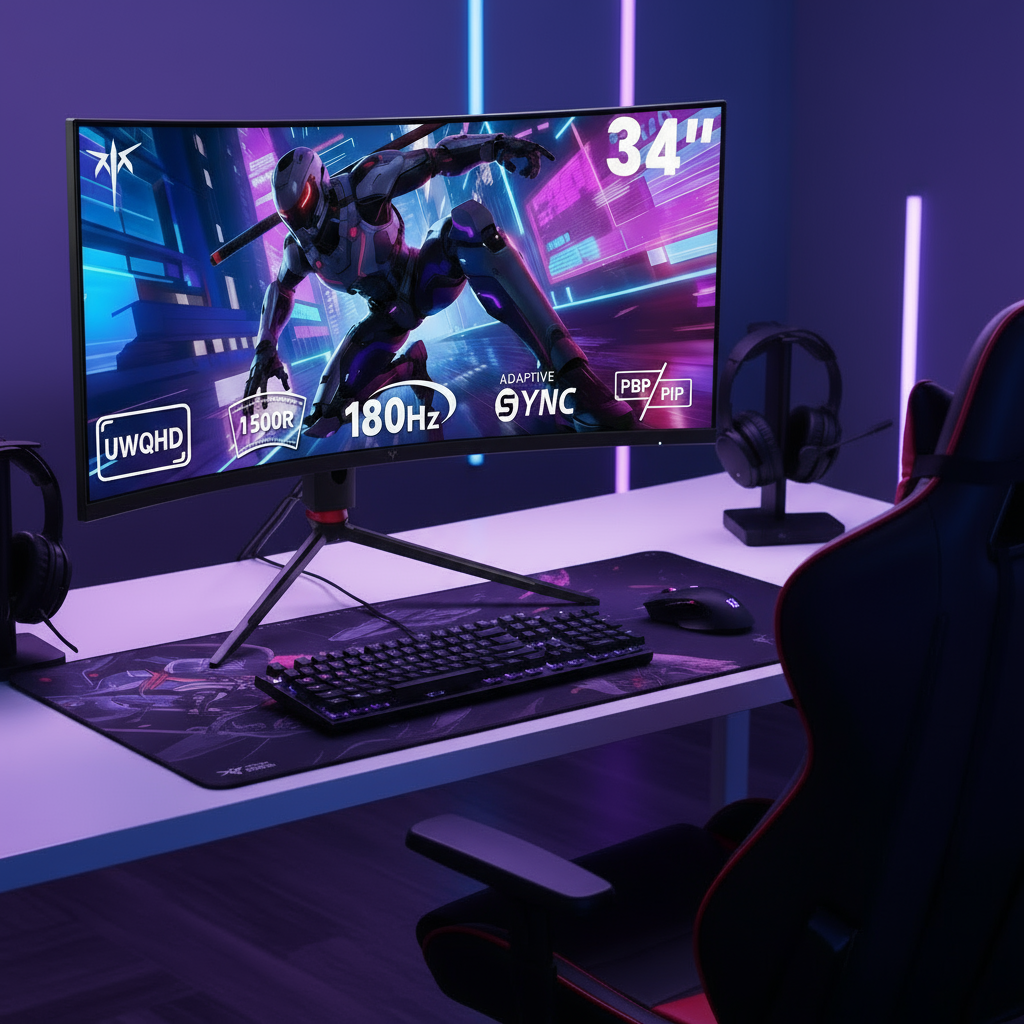


A PC can handle basic display changes on a schedule, but full profile switching usually needs a profile tool plus Task Scheduler or app-linked monitor software.
Does your bright gaming setup feel perfect at 7:00 PM, then harsh when you open spreadsheets at 8:00 AM? A time-based profile setup gives you a testable win: fewer manual clicks and more consistent brightness, layout, scaling, and color behavior across work, play, and night use. Here is how to build a reliable display routine that changes with your day.
What “Display Profile” Means on a PC
A display profile can mean two different things, and mixing them up is where many setups go wrong. In system display settings, a profile often means the monitor arrangement: which screens are active, which one is primary, whether the desktop is duplicated or extended, the resolution, scaling, refresh rate, HDR state, and orientation. Built-in multi-monitor controls define practical behaviors such as Identify, Detect, Extend, Duplicate, and Second screen only, all managed through multiple-monitor controls.
A color profile is different. An ICC profile translates color between devices so images appear as consistently as possible across screens, printers, and papers. This explanation of an ICC profile keeps the concept grounded: the right profile depends on the exact device and output target, not whichever preset looks nicest at a glance.
For a real daily setup, think in layers. Your morning productivity profile might use 125% scaling on a 32-inch 4K display, SDR brightness, document mode, and a warmer white point. Your afternoon editing profile might use a calibrated ICC profile, fixed brightness, and an sRGB or creator mode. Your evening gaming profile might enable the high-refresh display, make it primary, turn on HDR where appropriate, and switch audio to a headset.
What the System Can Do Natively
The operating system gives you fast manual switching through the Windows key + P menu. The options are PC screen only, Duplicate, Extend, and Second screen only. Classroom AV instructions offer a useful everyday example: if a projector is blank, the computer may be set to PC Screen Only, and switching to Duplicate mode mirrors the laptop screen to the external display.
That shortcut is reliable, but it is not a full automation system. The system does not natively let you say, “At 9:00 AM, use my office layout; at 6:00 PM, switch to my gaming layout,” with all monitor position, refresh rate, HDR, scaling, and audio preferences restored as a named profile.
It does, however, give you two useful foundations. First, it remembers many monitor arrangements after docking and undocking. Second, it can run scheduled actions through Task Scheduler. The practical limitation is that the scheduled action needs something to run, such as a display-profile utility, vendor monitor software, or a scriptable command from a tool you trust.
The Best Setup Strategy
Use the System for the Base Layout
Start by making the base layout stable before adding automation. Connect every monitor, dock, smart screen, or portable display you normally use. Open Settings, then System, then Display. Use Identify to match screen numbers to physical displays, drag them into the right arrangement, set the primary monitor, and choose the correct scaling per screen.

For a productivity rig, this is where the value shows up quickly. A 27-inch 4K office display might be comfortable at 150% scaling, while a 32-inch 4K gaming monitor may feel better at 125%. A portable 15.6-inch smart screen may need 150% or 175% scaling if it sits farther away on a stand. If your cursor jumps strangely between displays, the virtual layout probably does not match the physical desk.
Save Real Profiles With a Dedicated Tool
For full profile storage, use a display-profile manager rather than relying on memory and manual settings. A free, open-source display-profile manager can save per-monitor settings including resolution, refresh rate, HDR state, rotation, DPI scaling, position, enabled or disabled status, and primary display selection. Its display-profile manager page also notes audio profile switching, which matters if your day profile uses monitor speakers and your night profile uses a headset or USB DAC.
There is one important reliability note: the project is marked as on hold, so treat it as useful but not guaranteed to receive frequent maintenance. That does not make it unusable; it just means you should export profiles, keep a restore path, and test after major operating system, GPU driver, or dock firmware changes.
A commercial multi-monitor utility is another mature option for users who want broader multi-monitor management. Its monitor-profile workflow is designed around saved layouts, and its monitor-profile workflow documentation is relevant if you need deeper desktop-management features.
Add Time-Based Switching
Once your profiles exist, create scheduled switches around your actual routine. A common pattern is a Morning Work profile at 8:00 AM, a Focus Review profile at 1:00 PM, an Evening Gaming profile at 6:30 PM, and a Night Reading profile at 10:30 PM.
The exact automation path depends on your tool. If your profile app exposes a command-line profile switch, create a Task Scheduler task that runs that command at the chosen time. If your monitor vendor software links profiles to applications, you can use a lightweight launcher approach: open the relevant work app or game client at a scheduled time and let the monitor software apply its linked profile. Some gaming-monitor utilities support custom monitor profiles and can link them to specific games or applications, which makes monitor profiles useful beyond pure gaming.

If your tool only supports tray switching or global hotkeys, keep time automation conservative. Use the saved profile as the trusted source of truth, then switch manually with the hotkey until you confirm that the profile app supports scheduled execution cleanly. A brittle automation that misplaces windows before a meeting is worse than one deliberate shortcut.
Recommended Time-of-Day Profiles
Time window |
Profile goal |
Practical settings |
Morning work |
Clarity and low fatigue |
Moderate brightness, native resolution, comfortable scaling, document or sRGB-like mode, external display as primary |
Afternoon creation |
Color consistency |
Calibrated ICC profile, fixed brightness, wide-gamut or sRGB mode based on the project, HDR off unless editing HDR |
Evening gaming |
Responsiveness and immersion |
Highest stable refresh rate, VRR enabled where reliable, gaming monitor as primary, HDR on for supported games |
Night reading |
Comfort and restraint |
Lower brightness, warmer tone, reduced blue light, fewer active displays, speakers or headphones matched to the room |
The table is a starting point, not a universal calibration recipe. Monitor experience is subjective and varies by contrast, color reproduction, HDR performance, and responsiveness, so your best setup should reflect the screen, room, and workload rather than a copied value from someone else’s panel. Recent reviews also show how different modern displays are, from high-refresh QHD gaming panels to productivity-focused 4K IPS screens, which reinforces why one monitor setting cannot govern every desk.
Color Profiles, Calibration, and Night Modes
Do not confuse a comfortable night profile with accurate color. Lowering brightness and warming the image can make late work more pleasant, but it can also compromise image judgment. If you edit product photos, grade video, or approve brand color, use your calibrated profile during review and reserve warmer night profiles for writing, browsing, spreadsheets, and casual media.

Calibration-tool users often run into another layer: system color association and calibration curve loading. A forum discussion makes the practical point that a generated calibrated profile still needs to be installed and associated with the selected monitor; the profile installation action handles that association. If you use a hardware calibrator, verify that the system is actually using the intended ICC or ICM file for the correct display.
For a simple example, imagine a creator with a 4K IPS display for editing and a high-refresh OLED for gaming. The editing profile should keep the IPS panel primary, use the calibrated ICC profile, and avoid casual night color shifts while reviewing exports. The gaming profile can move primary status to the OLED, raise refresh rate, and enable HDR for supported titles. The night profile can disable the secondary display entirely to reduce brightness spill in a small apartment or bedroom office.
Pros and Cons of Automatic Switching
The biggest advantage is consistency. A scheduled display profile removes the daily friction of changing brightness, refresh rate, primary monitor, scaling, and audio output. For office productivity, that means fewer interruptions when moving from email to dashboards to document review. For gaming, it means your high-refresh display is ready without hunting through menus. For portable smart screens, it keeps the travel display from becoming an awkward leftover monitor after you return to the desk.
The trade-off is complexity. Display automation depends on the operating system, GPU drivers, monitor firmware, docks, USB-C behavior, and the profile tool. If one link changes, the profile may apply partially or slowly. Complex multi-monitor rigs benefit from staged application modes when available because applying every change at once can be less stable than applying a layout in phases.
There is also a window-position problem. Users of multi-monitor utilities have reported that switching monitor profiles can shuffle open windows, especially in laptop, meeting, and presenter setups with many open apps. That real-world complaint matters because a profile that restores displays but scatters 15 windows still costs time. If window placement matters to your work, choose a tool that can save and restore window positions as part of the routine.

A Practical Build for One Desk
For a strong all-day setup, create three profiles first. Name them Work Day, Game Night, and Low Light. Work Day should keep your main office display primary, use the most readable scaling, and run at a refresh rate that feels smooth without wasting power. Game Night should make the gaming monitor primary, use its highest stable refresh rate, and apply the correct audio output. Low Light should reduce active displays and use warmer comfort settings.
Next, test each profile manually for a full day before scheduling anything. Switch from Work Day to Game Night, open a few normal apps, launch a game, then return to Work Day. Confirm that taskbar placement, scaling, app launch positions, HDR behavior, and audio output are acceptable. If anything breaks manually, scheduling will only make the failure more repeatable.
After manual testing, add scheduled tasks only for the transitions that are predictable. A weekday 8:00 AM Work Day profile is usually safe. A 10:30 PM Low Light profile is also safe if it does not interrupt full-screen gaming or media. A gaming profile is often better tied to launching a game or game client than to a fixed clock, because not every evening follows the same rhythm.
FAQ
Can a PC switch display profiles by time without extra software?
The system can schedule tasks and provides basic display modes, but it does not provide a complete built-in named-profile scheduler for multi-monitor layouts, refresh rates, scaling, HDR, and audio. For that, use a trusted display-profile tool or monitor vendor software.
Should I use the same ICC profile for every time of day?
No. Use the calibrated ICC profile for color-critical work, but treat comfort modes as separate viewing presets. If the work depends on accurate color, avoid judging final color while a warm night mode or aggressive blue-light filter is active.
Is automatic switching worth it for one monitor?
Yes, if your day changes between office work, gaming, media, and night reading. Even on one screen, profiles can manage brightness, refresh rate, HDR, color mode, and audio behavior. For a single basic office monitor, Night Light and manual monitor presets may be enough.
Final Word
The cleanest PC setup is layered: let the operating system handle the physical monitor arrangement, let a profile tool save the serious configuration, and use scheduling only after each profile proves stable by hand. Done well, your display stops acting like a static accessory and starts behaving like performance gear that adapts to the hour, the task, and the way you actually use your desk.


