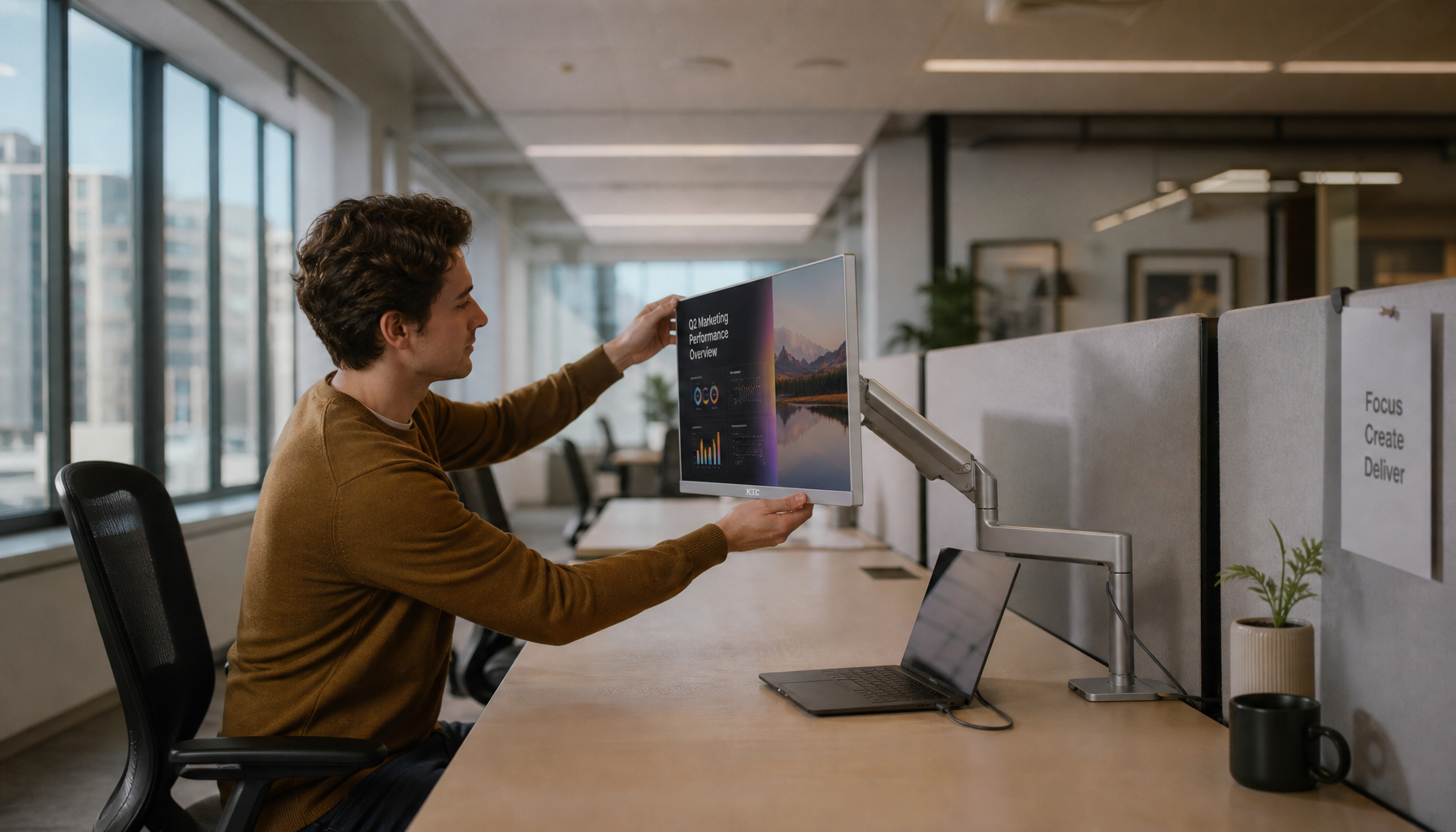
To show different windows on each screen, switch from Duplicate or Mirror mode to Extend, then arrange the monitor positions so they match your desk.
Is every monitor showing the same window when you expected one screen for work and another for reference, chat, or a live dashboard? A correctly extended desktop gives you separate work areas, so you can keep a game, spreadsheet, code editor, video call, or browser visible without constant switching. Here is the practical path to make each display act independently and fix the common reasons it keeps mirroring.
Extended Display vs. Mirroring: What You Are Actually Changing
Mirroring, also called duplicate or clone mode, sends the same desktop image to more than one screen. That is useful for presentations, classrooms, lobby displays, and quick screen sharing, but it wastes the value of a second monitor when you are trying to multitask.

Extended display mode makes multiple screens behave like one wider workspace. System display settings define Extend as the mode that spreads the desktop across displays and lets you move items between them, while Duplicate shows the same content everywhere in multiple monitor settings. In everyday terms, your main monitor can hold the primary task, while the second screen holds reference material, streaming controls, chat, call participants, a timeline, or a performance monitor.
Mode |
What You See |
Best Use |
Main Drawback |
Duplicate or Mirror |
Same content on each display |
Presentations, shared viewing, troubleshooting |
No extra workspace |
Extend |
Different windows on different displays |
Productivity, gaming, editing, coding, analysis |
Requires correct arrangement |
Second Screen Only |
Laptop display off, external display active |
Desk setups with lid closed |
Can confuse users if the wrong screen is selected |
Before You Change Settings, Check the Physical Setup
If your computer sees two screens as one duplicated output, software settings may not be the only issue. Start with the signal path: each monitor needs a real display connection that your computer or dock can address independently. HDMI, DisplayPort, USB-C, and Thunderbolt-style connections are the modern standards to prioritize, while older VGA and DVI can still work but may limit resolution or refresh rate.
Hardware setup guidance emphasizes checking computer specifications, matching the video output to the display input, and using the correct cable or adapter before configuring two or more monitors. In practice, a desktop with two graphics outputs usually extends cleanly, while a laptop with one HDMI port may need a USB-C dock, high-bandwidth dock, or USB graphics adapter depending on hardware support.
A common mistake is using a basic HDMI splitter. Most simple splitters duplicate one signal to two screens; they do not create two independent desktops. If you want Monitor A to show a spreadsheet and Monitor B to show a browser, the computer must detect them as separate displays, not one cloned HDMI feed.

How to Extend Displays on a PC
Connect both monitors, turn them on, and confirm each display is using the correct input source. Then right-click the desktop, open Display settings, and use Identify so each physical screen shows its number. Drag the numbered display boxes until they match the real layout on your desk, such as laptop on the left and gaming monitor in the center.
Next, open the Multiple displays menu and choose Extend these displays. You can also press the projection shortcut, then choose Extend from the display options. After applying the change, move your mouse across the edge between displays. If the pointer exits the wrong side or gets stuck, return to Display settings and reposition the display boxes.

For a clean desktop workflow, select your preferred primary monitor and enable Make this my main display. This controls where the main taskbar, default windows, and many game launchers appear. If you are using a laptop dock with two external monitors and do not want the built-in laptop screen active, choose Second screen only only when the external displays are correctly detected; otherwise, keep Extend enabled and disable or ignore the laptop panel from Display settings.

How to Extend Displays on a Mac
Connect the external monitor or monitors, then open System Settings and go to Displays. Choose the external screen and set its behavior so it is used as an extended display rather than mirrored. If the screens are stacked or placed side by side on your desk, arrange them in the Displays layout so the cursor movement matches the physical position.
School and workplace support documentation often explains the same principle clearly: an extended display lets the computer and secondary display show different content, while mirrored display shows the same content on both screens. The workflow also depends on correct arrangement, because the pointer moves between screens according to the layout shown in the extended display settings.
If you are using a USB graphics dock or adapter and the monitors only mirror, install or update the required display management software. Support documentation for USB graphics adapters recommends using the newest manager app because it controls whether connected displays extend, mirror, or arrange through the system’s monitor behavior. That detail matters because not all USB-C hubs operate the same way.
How to Extend Displays on a Browser-Based Laptop
Connect the external display, open the bottom-right status area, go to Settings, then Device and Displays. If Mirror Internal Display is checked, uncheck it. Select the external display tab and drag the monitor position so it matches your desk.
The key is simple: if the mirror checkbox is active, both screens show the same thing; if it is off, the laptop treats the external monitor as extra workspace. If you do not see display options at all, confirm the external monitor is powered on, set to the correct input, and actually detected.
Why Your Monitors Still Mirror After Choosing Extend
When Extend does not behave as expected, the cause is usually detection, bandwidth, driver behavior, or a duplicated source device. Setup guidance recommends verifying graphics support, checking available outputs, using compatible cables, setting native resolution, and changing from Duplicate to Extend when troubleshooting a multi-display setup. That sequence is reliable because it separates hardware recognition from operating system layout.
If both monitors show the same number when you click Identify, your computer is not seeing them as separate screens. Check whether you are using a splitter, a dock that only mirrors on your system, or an adapter that requires a driver. If one monitor is missing, try another port, another cable, the monitor’s input menu, and the Detect button in display settings. For USB display adapters, install the required driver before judging the setup.
Resolution and scaling can also make an extended desktop feel broken. Mixed displays, such as a 4K monitor beside a 1080p panel, should usually run at native resolution with scaling adjusted so text and windows feel consistent across screens in a dual-monitor setup. For example, a 27-inch 4K screen at 150% scaling beside a 24-inch 1080p screen at 100% can feel smoother than forcing both to the same resolution.
Best Layout for Work, Gaming, and Long Sessions
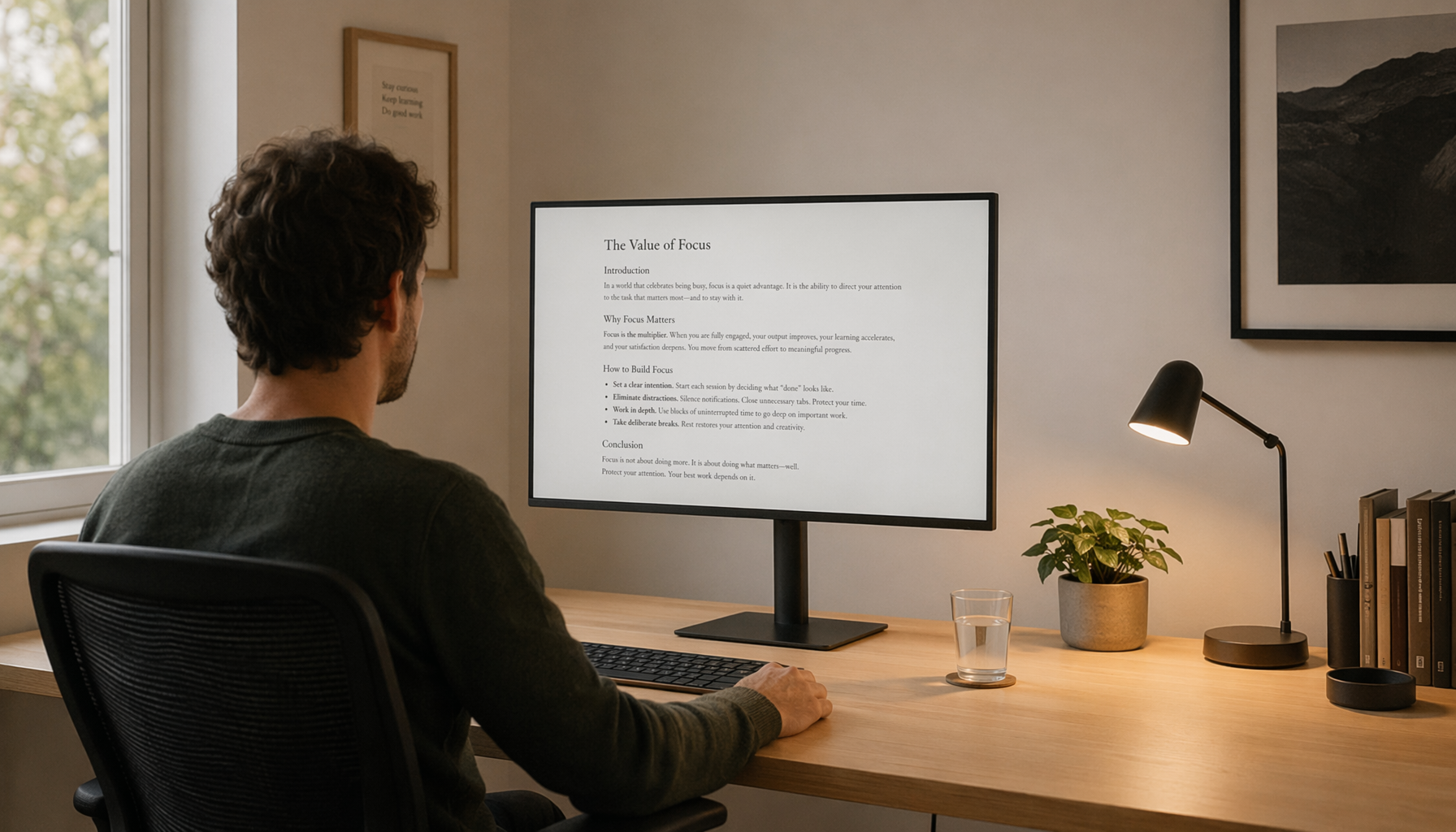
For most users, the strongest layout is a primary display directly in front of you with the secondary display angled slightly to the side. Put your highest-refresh gaming monitor, color-accurate creative display, or main office screen in the center. Use the side monitor for chat, references, music, notes, calendar, recording controls, system metrics, or documentation.

Ergonomics matter because extended desktops invite longer sessions. Workstation guidance warns against strain from awkward phone posture, and the same body logic applies to monitor placement: keep the main work surface centered and avoid repeated neck twisting during calls or document review in a workstation setup. A practical test is simple: if you spend more than half your time on one screen, that screen should be directly in front of your chair.
For productivity, dedicate roles to each display. A writer can draft on the main monitor while keeping research and feedback on the second. A developer can code on one screen while logs, documentation, and a terminal stay visible on the other. A gamer can play full-screen on the fast panel while monitoring stream chat or voice controls on the side. That is the real performance value of Extend mode: fewer window swaps, fewer hidden alerts, and more control over the visual field.
Pros and Cons of Extending Your Desktop
Extended mode gives you more workspace, cleaner task separation, faster comparison between documents, and a more immersive command center for games or creative tools. It is especially powerful when monitors have similar size, resolution, refresh rate, and color behavior, because window movement feels more natural.
The tradeoff is complexity. You may need better cables, a capable dock, enough graphics outputs, driver updates, and careful scaling. Mixed monitors can introduce uneven cursor movement or text size differences. Extra displays also add some graphics workload, which usually is minor for office use but can matter for high-refresh gaming, 4K video editing, or multi-screen streaming.
FAQ
Why are both monitors showing the same thing?
They are in Duplicate or Mirror mode, or the computer is receiving one cloned signal through a splitter or unsupported dock. Switch to Extend in display settings, then click Identify. If both screens show the same number, fix the connection path before changing software settings again.
Can one HDMI port extend to two monitors?
A single basic HDMI output usually drives one independent display. A simple HDMI splitter normally duplicates the image. To extend to two external monitors from a laptop with limited ports, you typically need USB-C with display support, a high-bandwidth dock, a compatible docking station, supported daisy-chaining hardware, or a USB graphics adapter with the required driver.
Should I use matching monitors?
Matching monitors are not required, but they make the setup feel better. Similar size, resolution, refresh rate, and panel type reduce scaling mismatches and color jumps. If you mix screens, run each at native resolution and tune scaling, brightness, and color temperature.
Final Calibration
The winning setup is not just “two screens connected.” It is two screens detected independently, set to Extend, arranged to match your desk, and tuned so your eyes and hands move naturally. Once that is done, the second monitor stops being a duplicate and becomes usable performance space.