In most cases, yes. A hybrid display can stay connected to your PC while still giving you access to its built-in smart features, but true side-by-side use depends on the display’s multitasking features.
When your desk handles work, gaming, and streaming, the last thing you want is to keep unplugging cables or rebuilding your setup every night. The cleanest real-world setups use separate inputs, single-cable USB-C for a laptop, and quick source switching or built-in KVM tools so changing modes feels like one step instead of a teardown. The goal is simple: understand whether your display can do this well, what limits to expect, and how to set it up without sacrificing speed or convenience.
What “Smart Features” Actually Mean on a Hybrid Display
A smart monitor is more than a plain display panel because it adds built-in functions such as streaming apps, wireless connectivity, speakers, webcams, microphones, Bluetooth, and sometimes a lightweight app environment. In practice, that means the screen is not only showing what your PC sends over HDMI, DisplayPort, or USB-C; it also has its own feature layer that can handle media playback, video calls, or device pairing without relying entirely on the computer.

That distinction matters at the desk. A standard monitor is mostly a pass-through surface for your GPU, while a hybrid display behaves more like a monitor and a small smart TV combined. On several recent models, that design makes it possible to leave a work laptop attached during the day, then switch to built-in streaming apps, wireless casting, or a second device at night without touching the cables.
The Short Answer: Connected, Yes; Simultaneous, Maybe
A Windows multi-display setup does not prevent a hybrid display from offering smart features, but one display normally expects one active video source at a time unless it specifically supports picture-in-picture or picture-by-picture. That is the most important rule to remember: physical connection is easy, but simultaneous on-screen use depends on feature support, not on whether the cable is plugged in.
This is where many buyers get tripped up. If your PC is connected through USB-C and your monitor also has a built-in app platform, the smart side usually remains available through the monitor’s home menu or remote. What often changes is what fills the panel. Without split-screen source support, you generally switch between the PC input and the monitor’s own apps rather than viewing both at full size at once.
How It Works in a Real Desk Setup
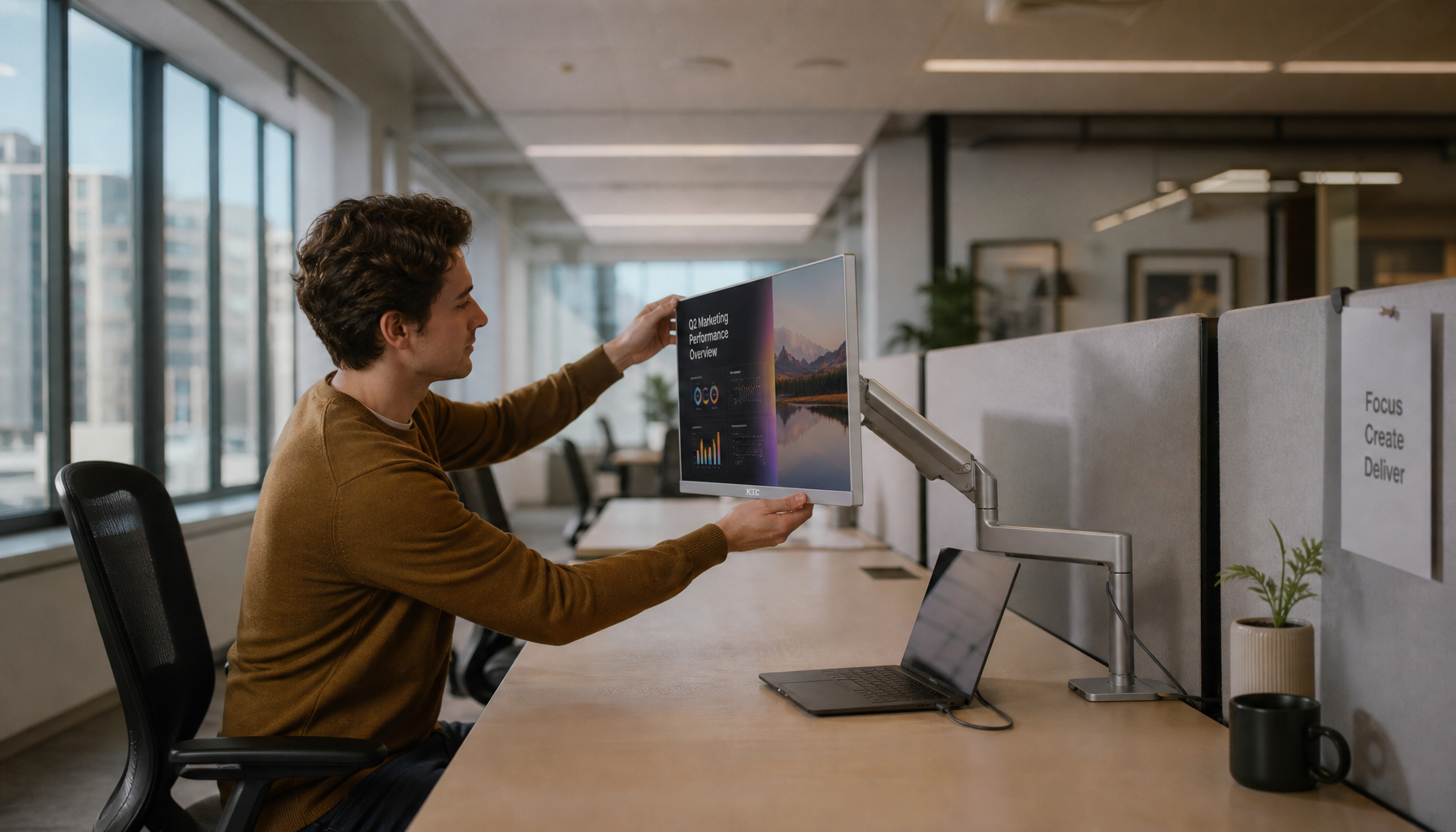
A hybrid monitor setup works best when the display has at least two strong inputs, a multifunction USB-C port, and ideally built-in KVM support. In a practical layout, you might run your work laptop through USB-C for video, data, and charging, keep a gaming desktop on DisplayPort, and still use the monitor’s internal apps or media functions through its smart interface. The key advantage is that you are changing inputs or profiles, not rebuilding the desk.

That matters more than it sounds. On a productivity-heavy day, you may want email, spreadsheets, and a browser on the laptop. At 7:00 PM, you may want the same screen to jump to a streaming app, cloud media, or a console. A well-designed hybrid display makes that transition one remote tap or one joystick press away. A poorly designed one still supports all those things on paper, but hides them behind slow menus, awkward input detection, or weak peripheral switching.
Where the Experience Gets Better or Worse
A tested 32-inch 4K example shows both the promise and the limits of this category. That kind of setup can work well as both a 32-inch 4K monitor and a small TV-style screen, with solid streaming support and convenient features like a remote, wireless casting, and USB media playback. That proves the core idea: yes, smart features can coexist with a PC-connected setup in a genuinely useful way.
The same test also shows why you should be selective. The built-in computing side felt slow, browser-based productivity tools were clunky, Bluetooth keyboard pairing failed in testing, and some actions still pushed the user back to the remote. That is a strong reminder that hybrid displays are not all equal. A smart feature is only valuable if it is fast enough to use repeatedly. If switching from your PC input to a built-in app feels sluggish every time, the feature exists, but the workflow breaks down.
What to Check Before You Buy
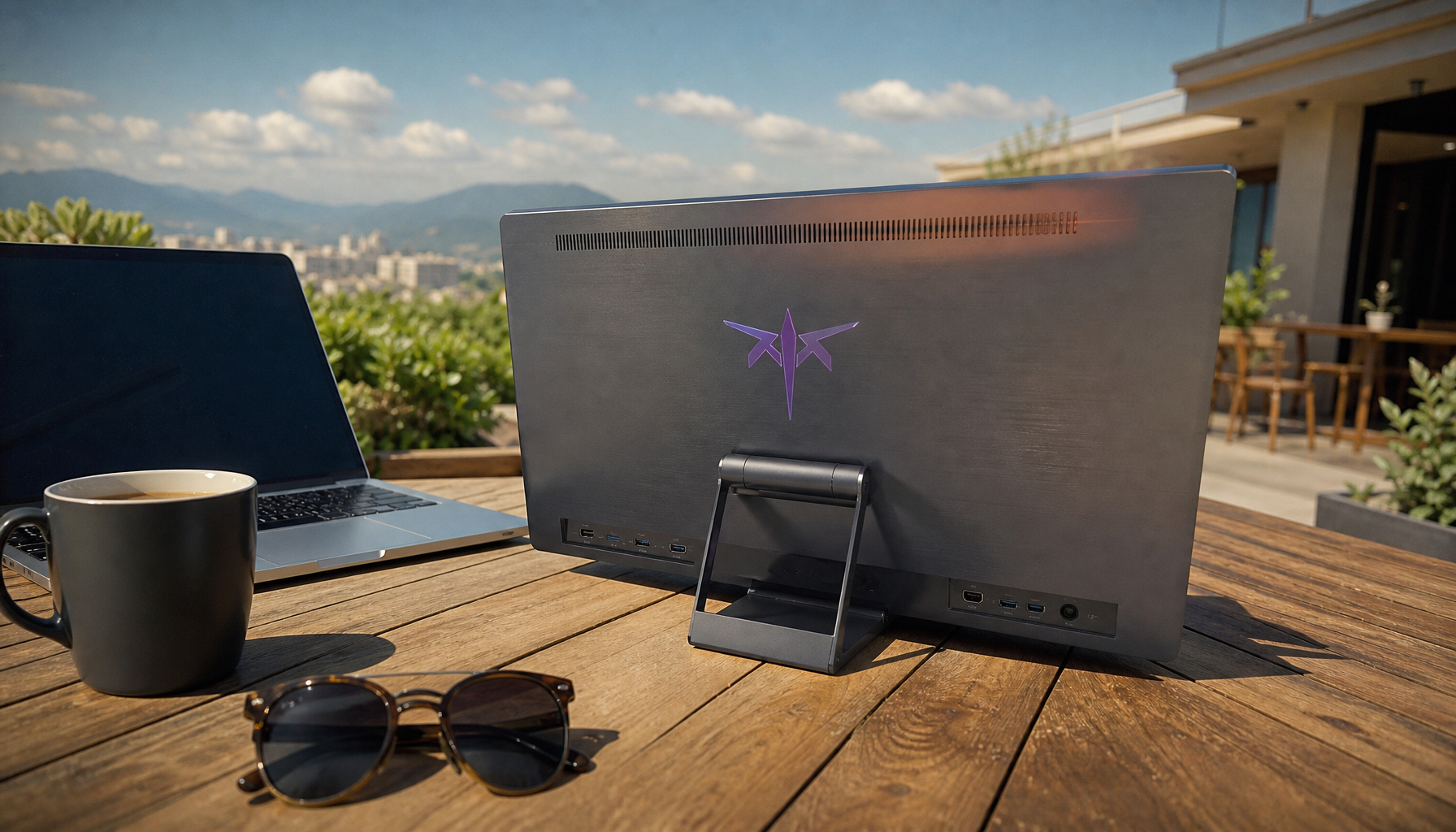
A work-and-gaming hybrid monitor should balance resolution, refresh rate, color quality, and ergonomics, but for this specific question you should look even harder at source management. The practical must-haves are multiple high-bandwidth inputs, USB-C with enough charging power for your laptop, quick input switching, and, if possible, built-in KVM or USB upstream switching so your keyboard and mouse follow the active source.
Need |
Why it matters |
USB-C with charging |
Lets one cable carry video, data, and laptop power |
Multiple inputs |
Keeps your PC, laptop, console, or streamer connected at the same time |
Built-in KVM |
Moves keyboard and mouse with the active source |
Smart OS or apps |
Enables streaming or light tasks without waking the PC |
PIP/PBP support |
Allows true simultaneous viewing if the model supports it |
Fast panel and good color |
Preserves both gaming responsiveness and work clarity |
If your setup includes competitive gaming, panel performance still matters. A hybrid model with a fast IPS panel, 1440p-class resolution, and a high refresh rate can handle spreadsheet work at noon and high-frame-rate play at night without feeling compromised. If your setup is office-first, stability and switching behavior matter more than a headline refresh rate you may never use.
What Happens When You Want PC Work and Smart Content Together
An extend-style desktop workflow gives you more workspace, but it does not automatically create dual-source capability on a single panel. If you want your PC on one side and a built-in streaming app or second source on the other, the display itself must support that mode. Some do. Many do not. This is why spec-sheet language such as PBP, PIP, Multi View, or split screen is more important than the generic phrase “smart monitor.”

At a desk, this changes the buying decision. If your real goal is to keep a chat app or browser on the PC while watching a live game, market stream, or reference video on the same panel, ask whether the monitor can show two sources at once. If it cannot, a second display may still be the better investment. That is especially true because multiple monitors can improve productivity by reducing constant window switching and keeping active tools visible together.
When a Second Display Is Still the Smarter Move
A dual-monitor workflow remains hard to beat when your work depends on keeping several windows live at once, and the gains are not just theoretical. Research cited there points to a 42% productivity increase from multiple monitors, while three-screen office scenarios are associated with roughly a 35% lift in some cases. For coding, trading, editing, or data-heavy operations, one hybrid smart display may be convenient, but two dedicated work surfaces are often faster.
That does not make the hybrid display a bad choice. It just means you should match the tool to the workflow. If you want a neat all-in-one desk with fewer cables and easy mode switching, a hybrid smart monitor is compelling. If you need true simultaneous visibility for dashboards, documents, chat, and meetings, the more practical answer still wins: keep the hybrid display as the main screen and add a second panel for always-on reference work.
Why This Matters More in Hybrid Work
A hybrid work model is no longer a niche use case, so displays now have to support more than one role across the same week and often the same day. You may be in spreadsheets at 10:00 AM, on a video call at 2:00 PM, and using the same screen for streaming or console play that evening. That shift is exactly why smart features, USB-C docking, and cleaner input management have become more valuable.

A productive hybrid office setup also depends on reducing friction between environments. In practice, the more your home desk behaves like a stable workstation instead of a cable puzzle, the more likely you are to use the monitor’s extra features instead of ignoring them. Reliable switching, predictable layouts, and comfortable ergonomics matter more than flashy software if you are spending eight or more hours a day on that screen.
The Practical Verdict
A hybrid display’s smart features are absolutely usable while the screen is connected to a PC, and for many people that is the whole point of buying one. The better question is whether your model lets those features work smoothly enough, and whether it supports true side-by-side source use when you need it. If the answer is yes, you get a desk that moves cleanly between work, gaming, and entertainment. If the answer is no, you still have a connected smart monitor, but not a truly seamless one.
Choose the screen that matches your switching habits, not just the one with the longest feature list. The best hybrid display is the one that stays fast, sharp, and dependable when your day moves from spreadsheets to high-refresh gameplay to built-in streaming without asking you to start over.