A KTC monitor firmware update matters less as a performance promise and more as a trust check. If you can verify the model, find the right version path, and understand what firmware can actually change, the monitor feels lower-risk to buy or keep. If that path is unclear, treat it as a support question, not a reason to guess.

Why Firmware Support Changes Purchase Confidence
For buyers, firmware support is really about ownership confidence. You want to know whether the monitor exposes a version check, whether an update path exists, and whether help is available if something goes wrong. That is why a KTC monitor firmware update should be judged as part of support quality, not as a magic fix.
Firmware can sometimes refine menu behavior, input handling, or display algorithms, but it does not turn a monitor into a different panel class. KTC's own support-oriented content on firmware stability and safe installation is the better place to start if you are trying to separate a real update path from a vague promise. For a broader support comparison, OEM vs. brand-name reliability is useful because the real question is how easy the brand is to live with after purchase.
A useful rule is simple: if the model page or help path is clear, firmware support can add confidence; if it is vague, the uncertainty itself is part of the buying decision. That is especially true for value monitor buyers, because a cheap monitor that is easy to service is often safer than a slightly nicer one with unclear support.
How to Verify the Right Firmware Path
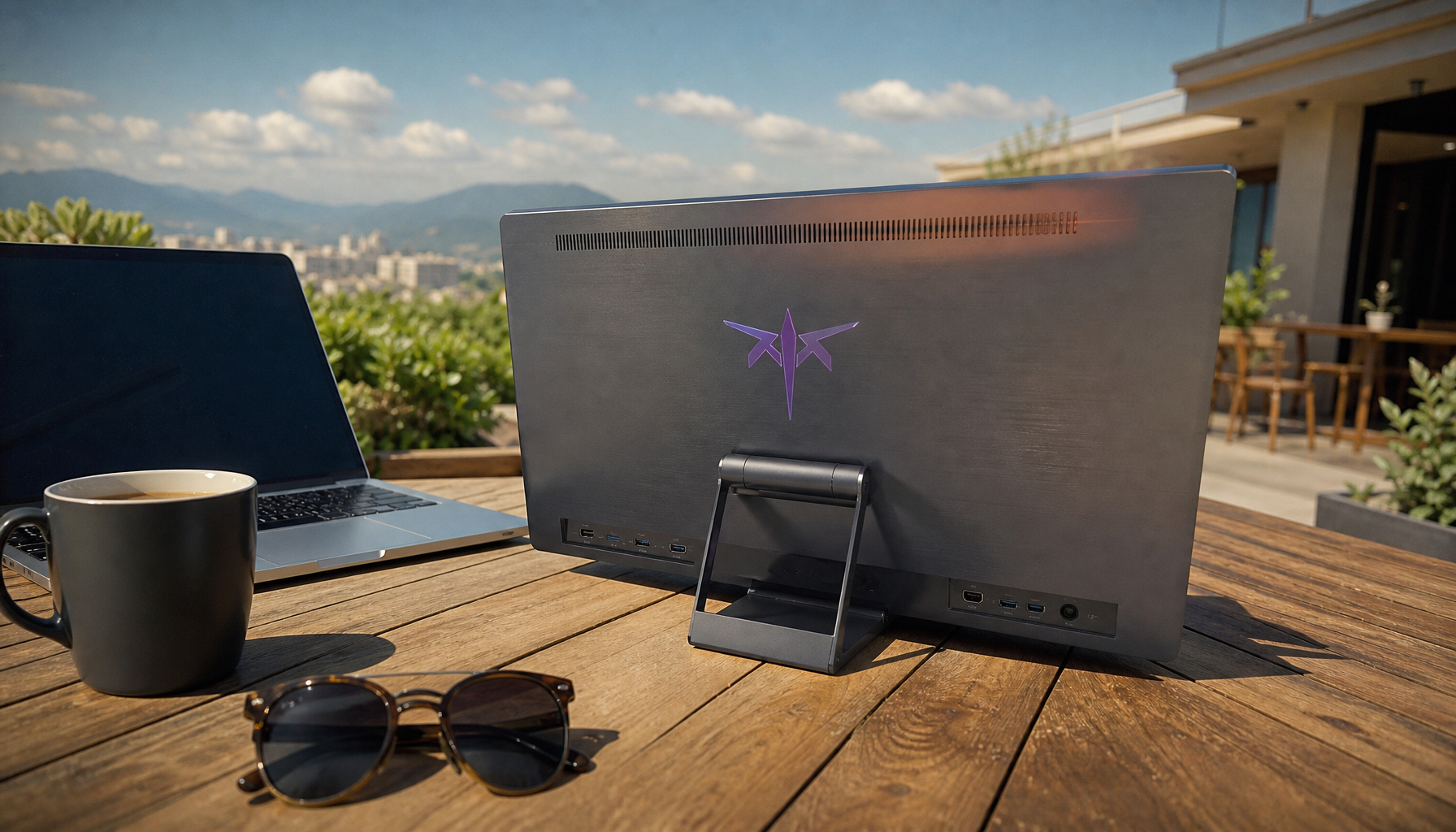
Start with the exact model number on the label, box, or order record. Then check the monitor's on-screen menu for the current version or firmware label if the menu exposes it. A common starting point is the OSD, where users can usually find the version under an information or system section, though the exact menu path varies by model as shown in standard OSD version checks. That first step is useful because it tells you whether you are looking at a real support path or just a guess.
Next, match the firmware package to the exact model, hardware revision, and region. A Tom's Hardware discussion about the KTC M27T20 firmware path is a good reminder that a near match is not enough. If the label, revision, or region does not line up, stop there.
For some KTC models, the update method may involve a USB service port, but that is model-specific, not a universal KTC rule. One practical example is the firmware roadmap guide, which helps frame the right expectation: check the model first, then the method, then the file. If the support page does not clearly name the path, treat that as a verification gap and confirm with support before downloading anything.

The safest decision sentence here is this: if you can identify the exact model, confirm the current version, and match a model-specific source, the update path is worth considering; if any of those pieces are missing, pause and verify before you install anything.
What Firmware Can and Cannot Fix
Firmware can sometimes improve software-driven behavior, such as dimming logic, menu responsiveness, or how a monitor handles certain signal states. That is the right way to think about it, not as a blanket fix. A technical overview of monitor firmware versus hardware limits makes the key boundary clear: firmware may change behavior, but it cannot change native refresh rate, panel type, or other fixed hardware traits.
That boundary matters because buyers often hope an update will solve a problem that is really structural. Brightness limits, backlight design, panel response, and other physical constraints usually stay what they are. For issues like local dimming behavior, the better expectation is conditional improvement, not guaranteed transformation. KTC's local dimming and backlight update guide is a helpful follow-up if you are trying to understand where algorithm tweaks end and hardware limits begin.
A good self-check is to ask whether the symptom is software-shaped or hardware-shaped. If it is a menu bug, odd handshake behavior, or an algorithmic issue, firmware may help. If it is a dead pixel pattern, a brightness ceiling, or a spec limit, firmware is unlikely to change the outcome. In other words, a KTC monitor firmware update is worth trying only when the symptom belongs to software territory.
Which KTC Models Fit Your Risk Tolerance
If you want visible support terms without overpaying, the featured fit case is the KTC 32" 2K IPS 100Hz/120Hz Home&Office Monitor | H32T13. It is a sensible reference point for buyers who want a larger QHD office-style monitor with documented support terms, including a 3-year warranty, 30-day returns, and free shipping over $100. Those details do not prove firmware excellence, but they do make the support picture easier to evaluate.
That is why the H32T13 is useful as a neutral fit case rather than a blanket recommendation. It suits buyers who care about a straightforward desk monitor and want a lower-friction ownership path. If you want a more gaming-focused alternative, the gaming monitor collection is the cleaner browse path. If your priority is a simple work display, the office monitor collection is the better starting point.
For comparison-minded buyers, the H32T13 and the mini-LED gaming monitor represent different support-risk moods: the office model favors simpler everyday use, while the mini-LED model may appeal if you want a stronger gaming feature set and accept more complexity. The decision is not about which one sounds better, but which one gives you the kind of support path you are comfortable verifying later.
| Model or path | Buyer fit | Support visibility | Firmware risk check |
|---|---|---|---|
| H32T13 | Larger QHD home-office buyer | Visible warranty, returns, and support contact | Good fit if you want a straightforward ownership path |
| Office monitor collection | Budget or productivity browser | Category navigation only | Check the exact model before assuming update support |
| Gaming monitor collection | Gaming-first browser | Category navigation only | Check the exact model and support path before buying |
| Featured product page | Neutral fit case | Product-level support terms are visible | Better when you want clearer post-purchase expectations |
The practical takeaway is this: if support clarity matters as much as specs, pick the monitor class that makes version checks, manuals, and contact paths easy to verify. If the support trail is thin, do not let marketing copy make up the difference.
When to Contact Support and What to Send
If the file is missing, the model cannot be matched, or the update fails, stop troubleshooting and contact support. That is the right move when the problem starts to look like a hard hardware limit or when the update path is too unclear to trust. The safest escalation point is the H32T13 support page, where the visible warranty and contact details give you a real path forward.
Send support the exact model name, the current firmware version if you can find it, the region or revision information, a short symptom description, and where you found the update file or instructions. A screenshot of the OSD version screen is especially helpful. If you already tried a method, say which cable, input, or port you used. That saves time and lowers the chance of back-and-forth.
If you remember only one rule, make it this: do not keep trying random firmware files when the model match is uncertain. A clean support request is usually faster than a risky second guess.
Related Resources
FAQs
How Do I Check My KTC Monitor Firmware Version?
Look in the monitor's on-screen display first, usually under an information, system, or settings area. The exact label is model-specific, so the safe move is to confirm the model number first and then check the menu path shown in the manual or support instructions.
What Should I Do If I Cannot Find a Firmware File?
Verify the exact model and revision, then check the product page, help center, or manual for a supported path. If the file still does not appear, contact support instead of downloading an unofficial mirror or a file for a similar model.
Can Firmware Fix Backlight or Local Dimming Problems?
Sometimes firmware can improve algorithm-driven behavior, including some dimming-related behavior, but it cannot remove hardware limits such as panel design or backlight structure. Treat any improvement as model-specific and issue-specific, not universal.
Why Do Some KTC Models Have Clearer Firmware Paths Than Others?
Because update methods can differ by model family, hardware revision, and region. A clear path on one monitor does not prove the same process exists on another, so each model has to be checked on its own.
Should I Try a Firmware Update If the Instructions Are Incomplete?
No. If the instructions are incomplete or the update method is unclear, stop and confirm the path with support. Guessing is the part most likely to create avoidable risk.
Final Takeaway
A KTC monitor firmware update is worth your attention when the model match is clear, the version check is easy to find, and the issue looks software-driven. If any of those pieces are missing, stop and contact support rather than guessing. For buyers, that same logic helps separate a low-risk monitor from one that looks fine on paper but feels uncertain after purchase.