

The $300 savings on an OEM-direct monitor can feel compelling in 2026, but it represents a calculated risk rather than a guaranteed win. The decision hinges on your tolerance for potential firmware stagnation, stricter defect policies under ISO standards, and slower or more cumbersome warranty processes compared to the ecosystem support offered by legacy brands like Dell or ASUS.

For budget-conscious buyers who can test thoroughly within retailer return windows and accept occasional manual adjustments, OEM options often deliver excellent raw hardware value. Professionals or multi-device users who prioritize zero downtime and seamless software integration usually find the brand-name premium worthwhile as practical insurance against common ownership frictions.
The 2026 Value Proposition: Hardware vs. Ecosystem
OEM manufacturers frequently deliver flagship-level panels, high refresh rates, and advanced backlighting such as Mini-LED at prices that legacy brands reserve for entry-level models. This gap exists because the premium paid to names like Dell or ASUS increasingly covers software tools, predictable support infrastructure, and streamlined replacement programs rather than inherently superior panels.
Many OEM units, including several from KTC, use the same BOE or LG panels found in higher-priced competitors. The real difference emerges in long-term ownership factors: how easily you can update firmware, control settings via desktop software, or resolve a defect without significant workflow disruption. This gaming monitor guide explores how raw specs translate to real performance across use cases.
Buyers must therefore weigh impressive specifications per dollar against the hidden costs of potential firmware gaps or support friction. In many 2026 setups, the hardware itself performs comparably; the ecosystem layer determines whether that initial savings remains satisfying months or years later.
Firmware in 2026: The Hidden Expiration Date
Firmware support has grown more critical than many buyers realize. Monitors increasingly function as docking stations or require system-level handshakes, making reliable update paths essential for ongoing compatibility.

With Secure Boot certificates set to expire in June 2026, monitors used as single-cable hubs for corporate laptops or multi-device workflows need manufacturers who provide user-flashable updates. Without them, compatibility or security policies may block the display after that date, as outlined in Microsoft's guidance on Secure Boot certificate expiration.
OEM models often ship with what amounts to launch-day firmware and limited ongoing support, forcing users to rely on physical on-screen display (OSD) controls for adjustments. This creates a daily “toggle tax” — the extra time and annoyance of navigating menus instead of using smooth desktop applications like Dell Display Manager for brightness, volume, or input switching.
Legacy brands have shifted toward background or “silent” firmware updates that keep monitors current without interrupting work. For users who frequently switch between Mac and PC or rely on precise software control, this difference can add up to dozens of hours of friction over the monitor’s life. Simple display-only setups face lower risk, but docking or enterprise users should verify update history before choosing OEM-direct.
The Dead Pixel Dilemma and Long-Term Panel Consistency
Even with careful shopping, panel uniformity remains a lottery in 2026. Independent tests show that brand-name monitors can still exhibit minor defects or color variation across batches, since many share the same panel suppliers.
The key distinction lies in how manufacturers handle those issues. The ISO 9241-307 standard defines specific pixel fault classes, meaning a small number of dead or bright pixels is often considered within spec and may not qualify for warranty replacement. As the official ISO 9241-307 documentation explains, manufacturers can legally deny claims for defects that fall inside these tolerances.
This creates the “Dead Pixel Dilemma.” OEM-direct channels may strictly enforce these limits, while legacy programs sometimes offer more generous “zero bright pixel” policies on premium lines. Many buyers intentionally purchase OEM monitors through Amazon to use the retailer’s 30-day return window as a safety net against stricter manufacturer rules.
The replacement process itself also differs. OEM RMAs frequently require shipping your unit first and receiving a refurbished replacement that could carry its own variation — sometimes called the “RMA loop.” In contrast, Advanced Replacement programs from brands like Dell or MSI ship a replacement before you return the original, minimizing downtime to near zero.
Who Can You Trust With a 2-Dead-Pixel Defect?
Broad tier comparison of defect tolerance and return logistics for a monitor that arrives with two dead pixels.
View chart data
| Category | OEM-direct (KTC-style) | Legacy brands (Dell/MSI) |
|---|---|---|
| ISO Tolerance | Low | High |
| RMA Downtime | High | Medium |
| Replacement Type | Loop | Advanced |
| Amazon Safety Net | Medium | High |
The chart above visualizes these trade-offs using conservative tiers. Higher bars reflect stronger buyer protection or lower friction in typical 2026 conditions. Legacy brands generally reduce downtime risk, but the practical outcome still depends on your specific retailer, model, and whether you test immediately upon arrival. For color-critical creative work, understanding metrics like Delta E values remains important regardless of brand channel.
Who Should Buy OEM-Direct in 2026?
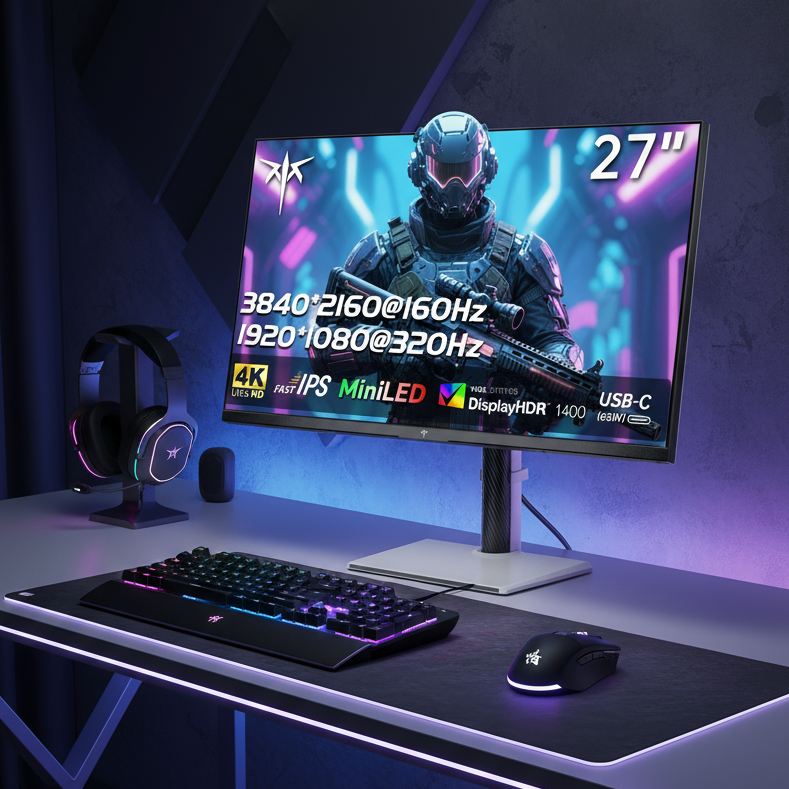
Value optimizers stand to benefit most. Gamers seeking high-refresh Mini-LED performance or 4K HDR capability at aggressive prices can safely consider OEM options if they leverage strong retail return policies and accept that daily adjustments may require the physical OSD. Models like the KTC M27T6 or M27P6 deliver impressive contrast and speed in this tier without the traditional brand markup.
Zero-tolerance professionals, corporate users, or anyone who cannot afford workflow interruptions should generally pay the legacy premium. The combination of Advanced Replacement, more consistent firmware support, and robust desktop software reduces the most common sources of long-term regret.
Mac and multi-device users who rely on seamless input switching or precise software brightness control will likely feel the toggle tax most acutely and should verify DDC/CI compatibility or prefer brands with mature applications. First-time buyers benefit from starting with a retailer that offers easy returns while they learn their tolerance for these variables.
A practical pre-purchase checklist includes:
- Confirm whether your workflow requires docking or frequent input changes.
- Check the manufacturer’s history of firmware updates for your intended use.
- Verify the exact return and warranty process through your chosen retailer.
- Test the unit thoroughly within any grace period for pixel or uniformity issues.
- Consider adding protection like a Worry-Free Purchase plan if buying direct to offset potential friction.
For broader shopping strategies, see this productivity monitor guide or current deal roundups.
Making the Smart Choice for Your Needs
The brand-name premium in 2026 functions primarily as insurance against support friction and downtime rather than a guarantee of superior hardware. OEM-direct monitors frequently match or exceed raw specifications, but they shift more responsibility onto the buyer for testing, manual adjustments, and navigating stricter defect policies.
Choose OEM when your budget is tight, your use case is primarily single-device gaming or entertainment, and you can comfortably handle a potential RMA through a retailer safety net. Pay for the legacy ecosystem when your work or setup cannot tolerate interruptions, requires reliable firmware for docking, or benefits from polished desktop software.
By focusing on your actual tolerance for the toggle tax, RMA logistics, and long-term update availability rather than marketing claims, you can make a 2026 monitor purchase that aligns with both performance needs and peace of mind. The most expensive monitor is the one that fails at an inconvenient moment; the smartest choice balances upfront savings against realistic ownership risks.
Are OEM Monitors Reliable in 2026?
Many OEM monitors deliver reliable day-to-day performance using the same panel technology found in premium models. Reliability gaps usually appear in firmware longevity and support responsiveness rather than outright hardware failure. Buyers who test units immediately and purchase through retailers with strong return policies often report satisfaction, while those needing guaranteed long-term updates or zero-downtime replacement face higher risk.
Do Brand-Name Monitors Justify Their Higher Price?
The added cost primarily purchases predictable RMA experiences, desktop software integration, and more consistent firmware updates. For users who value minimal disruption over raw specifications per dollar, this premium functions as practical insurance. Gamers or casual users who can self-manage minor issues frequently find the extra expense unnecessary when comparable OEM hardware is available.
What Is the Toggle Tax with OEM Monitors?
The toggle tax refers to the extra time and annoyance of using physical OSD controls for every brightness, volume, or input change because desktop software control (DDC/CI) is often limited or unreliable on OEM models. Over years of ownership this can add significant friction, especially for users switching devices daily or working in variable lighting.
How Do Warranty Response Times Compare Between OEM and Brand Monitors?
Legacy brands typically offer more structured processes, including advanced replacement that ships a new unit before you return the defective one. OEM response often requires you to ship first and may involve longer turnaround or refurbished replacements. KTC provides a competitive 3-year warranty on paper, but real-world friction depends on the specific claim and retailer involvement.
Should I Buy a Rebranded Monitor in 2026?
Rebranded or OEM-direct monitors can be excellent value for buyers who prioritize specifications and accept the support trade-offs. They become a poor fit for corporate environments, color-critical work requiring guaranteed uniformity, or users who dislike manual menu navigation. Always verify the exact manufacturer support policies and test the unit promptly after delivery.
How Does the 2026 Secure Boot Change Affect Monitor Choice?
Monitors functioning as docking stations or USB-C hubs may lose compatibility with corporate security policies after June 2026 if they cannot receive firmware updates. Legacy brands with active update programs handle this transition more smoothly. Pure display users face lower risk, but docking-dependent buyers should prioritize manufacturers with a proven track record of post-launch firmware support.