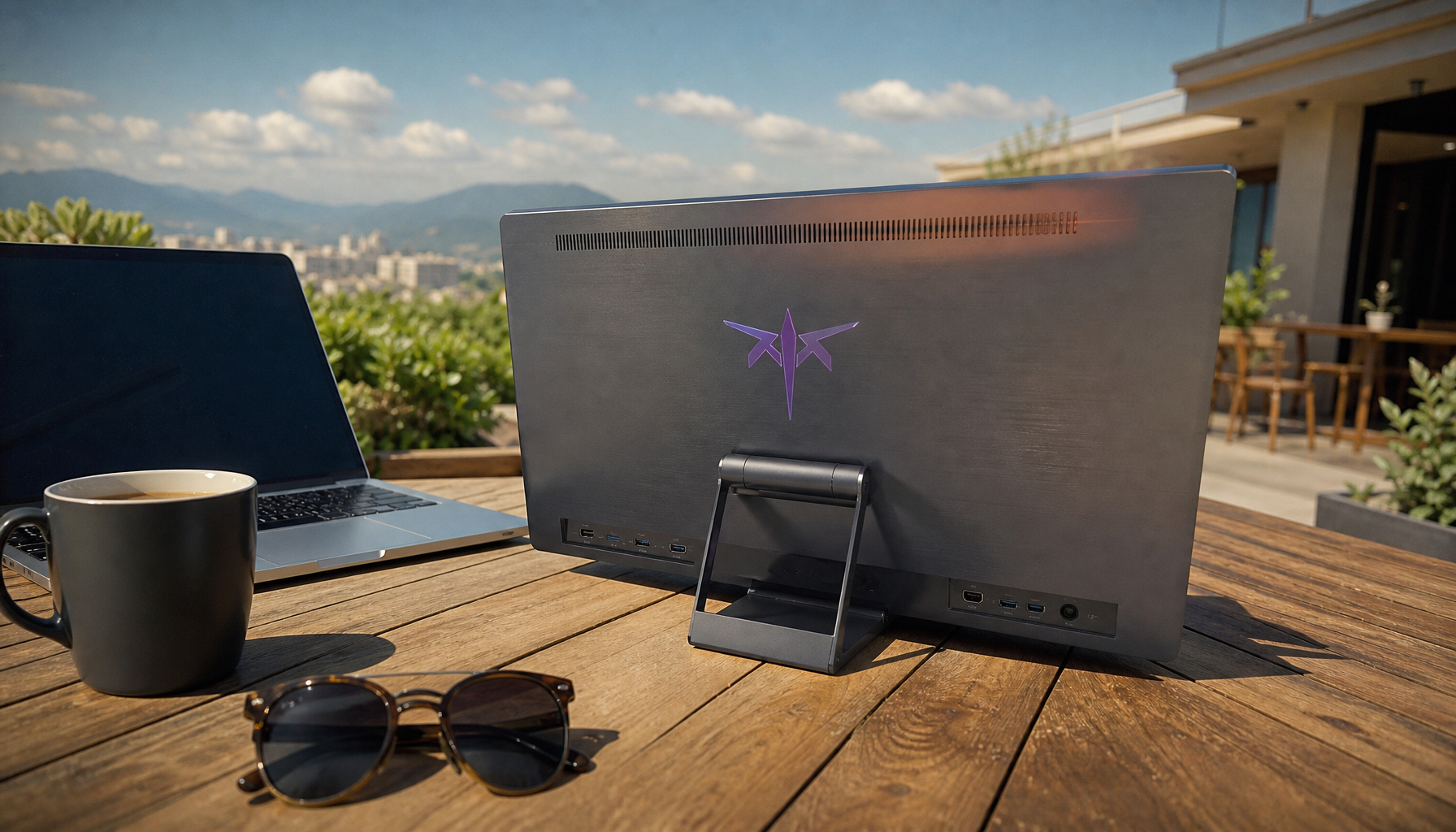
KTC warranty is best treated as a limited safety net for manufacturing defects, not a promise of instant resolution. The 30-day return window is a separate path, so the first decision is whether your issue looks like a buyer-remorse or early quality problem, or a defect that belongs in a warranty claim. 
What KTC Warranty Usually Covers
For most value-monitor buyers, the key question is simple: does the problem look like a manufacturing defect, or is it more likely from setup, cable trouble, or accidental damage? On supported product pages, KTC lists a 3-year limited warranty for the monitor unit and included accessories against manufacturing defects. That is useful protection, but it is not the same thing as coverage for normal wear or user-caused damage.
Standard Monitor Coverage
On the models with published warranty details, KTC describes the standard warranty as covering the monitor unit and included accessories for manufacturing defects. In plain language, that means a dead pixel cluster, panel failure, or another defect that shows up as a product problem is more likely to belong in the warranty path than a loose cable or a bad source setting.
A practical rule: if the symptom disappears when you swap cables, ports, or refresh-rate settings, it is probably not the kind of issue you should lead with as a warranty defect. If the symptom stays put across different devices and direct connections, the warranty case becomes more plausible.
Included Accessories and Exclusions
Warranty coverage is usually strongest when the issue is tied to the monitor itself or the included accessories that came with it. The weaker cases are the ones that involve obvious misuse, shipping abuse after delivery, or setup mistakes. KTC also notes a separate 1-year main-unit term on the MEGAPAD series, so buyers should not assume every KTC product follows the same clock.
That is the main caution with KTC warranty: the term is not something to generalize across every series without checking the exact product page. If the model page shows a different term, that page controls the expectation, not a broader category assumption.
Where the Warranty Applies
The warranty is a support promise, not a return policy. On product pages, KTC separately lists a 30-day return window, which serves a different purpose. For a shopper, that difference matters because a return often fits a brand-new issue or a change-of-mind situation, while warranty coverage is the longer-term path for a defect that appears after use.
If you are comparing KTC 27-inch 144Hz gaming monitor or KTC Mini LED 27-inch 200Hz monitor, verify the exact warranty line on the model page before you assume the same terms apply. That check is worth doing before checkout, not after a problem appears.
How a Warranty Claim Works
The safest way to start a KTC warranty claim is to rule out the obvious causes first, then send support a clean evidence package. KTC lists support@ktcplay.com on product pages, and some pages also reference a help center and technician inspection for quality issues. That suggests a case-review process, not a one-click replacement decision.
Step 1: Confirm It Is Not a Setup Problem
Before you open a claim, try the basic checks that often solve monitor issues without any service request. Test another cable, another port, and another source device. Make sure the input is correct, the refresh rate matches what your system can handle, and any dock or adapter is removed while you troubleshoot.
This matters because many monitor problems look like panel defects at first but turn out to be signal-path issues. If the issue disappears after a simple cable or input change, you avoid sending support a claim that is not really a defect case.
Step 2: Collect the Right Details
Have your order confirmation, model name, and a short description of the problem ready before you email support. Add photos or video that show the symptom clearly, plus the on-screen menu state if it helps explain the issue. If you can see the serial number, include it.
The faster you make the issue legible, the easier it is for support to route the case. A blurry complaint like "screen bad" creates back-and-forth. A tighter note like "black screen on HDMI 2 after testing two cables and a console directly connected" gives support something usable.
Step 3: Contact the Official Support Channel
Start with the support email listed on the product page, and use the help center if the page points you there. From there, expect an intake step that may ask for more proof or troubleshooting details before the case moves forward. On issues that look like quality defects, KTC may also inspect the unit before any replacement decision.
That is normal claim handling. It also means the first reply may be a verification step, not a final answer.
Step 4: Keep the Box and Accessories Handy
Even when a page does not spell out every packing rule, it is smart to keep the box, inserts, cables, and warranty card until the case is closed. That makes shipping, inspection, and repacking easier if support asks for a return.
In real use, this is where people often regret throwing packaging away too early. If the monitor has to go back, having everything packed neatly can save time and reduce friction.

Documentation That Speeds Up Support
If you want a smoother claim, think in terms of proof, not persuasion. Support usually needs enough detail to verify the purchase and reproduce the complaint, and the more clearly you document the problem, the less likely you are to bounce between follow-up emails.
- Keep the order confirmation or receipt in one easy-to-find folder.
- Save the exact model name and, if available, the serial number.
- Photograph the monitor, the cable connections, and any visible defect.
- Record a short video if the issue changes over time, flickers, or appears only in certain inputs.
- Note every troubleshooting step you already tried so you do not repeat the same loop.
- Keep the original box, inserts, cables, and warranty card until the case is finished.
A good evidence package does two things at once. It helps support verify eligibility, and it helps you avoid the common mistake of reopening the same problem with incomplete context.
Return Policy Versus Warranty
The return policy and the warranty solve different problems, so filing the wrong one first can slow you down. If your issue shows up within the return window and looks like an early quality problem or simple buyer-remorse situation, the return path is usually the cleaner first step. If the issue appears later and looks like a defect, warranty support is the better fit.
| Situation | Better First Path | Why It Fits Better | What To Prepare |
|---|---|---|---|
| Arrived damaged or not as expected within the return window | Return | The issue is tied to early delivery or purchase dissatisfaction | Order confirmation, photos, packaging details |
| Problem appears after normal use and looks like a defect | Warranty | The issue is more consistent with manufacturing trouble | Receipt, model name, photos or video, serial number if available |
| You are unsure whether the problem is the monitor or the source device | Troubleshoot first, then decide | Many display problems are caused by cables, inputs, or settings | Test cable, alternate device, and a short symptom log |
| The return window has likely passed | Warranty | A longer-term defect is more likely the remaining path | Full evidence package and patience for inspection steps |
For buyers who want a deeper reference point on display issues, the display diagnostics and maintenance library is a useful follow-up resource. It is not a warranty policy page, but it can help you separate a true defect from a setup problem.
The short version is this: return requests are usually about timing, while warranty requests are usually about defect type. If you mix them up, you may add days to a case that could have been cleaner from the start.
Response Timelines You Can Realistically Expect
KTC does not publish a universal response-time promise in the materials reviewed here, so the safest expectation is a back-and-forth process rather than a same-day resolution. Response speed can vary by case volume, time zone, business days, and how complete your first message is.
In practice, the first reply may be a request for more evidence, a troubleshooting check, or an inspection step. That is especially true when the issue is not obvious from the first message. If you contact support near a weekend or holiday, allow extra time for a business-day reply.
A useful mindset is this: the better your initial documentation, the less likely the process is to stall. KTC warranty can still be a reasonable safety net, but it works best when you treat the claim like a structured case instead of an urgent chat.
What Buyers Should Check Before They Buy
If you are still comparing monitors, do the support check before checkout, not after. A model can look attractive on specs alone and still be a poor fit if the warranty page is vague or you are not comfortable with a possible inspection step.
- Confirm the exact warranty length on the model page.
- Check whether the page lists support email, help center, or inspection language.
- Read the return window separately from the warranty term.
- Think about how long you could live without the monitor if a claim took several steps.
- Keep the receipt, packaging, and accessory list somewhere safe after delivery.
- Compare the support terms with the price, not just the panel specs.
If you want to browse the broader lineup, All Monitors is the easiest category entry point. Use it for navigation, then open the exact model page to verify the support details that matter.
For example, a KTC 27-inch 4K gaming monitor or a KTC 34-inch curved gaming monitor may be a good fit for different use cases, but the support choice still comes down to the same question: do the warranty terms, return window, and claim process feel acceptable for your risk tolerance?
KTC Warranty in Context for Value Buyers
KTC warranty is useful when you want a practical defect safety net, but it works best if you understand the boundaries before you buy. The biggest mistake is treating it like an instant replacement promise or assuming every model uses identical terms. If you verify the exact page, keep your documents, and use the right path first, the support experience is usually easier to manage.
FAQs
Q1. How Do I Start a KTC Warranty Claim?
Start by confirming that the issue is not caused by the cable, input, refresh-rate setting, or source device. Then gather your proof of purchase, model name, and photos or video, and email the support address listed on the product page. That gives support the basics needed to open the case.
Q2. What Is the Difference Between KTC Returns and Warranty Coverage?
Returns handle eligible early issues or buyer-remorse situations inside the return window. Warranty coverage is the longer-term path for manufacturing defects. If you file the wrong one first, you may slow down the resolution even when the underlying problem is legitimate.
Q3. Can KTC Ask for Photos or Video Before Approving a Claim?
Yes. Documentation requests are normal because they help support verify the problem before inspection or replacement decisions are made. Clear photos and short video clips are often more useful than a long explanation alone, especially when the problem is intermittent.
Q4. Why Might a Claim Take Longer Than Expected?
The most common reasons are incomplete documentation, extra troubleshooting, business-day timing, and inspection steps. If support has to ask follow-up questions before moving the case forward, the process can stretch out even when the issue itself is straightforward.
Q5. Is KTC Warranty Good for Value Monitors?
It can be, if you are comfortable with a warranty that is tied to model-specific terms, documentation checks, and a support process that may take more than one step. It is a better fit for buyers who are willing to verify details up front than for shoppers who want the fastest possible exchange experience.