Mini-LED HDR performance tuning works best when you start with the symptom you can actually see. If you notice blooming around UI, crushed shadow detail, or brightness that changes from one game to the next, the right fix is not always the same. The goal of Mini-LED HDR performance tuning is to reduce visible artifacts and make HDR behave more consistently, not to remove every local-dimming trade-off.

Start With the HDR Problem You See
For most Mini-LED owners, the first question is simple: what looks wrong in real use? Mini-LED local dimming improves contrast by controlling backlight zones independently, which is why HDR can look deeper in dark scenes, but it also creates the trade-off that bright objects can glow into nearby dark areas. VESA's DisplayHDR guidance is a useful reminder that stronger HDR hardware still needs user tuning for consistent results.
If bright subtitles, HUD edges, or menus are the problem, focus on blooming first. If blacks look muddy or shadow detail disappears, prioritize tone mapping and dimming behavior instead. That difference matters, because the right setting for one symptom can make the other worse. For desktop-specific color shifts, see Why Does Enabling HDR Change Desktop Color Appearance on a PC.
Decision sentence: If blooming is the main complaint, leave peak brightness alone at first and test local dimming behavior. If shadow crush is the main complaint, keep dimming active but lower the aggressiveness of the HDR curve before touching other controls.
Set Local Dimming for Stable Zone Behavior
Local dimming is the first control worth testing because it drives most Mini-LED HDR contrast behavior. Independent dimming zones can make blacks look much better, but they also make haloing easier to notice around subtitle bars, HUDs, and bright weapon or spell effects. Industry notes on Mini-LED halation describe the same basic trade-off: better-controlled zones reduce blooming, but they do not eliminate it.

Start with the most stable local-dimming mode available on your monitor, then test one high-contrast scene. Do not judge the setting from a splash screen or a showroom clip. In real gameplay, the artifact usually shows up on moving UI, not in a still image.
Match Local Dimming to the Content Type
Dark-room single-player games usually reveal blooming more clearly than bright desktop use. If you play story games at night, a stronger dimming mode may look better overall. If you spend more time on strategy games, subtitles, or desktop work, a slightly less aggressive mode often keeps the image more usable.
Reduce Blooming Without Crushing Blacks
The best starting point is usually the mode that gives you the cleanest black bars and menus without making near-black details disappear. If faces, shadows, or dark clothing lose definition, back off one step. If halos around text become distracting, move one step in the other direction. The key is to change one control at a time so you can tell what actually improved.
Use Zone Count and Shape as Context, Not the Only Fix
Higher zone counts can help Mini-LED displays manage bright objects more precisely, but content, firmware, and zone algorithm quality still matter. That is why two monitors with similar specs can look different in the same game. More zones can improve the odds of cleaner HDR, but they do not guarantee a halo-free result.
Choose the Right Firmware Profile
Firmware and picture profiles can change tone mapping and dimming response, so a known baseline matters before you fine-tune. RTINGS' HDR monitor setup notes are useful here because they reinforce a simple workflow: pick one stable profile first, then compare every later change against it. That keeps you from confusing a better-looking profile with a more consistent one.
Use one profile for desktop checking and one for game testing if your monitor behaves differently across sources. A profile that looks excellent in one title can look too dim, too punchy, or too unstable in another. That variation is normal, not automatically a defect.
Decision sentence: If your monitor offers several HDR or game presets, start with the most neutral-looking one and keep it unchanged as your baseline. If a later preset looks brighter but makes shadows or UI glow worse, treat it as a trade-off rather than an upgrade.
Start With a Baseline HDR Profile
Your baseline should be the profile that makes both bright and dark areas look balanced in the same scene. Write it down before you change anything else. That gives you a fallback when later tuning goes too far.
Test Game and Desktop Behavior Separately
Desktop HDR can expose different issues than a game engine does. Menus, windows, and browsers often make dimming behavior look harsher than a full-screen game. If the desktop looks odd but games look fine, do not assume the monitor is broken. You may simply need a separate desktop check.
Save a Known-Good Profile Before Experimenting
This is the easiest way to avoid getting stuck. If every new change is compared against one saved baseline, it becomes much easier to spot which setting helped and which one only changed the look. That is especially useful after firmware updates or driver changes.
Map One Mini-LED Model to Your Use Case
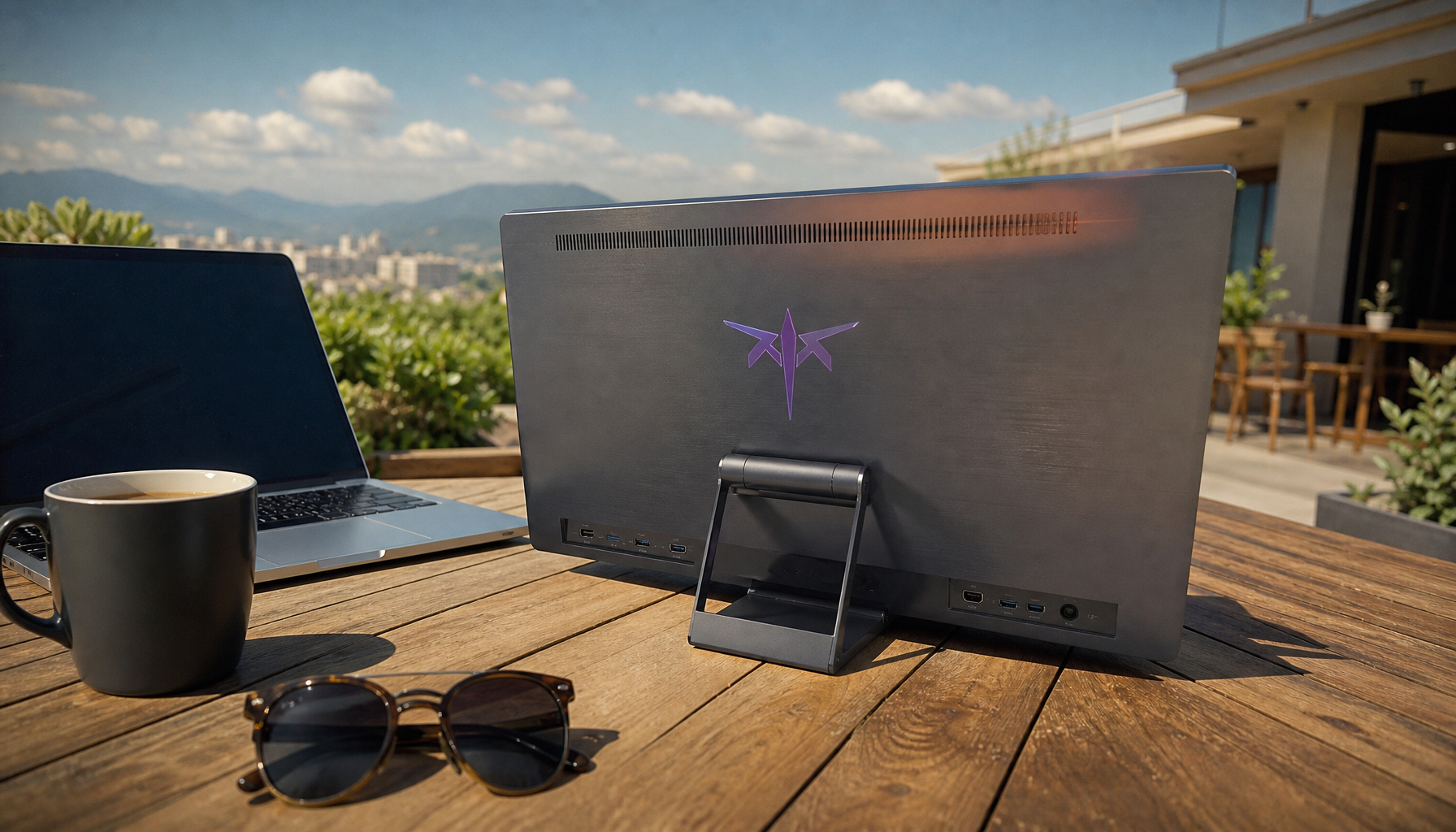
A real-world example helps because the tuning path changes with resolution, refresh rate, and how hard you push HDR. The KTC Mini LED 27" 180Hz 2K HDR1400 Gaming Monitor | M27T6 is a natural fit for 1440p Mini-LED HDR tuning when you want strong contrast, a fast panel, and a setup that still makes sense for PC gaming and console testing. The KTC Mini LED 27" 200Hz 2K HDR1000 Gaming Monitor | M27T6S offers a similar zone count with a higher refresh rate for motion-focused use cases.
| Condition | Why It Matters For Tuning | M27T6 Fit |
|---|---|---|
| 2560×1440 gaming | Keeps the focus on HDR behavior instead of pushing 4K bandwidth or scaling variables | Matches the native 1440p class |
| 180Hz refresh | Leaves motion smooth enough that you can judge HDR artifacts without motion blur taking over | Strong fit for fast play |
| Mini-LED local dimming | Gives you the zone behavior you are actually trying to tune | 1152-zone class Mini-LED design |
| HDR1400 target | Makes bright highlights and dark corners easier to compare | Good fit for high-impact HDR tests |
| PC and console use | Lets you compare sources instead of blaming one device | Useful for mixed setups |
For buyers comparing browsing paths rather than locking into one model, the broader All-Mini-LED Monitors collection is the better place to start. If you are deciding between QHD options more generally, the 2K Monitor collection or the Gaming Monitor collection is a cleaner category view.
Decision sentence: If you want a 1440p Mini-LED setup that makes HDR tuning easy to see, this model is a sensible example. If you care more about 4K desktop sharpness than HDR tuning headroom, a different resolution class may fit better.
Test Brightness Mapping With Repeatable Scenes
Brightness mapping is easiest to judge when you use the same scenes every time. RTINGS' HDR test approach is a good model for this: subtitle bars, HUD edges, and bright objects on dark backgrounds expose blooming faster than generic test images. That does not mean a test pattern is useless. It just means repeatable real scenes usually tell you more.
Use the same game, the same menu, and the same desktop window after each change. Otherwise, you are comparing content differences instead of monitor behavior. That is the fastest way to misread a tuning result.
Mini-LED HDR Tuning Priorities by Symptom
| Symptom | Priority 1 Action | Priority 2 Action | Priority 3 Action |
|---|---|---|---|
| Bright highlights clip first | Lower HDR curve | Check profile | Retest scene |
| Dark detail looks crushed | Ease dimming aggressiveness | Verify baseline | Compare sources |
| Noticeable haloing around subtitles or UI | Reduce zone strength | Test stable mode | Check firmware |
| Image changes across profiles or firmware | Save known-good preset | Isolate one change | Recheck after updates |
| Results differ from scene to scene | Use repeatable scenes | Separate PC/console checks | Keep fallback baseline |
Check for Clipped Highlights, Raised Blacks, and Shadow Crush
A practical check is to look at one very bright object, one dark corner, and one mid-dark area in the same scene. If the bright object loses detail, lower the mapping first. If the dark corner turns gray, the dimming curve may be too weak. If both problems appear together, the profile may simply be a poor match for that source.
Compare One PC Game and One Console Source
PC and console HDR can behave differently even on the same monitor. If you use both, test both. A setup that looks stable on a console can still be too aggressive on a PC game with different metadata or menu behavior.
Decision sentence: If the same monitor setting looks good on one source but wrong on another, do not force one universal setting. Keep separate source checks and choose the profile that behaves best in your most important use case.
Use This Final HDR Tuning Checklist
Lock in the profile that looks best across your favorite bright scene, dark scene, and desktop check. Then save the settings, keep one baseline untouched, and retest after firmware updates, console updates, or major game patches. If haloing still distracts you, step back one change at a time. The right finish line is consistency, not perfection.
- Recheck your preferred game, one subtitle-heavy scene, and one desktop screen.
- Save the best-known profile before making more changes.
- Change only one control at a time.
- Re-test after firmware, driver, console, or game updates.
- Keep a fallback baseline in case a later change makes the image worse.
FAQs
Q1. How Do Firmware Profiles Change Mini-LED HDR Behavior?
Firmware profiles can change how aggressively local dimming reacts and how the HDR curve is mapped. That means the same game can look more balanced in one preset and more halo-prone in another. The safest comparison is still a saved baseline plus one change at a time.
Q2. What Should You Test First to Spot Blooming?
Subtitle bars, HUD edges, and bright objects on dark backgrounds are the fastest way to expose blooming. They create a stronger contrast edge than a generic test image, so you can see haloing sooner and with less guesswork.
Q3. Can Console HDR Need Different Brightness Mapping Than PC HDR?
Yes. Consoles and PCs can send different HDR metadata or trigger different game behavior, so they deserve separate checks. If the same monitor setting looks clipped on one source and fine on the other, that is a source-mapping difference, not proof that the display is inconsistent.
Q4. Why Does Mini-LED Sometimes Crush Shadow Detail?
Shadow crush often happens when the dimming curve or HDR mapping is too aggressive in dark areas. The image may look punchier at first, but near-black details disappear. In that case, easing the curve is usually more useful than turning off HDR entirely.
Q5. How Often Should You Recheck HDR Settings?
Recheck after firmware updates, GPU driver changes, console updates, or a major game patch. Those changes can alter tone mapping or dimming response enough to make yesterday's best preset look different today.
Mini-LED HDR performance tuning succeeds when changes stay small, repeatable, and compared against one saved baseline. Retest after any firmware or driver update and keep the most stable profile for daily use.