


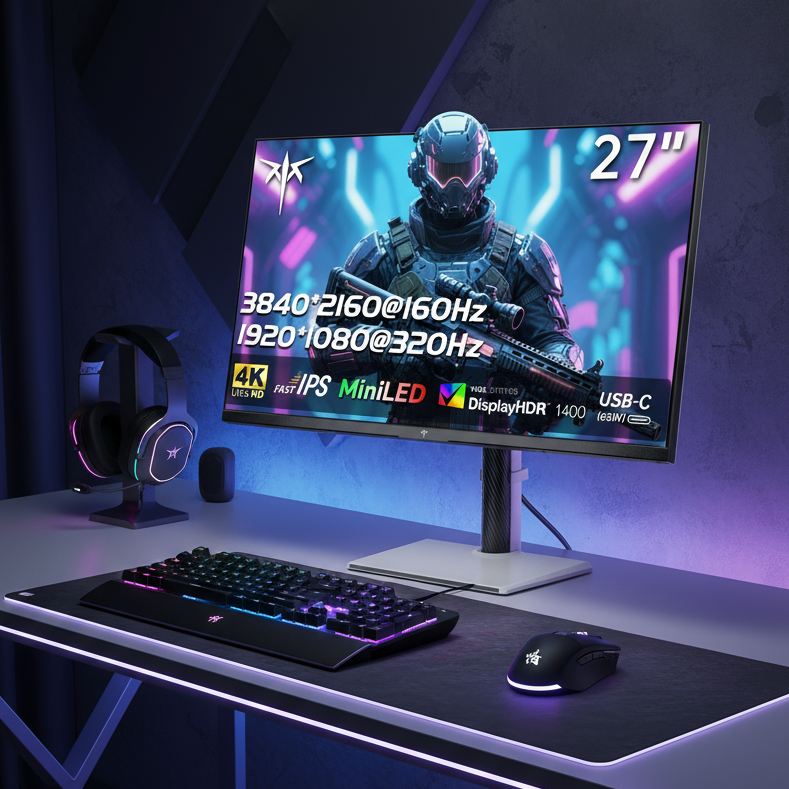




Color temperature changes how “white” looks on your screen, which affects how sharp, calm, or tiring your workspace feels. The right setting will not make you faster by itself, but it can make focus easier and color decisions more trustworthy.
Color Temperature Is a Productivity Signal
Color temperature is measured in Kelvin: lower values look warmer and more reddish, while higher values look cooler and more bluish. On LCD monitors, changing this setting adds a visible color cast across the whole display, which is why a document can feel softer at 5000 K and more clinical at 9300 K.

For everyday computer work, 6500 K is the practical baseline because it aligns with sRGB and common digital content standards, making it a safe default for browsing, office apps, and mixed productivity tasks.
Why Cool Screens Feel Faster
A cooler setting can make whites look brighter and text feel crisper at first glance. That perceived sharpness can help in dashboards, code editors, spreadsheets, and competitive gaming menus where quick visual separation matters.

The tradeoff is fatigue. If the display is too blue for your room lighting, your eyes may keep adapting between the screen and your surroundings. That adaptation cost can make long work sessions feel more draining, even if the monitor itself is high-end.
For most productivity users, a cooler preset works best as a short-session tool, not a universal upgrade. Think fast review, not all-day writing.
Why Warm Screens Feel Calmer
A warmer color temperature reduces the blue cast and can make the screen feel less harsh in dim rooms or evening work sessions. That can support reading, writing, planning, and email triage because the display feels less visually aggressive.

But too warm can backfire. Whites may look yellow, grays may lose neutrality, and images can appear less clean. If you work with decks, product photos, brand assets, or video thumbnails, that warmth can quietly distort your judgment.
Color-sensitive users should avoid vague “Warm” and “Cool” labels when possible. A monitor with direct Kelvin controls gives you a more repeatable target.
Match the Setting to the Work
Use color temperature like a performance mode, not a set-and-forget mystery slider.
- 6500 K: best default for office work, web, gaming, and sRGB content.
- 5000 K: useful for print-aware review and softer reading environments.
- 6500–7500 K: clean, bright-feeling range for spreadsheets and dashboards.
- 9300 K: niche use for very cool video targets, not general productivity.
- Hardware calibration: best for photo, grading, and design work.
If you also run multiple displays, match their color temperature first. A dual-screen setup can improve flow by reducing window switching, but mismatched whites make your eyes constantly recalibrate between panels; that undermines the benefit of multi-monitor setups.

The Best Setting Is the One You Stop Noticing
A productive monitor disappears into the work. If the screen looks blue, yellow, harsh, or dull, your visual system is spending energy on the display instead of the task.
Start at 6500 K, use sRGB mode when accuracy matters, then adjust only for your room and workflow. For serious creative work, prioritize calibration and color accuracy over preference; professional displays are judged by repeatable color, wide gamut, and low Delta E, not just a pleasing preset on day one.
Comfort and accuracy are related but not identical, so the most comfortable setting for late-night writing may not be the most accurate setting for color-critical production.


