Mixed-use desks do not automatically wear out an OLED. The real OLED monitor burn-in prevention tips are simple: keep static elements from sitting in the same place all day, avoid running brightness higher than you need, and let the monitor's protection features do some of the work.
Why Mixed-Use Desks Stress OLED Panels
The risk comes less from "work plus gaming" and more from repetition. Taskbars, browser tabs, spreadsheets, HUDs, and launchers can sit in the same place for hours, and that is the pattern that matters most. A long static workday at high brightness is more stressful than a desk that changes content often.
That is why the usual warning is not "do not buy OLED," but "do not treat it like a set-it-and-forget-it office panel." As Tom's Hardware's long-use OLED coverage notes, screen savers help most when the display is idle, while brightness control and sleep habits do more of the real work.
For most buyers, this is the key decision sentence: if your desk changes content often, OLED can be a reasonable fit; if the same windows stay pinned all day, you should expect more maintenance.
Set Up Your Desktop to Reduce Static Wear
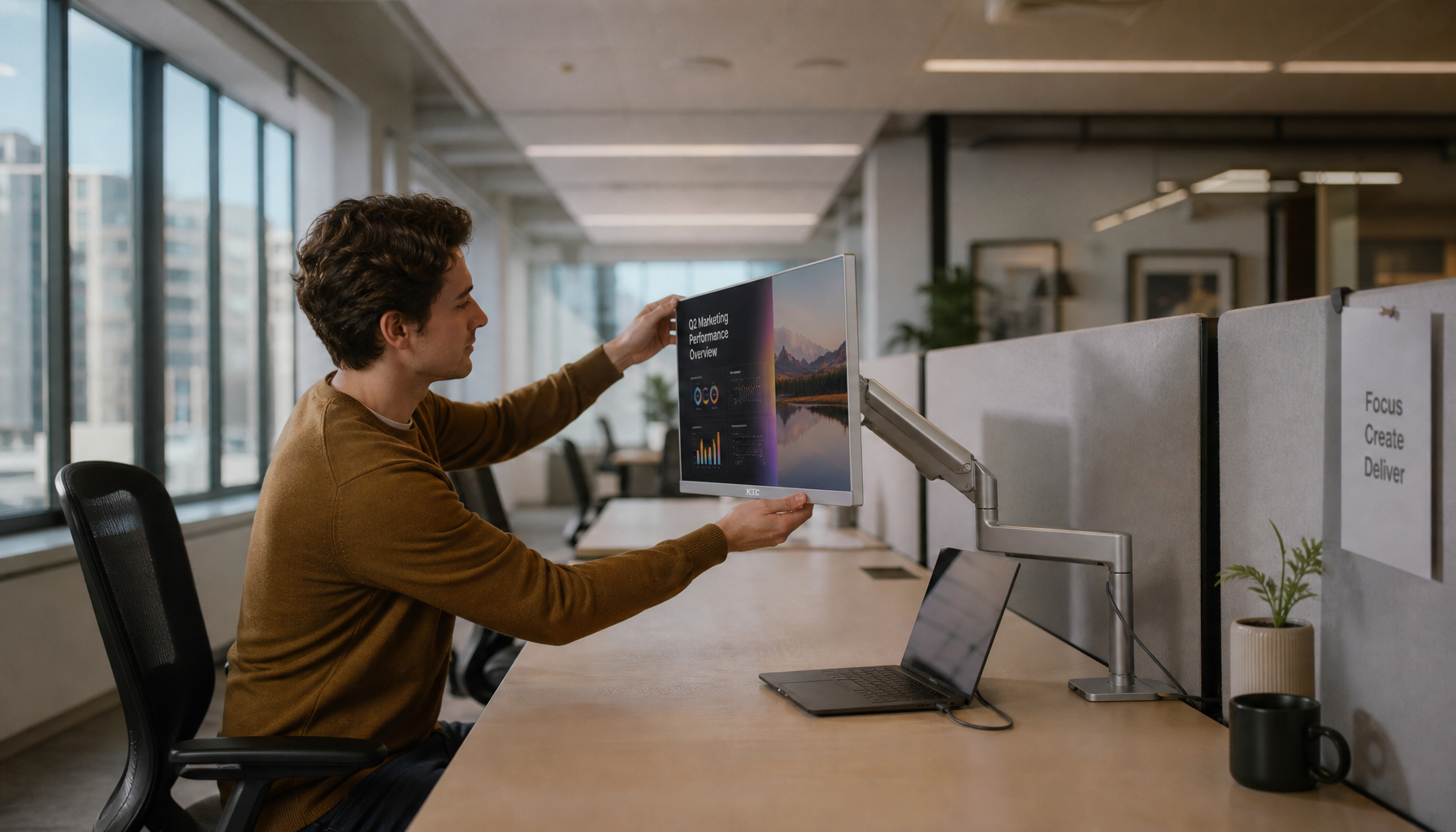
Start with the easiest win: make the desk layout less fixed. Move the taskbar, dock, or browser chrome if your operating system allows it, and use full-screen or app-focused layouts when that feels natural. The less a bright white bar sits in one place, the better.
Then lower brightness to the minimum that still feels comfortable for daytime work. DisplayModule's OLED lifespan guidance points in the same direction: lower brightness during long static sessions and use pixel shift or auto-dim features when available. That does not eliminate wear, but it reduces how hard the panel works during the longest stretches.
If your monitor offers pixel shift, logo dimming, or similar protection, turn it on. Think of those features as spreading the workload around, not replacing good habits.

A practical rule of thumb is this: if you need the same app layout every hour of the day, brightness discipline matters more than fancy presets.
Daily Habits That Matter Most
The daily routine matters more than occasional tweaks. On an 8- to 12-hour desk, the biggest mistake is leaving a bright static screen open because it feels convenient. Let the monitor sleep during lunch, calls, or long idle gaps instead of using the desktop as a permanent wallpaper.
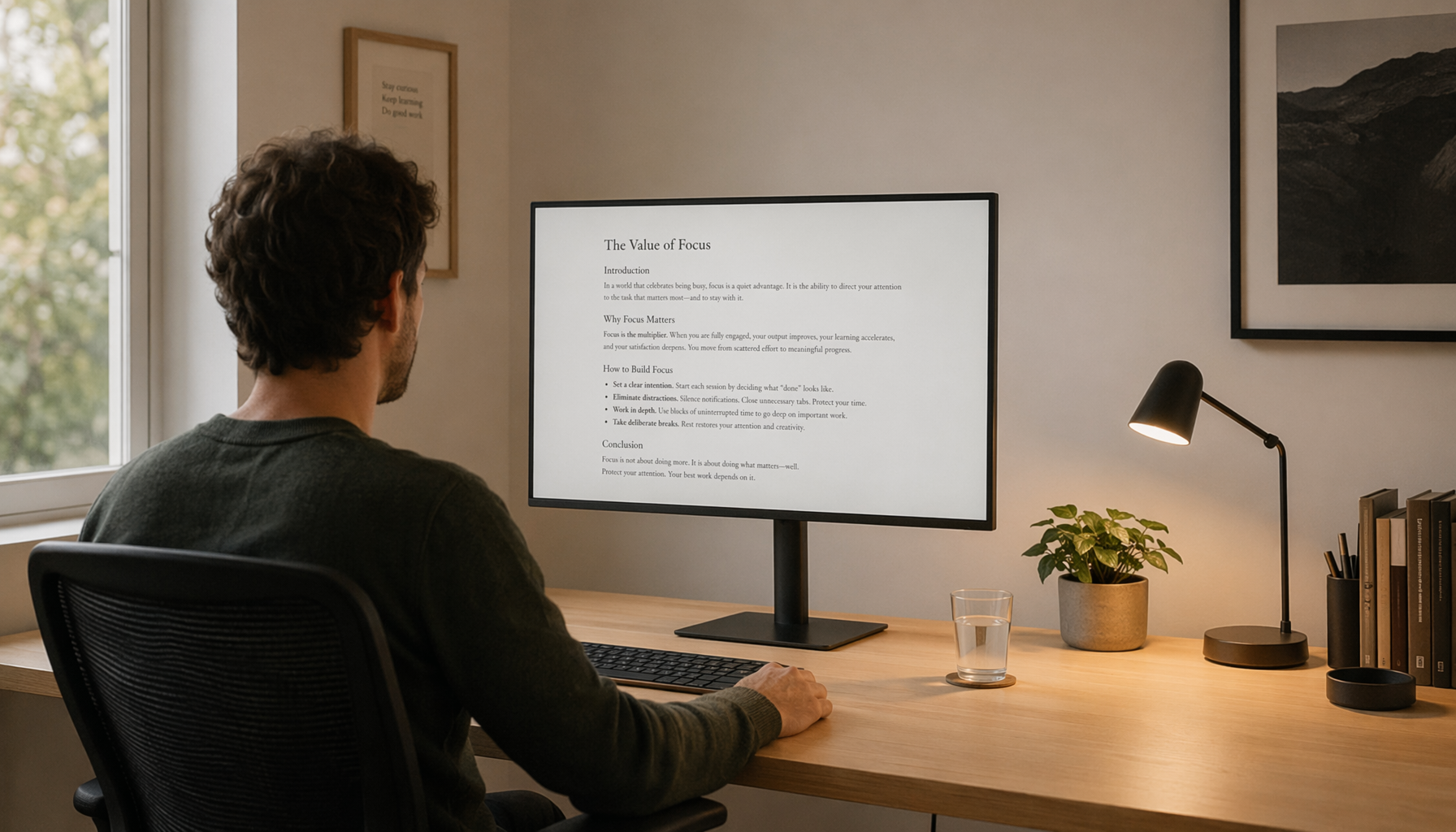
Use dark mode where it fits, but do not overrate it. Dark mode helps most when it reduces bright fixed areas, not when you still keep the same interface open all day. As a practical browsing habit, rotating between documents, browsers, and full-screen apps spreads out the wear pattern.
Taskbar auto-hide can help, but it is only one layer of protection. If you hide the taskbar and still leave spreadsheets up for 10 hours straight, you have reduced one risk and left the bigger one in place.
A good decision sentence here is: if your workflow already includes natural breaks, OLED is easier to manage; if you rarely leave a screen idle, you need more deliberate sleep settings.
How Often to Run Pixel Refreshers
Do not invent a daily refresher schedule. Use the monitor's built-in maintenance cycle when the display prompts you or the manual tells you to, and treat it as periodic care rather than a ritual you run every night.
Pixel refresh cycles should follow on-screen prompts rather than a fixed daily schedule. If you notice temporary retention after a long static session, the first move is usually to let the panel cool, power it off normally, and follow the monitor's maintenance prompt if one appears.
What this means in practice is simple: refresher cycles are there to support long-term upkeep, not to excuse poor brightness or idle habits.
OLED vs Mini-LED for Daily Work
If the same desk handles spreadsheets by day and gaming at night, the panel choice comes down to how static the workday is. OLED is the better fit when you care most about contrast, black levels, and gaming image quality. Mini-LED is the easier choice when the monitor stays on a desk with toolbars, dashboards, and white document windows for long stretches.
Mini-LED offers lower maintenance for long static productivity while OLED provides better contrast for gaming. That does not make OLED a bad office display, but it does make Mini-LED the calmer option for users who do not want to think about panel care as often.
For a mixed-use buyer, the decision flips when the workday becomes mostly fixed-window productivity. If that sounds like you, Mini-LED deserves a close look before OLED.
| Mixed-Use Condition | OLED | Mini-LED |
|---|---|---|
| Evening gaming matters most | Strong fit | Good fit |
| Same spreadsheets or dashboards stay open for hours | Manageable, but higher-maintenance | Easier fit |
| Bright-room daytime work | Works better when brightness is kept reasonable | Usually easier to live with |
| Lowest attention to panel care | Not the easiest choice | Better match |
If you want to compare models in that lower-maintenance category, browse the All-Mini-LED Monitors collection. If you know you still want OLED for contrast and motion, the All-OLED Monitor collection is the cleaner browsing path. For broader options, see the Gaming Monitor collection.
Choose an OLED Monitor With Realistic Expectations
OLED makes sense when you want strong contrast for games and are willing to manage static UI habits during work hours. It is less comfortable if your job keeps the same dashboards or reference windows open all day. That is the part most first-time buyers need to check before they get distracted by refresh rate alone.
For readers looking at a current 27-inch option, the KTC OLED 27" 2K 240Hz/0.03ms USB-C Gaming Monitor | G27P6 is a relevant starting point because it matches the kind of mixed-use desk this article is about: gaming-first performance with a 27-inch QHD panel, 240Hz refresh, 0.03ms response, and 450 nits peak brightness in the product facts.
Consider also the KTC Mini LED 27" 4K 160Hz HDR1400 Gaming Monitor | M27P6 or the KTC Mini LED 27" 200Hz 2K HDR1000 Gaming Monitor | M27T6S when lower maintenance is the priority.
What matters more than the headline specs is whether your desk setup supports the habits OLED needs. If you can sleep the screen, vary layouts, and keep brightness reasonable, the category is much easier to live with.

For a quick fit check, ask yourself: do I want the best image quality for gaming, or do I want the least maintenance for long static work? If it is the second one, OLED is probably not the relaxed choice.
Final Desk Checks Before You Buy
Before you commit, verify four things on your actual desk:
- Main apps can run in dark mode or full-screen mode
- Room lighting will not force constant max brightness
- You are willing to let the screen sleep during breaks
- You can live with occasional maintenance prompts
Those checks matter more than the slogan on the box. If you pass those checks, OLED is still a solid mixed-use option. If you fail two or more of them, Mini-LED is usually the lower-stress path for daily work and gaming.
FAQs
Q1. How Bright Should an OLED Monitor Be for Office Work?
Use the lowest brightness that still feels comfortable in your room, especially if you spend most of the day in documents and browsers. Bright rooms may require more light, but the goal is still to avoid keeping static work windows unusually bright for hours at a time.
Q2. Can a Screen Saver Really Help With Burn-In?
Yes, but mostly as idle-time protection. A screen saver helps when you step away, yet it does not replace sleep timers, lower brightness, or changing what stays on-screen during the workday.
Q3. What Is the Best Way to Handle a Taskbar on OLED?
Auto-hide is useful if it fits your workflow, and darker taskbar styling can help a bit too. The bigger win is preventing the taskbar from being the only fixed element on the screen for most of the day.
Q4. How Often Should I Use Pixel Refresh on an OLED Monitor?
Follow the monitor's prompt or manual guidance rather than running it on a random daily schedule. If the screen shows temporary retention after a long static session, use the built-in maintenance cycle when the display asks for it.
Q5. Can Mini-LED Be a Better Choice for Mixed Work and Gaming?
Yes, especially if you keep spreadsheets, dashboards, or toolbars open for long stretches. Mini-LED usually asks less of you day to day, while OLED still has the edge when you care most about black levels and contrast in games.
The Short Version for Mixed-Use Buyers
OLED monitor burn-in prevention tips work best when brightness stays sensible, the screen sleeps during breaks, and static layouts do not remain open all day. If your schedule is mostly fixed-window productivity, Mini-LED is the easier fit. The best choice is the one your actual desk habits can support for years, not just the one that looks best on paper.