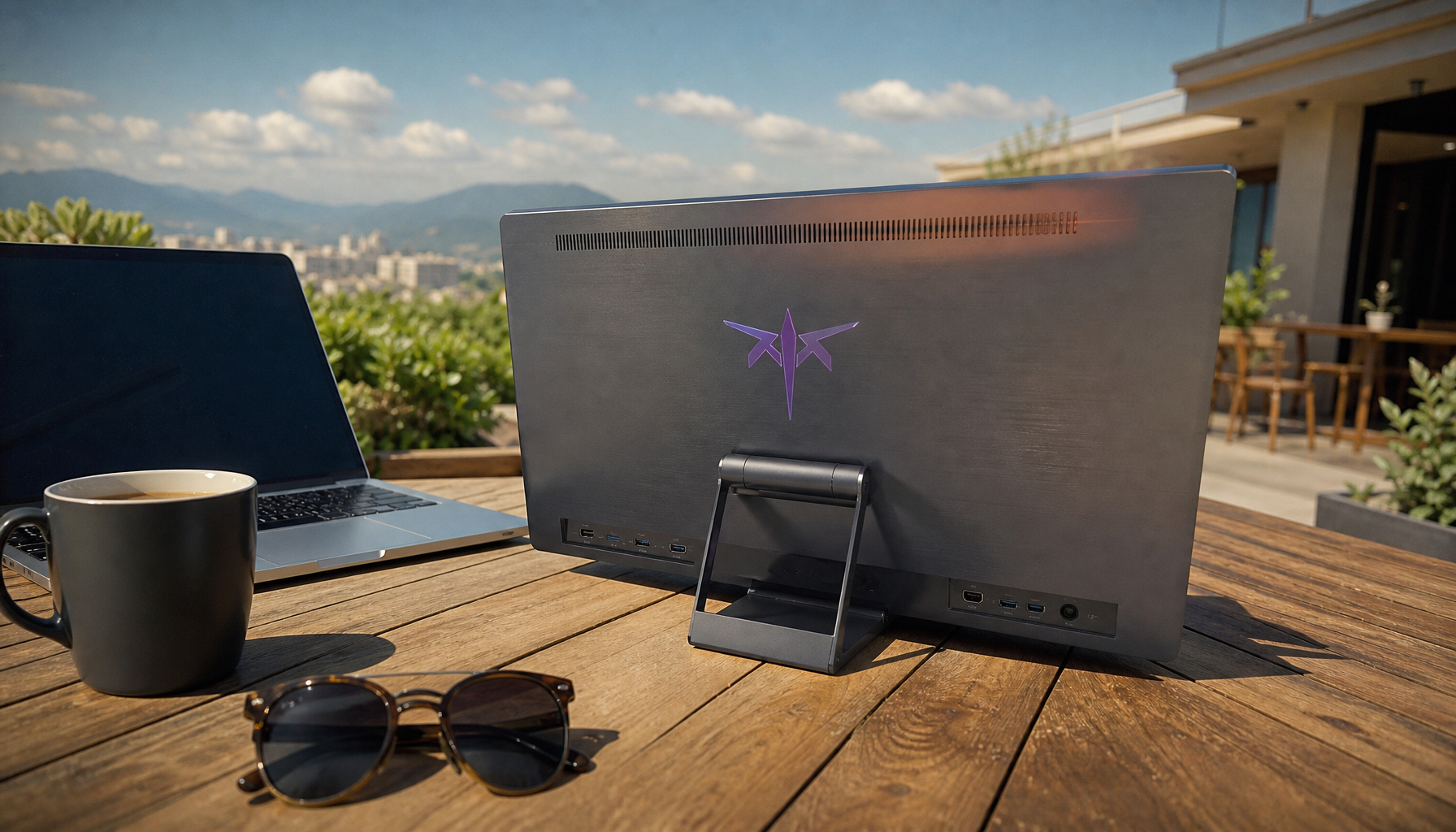
Usually, no. You can bring a portable monitor onboard, but during takeoff, landing, taxi, and safety briefings, expect to stow it like a laptop unless the cabin crew says otherwise.
The Short Rule: Bring It, but Don’t Set It Up Yet
A portable monitor is generally treated as a personal electronic device, not a prohibited item. The FAA’s battery guidance covers laptops, tablets, games, cameras, and similar portable electronic devices, so a travel display fits the same practical category.
Using it is different from packing it. During takeoff and landing, airlines want large electronics secured so they do not become loose objects, block movement, or distract passengers during required instructions.
Your second screen should stay inside your bag or flat in a seatback-safe position until cruising altitude, when the crew allows larger electronics.
Why Takeoff and Landing Are Treated Differently
Takeoff and landing are the highest-workload phases of a flight. Cabin crews need tray tables up, aisles clear, bags secured, and passengers ready to respond quickly.
A 15.6-inch portable display may feel slim, but once it is on a tray table with a laptop, cable, stand, and power bank, it becomes a small workstation. In turbulence or a hard brake, that setup can shift fast.

For productivity travelers, the smarter move is simple: use your laptop alone until the seatbelt sign and crew instructions make it clear that larger devices are allowed.
Battery, Cable, and Power Bank Rules Matter
If your portable monitor has no built-in battery and runs from USB-C, it is usually easier to travel with. If it has a lithium battery, follow battery rules closely.
The FAA recommends carrying lithium-battery devices in the cabin when possible, and spare lithium batteries must stay in carry-on baggage. If a device is checked, it should be fully powered off and protected from accidental activation or damage.
TSA may also ask travelers to power on electronics during screening, and devices that cannot power on may not be allowed onboard. Keep the monitor, USB-C cable, charger, and power bank accessible.
- Charge the monitor and laptop before security.
- Pack spare batteries and power banks in carry-on only.
- Protect battery terminals from short circuits.
- Keep cables coiled so they do not scratch the panel.
- Know the monitor’s watt-hour rating if it has a battery.
Best Setup for In-Flight Productivity
Once larger electronics are allowed, a portable monitor can be a strong travel upgrade. A 14- to 16-inch screen gives you a practical dual-display workspace for spreadsheets, code, briefs, dashboards, or creative review without committing to a bulky desktop monitor.

Use a compact USB-C monitor when possible. One cable for video and power reduces tray clutter and makes it faster to pack everything away when meal service, turbulence, or landing prep begins.
Avoid wide stands, loose HDMI adapters, and heavy battery bricks on the tray table. The best airplane setup is stable, low-profile, and easy to collapse in under 15 seconds.
Airline rules and crew instructions can vary, so the legal answer may be “allowed,” while the operational answer during takeoff and landing is still “stow it.”
How to Pack It So the Screen Survives
Carry-on is the better choice for most portable monitors. Checked bags face rough handling, stacking pressure, and temperature swings that are not friendly to thin glass panels.
For travel, use a padded sleeve or hard-shell tech case. If the monitor has a detachable stand, remove it so the hinge or mount does not press into the screen.

Pack it like fragile tech gear:
- Put a microfiber cloth over the screen.
- Keep chargers and adapters in a separate pouch.
- Place the display against a flat laptop compartment.
- Avoid packing heavy items against the panel.
- Keep it easy to remove for inspection.
Bottom line: bring your portable monitor, protect it like fragile glass, and save the dual-screen setup for the cruise portion of the flight.