Yes, but only if the portable touchscreen supports true pen input, pressure sensitivity, reliable drivers, and the right desktop connection. A basic finger-touch portable monitor can work for notes, markup, and simple sketching, but it will not feel like a real drawing tablet.
Trying to draw on a desktop with a mouse can make clean linework feel slow, stiff, and disconnected from your hand. A portable touchscreen can give you direct on-screen control for sketching, annotating, zooming, and brushing, but the real performance jump comes when the screen behaves like a pen display instead of a giant phone screen. Here is how to tell the difference, set it up correctly, and avoid buying the wrong display.
The Short Answer: Touchscreen Monitor vs Drawing Tablet
A portable touchscreen monitor is an external display that also accepts touch input. That means you can tap, swipe, pinch, annotate, and sometimes draw directly on the screen; touchscreen displays are often positioned as productivity and creative tools because they let you control software directly on the display with fingers or a stylus control software directly on the display.
A drawing tablet, however, is built around pen precision. The important distinction is not whether the screen reacts to touch. It is whether it has an active digitizer, pressure-sensitive stylus support, palm rejection, reliable calibration, and low enough latency for drawing. A drawing-focused touchscreen monitor is better understood as a pen display, while a generic touch monitor is usually designed for finger navigation, menus, presentations, and document markup generic touch monitor.
For a desktop PC, the practical answer is this: use a portable touchscreen monitor as a drawing tablet only if it supports active pen input. If the product page only says “10-point touch” and does not mention pressure levels, stylus protocol, tilt, drivers, or drawing-app compatibility, assume it is not meant for serious digital art.
What You Need for It to Work on a Desktop PC
A desktop setup needs three things to happen at the same time. The monitor must receive video from the PC, the PC must receive touch or pen data back from the monitor, and the display must have enough power. On newer hardware, one full-featured USB-C cable may handle video, data, and power, but only when the PC port supports DisplayPort over USB-C and the monitor can draw enough power through that connection; portable monitor buying guidance consistently treats USB-C DisplayPort Alt Mode as the cleanest option when compatibility is verified compatibility is verified.

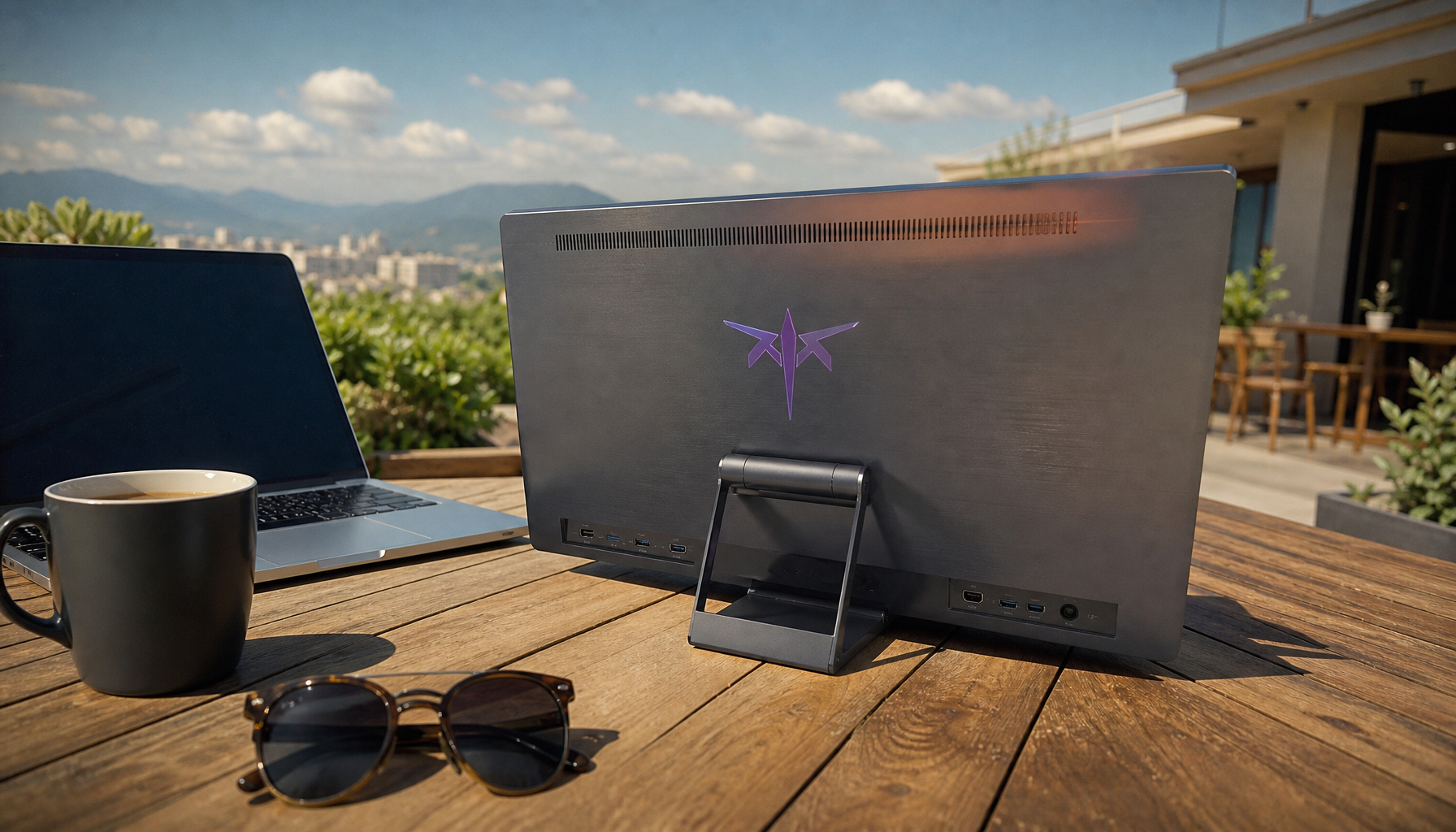
On many desktop PCs, the cleaner real-world setup is HDMI or DisplayPort for video, plus USB for touch data, plus a separate power cable if the portable screen needs it. This is normal. A touchscreen monitor is not sending pen strokes through HDMI. HDMI carries the picture; USB carries the input.
Before buying, check your graphics card outputs, motherboard USB-C capability, and monitor cable requirements. Some desktops have USB-C ports that transfer data but do not output video. Others have no front-facing USB-C at all. If the monitor uses mini-HDMI, make sure the cable can sit securely on your desk without bending at the connector. Port location matters more than spec-sheet glamour when the screen is lying flat or angled like a small drafting surface.
The Feature Checklist That Actually Matters

Pressure sensitivity is the first major separator. Many drawing displays advertise 4,096, 8,192, or even higher pressure levels, while basic touchscreens often have no real pressure sensitivity at all. For line weight, brush opacity, calligraphy, inking, and masking, pressure support is not a luxury; it is the control layer that makes a stylus feel like an art tool.
Palm rejection is the second separator. If your hand resting on the screen creates random marks, pans the canvas, or opens menus, the device will slow you down immediately. Modern pen displays treat stylus input and finger touch differently, using the pen for drawing and touch for gestures such as pinch, rotate, and pan. That is why touch is best seen as a workflow enhancer, not a replacement for the stylus itself touch for gestures.
Screen lamination is another overlooked factor. A fully laminated screen reduces the visual gap between the pen tip and the pixels, which makes the drawn line appear closer to the point of contact. If you have ever drawn on a cheap screen and felt like the cursor was floating under glass, that is the problem lamination tries to solve.
Color and panel quality also matter. For digital art, IPS panels are widely recommended because they keep color and contrast more consistent when your head angle changes. On a portable 14-inch to 16-inch display, 1080p can be usable, while 1440p or 1600p gives sharper UI and brush detail if scaling behaves well. For web illustration and general design, 100% sRGB is a sensible target. For print, photo, and video work, you will want stronger gamut coverage and calibration support.
Feature |
Good for casual markup |
Good for serious drawing |
Finger touch |
Yes |
Not enough by itself |
Active stylus |
Helpful |
Essential |
Pressure sensitivity |
Optional |
Essential |
Palm rejection |
Nice to have |
Essential |
Laminated screen |
Nice to have |
Strongly recommended |
IPS panel |
Recommended |
Strongly recommended |
Stable PC drivers |
Useful |
Essential |
Where a Portable Touchscreen Works Well
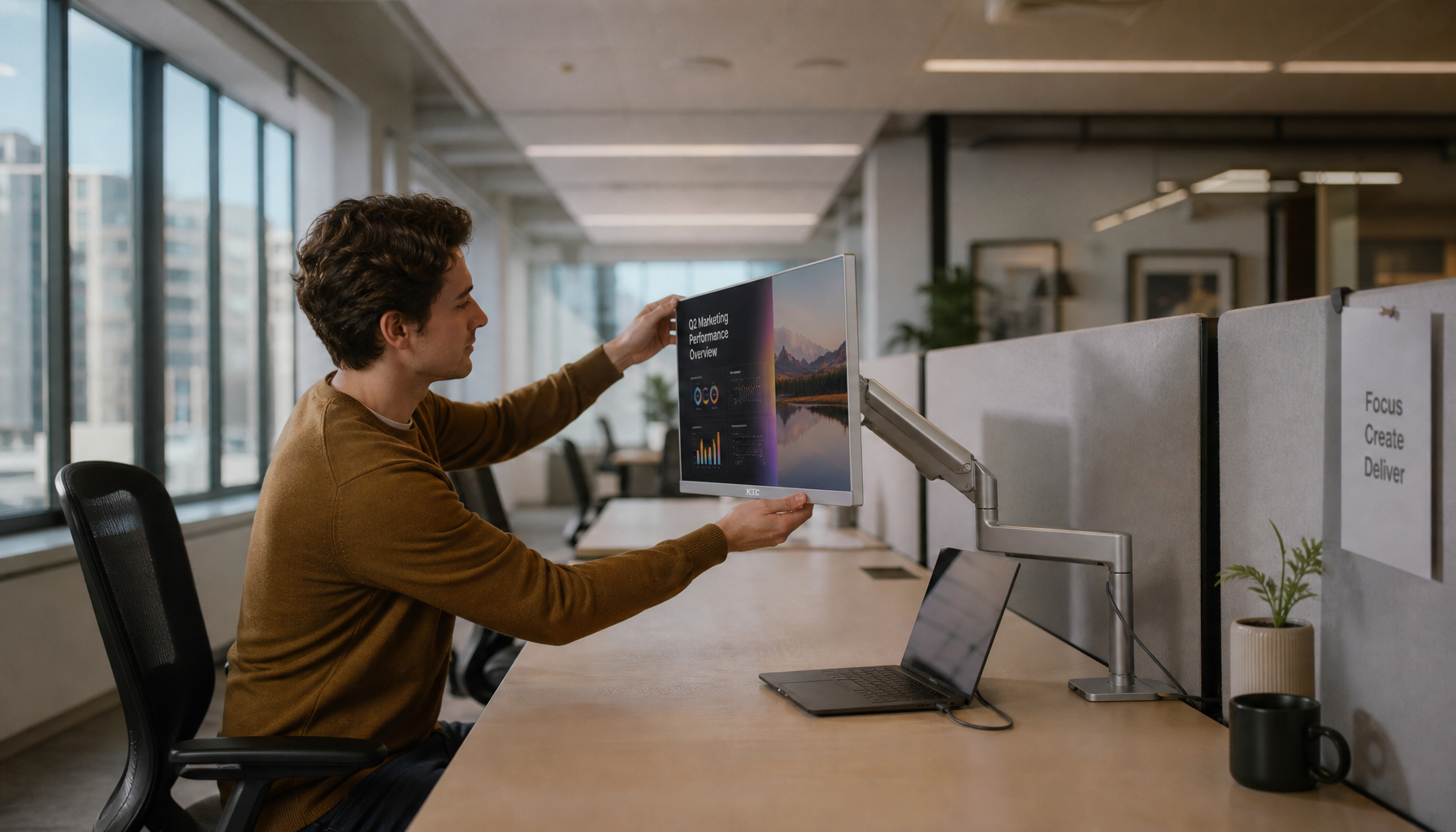
A portable touchscreen is excellent for markup-heavy desktop work. If you review PDFs, annotate screenshots, sketch wireframes, teach remotely, or mark up photos, the direct input can feel much faster than bouncing between mouse, keyboard, and screen. For office productivity, the value is immediate: drag a document to the portable display, angle it beside your keyboard, and use the stylus to circle changes, underline text, or sketch a layout while your main monitor stays dedicated to email, browser tabs, or reference material.

It also works well as a compact second screen for creative control panels. In creative software, touch can help with zooming, panning, masking, brushing, and quick edits. The benefit is not that touch beats a keyboard for every command. The benefit is that your eyes and hand stay on the canvas more often, which keeps the workflow more fluid.
For gaming-monitor users or high-refresh desktop setups, a portable drawing screen can be a smart companion rather than a replacement. Keep the fast 27-inch or 32-inch monitor for games, timelines, 3D previews, or full-canvas review, then use the portable touch display for brush input, notes, stream overlays, or control panels. That split is often more ergonomic than trying to make one screen do everything.
Where It Falls Short
A generic portable touchscreen monitor is usually disappointing for serious illustration. The main problems are lack of pressure sensitivity, weak palm rejection, visible input lag, edge inaccuracy, and limited stylus support. Community drawing-tablet advice is blunt on this point: standard touch monitors are generally not recommended as graphics tablets because they are built for finger input rather than precise, pressure-sensitive art control finger input.
Ergonomics can also become a problem. Drawing on a vertical monitor is hard on the shoulder after a short session. A portable screen needs a stable kickstand or stand angle that lets it sit low, tilted, and close to the keyboard. If the stand only supports an upright presentation angle, it may be fine for tapping buttons but poor for long drawing sessions.
Mapping can create another accuracy issue. If your desktop treats the portable display and main monitor as one extended workspace, the pen or touch area must map correctly to the drawing screen. Artists using external monitors with tablets often run into aspect-ratio mismatch, where a hand-drawn circle can appear stretched into an oval if the input area and display area do not correspond cleanly aspect-ratio mismatch. In tablet settings or the device driver, map the pen input specifically to the portable touchscreen, then test a circle, diagonal stroke, and corner targets before starting real work.
Buying Advice: Pick the Right Class of Device
If your goal is occasional annotation, office whiteboarding, signatures, and rough sketches, a portable touchscreen monitor with a decent stylus can be enough. Look for 14 inches to 16 inches, IPS, at least 1080p, USB-C plus HDMI flexibility, a stable kickstand, and touch support on your desktop operating system. A compact model with 4,096 pressure levels can be a useful bridge between productivity display and light creative tablet.
If your goal is digital painting, line art, comics, animation, photo retouching, or paid design work, buy a pen display instead. The strongest value range is usually the midrange drawing-display category, where you can get a laminated screen, reliable stylus, strong sRGB coverage, and mature drivers without jumping into premium studio pricing. Drawing-focused buying guidance commonly points users away from finger-only touch monitors and toward active-pen displays for real creative work.
If you already own a tablet with a good stylus, software can turn it into a desktop drawing screen. One common approach lets a tablet act as a mirrored or extended display for a desktop computer, with stylus input for creative apps mirrored or extended display. That route can be a smart trial before investing in dedicated hardware, especially if your desktop PC already has the performance you need.
Setup Tips for Better Drawing Feel
After connecting the display, set your desktop to extend the workspace rather than duplicate it if you want the portable screen to act as a separate canvas. Then open the tablet or monitor driver and assign pen input to the portable display only. If strokes appear on the wrong monitor, run the operating system’s tablet calibration or the manufacturer’s mapping utility.

Next, tune pressure sensitivity inside both the driver and the drawing app. A light-handed illustrator may need a softer curve so thin strokes appear without pressing hard. A heavy-handed retoucher may prefer a firmer curve to avoid accidental thick strokes. Do a quick test page with hairlines, heavy lines, soft shading, and fast curves before judging the device.
Finally, treat the portable screen like a performance surface. Lower it to a comfortable angle, keep the main monitor directly ahead for reference, and put shortcuts where your non-drawing hand can reach them. If the touchscreen supports gestures, reserve them for canvas navigation and keep drawing to the pen. That balance gives you the most control with the least friction.
FAQ
Can I use any stylus on a portable touchscreen monitor?
No. Many touchscreens only support finger input or simple capacitive styluses, which behave more like a fingertip than a pen. For drawing, you need the specific active stylus technology supported by the monitor.
Is 10-point touch the same as pressure sensitivity?
No. 10-point touch means the screen can detect multiple fingers at once. Pressure sensitivity means the pen can vary line weight or brush behavior based on how hard you press.
Is a portable touchscreen better than a screenless drawing tablet?
It depends on your workflow. A portable touchscreen or pen display feels more direct because you draw where you look. A screenless tablet is often cheaper, more ergonomic for long sessions, and may offer better pen performance at the same price once you adapt to the hand-eye separation.
Should I buy 4K for a small portable drawing screen?
Usually not as a first priority. On screens under roughly 16 inches, 4K can make interface scaling awkward in some creative apps. Pen quality, lamination, color coverage, brightness, stand stability, and driver support matter more.
Final Verdict
A portable touchscreen monitor can serve as a drawing tablet for your desktop PC when it has active pen support, pressure sensitivity, palm rejection, and reliable PC drivers. For markup, productivity, and light sketching, a good touch portable display is a flexible upgrade; for serious art, choose a true pen display and let the portable format support your workflow instead of limiting it.