Keep the room bright while moving the reflection path away from your eyes: set the screen slightly below eye level, adjust tilt until ceiling lights stop appearing on the panel, and use side-biased ambient light instead of light aimed at the display.
Does your monitor look clean until a ceiling panel, pendant lamp, or bright office fixture lands in the middle of your spreadsheet, game HUD, or editing timeline? A simple screen-off reflection check can reveal the light source causing the problem, then a few inches of height, tilt, and swivel adjustment can make text and motion look cleaner without turning the room into a cave. This method works for bright offices, gaming rooms, and portable screens where visibility matters all day.
Why Overhead Lighting Creates Monitor Reflections
Glare is unwanted brightness or reflection that disrupts screen visibility, and it often comes from overhead lighting, nearby reflective surfaces, glossy display finishes, or poor screen positioning. The practical issue is not simply that the room is bright; it is that a bright source is bouncing off the display surface toward your eyes, lowering contrast and making the panel harder to read.
A glossy monitor behaves more like a mirror, while a matte or anti-glare surface diffuses light into a softer reflection. That diffusion can help in bright rooms, but it may also slightly soften perceived sharpness or contrast. For competitive gaming, design work, or dense office dashboards, the best first move is physical positioning because it protects clarity before adding filters, coatings, or brightness compromises.
Start With the Screen-Off Reflection Test

Before changing your whole desk, turn the monitor off and look at the black screen from your normal seated position. If you can see a ceiling fixture, white ceiling panel, bright lamp, window, or even a pale shirt reflected in the display, that object is part of your glare chain. Reflections are often easier to identify on a dark screen than when bright content is masking them.
Make one adjustment at a time. Raise or lower the monitor by 1 to 2 inches, tilt it a few degrees, then swivel it slightly left or right. The goal is not to hide every reflection from every angle; it is to move the brightest reflection outside your normal viewing zone so your eyes are not competing with the light source during work or play.
Set Height for Comfort First, Then Tune for Reflection
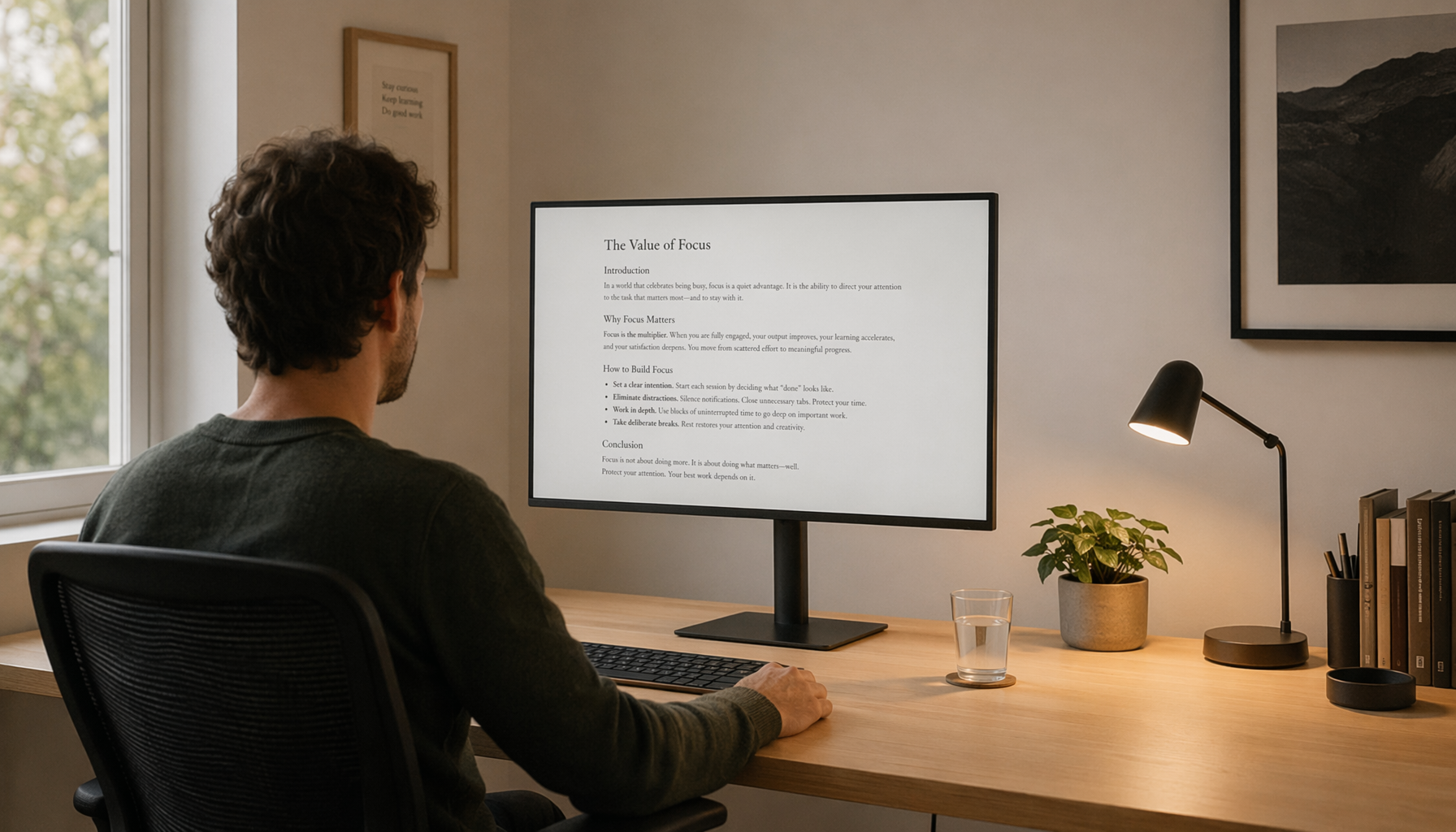
A monitor that is too high can make you tilt your head back, and OSHA notes that a monitor positioned too high can strain back muscles. For most users, the top edge of the screen should sit at or slightly below eye level, with the main viewing area a little below your horizontal line of sight. That posture keeps the neck more neutral and gives you room to tilt the display without forcing an awkward head position.
Here is the practical version: sit back in your chair, keep your feet planted, and look straight ahead. Your eyes should land near the top third of the screen, not above the monitor and not down at the keyboard deck. If you use a 32-inch or ultrawide display, move it farther back so you can scan the full width without constant head turns. A distance of about 20 to 30 inches works for many desks, but larger panels often feel better slightly farther away.
Use Tilt to Redirect the Ceiling Reflection

Screen tilt is the fastest non-dimming fix for overhead glare. If a ceiling light appears near the center of the screen, the panel angle is sending that reflection directly into your eyes. A slight downward tilt can push reflections lower, while a modest backward tilt can improve viewing comfort on some ergonomic setups. The right adjustment depends on your light position, screen height, and panel finish.
The monitor position should support a relaxed downward gaze, with the center of the screen below horizontal eye level. In real use, that means you should adjust tilt only after height is close to correct. If you tilt aggressively to dodge glare, you may trade eye strain for neck strain. A better setup is usually a small height correction, a small tilt correction, and a slight swivel rather than one extreme angle.
For example, if your ceiling light is directly above and slightly behind you, tilting the display a few degrees downward often moves the reflected light below your main content area. If the light is above and in front of the desk, a slight backward tilt may work better. The screen-off test will show which direction works.
Rotate the Monitor, Not the Room

When glare comes from overhead lighting, users often think only in vertical angles. Swivel matters too. Even a 20- to 30-degree turn can move a bright reflection away from your eyes while keeping the room fully lit. This is especially useful for fixed office desks, apartments, dorm setups, and shared workstations where you cannot relocate the ceiling fixture.
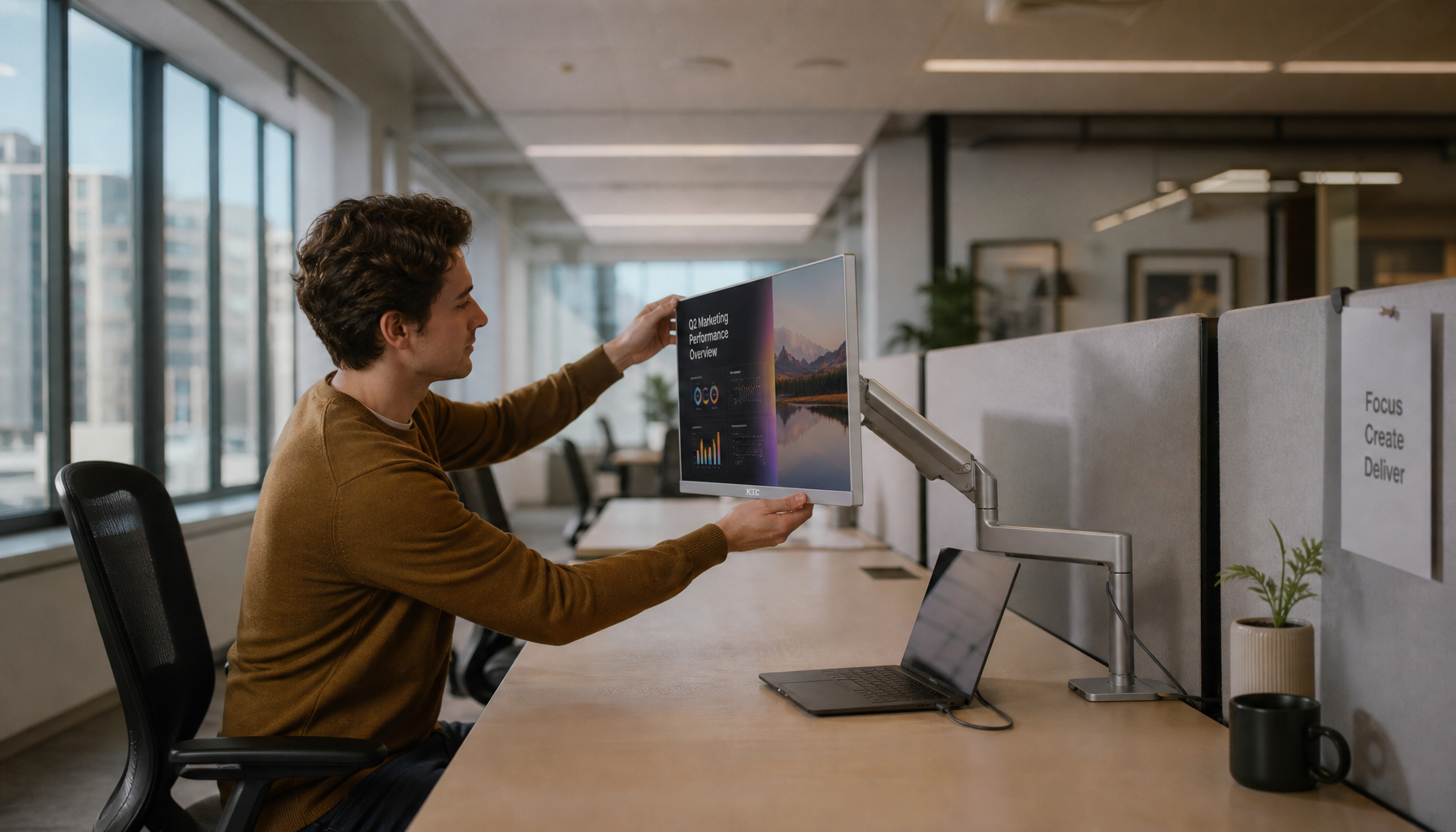
For window glare, the common rule is to place the display at a right angle to the window, and that same thinking helps with overhead fixtures. Keep the brightest light source out of the direct reflection path between the screen and your eyes. If your desk sits under a row of ceiling lights, try shifting the monitor slightly left or right on the desk, then swivel it back toward your seated position. A monitor arm makes this much easier because height, depth, tilt, and swivel can change together.
Keep the Room Bright With Indirect Light

You do not need a dim room; you need controlled light direction. Ambient lighting should be indirect or diffused because adjustable task lighting and shaded lamps can reduce direct reflections while keeping the workspace bright enough for paper notes, keyboards, and video calls. The best room lighting fills the space without pointing straight at the screen.
A strong setup for office productivity is an overhead light that brightens the room, plus a shaded desk lamp aimed at the desk surface rather than the monitor. For gaming, a soft bias light behind the monitor reduces the contrast between a bright panel and a dark wall, which can make long sessions feel easier on the eyes. For portable screens, place the device so ceiling lights reflect toward the desk or wall, not toward your face, then raise it on a stand instead of laying it flat under the fixture.
When Anti-Glare Filters Help, and When They Cost Too Much
Anti-glare filters and matte screen protectors can reduce stubborn reflections by diffusing light. They are useful in bright offices, public workstations, classrooms, trade shows, and portable screen setups where you cannot control the lighting. Some products are designed specifically to reduce glare from overhead lights, windows, and sunlight.
The trade-off is optical performance. Anti-glare surfaces can make text and images look slightly softer, and some matte layers can add a faint sparkle on bright backgrounds. For esports, photo editing, color grading, or high-density text work, try placement, tilt, and room-light direction before adding a filter. For admin work, coding, spreadsheets, dashboards, and travel screens, the comfort gain may be worth the small clarity trade-off.
Option |
Best Use |
Main Benefit |
Main Trade-Off |
Monitor arm |
Changing glare throughout the day |
Fast height, tilt, swivel, and depth control |
Adds cost and requires desk compatibility |
Matte or anti-glare filter |
Fixed lighting you cannot change |
Softens harsh reflections |
May reduce crispness or color punch |
Bias light |
Evening work or gaming |
Lowers contrast between screen and room |
Does not fix direct ceiling reflections |
Bright room without screen glare |
Adds usable light where needed |
Must be aimed away from the panel |
Special Cases: Dual Monitors, Ultrawides, and Portable Screens
Dual monitors need a primary-screen strategy. If one display carries most of your work or game, center that screen directly in front of you and angle the secondary display inward. If both displays are used equally, place their inner edges together in front of you and angle both slightly inward so the reflected ceiling light does not land symmetrically across both panels.
Ultrawide monitors need more distance. A 34-inch curved display can feel immersive and efficient, but if it sits too close, you may chase reflections across the panel and rotate your neck more than necessary. Move it back until you can see the full width comfortably, then fine-tune tilt. Curved panels can reduce some side reflections, but they can also catch overhead light differently across the curve, so the screen-off test remains essential.
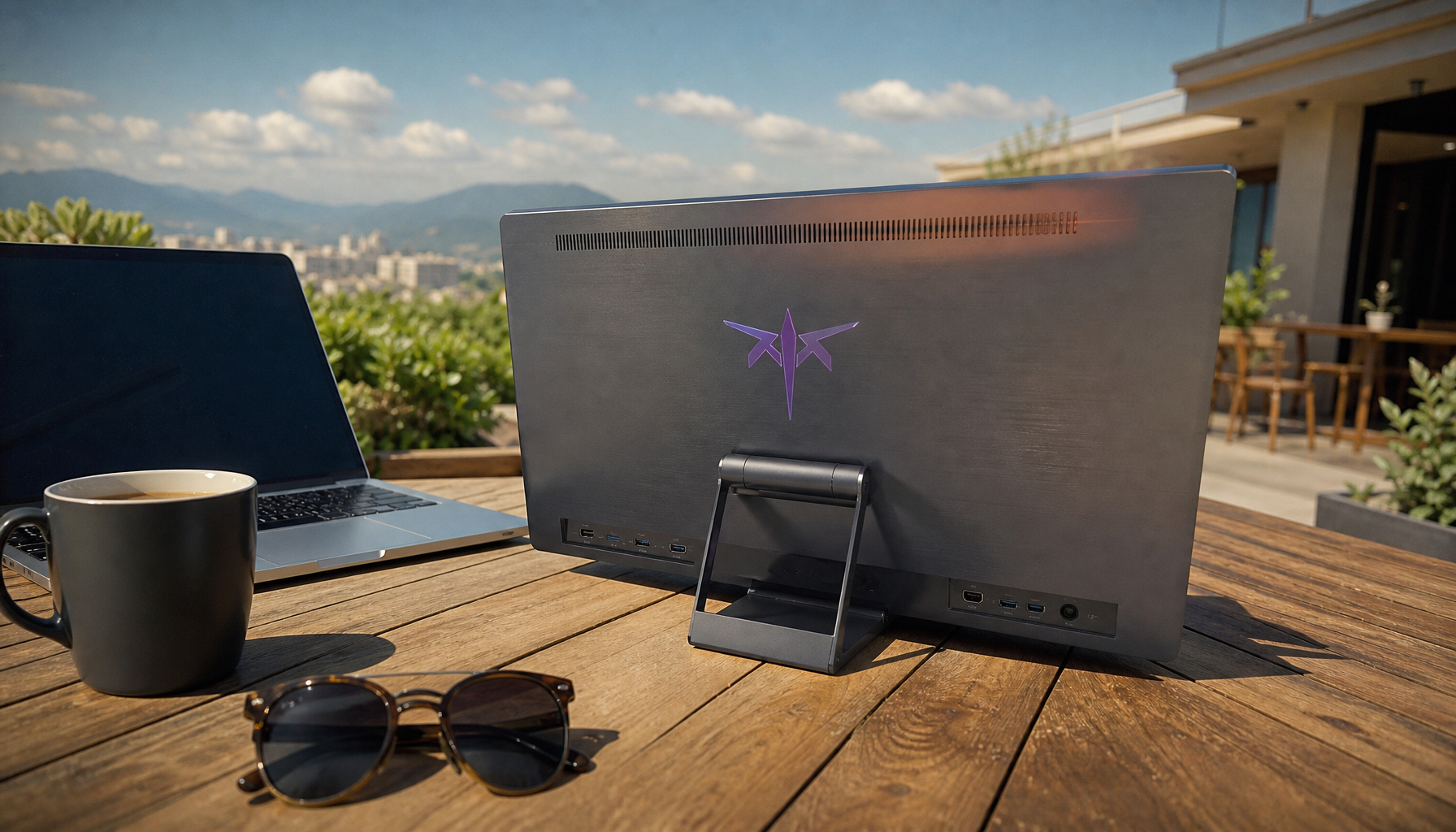
Portable screens are more sensitive to angle because they are often lower, glossier, and closer to the user. Avoid using them flat on the desk under ceiling lights. Raise the screen on a stand so the top edge is near eye level, tilt it until the ceiling reflection drops out of the viewing area, and use an external keyboard if needed so your posture does not collapse around the device.
Brightness Is a Support Tool, Not the Fix
Increasing brightness can improve readability against external light, but it does not remove the reflection. It can also make the screen feel harsher during long sessions. A better target is balance: match screen brightness to the room after you have moved the reflection path away from your eyes.
If text still feels weak after positioning, increase text size or scaling before pulling the monitor too close. Sitting too close can encourage eye fatigue, while sitting too far away can cause squinting and forward leaning. The display should be close enough for clean detail and far enough that your shoulders, neck, and eyes stay relaxed.
Quick FAQ
Should the monitor face away from overhead lights?
Not exactly. It should be angled so overhead lights do not reflect into your eyes from your normal seated position. A few degrees of tilt or swivel is often more effective than moving the whole desk.
Is matte always better than glossy?
Matte is usually better in bright or uncontrolled lighting because it diffuses reflections. Glossy can look sharper and more vibrant in controlled lighting, but it is less forgiving under ceiling fixtures.
Can I solve glare with blue light glasses?
Blue light glasses are not primarily glare-control tools. They may improve comfort for some users, but they do not change the physical reflection coming off the screen.
Final Positioning Check
A strong monitor setup should let the room stay bright while the screen stays visually calm. Turn the screen off, find the reflected ceiling light, then adjust height, tilt, swivel, and distance until that reflection leaves your main viewing area. When the panel is positioned correctly, you get cleaner contrast, steadier focus, and a workspace that feels brighter without fighting your display.