Mouse jumps after switching computers usually come from mismatched display layout, resolution, scaling, or KVM/input behavior. Fix the problem by matching each computer’s monitor arrangement to the physical desk, using native resolution and consistent scaling, then checking how your KVM, dock, or monitor input handles USB devices.
Does your cursor land on the wrong screen edge the moment you switch from your work laptop to your gaming PC? A correctly mapped display layout can make the pointer cross screens predictably, preserve muscle memory, and reduce the small resets that slow down work and play. This setup path gets your mouse behaving like the desk in front of you.
Why Your Mouse Jumps After Switching Computers

When you move a mouse across multiple displays, the operating system is not thinking in inches across your desk. It is moving through a virtual desktop made of screen rectangles. If those rectangles do not match the physical order, height, resolution, or scaling of your monitors, the cursor can jump, stall, or reappear at an unexpected edge.
This is especially common on hybrid desks where one monitor serves two machines. Your work laptop may see the ultrawide as display 2 on the right, while your desktop PC sees the same monitor as display 1 above a secondary screen. After a switch, the video signal changes, but your hand still expects the old map. In extended desktop mode, the operating system combines displays into one larger workspace, so dragging monitor icons to match the desk is not cosmetic; it defines where the mouse can travel.
The good news is that this problem is usually configuration, not a broken mouse. A strong display setup treats video, USB control, resolution, and ergonomics as one system.
Start With the Physical Desk, Not the Settings Menu

Before changing software, look at the actual monitor geometry. Are both screens level at the top? Is the secondary display slightly higher because of a stand? Is a laptop screen sitting lower than the main monitor? The cursor crosses from one display rectangle to another based on their virtual alignment, so a monitor that is physically lower but configured as perfectly level can make the pointer feel wrong.
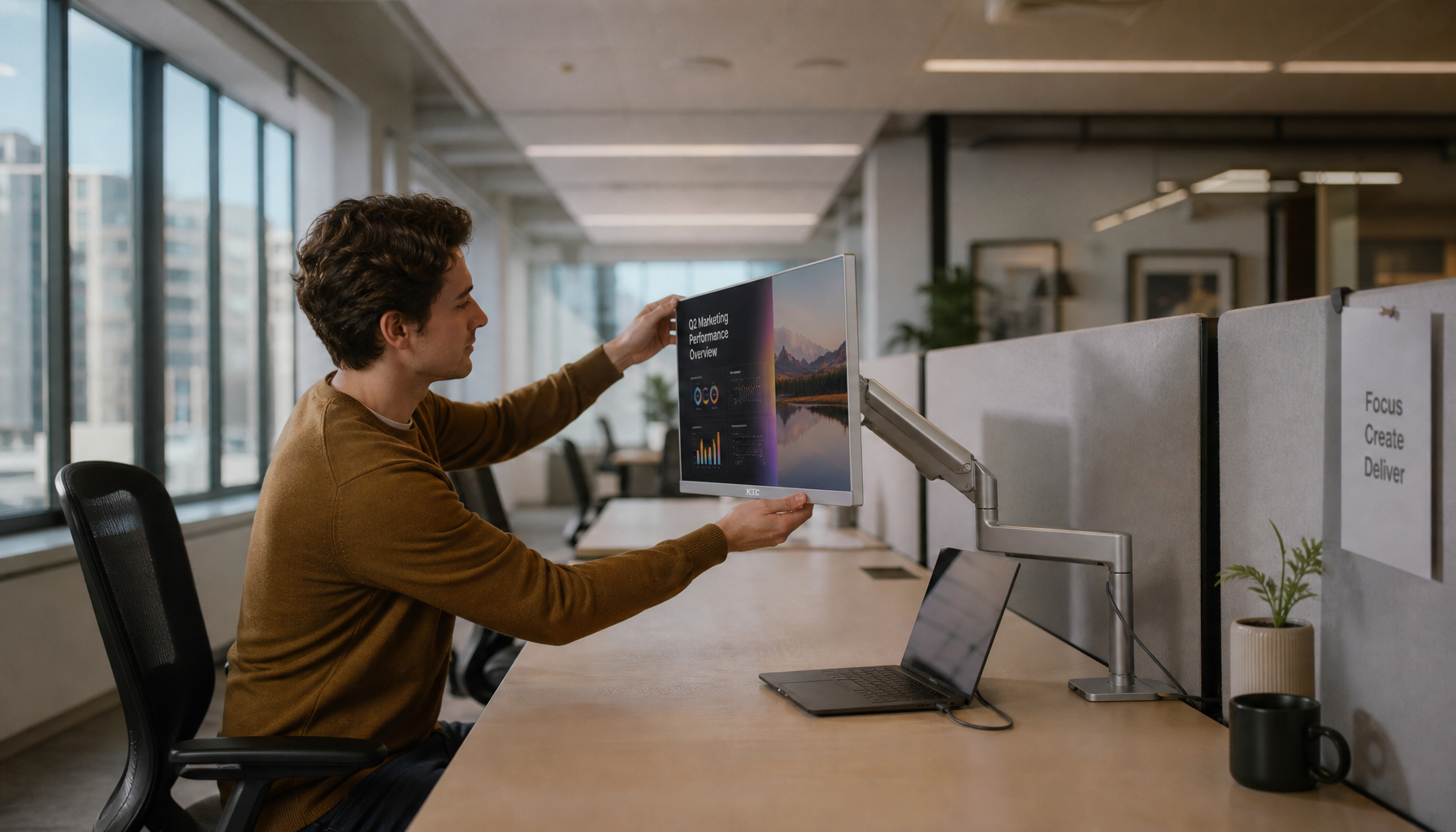
For equal-use dual monitors, put the inner edges together and angle both displays slightly inward. For a primary-secondary setup, keep the main screen directly in front of the keyboard and place the secondary screen to the side. That physical choice matters because an unbalanced dual monitor setup is often caused by mismatched height, workflow roles, brightness, resolution, scaling, refresh rate, or operating-system arrangement.
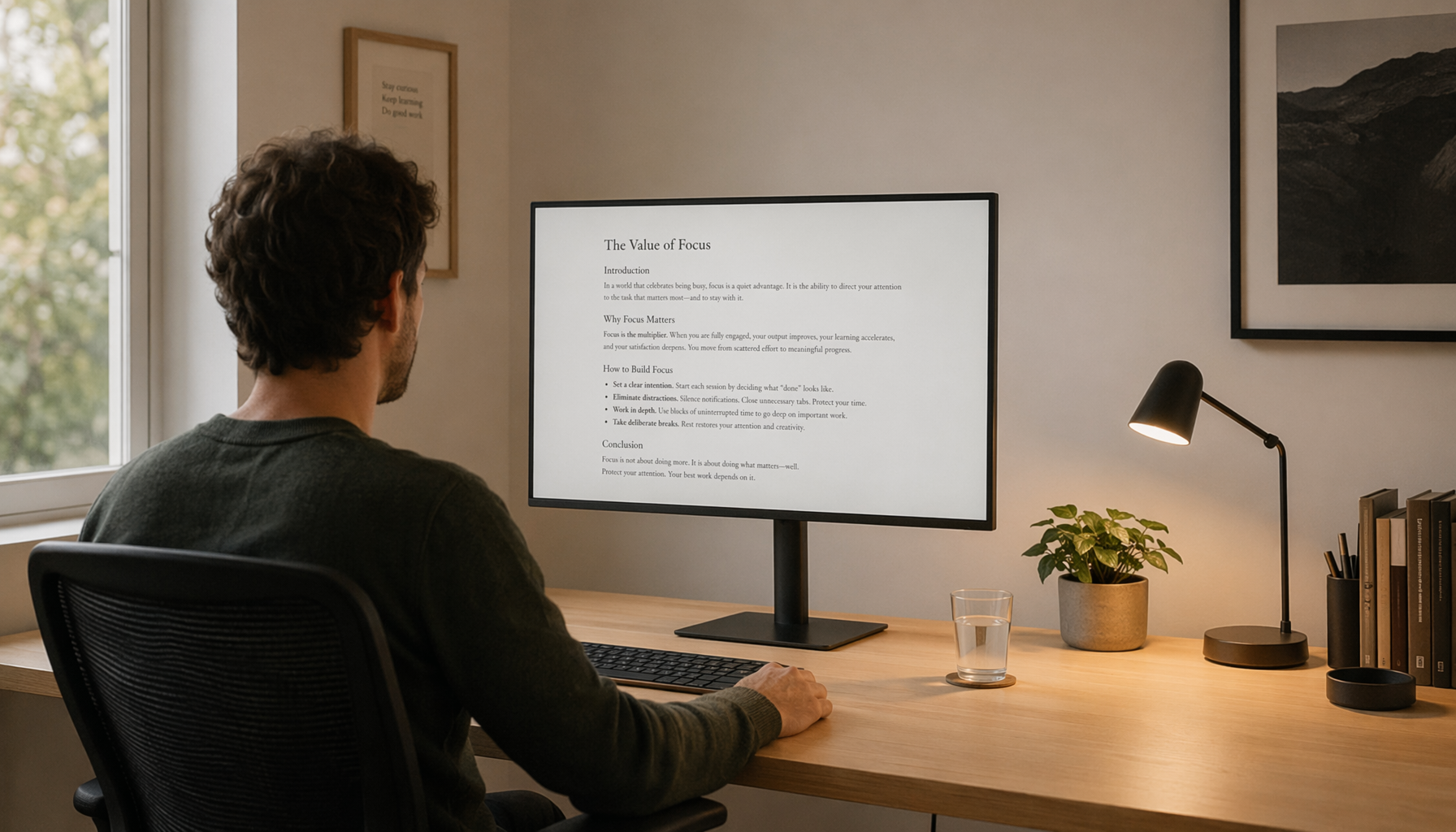
A simple real-world test is to sit normally, close your eyes, relax your shoulders, then open your eyes. Your gaze should land on the screen area where your most important work happens. If it lands between displays or on a bezel, your body is already compensating, and your mouse behavior will feel less natural after every computer switch.
Match Display Arrangement on Every Computer

The most important fix is simple: configure each computer so the virtual display layout matches the real desk. Open your display settings, choose the option that identifies each screen, and drag the numbered screens into the same left-right and up-down positions as the physical monitors.
If your laptop sits to the left of a 27-inch monitor, its rectangle should sit to the left in display settings. If the laptop screen is lower, lower its rectangle slightly until the shared edge matches where your cursor naturally crosses. Incorrect display arrangement is a common reason a cursor only moves between screens at unexpected edges, and the fix is to reposition the display boxes and apply the change.
Do this separately on each computer. Your gaming PC, work laptop, mini PC, and docking-station profile may each store their own arrangement. If you only fix one machine, the mouse will feel correct until you switch inputs, then wrong again.
Symptom |
Likely Cause |
Best Fix |
Cursor exits left but appears on the right monitor |
Displays reversed in operating-system settings |
Drag display rectangles into physical order |
Cursor gets stuck at part of the edge |
Monitor heights do not align virtually |
Adjust vertical rectangle alignment |
Cursor jumps too far on one screen |
Resolution or scaling mismatch |
Use native resolution and tune scaling |
Mouse follows old computer after video switch |
KVM or USB path did not switch |
Check monitor KVM, USB upstream, or external KVM settings |
Use Native Resolution and Sensible Scaling
Resolution and scaling shape how your cursor feels. A 4K display beside a 1080p display creates a much larger pixel surface on one side, even if both monitors are similar physical size. That can make the pointer seem to accelerate, shrink its crossing target, or appear higher or lower than expected.
Set each display to its native resolution first. If both monitors support the same resolution and size, matching them gives the cleanest experience. If they do not match, assign clear roles. For example, use a 27-inch 1440p monitor as the main reading or gaming display and a 24-inch 1080p screen for chat, dashboards, music, or reference windows. The setup remains efficient because the visual job of each display is predictable.
Mouse sensitivity can add another layer. DPI means dots per inch, and higher DPI makes the cursor move farther with less hand movement. Polling rate is different; it affects how often the mouse reports movement, which influences responsiveness rather than basic pointer distance. For competitive gaming, keep your mouse DPI and in-game sensitivity consistent on the gaming PC, then tune office pointer speed separately so switching machines does not wreck precision.
Check Your KVM, Dock, and Monitor Inputs

If you use one keyboard and mouse with two computers, the switching hardware matters. A built-in KVM lets the keyboard and mouse follow the active input, preventing the common failure where the monitor changes input but the peripherals remain attached to the other computer. In a hybrid desk, a display with built-in KVM or input-specific presets can reduce daily reconfiguration and keep the desk more predictable.
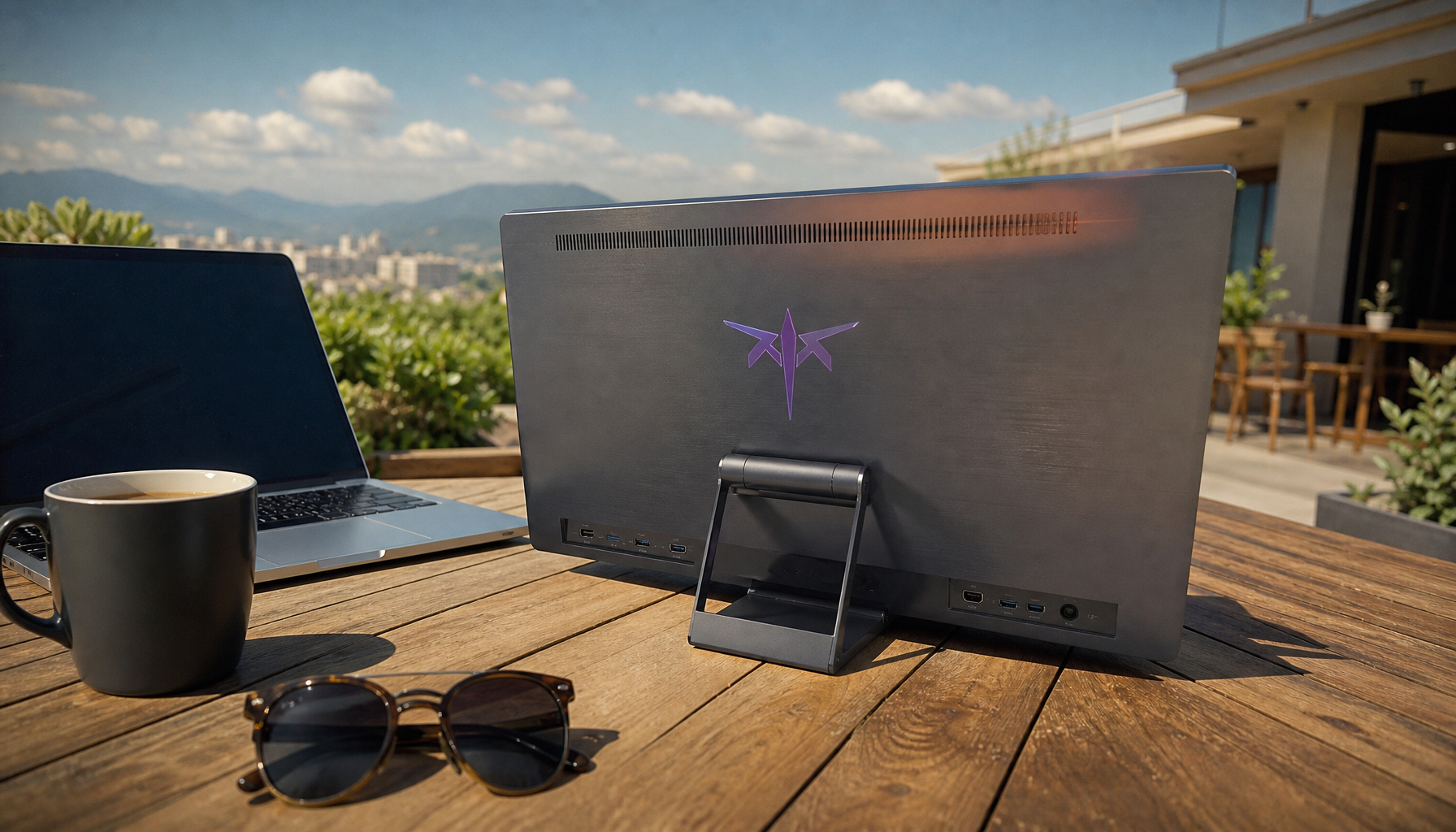
The cleanest setup is usually one full-featured USB-C connection for the laptop and a dedicated DisplayPort or HDMI connection for the desktop PC, with the monitor’s USB upstream ports assigned correctly. If your monitor has two upstream USB ports, confirm that USB-C maps to the laptop input and USB-B maps to the desktop input. If that mapping is wrong, the video may switch while the mouse does not.
External KVMs can also introduce quirks. Some emulate a mouse continuously so each computer thinks the device is still connected; others disconnect and reconnect USB on every switch. The first style can preserve layouts more smoothly, while the second may trigger a brief delay or reset. Neither is automatically bad, but the behavior should match your tolerance for switching speed and device compatibility.
Avoid Cable and Dock Bottlenecks That Reset the Desktop
A mouse jump can start with video renegotiation. When a monitor input switches, the computer may briefly lose the display, rediscover it, and rebuild the desktop. That is when windows move, taskbars shift, and the cursor can land somewhere unexpected.
Use the highest-quality connection your setup supports. HDMI, DisplayPort, USB-C, docking stations, and DisplayPort MST can all work, but every link has bandwidth limits. Multi-monitor setups should begin with a hardware check covering video output ports, monitor input ports, adapters, and dock capability because connection options determine whether the system can hold the resolution and refresh rate you expect.
For a performance display, the practical example is straightforward. If your desktop drives a 1440p high-refresh gaming monitor through DisplayPort but your laptop dock only supports that screen at a lower refresh rate, each switch may force a different display mode. Set each computer to a stable native resolution, choose a refresh rate the connection reliably supports, and avoid questionable adapters when the monitor is part of your daily control surface.
Decide Whether You Need Hardware or Software Switching
There are two broad ways to share a mouse between computers. Hardware switching uses a KVM, monitor KVM, USB switch, or dock. Software switching uses a network-based tool that lets the cursor move from one computer to another as if both belonged to one desktop.
Hardware switching is more reliable for locked-down work laptops, startup screens, gaming PCs, and situations where IT policies block software installation. It also avoids depending on Wi-Fi or office network permissions. The downside is that cheaper KVMs may add switching delays, lose USB state, or limit high-refresh display support.
Software switching can feel elegant when both computers stay on the same network and the app is approved on both machines. The downside is that it usually will not help before login, during boot, or on a restricted corporate laptop. Validate the actual tool in your environment before building the desk around it.
A Practical Fix Sequence That Works
Start with the main computer and set the monitor layout to match the desk. Then repeat the same process on the second computer. Use native resolution on each display, set scaling so text is readable without changing posture, and confirm the primary display is the one directly in front of your keyboard.
Next, test the edges. Move the cursor slowly across the left, right, and top or bottom boundaries where screens meet. If it catches at the bezel, slightly adjust the vertical alignment of the display rectangles. If it crosses but lands too high or too low, the virtual height does not match the physical height. If it feels too fast only on one monitor, scaling and resolution mismatch are the likely culprits.
Finally, switch computers three or four times and watch what changes. If the mouse position is consistent but windows move, the display is being redetected. If the video switches but the mouse controls the old computer, the USB path is wrong. If both video and USB switch correctly but the pointer still feels off, tune DPI, pointer speed, and per-computer scaling.
FAQ
Why does my cursor not cross at the full edge between monitors?
The display rectangles are probably misaligned. If one virtual monitor sits slightly higher than the other, only the overlapping part of the edge will allow cursor travel. Adjust the vertical placement in display settings until the crossing point matches the physical monitor edges.
Will matching monitor sizes fix mouse jumping?
It can help, but it is not required. Matching size, resolution, refresh rate, and scaling usually matters more than the logo on the bezel. Identical monitors simply make those variables easier to control.
Is a built-in monitor KVM better than an external KVM?
A built-in KVM is cleaner when your monitor already has the right video inputs, USB upstream ports, and laptop charging. An external KVM is better when you need broader device compatibility, more ports, or a setup that works across monitors without replacing the display.
Should I use duplicate mode or extend mode?
Use extend mode for productivity, gaming support screens, coding, editing, and dashboards because it creates one larger workspace. Duplicate mode is useful for presentations or troubleshooting, but it will not solve a multi-screen pointer workflow because both displays show the same desktop.
A precise mouse handoff is not a luxury feature; it is the foundation of a fast multi-computer desk. Match the virtual layout to the physical screens, stabilize resolution and scaling, and make sure your KVM switches USB as deliberately as it switches video. Once those pieces line up, the cursor stops feeling random and starts feeling like part of the display system.