Secure wireless display connections by hardening the wireless path, requiring explicit pairing, using modern encryption, disabling unused radios, and separating guest or presentation devices from sensitive networks.
Ever had a conference room screen suddenly show the wrong laptop, or watched a smart display keep accepting connection prompts after the meeting ended? A properly locked-down setup can prevent unauthorized casting, reduce sniffing exposure, and keep presentation traffic away from private files and internal systems. Here is a practical configuration path for safer screen mirroring at home, in offices, and on the road.
Why Wireless Display Security Matters
Wireless display feels simple: your laptop, tablet, or phone sends video to a monitor, projector, TV, or adapter without HDMI. Underneath, it still depends on wireless radios, device discovery, pairing, and network behavior. That makes it convenient, but it also creates a larger attack surface than a cable.
The core risk is not that a wireless display automatically copies every file from your computer. In normal screen projection, the receiver displays the content you send. The larger concerns are unauthorized access to the receiver, interception of traffic on weak wireless networks, malicious lookalike access points, exposed device settings, and risky behavior such as leaving Bluetooth, Wi-Fi, or NFC active in public spaces. CISA warns that unsecured wireless networks can allow unauthorized use, traffic monitoring, file theft, and other abuse.
For display users, the practical takeaway is direct: if your gaming monitor, office display, wireless HDMI receiver, smart screen, or meeting-room projector accepts connections too easily, anyone nearby may be able to interrupt the session, observe content, or route you through an unsafe network.
Know the Connection You Are Securing
Wireless display setups usually fall into three common patterns. Direct projection creates a wireless link between a device and a compatible screen or adapter. Network-based casting often relies on the local Wi-Fi network. Commercial wireless presentation systems may add PINs, device management, certificates, or separate guest networks.
Each pattern needs a slightly different security posture. A direct display link needs strict pairing and receiver approval. A Wi-Fi-based casting path needs strong router security. A business presentation system needs identity controls, segmentation, and centralized settings so one poorly configured room does not become the weak point.
Setup Type |
Main Benefit |
Main Security Concern |
Best First Control |
Direct wireless display |
Low cable clutter and fast screen sharing |
Nearby unauthorized pairing |
|
Wi-Fi casting |
Easy multi-device sharing |
Weak home or office Wi-Fi |
WPA3 or WPA2 with a strong password |
Guest presentation system |
Flexible meeting-room use |
Guest access reaching internal systems |
Separate guest network or VLAN |
Public display use |
Convenience while traveling |
Rogue hotspots and sniffing |
Use a hotspot or VPN; avoid sensitive work |
Lock Down Pairing and Receiver Access
The first control is simple: never leave a receiver in open-accept mode. Require a PIN, confirmation prompt, or physical approval on the display before a new device can connect. This matters in offices, classrooms, hotels, shared apartments, esports lounges, and trade-show booths where many devices are within range.

If your display or adapter supports “always ask,” “require PIN,” or “first-time pairing only with code,” enable it. Projection environments often include options for requiring a PIN, controlling which devices can project, and deciding whether the projecting device can send input back to the receiver. That last setting matters: allowing keyboard or mouse input from a projected session can be useful for collaboration, but it should not be enabled casually on shared receivers.
Treat every display receiver like a door to the screen. In a private home office, a remembered laptop may be acceptable. In a conference room, every session should require visible approval so a nearby visitor cannot take over the screen during a product demo or financial review.
Harden the Wi-Fi Network Behind the Display
If the casting path touches your Wi-Fi network, router security becomes display security. Use WPA3 when all important devices support it, or WPA2 where compatibility requires it. Avoid WEP and open networks entirely. Home wireless guidance recommends modern routers, strong encryption, unique network names, and replacing older routers that no longer keep up with current security and performance needs.
Change the router administrator password, not just the Wi-Fi password. These are different credentials. The admin password controls the router settings; the Wi-Fi password controls who joins the wireless network. If both are weak or reused, an attacker who gets network access may also be able to change DNS, lower encryption, or add unsafe forwarding rules.
Router firmware also matters. Security patches close vulnerabilities that may not be visible from the display side. A high-refresh gaming monitor or portable smart screen can only perform as securely as the network feeding it. For a home studio, a practical setup is a modern router using WPA3, a long unique Wi-Fi passphrase, and automatic firmware updates where available.
Separate Guest Casting From Private Devices
Wireless display is often used socially: clients present slides, friends cast videos, contractors join a screen, or a visiting teammate shares a build. That convenience should not put laptops, network storage, printers, or internal dashboards on the same network.
Use a guest network for visitors and untrusted devices. For business spaces, place presentation receivers on a segmented network or VLAN with only the access they need. The receiver may need internet access, local discovery, or management access, but it usually does not need broad access to file servers or employee laptops. CISA’s wireless recommendations include restricting access to authorized users and using guest network features to provide visitors with a separate wireless channel.

A simple example: if a meeting-room display only needs to receive guest presentations and reach the internet for updates, it should not sit on the same network as accounting workstations. Segmentation limits the blast radius if a guest device is compromised or a receiver is misconfigured.
Defend Against Eavesdropping and Evil Twin Networks
Eavesdropping is the unauthorized capture or monitoring of wireless traffic. It is especially dangerous on open public Wi-Fi because attackers may be able to capture unencrypted traffic or trick users into joining an impostor hotspot. The FCC recommends verifying hotspot names, using HTTPS, and using a VPN when public Wi-Fi is a regular part of your workflow.
For wireless display users, the highest-risk moment is often travel. A portable monitor in a hotel room, airport lounge, coworking space, or tournament venue may be connected while your laptop is also scanning for networks. Avoid sensitive screen sharing on unknown public Wi-Fi. Use a personal hotspot or corporate hotspot when possible. If public Wi-Fi is unavoidable, use a trusted VPN and avoid entering credentials on sites that do not show HTTPS.

The NSA’s public wireless guidance, summarized by the Global Cyber Alliance, is blunt about radios: disable Wi-Fi, Bluetooth, and NFC when they are not in use. That advice is practical, not paranoid. If your laptop is not casting, it does not need to advertise connection options. If your headphones are already paired, your Bluetooth settings do not need to stay discoverable.
Use Strong Display and Device Hygiene
Wireless display security is not only a network setting. The source device matters too. A malware-infected laptop can create risk during projection, especially if the user enables input sharing, file sharing, or account access during the session. Keep the operating system, graphics driver, Wi-Fi driver, display firmware, and adapter firmware updated.
Turn off file sharing on public networks. Use full-device encryption on laptops and tablets, especially for people who travel with portable screens. Require strong device passwords or biometric unlock. Use multi-factor authentication for accounts that may appear during presentations, such as cloud storage, project boards, email, or admin dashboards.
For performance-focused users, this is also about reliability. Updated Wi-Fi and graphics drivers reduce dropped sessions, failed handshakes, and unstable casting. Security and smooth presentation quality often improve together because both depend on current firmware, clean configuration, and predictable network behavior.
Understand the Pros and Cons of Wireless Display Security Controls
Stronger controls can add small friction, but the tradeoff is usually worth it. A PIN prompt may slow first-time connection by a few seconds, yet it prevents accidental or hostile screen takeover. A guest network may require more setup, but it keeps visitor devices away from private systems. Disabling unused radios may be mildly inconvenient, but it reduces discovery and spoofing exposure in public.
MAC address filtering can help limit casual unauthorized access, but it should not be treated as a primary defense because hardware addresses can be spoofed. Hiding an SSID also provides little real protection because determined attackers can still discover network names from wireless management traffic. Strong encryption, strong authentication, updated firmware, receiver approval, and segmentation deliver more dependable value.
A Practical Secure Setup for Home, Office, and Travel
For a home productivity display, use a modern router with WPA3 or WPA2, change the router admin password, give the network an SSID that does not reveal your name or router model, and require PIN approval on the display receiver. Put smart TVs, streaming sticks, and low-trust connected devices on a guest network when your router supports it.
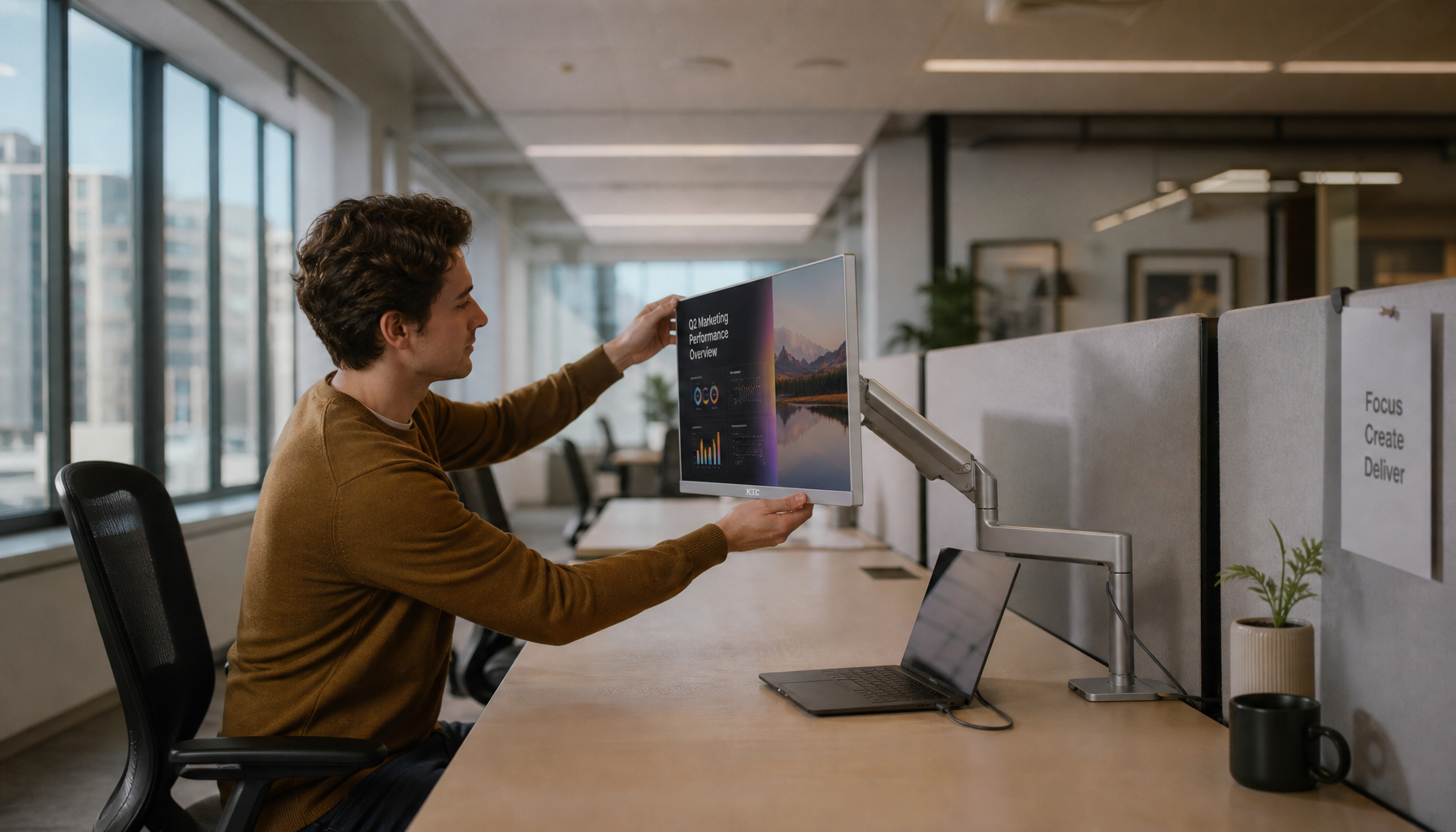
For an office presentation display, require connection approval, separate guest casting from the internal network, centrally manage receiver settings where possible, and review rooms for receivers left in open-pairing mode. For a gaming lounge or esports space, where many devices are physically close together, visible PIN pairing and network separation are especially important because proximity alone should not equal permission.
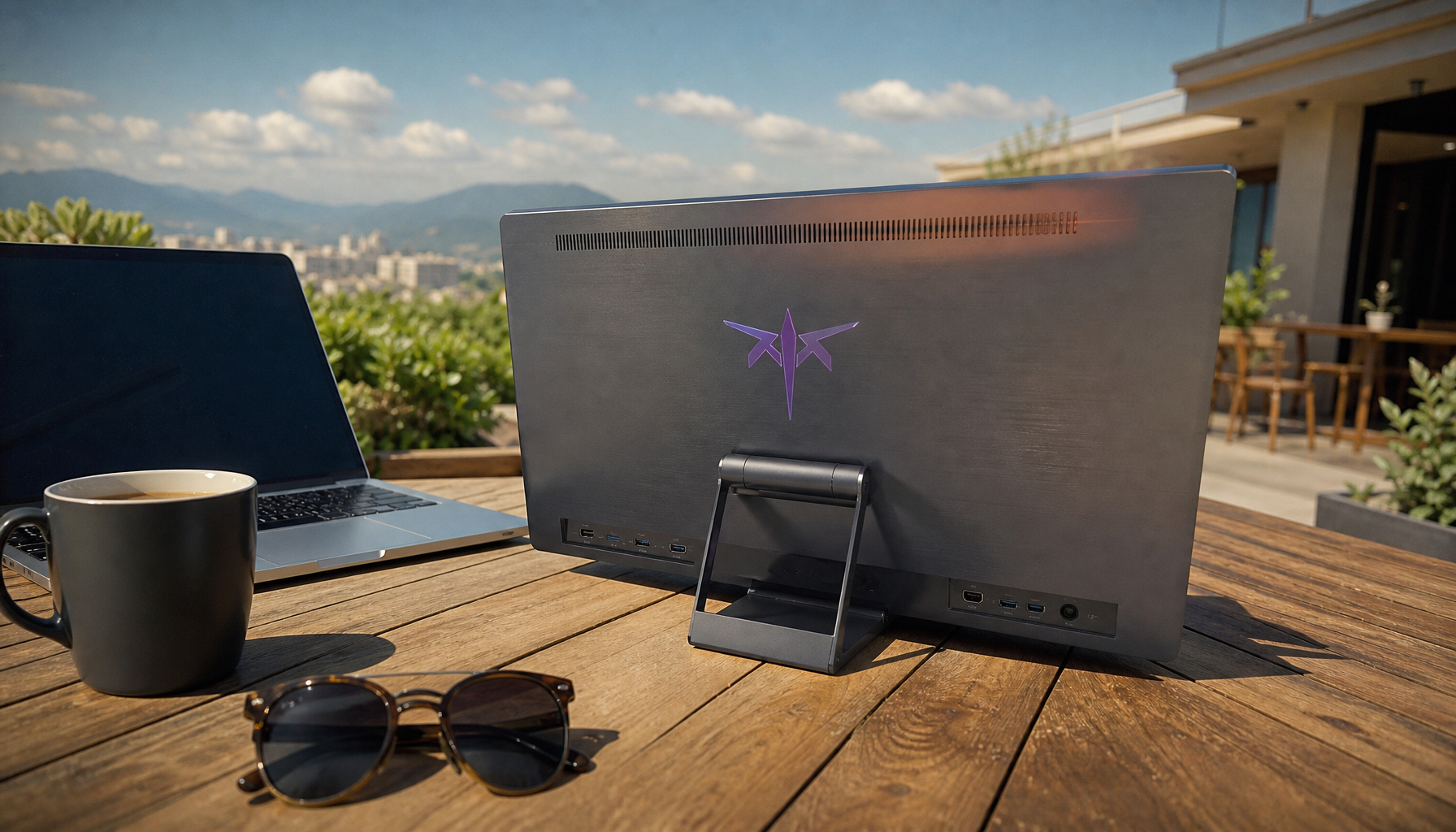
For portable smart screens, travel monitors, and hotel-room setups, prefer a phone hotspot or trusted corporate hotspot over public Wi-Fi. Use a VPN when public Wi-Fi is unavoidable, turn off Wi-Fi and Bluetooth discovery when finished, and avoid projecting sensitive account pages in crowded spaces where shoulder surfing is possible.
FAQ
Is wireless display safe for business presentations?
Yes, when it uses explicit pairing, encrypted wireless networking, updated devices, and network separation. The risky version is an unmanaged receiver on the same network as private business systems, accepting connections from anyone nearby.
Does a VPN secure direct projection or screen mirroring?
A VPN helps protect internet traffic over untrusted networks, but it does not replace receiver pairing controls or Wi-Fi encryption. Use the VPN for public-network exposure, then still require PIN approval and secure the display receiver.
Should I hide my Wi-Fi name for better casting security?
No. Hiding the SSID is not a meaningful security control. Use WPA3 or WPA2, a strong password, updated router firmware, and a separate guest network instead.
What is the safest option for travel?
A personal or corporate hotspot is usually safer than public Wi-Fi for sensitive work. If you must use public Wi-Fi, verify the network name, use HTTPS, run a trusted VPN, and turn off wireless radios after the session.
Secure wireless display is not about making screen sharing difficult. It is about making access intentional. Require approval, encrypt the path, isolate guests, update the gear, and your monitor becomes what it should be: a high-performance window into your work, not an open invitation to anyone within range.