


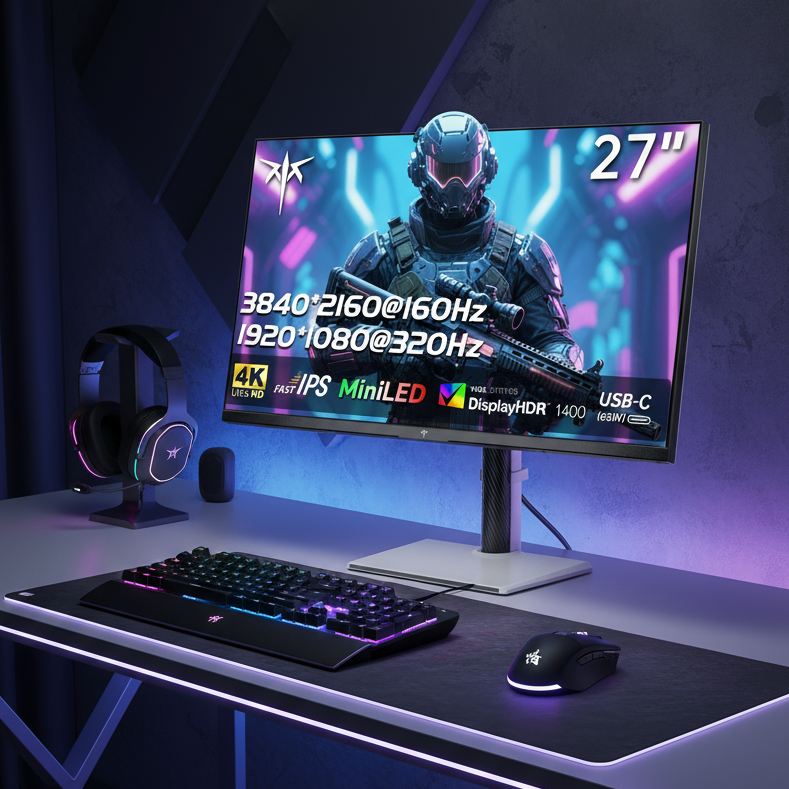
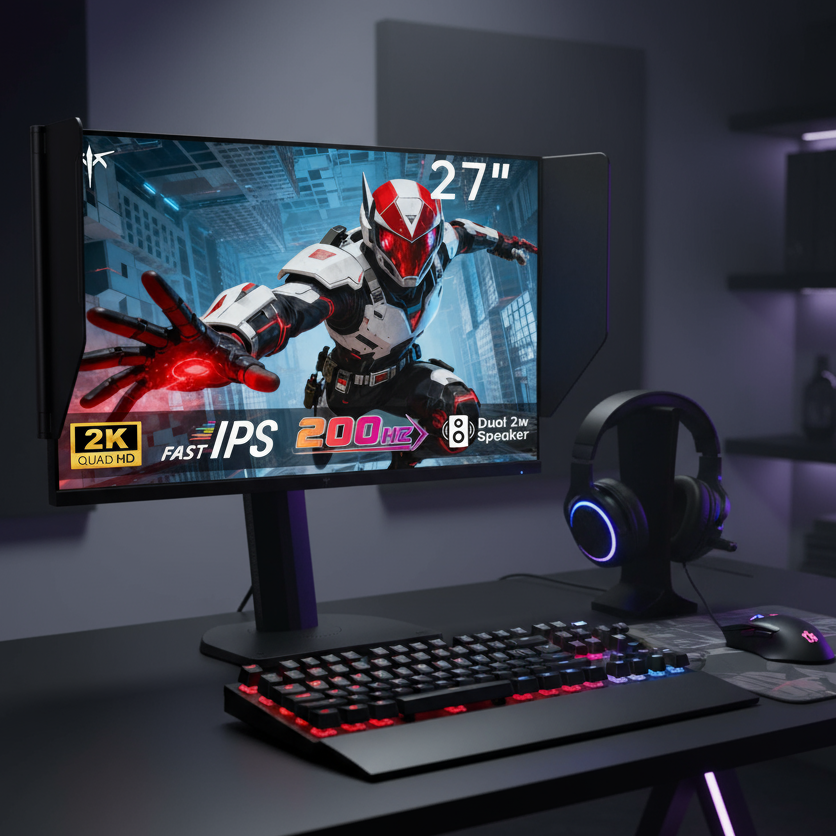
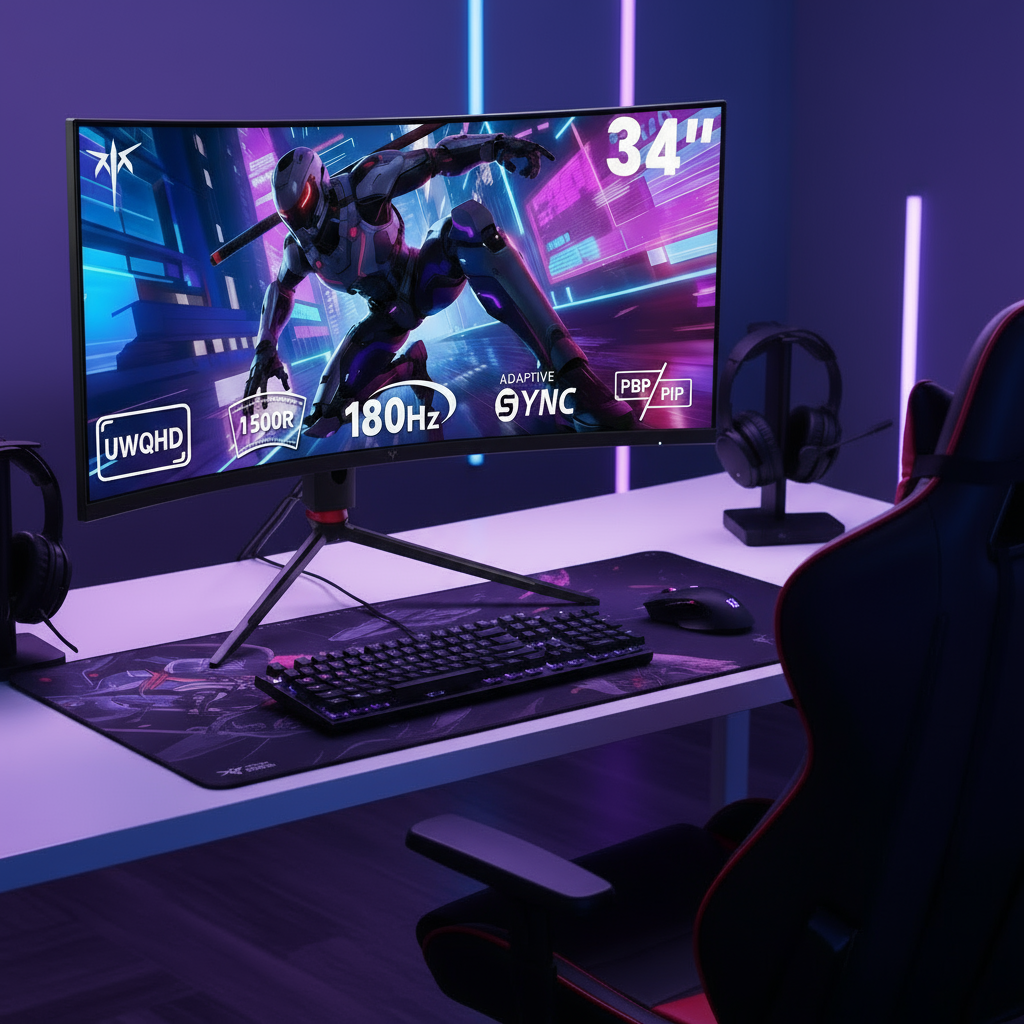


You can assign a separate refresh rate to each connected monitor by selecting that display first, then changing its refresh rate under Advanced display settings.
Is your 240 Hz gaming monitor smooth in a fast shooter, but your second screen stutters when a video, chat app, or spreadsheet is open? A properly tuned mixed-refresh setup can keep the main display responsive while reducing wasted GPU load on side screens. Here is how to set each monitor correctly, what to do when the right option is missing, and when matching rates is smarter than maximizing every screen.
Why Different Refresh Rates Matter in a Multi-Monitor Setup
Refresh rate is the number of times a display updates its image each second, measured in hertz. A 60 Hz screen refreshes 60 times per second, while a 144 Hz screen refreshes 144 times per second. Higher rates usually make motion, cursor movement, scrolling, and fast gameplay feel smoother, especially when your graphics card can deliver enough frames to match the display.
In a real desk setup, not every screen needs the same speed. A competitive gaming monitor at 144 Hz, 165 Hz, 240 Hz, or higher deserves the best available connection and the highest stable refresh rate. A secondary monitor showing chat, email, streaming controls, a document, or a browser tab can often sit comfortably at 60 Hz or 75 Hz. That split is practical because refresh rate is a performance budget, not a trophy number.
The benefit is not just subjective. A visual neuroscience study using 60 Hz, 120 Hz, and 240 Hz displays found stronger motion-related visual responses at higher refresh rates, with average response gains from 60 Hz to 120 Hz and 240 Hz depending on motion type. That supports what gamers and high-speed display users feel every day: higher refresh rates can materially change motion perception.
Before You Change Anything: Identify the Right Monitor
The operating system only changes settings for the display currently selected. Open Display settings by right-clicking an empty part of the desktop and choosing Display settings, or go through Start, Settings, System, then Display. On the display layout screen, use Identify so a number appears on each physical screen; then click the monitor you want to tune.

This step prevents the classic mistake of lowering the refresh rate on the gaming display while leaving the office monitor untouched. The selected display is the one being adjusted, so confirm the highlighted monitor before moving into Advanced display.
Also check that your layout matches your desk. If your left monitor is shown on the right in settings, drag the display boxes until mouse movement feels natural. Poor arrangement does not change refresh rate, but it makes the whole setup feel less precise.
How to Set a Different Refresh Rate for Each Monitor
Open Settings, then System, then Display. Select the monitor you want to change. Scroll to Advanced display. If a display selector appears at the top, confirm it points to the correct monitor. Use the refresh rate menu and choose the rate you want, such as 60 Hz, 75 Hz, 120 Hz, 144 Hz, 165 Hz, or 240 Hz. Accept the confirmation prompt if the screen looks correct.

Repeat the same process for each display. For example, set Display 1, your 27-inch gaming monitor, to 240 Hz. Then return to Display, select Display 2, your side monitor, open Advanced display, and set it to 60 Hz or 75 Hz. The setting is per monitor, not global.
If you see a fractional value such as 59.94 Hz or 119.88 Hz, do not panic. Small fractional refresh-rate values are common in video standards and usually behave like their rounded names. The important point is whether the display feels stable, smooth, and free of flicker or dropouts.
Best Refresh-Rate Combinations for Gaming and Productivity
The strongest mixed setup is usually not “highest on everything.” It is “highest where motion matters, efficient where it does not.” A main gaming monitor at 144 Hz or higher plus a secondary productivity display at 60 Hz is a balanced configuration for many PCs. It keeps the game display responsive while reducing unnecessary work on the desktop side.
Main Display Use |
Secondary Display Use |
Practical Refresh-Rate Choice |
Competitive gaming |
Chat, browser, music, monitoring apps |
Main at 144 Hz to 240 Hz, secondary at 60 Hz |
Office productivity |
Email, calendar, documents |
Both at 60 Hz to 75 Hz |
Creative work |
Reference images, scopes, file browser |
Main at native resolution and preferred color mode, secondary at 60 Hz |
Flight or racing simulation |
Side displays or extended cockpit view |
Match rates when spanning the game across screens |
For games that span multiple monitors, the rule changes. Some spanning modes treat several monitors as one large display for fullscreen applications. In a flight-simulation multi-monitor test, linked-GPU configurations performed far better than non-linked configurations, and a wide-display mode was recommended for fullscreen triple-monitor flying. That kind of use case depends less on “one fast screen plus one utility screen” and more on a synchronized wide-view setup, where multi-monitor performance is tied to rendering mode, GPU configuration, and how the game handles fullscreen output.
When Matching Refresh Rates Is Better
Different refresh rates are supported, but they are not always the smoothest choice. If your second monitor lags, flickers, or stutters while gaming on the primary display, try matching both monitors at the same refresh rate or using clean multiples, such as 120 Hz and 60 Hz. Mixed pairings like 144 Hz and 60 Hz can work well on many systems, but some driver, browser, video playback, or game combinations behave better when timing is simpler.
This is especially relevant when the secondary screen is playing video while the main screen is running a game. A common troubleshooting pattern in dual-monitor lag cases is that mismatched refresh rates, outdated display drivers, browser hardware acceleration, and graphics scheduling can all contribute to stutter. If changing the second monitor from 60 Hz to 120 Hz fixes the problem, or lowering the main display from 144 Hz to 120 Hz stabilizes everything, that is a legitimate performance tradeoff, not a downgrade. The goal is clean frame delivery, and second monitor lag often has more than one cause.
Why the Refresh Rate You Want May Be Missing
If 144 Hz, 165 Hz, 240 Hz, or 4K at 120 Hz does not appear, the system is usually reporting a limitation somewhere in the chain. The monitor, graphics card, port, cable, dock, adapter, or current resolution may not support that mode.
Cable bandwidth is a common culprit. High-resolution, high-refresh signals need the right standard, and HDMI guidance is clear that demanding formats such as 4K at 120 Hz or 8K require an Ultra High Speed HDMI Cable. DisplayPort is often the safer choice for high-refresh PC monitors, especially at 1440p or 4K. If your monitor has both HDMI and DisplayPort, test DisplayPort first for gaming-grade refresh rates.

Resolution also matters. A monitor may support 240 Hz at 1080p but not at 4K, or 144 Hz over DisplayPort but only 60 Hz over an older HDMI input. If the target option is absent, set the monitor to its native resolution first, update the GPU driver, bypass docks or splitters, and connect one monitor at a time to confirm the maximum supported mode. The right HDMI cable or DisplayPort connection can be the difference between seeing the advertised refresh rate and being locked to 60 Hz.
Pros and Cons of Mixed Refresh Rates
Mixed refresh rates let you prioritize the display that matters most. The main advantage is efficiency: your GPU is not spending extra effort refreshing a static email window at 144 Hz while your game needs every frame it can get. It also saves power on laptops and portable smart-screen setups, and it can reduce heat when running multiple external displays.
The downside is timing complexity. Some systems show stutter when a 144 Hz game runs beside 60 Hz video playback. Screen recording, streaming overlays, borderless windowed games, and browser hardware acceleration can expose those issues. Matching refresh rates or using multiples can simplify rendering behavior, even if it means the gaming monitor runs at 120 Hz instead of 144 Hz during a specific workflow.
For office users, the priorities are different. Dual displays can improve workflow by keeping reference material visible, and productivity guidance often emphasizes physical layout, matching size, resolution, and comfortable positioning. A well-arranged extended desktop is usually more important than forcing every office monitor to use a high refresh rate. The extended desktop approach works best when each screen has a job.
Practical Setup Examples
For a gaming and work desk, set the center monitor to its highest stable refresh rate, such as 165 Hz or 240 Hz, and keep the side monitor at 60 Hz. Put the game, editing timeline, or primary spreadsheet on the fast screen. Keep chat, music, hardware monitoring, or research on the secondary screen.
For a developer or productivity setup with two or three displays, use 60 Hz or 75 Hz across standard office monitors unless scrolling smoothness is a daily pain point. Arrange the main work display directly in front of you, with secondary displays angled slightly inward. A three-monitor productivity setup works best when the center screen holds the active task and side screens hold reference material, because visible context reduces constant app switching. Scott Hanselman’s practical multi-monitor argument is that multiple monitors reduce the mental load of repeatedly using Alt-Tab.

For a laptop with a portable smart screen, start conservatively. Use the laptop panel at its native refresh rate, set the portable display to 60 Hz, and avoid routing high-refresh external displays through a weak USB-C dock unless the dock clearly supports the required mode. If performance drops when docked, test the same monitor directly from the laptop before blaming the operating system.
Quick Troubleshooting Path
If the setting does not stick, update the graphics driver and try again after a restart. If the highest option is missing, swap the cable, change ports, remove adapters, and test the monitor by itself. If games stutter only when the second monitor is active, lower the second monitor to 60 Hz, then test matched or multiple-based rates such as 120 Hz and 60 Hz. If browser video triggers the issue, disable hardware acceleration in that browser and retest.
Also confirm that the display mode is set to Extend rather than Duplicate when you want independent screens. Duplicate mode often forces displays into shared behavior that can limit resolution or refresh options. In Display settings, choose Extend these displays for a true multi-monitor workspace.
Final Word
Set the fastest refresh rate on the screen where motion, aim, scrolling, or creative precision matters. Let secondary displays run at a practical rate unless they are part of the main visual experience. A strong multi-display setup is not about maxing every number; it is about giving each screen the right job, the right cable, and the right refresh rate for smooth, reliable work and play.


