A rolling smart display can be a practical part of smart display Matter integration, but it should be treated as a visible control surface first, not assumed to be the controller or Thread border router. The right setup depends on the rest of your ecosystem, so verify compatibility before you build automations around it.

Why a Rolling Display Fits Home Control
For many households, the value of a rolling display is simple: it puts the controls where people actually are. A screen that can move between the living room, kitchen, and home office makes shared dashboards easier to check than a phone buried in a pocket.
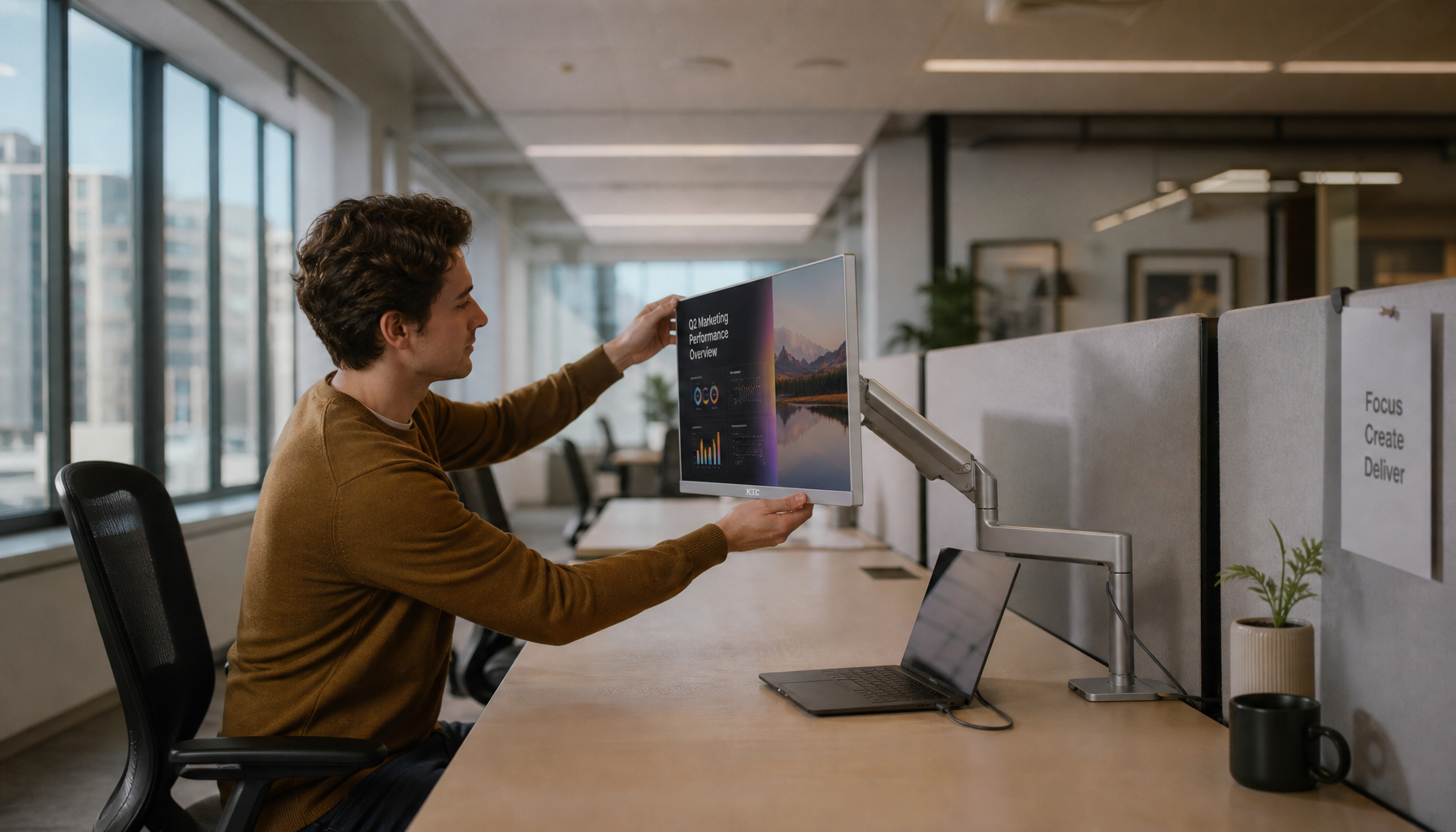
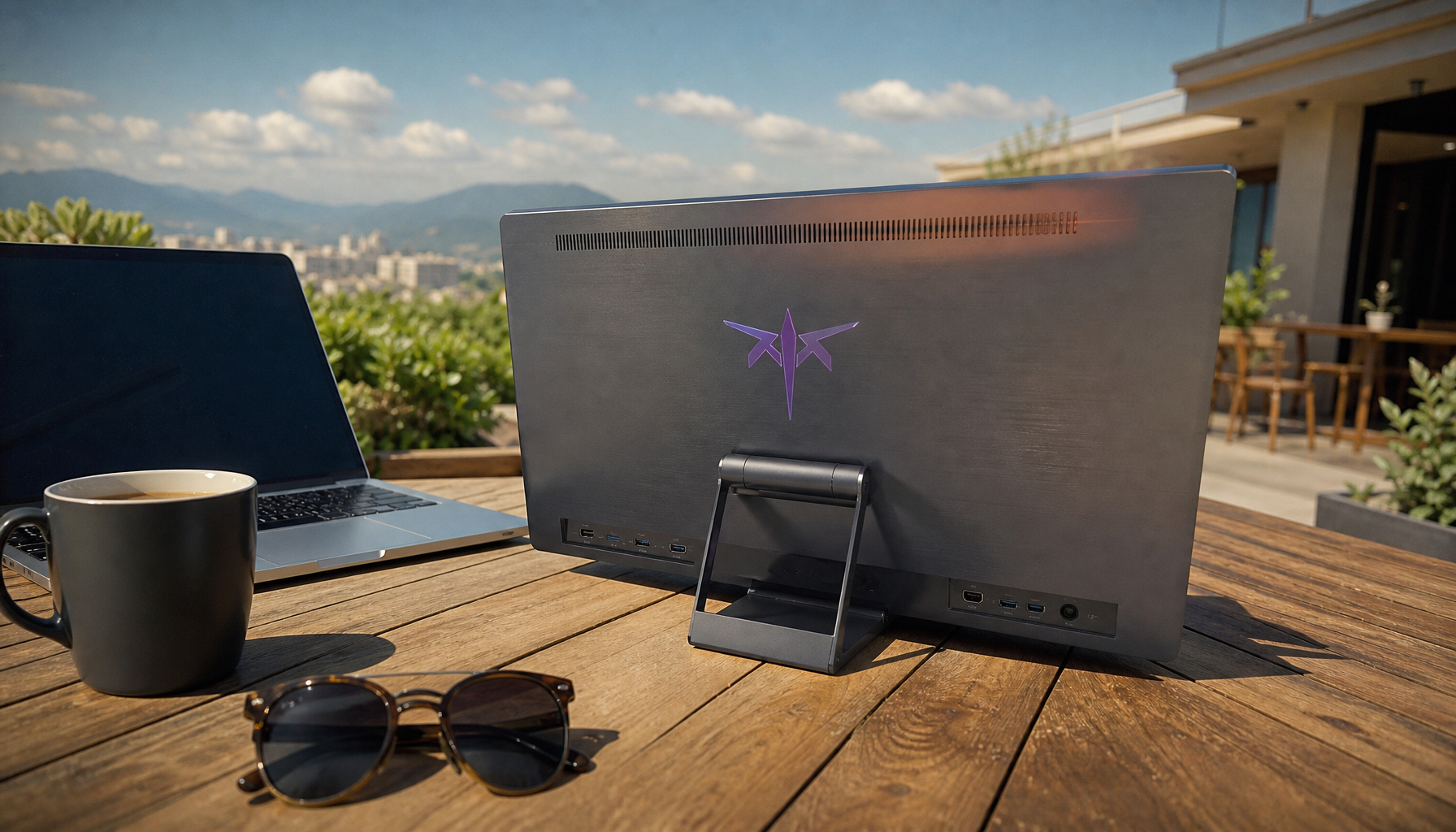
That is why a display like the KTC MEGAPAD 32" 4K Android 14 Google EDLA Smart Touch Monitor with 8550mAh Battery can make sense in a smart-home role. Its Android 14 platform, touchscreen, wireless connectivity, and built-in battery support the kind of at-a-glance control people usually want from a room hub.
The key boundary is important: a helpful screen does not automatically become the thing that runs your whole smart home. It becomes useful only when your app, controller, and devices already support the setup.
If you want a broader browsing path while you compare screen options, the Mobile Touch Screen collection is the cleaner place to start than trying to force a TV-first model into hub duty. The Mobile Office Revolution: Why Rolling Screens are Replacing Traditional Laptops explores similar mobility trade-offs.

Check Compatibility Before Pairing
Before you try any pairing flow, confirm three things: the ecosystem, the display platform, and the device type. Matter is an IP-based smart home standard, and Thread devices need a Thread border router before they can reach Wi-Fi or Ethernet. Google Home devices such as Nest Hub can act as Matter controllers.
That means the display itself is only one piece of the setup. A screen can show controls without acting as the controller, and that distinction matters when you are deciding whether the display belongs in the setup at all.
A practical self-check is easy:
- Confirm that your main smart-home app already supports the devices you own.
- Check whether your existing hub is the place where Matter and Thread commissioning happens.
- Verify that the display is meant to join the ecosystem as a client, dashboard device, or controller.
- Keep the setup conservative until you know exactly which role each device plays.
If you want a contextual follow-up on the limits of hub-free setups, read Matter 2.0 & Thread 2026: Building a Hub-Free Smart Office.
Confirm the Ecosystem Controller
Your controller is the device or app that actually adds the smart-home accessory to the household network. That role may live in a phone app, a dedicated hub, or another ecosystem device, depending on the brand and platform. Verify the existing hub, app, and display platform support Matter or Thread before attempting pairing.
The safe move is to verify that role before you start pairing. If the controller is missing, the pairing process may look like a display problem when the real issue is simply that the ecosystem entry point is not ready.
Check the Display Platform
A display running Android with app access can be useful for dashboards, camera views, and household shortcuts. The MEGAPAD's Android 14 base helps here because it gives you a normal app-driven path rather than a locked-down screen-only experience.
That said, Android access does not prove Matter controller support. It only tells you the display has a usable software environment for control surfaces and supporting apps.
Match Device and Network Support
Matter sits on IP networking, so Wi-Fi quality matters even when the display is not the main controller. Thread support is separate, and Thread accessories still need the right bridge path into the broader network.
This is where many setups go wrong: the display looks ready, but the household router, border router, or accessory type does not match the system's expected path. If you are unsure, stop at the compatibility check instead of guessing through the pairing wizard.
Review App and Voice Assistant Limits
Touch control is often more reliable than voice in a busy room, especially when the display is moving around the house. Voice can still be useful, but it depends on room noise, mic placement, and ecosystem support.
For home control, the right goal is not "voice first." It is "best available control first." If touch is faster and more consistent, use that as the primary interaction method and treat voice as a convenience layer.
Why Voice Assistant Integration on Smart Displays Misses More Commands Than Smart Speakers is a helpful companion piece.
| Scenario | Matter/IP interoperability | Thread border router | Android 14 app control | Wi‑Fi 6 connectivity | Bluetooth 5.2 pairing | Touchscreen control | Power and runtime | Display and speaker fit |
|---|---|---|---|---|---|---|---|---|
| Required before relying on it | Yes | Required | Useful | Useful | Useful | Useful | Useful | Useful |
| Useful but not sufficient | Partial | Background | Yes | Background | Background | Yes | Background | Partial |
| Device fits the role | Yes | Yes | Yes | Yes | Yes | Yes | Yes | Yes |
Set Up the Display as a Control Hub
Start with the display itself before you touch the smart-home app. Power, Wi-Fi, and the base system setup should already be stable, or you will end up troubleshooting the display instead of the ecosystem.
For a battery-powered rolling screen, this matters even more. The MEGAPAD 32 includes an 8550mAh battery and a manual-stated runtime of about 5 hours after a full charge, so setup is easier when the display can stay plugged in during the first pairing pass. The KTC MEGAPAD 27" FHD Android 14 Google EDLA Smart Touch Monitor with 9500mAh Battery offers a similar battery-first alternative for lighter mobility needs.
A simple sequence works best:
- Finish the display's basic system setup.
- Connect it to power and a reliable network.
- Sign in with the household ecosystem account already used for the rest of the devices.
- Open the smart-home app and confirm the controller view loads correctly.
- Add one or two devices first, then expand the dashboard later.
If you want a product-side reference point for a rolling display workflow, rolling smart display workflows is a useful supporting read. It matches the common setup pattern of keeping the screen mobile while reducing room-to-room friction.
A good decision sentence here is: if the display cannot stay online long enough for first-time setup, it is not a good primary hub candidate, even if the hardware looks convenient.
Build Useful Dashboards and Automations
The best dashboards are the ones people actually open. For a home hub, that usually means lights, climate, locks, plugs, and a camera snapshot or two, not a giant all-devices list that takes too much tapping.
The first automation should be small and obvious. Morning, arrival, or bedtime routines work because they show value fast without asking the household to learn a complicated panel.
A useful rule is this: if the automation reduces repeated taps, it is probably worth keeping. If it adds a new control path without removing friction, it usually belongs in a test folder, not the main screen.
Morning and Arrival Routines
These are the easiest routines to keep because they map to real household behavior. A morning panel can show climate, lights, and a calendar preview. An arrival panel can show door status, camera snapshots, and the living-room lights.
Keep the first version simple. A few tiles that show status and one-tap actions beat a dense dashboard with every accessory in the home.
Room-Specific Control Panels
Room-based panels make a rolling display feel intentional instead of generic. A living-room panel should look different from a home-office panel because the decisions are different in each space.
That distinction matters more than most buyers expect. If the screen keeps showing irrelevant devices, people stop using it and go back to their phones.
Shared Household Status Views
A wall-mounted tablet and a rolling display are not the same thing. The rolling version works best when it presents shared household status in a place people naturally pass by.
This is one reason the larger 31.5-inch class can work well: it gives you enough room for several tiles, but it still stays touch-friendly. In the MEGAPAD 32's case, the touchscreen and built-in speaker support that shared-use pattern.
Voice and Touch Fallbacks
Voice control is useful when your hands are busy, but it is not always the most reliable path in a noisy room. Touch should stay available as the fallback because it is predictable, visible, and easy to repeat.
If you are trying to decide whether a display belongs in the room, this is a good test: if the setup still feels smooth when voice fails, the display is doing useful work. If the whole experience depends on voice, it is too fragile.
Keep Control Fast and Reliable
For a rolling home hub, speed is mostly about friction, not benchmark numbers. The question is whether the screen is easy to move, easy to wake, and easy to trust when someone wants a quick answer.
Mobility helps when the display moves between rooms. Power continuity matters when the device is expected to stay useful during longer routines. Touch input matters when the room is noisy or the household does not want to speak commands out loud.
The MEGAPAD 32's 31.5-inch 4K panel, Wi-Fi 6, Bluetooth 5.2, touchscreen, and built-in battery fit that use case better than a fixed monitor that needs extra hardware to move. Still, the display is only the right choice if you actually want a dashboard-first device.
Featured Product is the better browsing path if you are still deciding whether you want a smart-display class device or a more general monitor-first setup.
| Decision Factor | What Matters Most | When It Helps | When It Breaks Down |
|---|---|---|---|
| Mobility | Easy room-to-room movement | Shared spaces and hybrid use | Fixed desks where the screen never moves |
| Power continuity | Enough runtime or easy charging | Dashboards that stay on during the day | Always-on use away from an outlet |
| Touch input | Fast, visible control | Noisy rooms or shared use | If touch is the only reliable input and the UI is cluttered |
| Voice control | Convenience, not dependence | Quiet rooms with good ecosystem support | Noisy rooms or inconsistent assistant pickup |
| Screen size | Room for multiple tiles | Camera feeds, routines, and status panels | Small tables or narrow shelves |
| Ecosystem fit | Verified Matter/Thread role | Existing smart-home setup with clear controller support | Unclear pairing path or missing border router |
Final Setup Checks Before Daily Use
Before you rely on the display every day, confirm that the app opens cleanly, your devices show up in the expected place, and automations trigger the way you planned. If any of those fail, the problem is still in setup, not in the concept.
Also check placement. The screen should be easy to see, easy to touch, and close enough to stable power or charging. If the display becomes a battery anxiety device, it will not stay in the room for long.
For this stage, the MEGAPAD's warranty and support details matter too. The product page lists a 12-month product warranty, 30-day returns, and support through KTC, which is useful if you need to troubleshoot after the first pairing pass.
What a Good Hub Setup Actually Looks Like
A good smart display Matter integration setup is boring in the best way. The display opens quickly, the household controller is already verified, Thread accessories are reachable through the right router path, and the dashboard shows only the controls people use most. Test the full flow by moving the screen between rooms and confirming every automation still fires without extra steps.
If your setup depends on assumptions, it is too fragile. If it works when the display moves rooms, loses voice clarity, or runs on battery for a while, it is probably ready for daily use.
Related Resources
- MegPad vs. DIY Rolling Monitor: Why Integrated Battery Displays Win in 2026
- Building the AI Command Center: Rolling Hub Setups
FAQs
Q1. Does a rolling display need to be the Matter controller?
No. It can act as a client dashboard while another device or app serves as the controller.
Q2. What is the first compatibility check?
Confirm your existing smart-home app and hub already support Matter or Thread before pairing the display.
Q3. How long does the MEGAPAD 32 battery last during setup?
Expect roughly five hours of runtime, so keep the unit plugged in for the initial pairing.
Q4. Should I prioritize touch or voice controls?
Use touch as the reliable fallback; treat voice as a convenience layer that may fail in noisy rooms.
Q5. When should I add more devices to the dashboard?
Start with one or two devices, then expand only after the first automations work reliably.