Yes, but only if the smart monitor’s software platform can run the right app, open the right web interface, cast from another device, or discover local servers through supported network playback features.
A smart monitor can turn a desk display into a lightweight media endpoint without adding a streaming stick, as long as you verify app support, codec handling, and network access before you buy or configure it. The key question is whether the monitor itself can reach your library reliably, or whether a dedicated media player is still the better choice.
What “Local Network Media Server” Means on a Smart Monitor
A local network media server is a device on your home network that stores and shares your own video, music, or photo files. It might be a desktop PC, mini PC, NAS, or small single-board computer. Instead of pulling everything from internet streaming services, your monitor reaches across your Wi-Fi or Ethernet network to play files you already control.
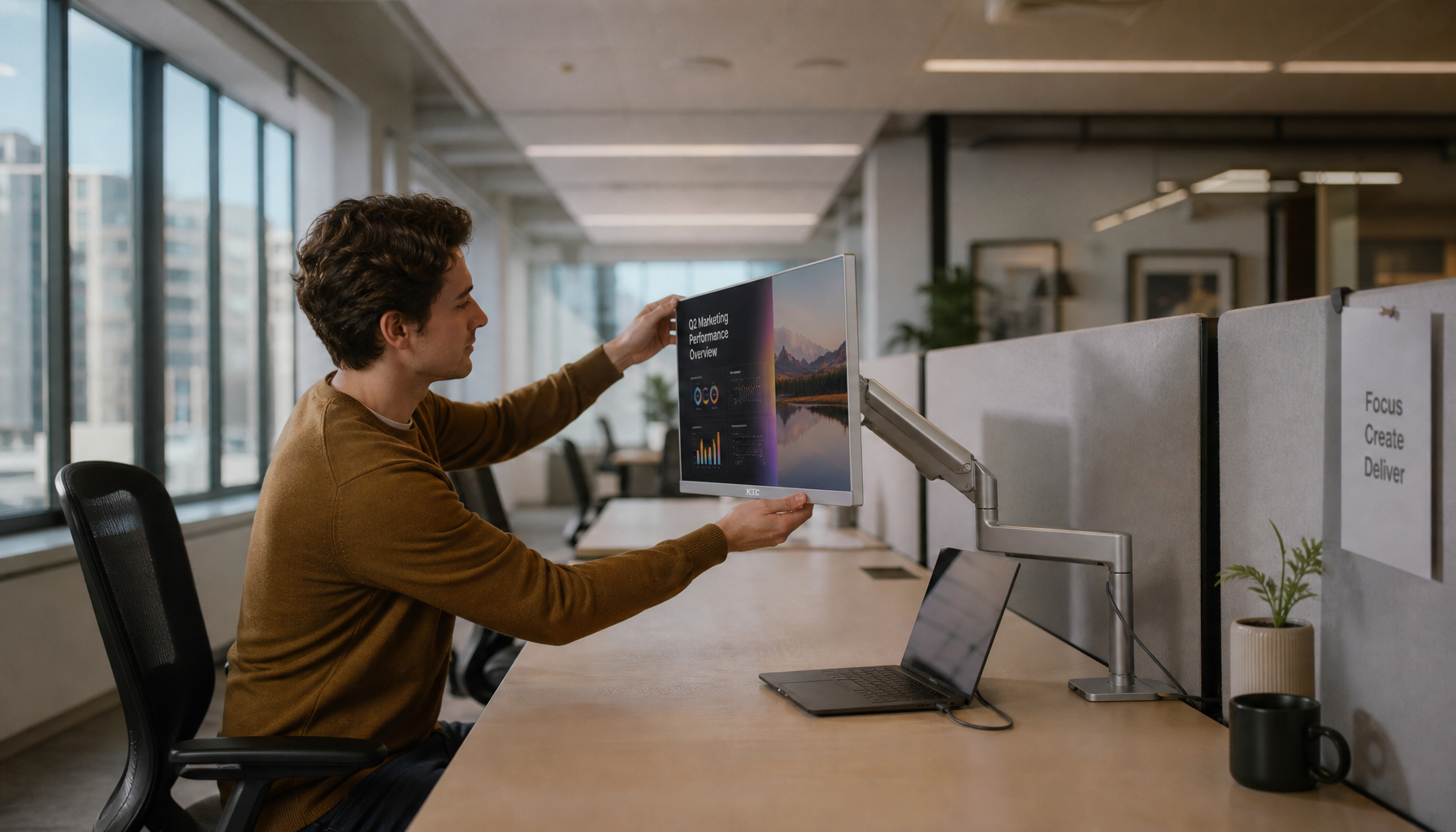
A smart monitor is not just a plain panel. It combines traditional monitor input with built-in software for apps, streaming, browsing, wireless sharing, and sometimes remote-control-style navigation; computer display use with standalone entertainment features are part of the category’s appeal. That built-in platform is the key difference. If it supports the media server app you need, the monitor can behave like a compact smart TV. If it does not, it is still an excellent display, but the “smart” layer may not be the best path to your library.
The most common practical example is a personal media server app. Personal files on a server device can be indexed, organized, and played through matching apps or a web interface. On a smart monitor, that usually means you want a native media app in the monitor’s app store, a browser strong enough to use the web player, or a fallback device connected through HDMI.
The Short Answer: Yes, But Platform Support Decides Everything
A smart monitor can access local media in four main ways. The cleanest option is a native media server app. The next-best route is a built-in web browser that can reach the server’s local web address. Some setups rely on casting or screen mirroring from a phone, tablet, or laptop. Older or simpler environments may use DLNA or UPnP-style discovery if the monitor platform exposes a media player that can browse local servers.
The reason this is not a guaranteed “yes” is that smart monitor platforms vary widely. A smart TV versus smart monitor comparison notes that both categories can include Wi-Fi and apps, but smart monitors are typically aimed at desks, home offices, bedrooms, and smaller spaces rather than full home theater input flexibility; fewer TV-oriented ports may also be part of the tradeoff. That matters because a living-room smart TV may have a broader local media app ecosystem, while a desk-focused smart monitor may prioritize productivity apps, casting, and cloud entertainment.
A simple real-world check is this: if your server is running media server software on a mini PC in the office, your smart monitor should either show a compatible client in its app store, load the web player smoothly, or accept a cast from your phone without turning the phone into the main playback engine. If none of those work reliably, HDMI from a streaming stick, console, mini PC, or dedicated media box will be more predictable.
Smart Monitor Platform Paths Compared

Access path |
Best fit |
Strength |
Watch-out |
Native media server app |
Personal media libraries |
Clean remote-friendly browsing |
App availability varies by monitor OS |
Built-in browser |
Quick local testing |
No extra hardware if playback works |
Codec support and controls can be weak |
Casting or screen sharing |
Phone-led playback |
Fast, low-clutter setup |
Depends on the sender device staying involved |
HDMI media player |
Highest reliability |
Strong app, codec, and update support |
Adds another box and cable |
The do-it-all smart monitor concept frames the screen as a hybrid work and entertainment device rather than a conventional PC-only display. That positioning is useful, but it should not be mistaken for universal server compatibility. The platform is still an operating system with an app store, codecs, permissions, and update limits.
Media Server Apps and Browser Access

For most users, a mainstream personal media server is the easiest first test because setup is well documented and client support is broad. A typical setup runs server software in the background, organizes libraries for movies, TV, music, photos, and other videos, then serves them to playback apps. That polished interface is exactly why a media server can feel natural on a smart monitor used from a desk or bedroom.
Open-source and self-hosted alternatives can also work well, especially when privacy, local control, or power-user permissions matter. The limitation is usually not the server software itself; it is whether the smart monitor’s platform has a usable client. If the app store is thin, the built-in browser becomes the fallback. Browser playback is acceptable for testing, but it can struggle with remote-friendly navigation, subtitles, audio formats, and high-bitrate files.
A practical performance example: a 4K HDR movie stored on a server is not just “a video file.” If the monitor can play the file format directly, the server does minimal work. If the monitor cannot decode the file, the server may need to convert it into a compatible format. Large 4K HDR libraries can demand several terabytes of storage, and server hardware must stay powered and connected; several terabytes become realistic quickly when you store lots of high-quality video. If you expect 4K playback, treat the monitor’s app and codec support as performance features, not convenience extras.
Network Setup Matters More Than the Logo on the Bezel

For local media, the best display cannot outrun a weak network. A wired Ethernet path is usually the cleanest choice when the smart monitor includes Ethernet or when the server and access point are wired. Wi-Fi can work well, especially in the same room, but high-bitrate 4K files expose interference, distance, and router congestion quickly.
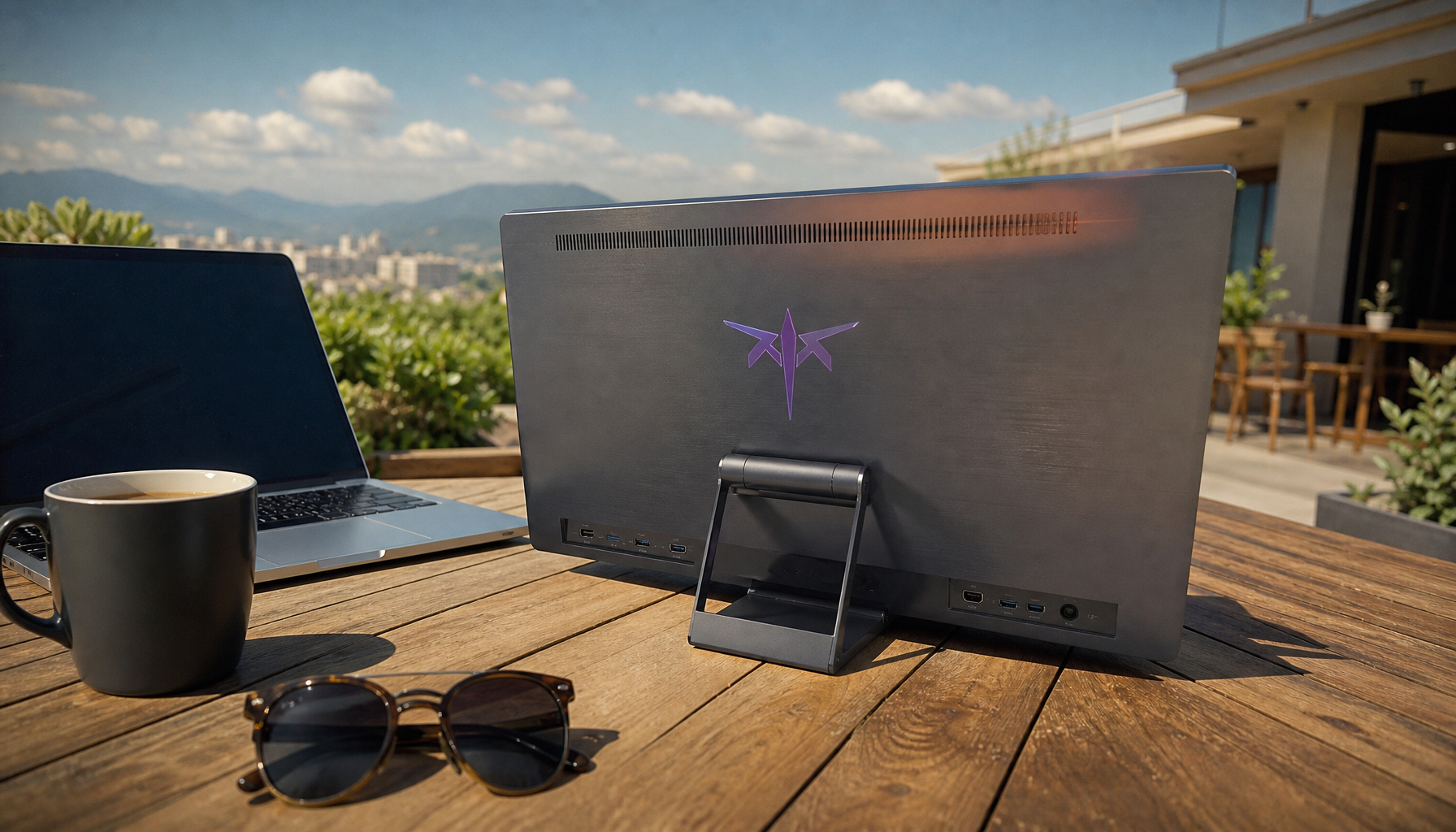
Connectivity remains a core buying factor for monitors beyond media use. Monitor buying guidance emphasizes HDMI and DisplayPort as compatibility anchors, with DisplayPort supporting high-resolution output and features such as multi-stream transport. For local media, that same philosophy applies: the more connection paths you have, the easier it is to recover when the smart platform disappoints.
For example, a 32-inch smart monitor in a home office might use Wi-Fi for local media most nights, HDMI from a gaming console for discs or streaming apps, and USB-C or DisplayPort for work. That gives you a resilient setup instead of betting everything on one app store.
Same Content on Many Displays Is a Different Problem
Accessing one local media server from one smart monitor is straightforward compared with feeding multiple displays. A discussion about streaming to four TVs highlights the distinction between duplicating one feed and independent playback.
If every screen should show the same movie, an HDMI splitter, matrix, or HDMI-over-IP system may be simpler than asking several smart monitor apps to stay synchronized. If each display should browse and play different files, every monitor needs its own playback endpoint, app login, network path, and decoding capability. In that case, the smart-monitor-as-client approach scales only if the platform is stable and the server can handle multiple streams.
Pros and Cons of Using the Smart Monitor Platform

The strongest advantage is simplicity. A smart monitor reduces devices, remotes, cables, and desk clutter. Smart monitor features such as HDMI, wireless peripherals, Bluetooth audio, casting, and wireless media sharing can be real quality-of-life improvements when your desk doubles as a work and entertainment zone.
The tradeoff is control. Smart monitor apps may age out, receive slower updates, or support fewer server clients than a dedicated streaming box. Security also matters because a smart monitor is a networked computer, not just glass and pixels. If local media access requires signing into accounts or keeping the monitor online for years, favor platforms with clear update support, easy sign-out, and the option to disable wireless features when you no longer trust the software.
The value-minded recommendation is direct: use the smart platform when it supports your server cleanly today, but keep HDMI as your long-term fallback. Displays often last longer than smart software.
Buying Checklist Before You Commit
Before buying, confirm the monitor’s operating system and app store, then search specifically for the media client you plan to use. Check whether the built-in browser can reach local IP addresses on your network. Verify Wi-Fi band support, Ethernet availability, Bluetooth audio needs, and whether the remote or on-screen controls are comfortable from your viewing distance.
Screen quality still matters. Smart access is not worth much if dark movie scenes look washed out or productivity text looks soft. For mixed work and media, prioritize resolution, contrast, brightness, ergonomic adjustment, and the ports you need for a laptop or console. A smart monitor is strongest when the panel is excellent first and the platform adds convenience second.
FAQ
Can a smart monitor play files directly from a NAS?
Yes, if the monitor has a compatible app, browser, or local media player that can reach the NAS or a server running on it. In practice, running media server software on the NAS is usually smoother than browsing raw shared folders from the monitor.
Do I need internet access to stream local files?
Local playback can work on your home network without pulling the media from the internet, but many smart platforms and apps still need internet access for sign-in, metadata, updates, or app launch behavior. Test this before relying on it for offline viewing.
Is a smart monitor better than a streaming stick for local media?
It is cleaner when the built-in app works well. A streaming stick, mini PC, or console is better when you need stronger codec support, longer software updates, faster app performance, or a platform you can replace without replacing the screen.
Final Word
A smart monitor can become a capable local media screen, especially with a well-supported client app. The winning setup is not the smartest-looking spec sheet; it is the one that gives you reliable playback, strong panel quality, enough ports, and a clear fallback when the built-in platform reaches its limits.